
Coaching guide · Practice design
Basketball Practice Planning
Mike MacKay keeps his practice plan in his head, but he tells new coaches to write theirs down. Start from your players' rate limiters (the things holding their game back), change a constraint when a game is too easy or too hard, and review the session afterward.
16 min read
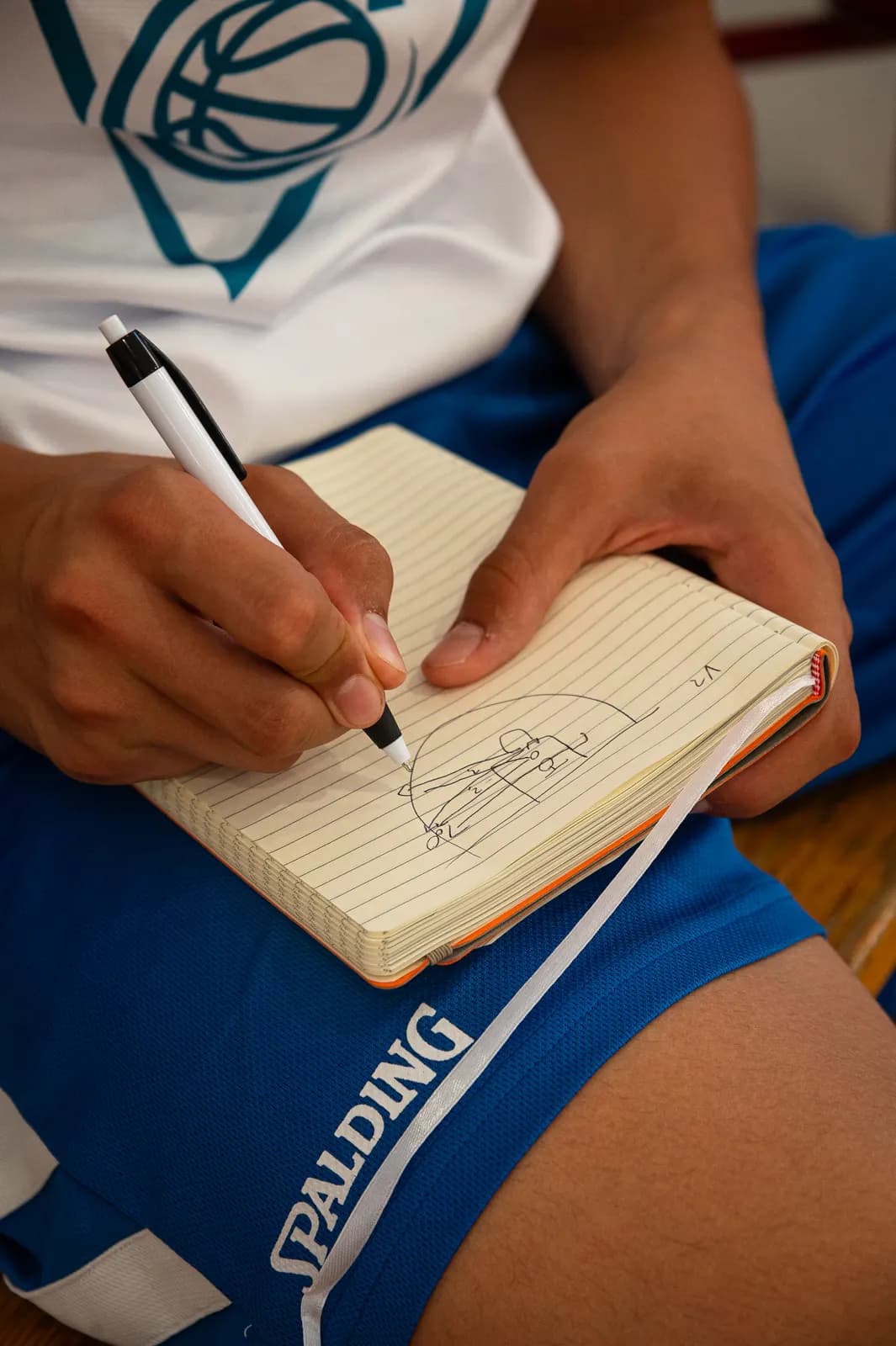
Some coaches who watch Mike MacKay run a session ask him where his practice plan is. MacKay, formerly of Canada Basketball and the coach Alex Sarama calls his biggest mentor, points at his head. At the Transforming camp in Roseto in 2026, he told George Vaz on EP174 what those coaches can't see.
“I said, well, it's up here. But I said, you have no idea how much time I spent thinking about what we're going to do.”
He was just as quick to add that a coach starting out should write it all down. He can adapt the plan in his head to whatever the gym gives him because he's done this for such a long time. Paper or head, the thinking behind the plan is what counts. So is being ready to change course when players show you something you didn't expect.
Alex's practice-planning presentation splits the job in three: the thinking before practice, the delivery during it and the review afterward. We plan the same way at Transforming Basketball.
“Make practice the best part of a player's day. This will take more planning and creativity than any conventional practice plan.”
Practice Plans by Age
Pick your age group, run the sample session, then adapt it to what your players show you. The thinking behind every adjustment is in the rest of this guide.
- U10: the U10 basketball practice plan, games from start to finish, with as many baskets as you can find and a ball for every child.
- U12: the U12 basketball practice plan writes out Practice 1 of our U12 plans in full. The other plans are in the U12 X20 Practice Plan Bundle.
- U14: the U14 basketball practice plan writes out Plan #1 of our U14 plans, built on shot selection and gets. The rest are in the U14 X20 Practice Plan Bundle.
- U16 and U18: twenty plans for each age group in the U16 X20 Practice Plan Bundle and the U18 X20 Practice Plan Bundle.
- Camps and tryouts: Youth Camp Practice Plans, Varsity Camp Practice Plans and the Tryout Practice Plan Bundle.
- Free: Mike MacKay's practice plan, a complete session plan to compare with your own.
Before Practice: The Thought Process
Start with Your Players' Rate Limiters
Shooting, passing and finishing are fine headings for a plan, but they don't describe the affordances players will face, the openings the defense gives them or takes away. Finishing against a defender recovering from behind is a different problem from finishing over a defender who's already protecting the rim. So start from what you've seen in games. If your team loses an advantage after a drive and kick, ask why before you reach for another passing drill:
- Is the receiver holding the ball?
- Is the pass arriving outside their shooting pocket?
- Are teammates standing where one defender can guard two of them?
Each answer points to a different activity. A temporary advantage game puts the emphasis on zero seconds (deciding to shoot, drive or pass as the ball arrives) and on spacing. A passing constraint puts the emphasis on whether the receiver can use the ball straight away. Whatever is holding a player or team back is what we call a rate limiter, and it's a better starting point for a plan than a skill category.
Tim Dather, then an assistant coach with the LA Clippers, gave the same advice when George Vaz asked him for one tip on EP141. Before every segment, he decides what its intention is. When a game he thought would be perfect isn't producing that intention, he can see it and change a constraint on the fly, "oh, we need one more dribble", instead of letting it run.
Write Down What You'll Do, Say and Show
In his section of Alex's book Transcending Basketball, Mike MacKay frames planning as metacognition, thinking about your own thinking, and gives two questions to plan around: what will the coach do, say and show, and what does the coach expect the players to do, say and show?
His Do example is a 3-on-3 transition game that starts with players moving randomly inside the paint while the coach shoots or throws a bad pass. Before the first possession, the coach has already decided where to stand so they're safely out of the way, what happens if the shot goes in, how possession is decided and which behaviors they'll watch. For transition offense, that might be a single number: how many offensive players beat their check in the first three steps.
Show is the one most plans leave out. MacKay credits Jill Payne with the question of what the coach wants their posture, vocal tone, facial expression, breathing and movement to be, because a coach's reaction to one mistake can set the tone for the whole session.
What Goes on the Page
George Vaz shares the template he used with his teams at MVP Academy in Portugal in how to plan your youth basketball practices. It's close to the format of our youth practice plan bundles. Combined with the organizational details every game needs, a plan covers:
| Field | What to write |
|---|---|
| Logistics | Where, when and what time |
| Practice type | A low, moderate or high stress day, which helps with load management |
| Weekly outcomes | What the team is prioritizing this week |
| Games and constraints | Each small-sided game, its rules, the constraint you plan to use and how you expect players to respond |
| Organization | Player numbers, available baskets, starting positions, scoring, rotation and who enters next |
| Lead | Which coach runs the activity |
| Cues | The intention of the game, in the team's own terminology |
| TLC | Whether the activity is for teaching, learning or competing |
| What would make you change it | The behavior that tells you to adjust the constraint or move on |
Vaz is open about the "how players will respond" column: "Sometimes it works; sometimes I am way off." Writing the prediction down gives you something to check after practice, which a list of drill names doesn't.
The organization row matters more than it looks. With 12 players and one basket, a three-team game such as Defensive Shutdown gives you a rotation that's already settled. With several baskets, smaller groups can play at the same time. Decide who enters next and how each possession restarts, because those details decide how much of practice players spend playing. Our one-basket practice guide goes further into this.
Plan for Time on Task
"Frantic pace" is one of the headings in Alex's planning presentation. Transcending Basketball defines time on task as how much of practice players spend active rather than waiting or listening to instructions, and names the usual culprits: punishments, keeping all the players on one basket for certain drills, and too much feedback and instruction.
“Coaches must remember that every second spent instructing players takes valuable time away from players developing “knowledge of.””
"Knowledge of" is the book's term for being able to do something in the game, as opposed to "knowledge about" it, which is what players get from being told. The book borrows an idea from video game design here: in a good game, players wait very little, and when they make a mistake they're playing again within seconds. In a lot of practices, a mistake is followed by a lecture.
During Practice: The Delivery
Get Them Going in 30 Seconds
"Get them going in 30" is another heading from the same presentation, and it comes from a framework Mike MacKay sets out in the book for starting small-sided games: 3, 10 and 30.
- 3: no more than three points of emphasis, usually tied to your principles of play. You don't always need any. Setting players up without instruction and watching how they play tells you a lot about their intentions.
- 10: no more than ten minutes on an activity before changing it, either with a new constraint or a new activity. Some coaches will move on sooner.
- 30: no more than thirty seconds to explain the activity and get players started. Name it, say which principle it's about, how it starts and how it's scored.
Alex's first book sets the bar even lower. In chapter 8 of Transforming Basketball, each activity comes with a few prompts the coach can use to introduce it without being overtly instructive, and coaches are challenged to start each activity in 20 seconds or less to get the most out of time on task. Some details can be left out of the explanation altogether. Alex's own advice in the book is to stop explaining rotations unless you're using bursts, where players stay in one role for a fixed time.
“Unless rotating in an inefficient way, it is best to save time and promote problem-solving and communication by allowing players to figure it out.”
Players shouldn't need a whistle to start a possession either. On EP174, MacKay said he only uses the whistle the way a referee would. "I will stop the activity, not you," he tells players, and until he does, they keep playing into whatever would happen next in a real game, whether that's an inbound and outlet, the rebound or the other end of the floor.
Observe Before You Intervene
Once a game is running, the job changes. Transcending Basketball asks coaches to give the least information they can before an activity, watch what emerges and only then decide on an intervention, whether that's feedback or a change of constraint. It admits that's hard, since others in the gym may judge the coach for how messy it looks.
MacKay's TLC framework helps you decide in advance how much you'll step in:
| Mode | What the coach does |
|---|---|
| Teaching | Stop at any time to make a point of emphasis or add a new task constraint |
| Learning | Don't stop the flow. Coach on the fly |
| Compete | Treat it like a game. Referee only, with no feedback |
George Vaz uses TLC for load as well as for feedback: on a low-stress day, he might put more teaching into an activity. MacKay pairs it with an "ICE check" on intensity, concentration and energy. On EP174 he described stepping back mid-activity to ask how players are self-organizing, how they're doing physically and whether their concentration and energy are where they need to be, and then deciding whether to intervene or let them solve it.
Give Group Feedback During the Breaks
Group feedback is a heading of its own in the presentation. The book describes MacKay's short debriefs during and at the end of practice: a question with more than one answer, such as "What game principles do you think we need to work on before our next game?", put to the team, with a few seconds' thinking time or 30 seconds in pairs before players share. Used during breaks in an intense period, a debrief builds the team's shared language without costing playing time.
MacKay's warning on EP174 is about the question every coach asks. "Does everybody understand?" followed by "Yes, coach" isn't checking for understanding. In his words, "That's compliance." Ask questions you don't know the answer to.
A Worked Example: Plan Around a Drive and Kick
Say your team keeps losing the advantage after a drive and kick. Before you reach for a 3-on-0 drive-and-kick drill, plan a game like this one.
3-on-2+1
6 playersRecognize and use an advantage before the recovering defender gets back to neutral. 3-on-0 drive and kick has no defense to read. Here the advantage only lasts until the recovering defender arrives, so players have to play dominoes, moving the ball catch after catch faster than the defense can recover.
How it works
- Three offensive players against two defenders who start matched up.
- The third defender recovers from behind when play begins.
- The offense has to use the advantage before the recovering defender gets back.
Adapt it
- Start the recovering defender farther away to give the offense more time.
- Start them closer to put more pressure on the first pass and the receiver's next action.
- Later, return to equal numbers and see whether players keep an advantage they've created themselves.
Watch for
- Whether the receiver makes a zero-seconds decision as the ball arrives.
- Whether the other players space so one defender can't guard two.
Players can work on different things inside the same game. The ball-handler might be working on recognizing help, the receiver on a zero-seconds decision and a third player on moving so one defender can't guard two. They don't all need identical conditions to work on the same team principle. Change starting positions or defensive rules for individuals.
Our U12 sample plan follows the same thinking across a whole session: differential-learning shooting and Shield Tag to start, then 1-on-1 from varied starts, changing advantages, 3-on-2 dominoes bursts with one-minute bursts and an eight-second clock, and wider play. The sample doesn't set minute-by-minute timings. The U12 practice plan guide walks through it.
Don't Let the Plan Run Practice
The "10" in 3, 10 and 30 is a maximum before you change something, not a reason to abandon a game that's working. If players are starting to pick up the affordances you designed the game around, keep it going and adjust the constraint. Transcending Basketball is blunt about plans that lock coaches in:
“Practice plans frequently negatively constrain coaching staffs by stipulating exactly what must happen and at what time within a practice.”
George Vaz's version for youth coaches: be adaptable, and stay with a game longer if players are learning in it, even if it costs you another game. Equally, move on if it isn't working. If the zone-offense game that was going to solve all your problems falls flat, move on and work out why after practice.
A plan also doesn't have to build up from small games to the full game. MacKay told George Vaz about being asked why he started a session with 5-on-5: "because that's where the game is played. I needed to see how they self-organize." If players can handle it, he constrains the 5-on-5. If they can't, he goes back to a smaller game. Our practice design guide covers how to choose formats.
You can also come back to the same activity across several practices. Changing the starting positions or the defensive coverage gives players repetition without repetition (the same problem, solved a slightly different way each time), and nobody has to learn a new set of rules. What doesn't work is running it unchanged. As players get better at reading the game, the activity has to become more complex with them:
“Using the same activities with identical constraint manipulations throughout the season therefore serves little purpose.”
The same chapter borrows a phrase from Jacobs and Michaels for the coach's role: a learning designer, someone who decides which affordances players need to be exposed to and designs the practice around them. Which activities you pick will depend on your players, your principles of play, the point in the season, how many games you've played and whether it's a low, moderate or high stress day. That last one is why the practice type sits near the top of the plan template above.
After Practice: The Review
Transcending Basketball cites Alan Keane and Simon Turner of MVMT Sports, who advocate a "plan-do-review" process and point out that coaches spend enormous amounts of time planning and running practices but seldom any time reflecting on how they went. Alex included himself when he looked back with his College Prep Italy staff on EP3.
“I would have loved to have evaluated more of our practices right after.”
Note-taking and journaling get a slide of their own too, and MacKay is the example. "I'm a big-time journalist," he said on EP174, meaning he journals all the time, because the writing is where he does his reflecting. The review doesn't need to be long. Write down the constraint you used and how players responded, specifically enough that it shapes the next plan:
"Moving the recovering defender farther back gave the receiver time to attack, but the weak-side players still stood where one defender could guard both."
That note gives the next practice a focus. You keep the activity and adjust the spacing conditions instead of replacing it because the team has already played it. And when your prediction was wrong, as Vaz says his sometimes are, the note tells you why.
For age-specific plans, see our U10, U12 and U14 practice plans, and for the first ten minutes, our warm-up games guide.
Questions Coaches Ask
How do you plan a basketball practice?
Start with your players' rate limiters, based on what you've seen in games, then design games that keep putting them in front of that problem. For each game, write down the numbers, baskets, start, scoring, rotation, the constraint you'll use and what would make you change it. After practice, note how players responded so the next plan builds on it.
What should a basketball practice plan include?
Logistics, the practice type (low, moderate or high stress), weekly outcomes, each game with its rules and constraints, the organization (players, baskets, rotation), who leads each activity, the cues in your team's terminology, and whether each activity is for teaching, learning or competing.
How long should each activity in a basketball practice last?
Mike MacKay's "3, 10 and 30" framework suggests no more than ten minutes before changing an activity, with a new constraint or a new game. That's a maximum. If the behavior you designed the game for is starting to emerge, keep it going and adjust the constraint.
How long should it take to explain a drill or game?
No more than thirty seconds. Name the activity, say which principle it's about, how it starts and how it's scored, then let players play. Don't explain the rotation unless you're using bursts.
What is the TLC framework in basketball practice?
Teach, learn, compete. In a teaching activity the coach can stop play at any time; in a learning activity the coach doesn't stop the flow and coaches on the fly; in a compete activity the coach only referees. Deciding this in advance tells you how much to step in.
Should you follow a basketball practice plan exactly?
No. Plan in detail, but respond to what happens. Plans that dictate exactly what happens at what time stop coaches from addressing what emerges in practice. Stay longer with a game that's working, move on from one that isn't, and review both afterward.
Take It to Your Next Practice
U12 X20 Practice Plan Bundle
$99 USD
Twenty age-specific practice plans for U12 — each with activities, constraints, feedback and scoring.
U14 X20 Practice Plan Bundle
$99 USD
Twenty age-specific practice plans for U14 — each with activities, constraints, feedback and scoring.
Sources
- Transcending Basketball, Alex Sarama (Wiley, forthcoming): chapters 1, 4, 5, 6 and 7 and the glossary, including sections by Mike MacKay and Tony Holler
- Practice Planning, Alex Sarama, coaching clinic slides
- Transforming Basketball, Alex Sarama (2024): chapter 8, Transforming Activities
- EP174: Mike Mackay: Culture Building Through The BioPsychoSocial Lens, with George Vaz
- EP141: The Art of Practice Design in Basketball with Tim Dather, with George Vaz
- EP3: The Journey of College Prep Italy's Coaching Team
- How to Plan Your Youth Basketball Practices, George Vaz
- Robertson, S. and Woods, C. T. (2021), "“Learning by Design”: What Sports Coaches can Learn from Video Game Designs", Sports Medicine - Open. doi:10.1186/s40798-021-00329-3
- Silva, P., Garganta, J., Araújo, D., Davids, K. and Aguiar, P. (2013), "Shared Knowledge or Shared Affordances? Insights from an Ecological Dynamics Approach to Team Coordination in Sports", Sports Medicine. doi:10.1007/s40279-013-0070-9
- Wood, M. A., Mellalieu, S. D., Araújo, D., Woods, C. T. and Davids, K. (2023), "Learning to coach: An ecological dynamics perspective", International Journal of Sports Science & Coaching. doi:10.1177/17479541221138680
Behind the methodology
About Alex Sarama
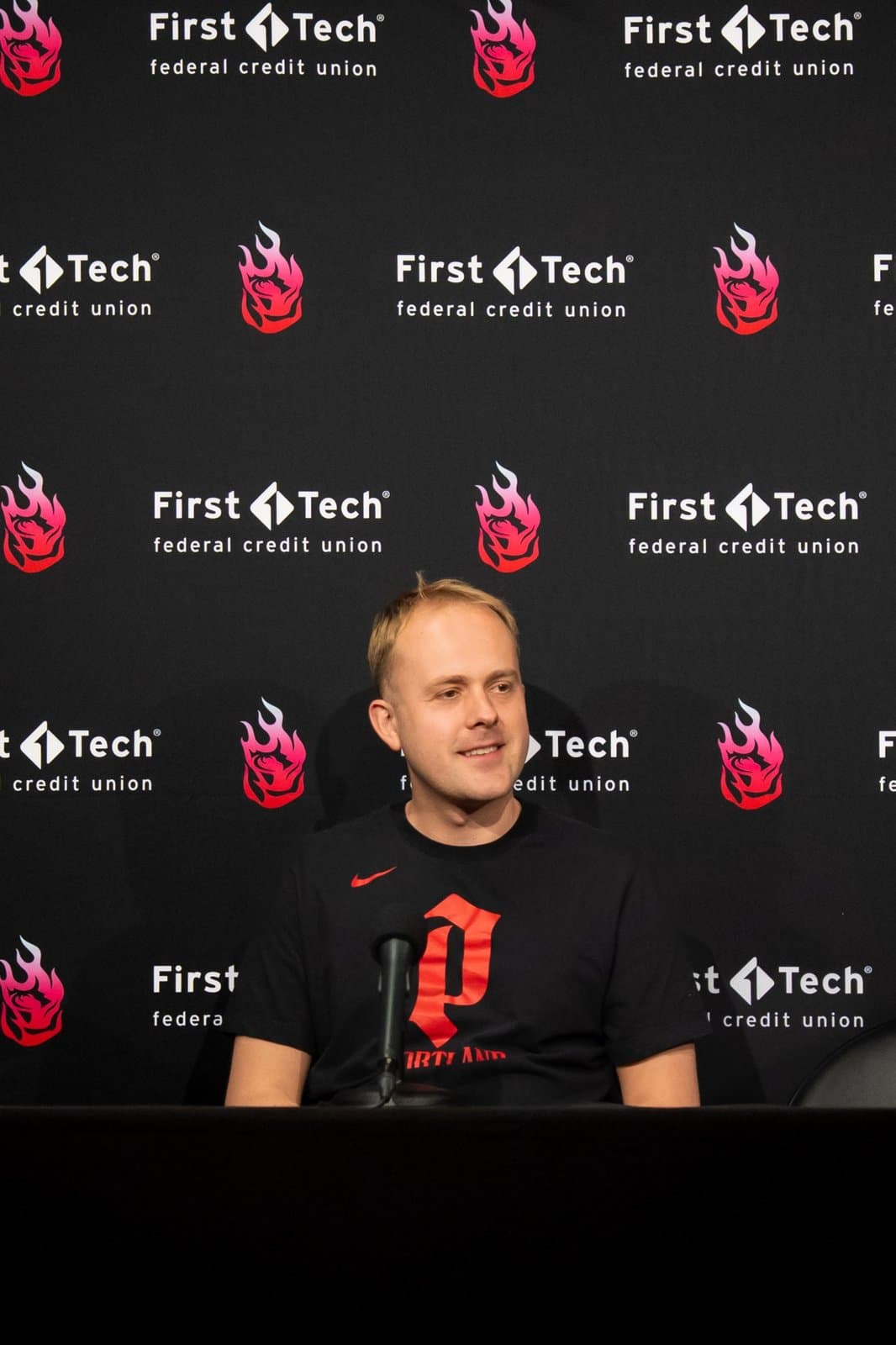
Alex Sarama
Founder, Transforming Basketball · Head Coach, Portland Fire
Alex Sarama is the founder of Transforming Basketball and Head Coach of the WNBA's Portland Fire. Previously, he served as Assistant Coach and Director of Player Development with the Cleveland Cavaliers.
His wider experience includes NBA Europe in Madrid, Paris Basketball in the EuroCup and the Rip City Remix, the Portland Trail Blazers' G League affiliate. Alex has delivered clinics in over 40 countries and has written three books on the constraints-led approach in basketball, including the Amazon bestselling Transforming Basketball (2024) and A Constraints-Led Approach to Coaching Basketball (2026).