
Coaching guide · Skill acquisition
The Constraints-Led Approach in Basketball
The constraints-led approach (CLA) is a way of coaching where, in its simplest form, you change the rules of the activities so players learn by doing, rather than by instruction. As the coach, you design the task, the rules, the scoring system and the format of the game (for example, player numbers and space) so that skills emerge as players solve real basketball problems.
14 min read
The constraints-led approach is becoming more popular at all levels, from the NBA and WNBA down to youth basketball. Our founder, Alex Sarama, worked under Kenny Atkinson for two years with the Cleveland Cavaliers, the first NBA team to go all in with this approach (The Athletic has a good introduction). In this guide, learn the essence of a CLA and how to apply it in practice.
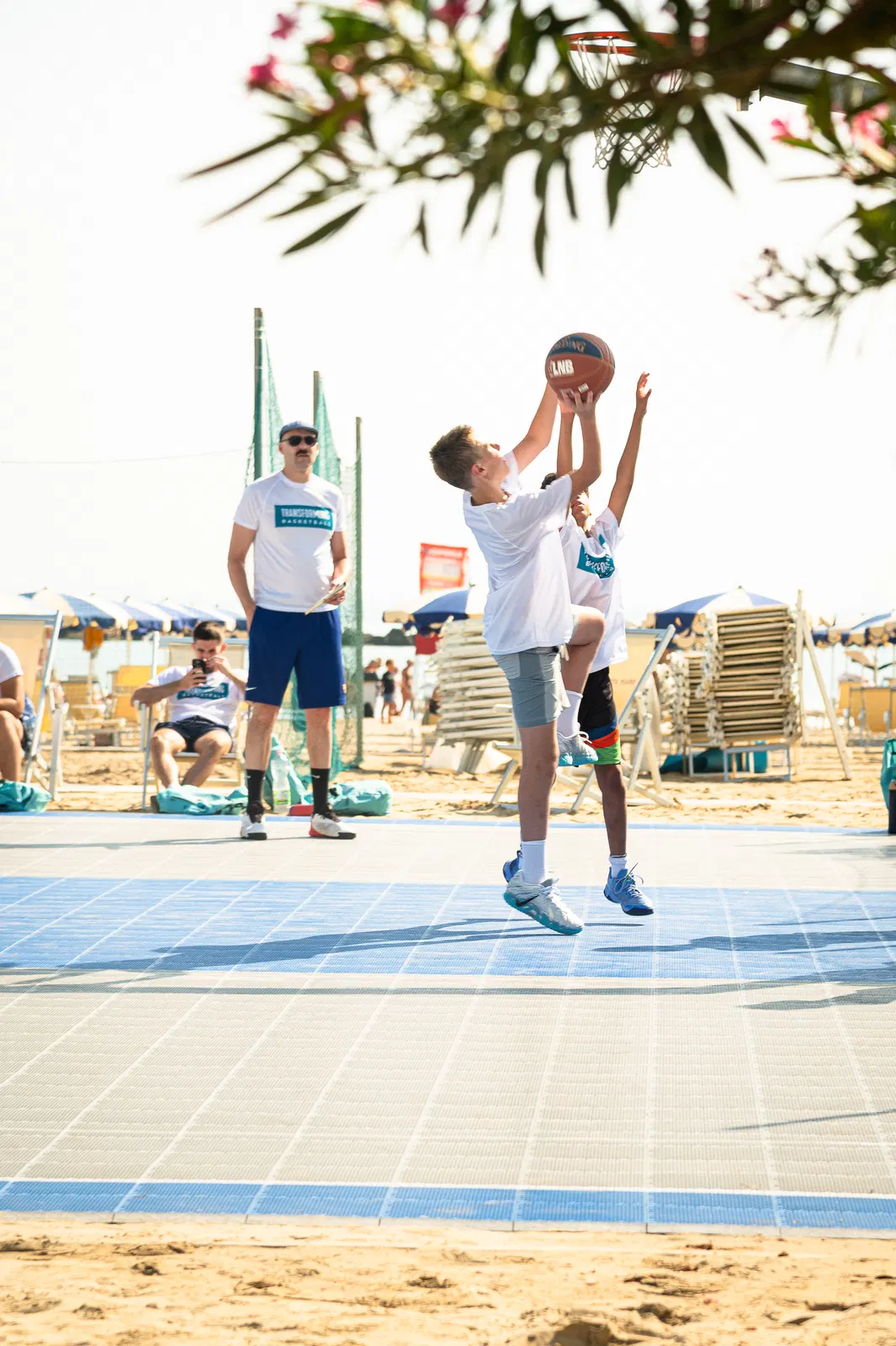
Traditional coaching, which we call the dominant approach, starts with coaches teaching a "correct" technique or pattern of play. The skill is broken into parts, practiced without defenders, and added back into the game later. The CLA starts from the game instead. Players practice against defenders and with teammates in everything they do, and the coach shapes what they learn by changing the conditions of the game, not by prescribing the movement. While many coaches may say the CLA has been done for years, there is a huge difference between playing live in a practice drill and how a CLA activity is delivered.
What Is the Constraints-Led Approach?
The CLA is a coaching methodology underpinned by ecological dynamics, a scientific framework that explains how human beings move by constantly interacting with their environment. Therefore, to use a CLA, you need an understanding of what ecological dynamics is.
The CLA is based on the researcher Karl Newell's constraint model: the interaction of individual, task and environmental constraints leads to movement solutions, or skills, emerging. Constraints are boundaries where players can explore and search for movement solutions.
| Constraint | What it includes | Basketball examples |
|---|---|---|
| Individual | Everything about the player | Height, wingspan, speed, strength, experience, confidence, fatigue |
| Task | The rules of the activity | How it starts, the number of players, the space, the scoring, the clock, the defensive coverage, your feedback |
| Environment | The setting around it | The ball and rim size, the court, noise and lighting, the team's culture |
Coaches can't change a player's height, but they control almost every task constraint. The CLA is the skill of choosing those constraints deliberately, watching what happens, and changing them again. Constraints don't cause a movement. They shape what's possible, nudging players toward some solutions and away from others.
You'll hear four common terms within the CLA methodology. Each one is relevant for the small-sided games you'll read about in this guide.
- Affordance: an opportunity for action, like a gap to drive or a teammate cutting free. Two players see different affordances in the same space: Steph Curry may read it as a chance to shoot, while Giannis Antetokounmpo reads it as a chance to drive. That's why expecting everyone to produce one common pattern is futile.
- Perception-action coupling: the link between what a player sees and what they do. Practicing moves 1-on-0 against nobody breaks that link.
- Self-organization: movement solutions emerge from the problem in front of the player, rather than being chosen in advance.
- Representative: practice keeps the information the player would find in the real game.

Free
Skill Acquisition Workshop
An online workshop on contemporary skill-acquisition principles for coaches.
An Example: Teaching Spacing with Constraints
Here is how that looks for spacing. In 3-on-3 Home Bases and Floor is Lava, nobody tells the players where to stand. The area inside the 3-point line is lava, so a player without the ball has 2 seconds to escape to a home base. The rule makes some positions worth more than others, and players work out the rest.
3-on-3 Home Bases and Floor is Lava
6 playersTeach spacing through two ideas: home bases (spots on the floor that stop one defender guarding two players) and floor is lava (the space inside the 3-point line).
How it works
- Mark five home-base spots on the floor.
- O1 can pass to either side to start. The defense starts inside the key, so the offense begins with an advantage.
- The offense plays with the principles of play it already knows.
Adapt it
- For novices, make the lava just the key.
- Give a player without the ball 2 seconds to escape the lava to a free home base, with +1 point for a successful escape.
- Call "Home Bases" whenever spacing is poor. Players have 2 seconds to get to a free home base, with +1 point for making it.
Watch for
- After a cut or a drive and kick, do players get out of the lava without being told?
What Counts as Skill?
The traditional view is that skill is a technique: a correct way to dribble, pass or finish that players learn on their own and then apply in games. The ecological view is that skill comes out of the interaction of the three constraints above. A skilled player sees the opportunities in front of them and acts on them, again and again, in different ways, whatever their crossover looks like in an empty gym.
This is why we reject the term muscle memory. Players use different techniques in games as the constraints change, so there is no perfect technique to store and replay. Many mistakes in games come from players not seeing or acting on the opportunities in front of them, not just technique. In a single pick and roll, the ball handler has to read the spacing, how close their defender is, the coverage, what the screener does and where the roller goes. A pick and roll run 2-on-0 contains none of that information, which is why our article on ecological dynamics argues for keeping defenders in practice.
Within a CLA lens, the word functional replaces the idea of a fundamental. A pass is functional if it gets to the right teammate, in a good spot, at the right speed. It doesn't matter whether it was a textbook chest pass. Nikolai Bernstein described how skilled performers solve the same problem again and again without repeating an identical movement, so the aim of practice should be to do the same. Read more in why we need to stop coaching fundamentals at all levels of the game.
Change One Constraint at a Time
The biggest difference with a CLA is how coaches intentionally change constraints frequently. Instead of using the same live games over and over, as coaches have done for decades, CLA coaches change constraints at a rapid rate in response to what is emerging in front of them. For example, the Smile 1-on-1 game shown below could be played in an infinite number of different ways by changing the constraints.
In Smile 1-on-1, two players play 1-on-1 inside the smile, the restricted area under the basket, with no dribbles. The table shows what happens when you start to introduce constraints.
| Constraint | What may emerge |
|---|---|
| Bursts: the offense stays on for a set burst | Creates more fatigue, better representing the cardio demands of basketball, where players play in short, intense bursts. |
| Scoring: 1 point for making the defense jump, 2 for a score, and a block resets the offense to zero | More pump fakes, more rim protection on defense. |
| One dribble allowed | Players create space by initiating contact, and the defense has to be stronger. |
| Different balls: size 5, size 7, size 9 | Players have to find a different touch and amount of force for each ball. |
| A two second shot clock | Faster play, more reps, and finishes played more powerfully, without time to evade or deceive the defense. |
An intention is what a player is trying to achieve within a possession, for example to score, advance the ball or find the open teammate. A constraint may make certain affordances more attractive than others. Used well, every constraint has a purpose behind it. So before you change the game, consider the intentions you want to see emphasized, then consider which constraints may nudge players towards them.
Common Misconceptions About the CLA
"So you just let them play?"
No. Rolling the balls out and playing the same 3-on-3 every day is a games-based approach, and without purposeful constraints it isn't much better than drills. A CLA coach picks a constraint for a reason, watches, and adjusts. Our small-sided games guide shows what that looks like.
"CLA coaches don't coach."
A CLA coach gives plenty of feedback, and it works as another constraint: it points a player's attention and intention somewhere. "Notice the help defender" is CLA feedback. "Elbow in, follow through" usually isn't. The approach asks a lot of a coach, because you respond to what happens in real time and don't follow a script.
"Beginners need fundamentals first."
No. The process of human movement is the same for a 7 year old beginner and a 35 year old pro. Beginners learn better in environments where perception and action are coupled, with players finding their own movement solutions instead of copying prescribed techniques. What changes is the difficulty. With beginners, keep the game and the defender, and make it easier: a large head start in a 1-on-1 (for example, the defense trailing by 2 feet), a defender who can only use one hand or isn't allowed to jump, more space, an extra teammate, or a lighter ball on a lower rim. Changing the ball and rim is called equipment scaling.
| Age group | Ball | Rim height |
|---|---|---|
| U8 | Size 5 | 8 feet |
| U10 | Size 5 | 8 feet 6 inches |
| U12 | Size 5 | 10 feet |
These recommendations come from A Constraints-Led Approach to Coaching Basketball (Routledge), written by Alex Sarama, Alex Lascu, George Vaz Rocha and Neil Houghton.
Our CLA for beginners guide, the youth basketball coaching guide and the U10 practice plan turn this into sessions. This video shows how to keep the game for beginners.
"It looks messy."
It often does, compared with a line drill. It should be productive messiness. If players are failing every rep, the coach scales the constraints. Progress is still measurable, through player development plans that name what is holding each player back and the games that target it.
This video covers the most common misreadings of the CLA.
How to Run It in Practice
Running a CLA practice is a continuous loop. Work out what is holding a player back, design a small-sided game that keeps bringing it out, watch what happens, change a constraint, and then go again.
Adapt Constraints to the Player
The real value of the CLA comes when you design constraints around a particular player. What a player needs is called a rate limiter: something very specific that prevents a player from being more skillful in a highly specific context. The more precisely you name it, the easier it is to design for. "Struggles to finish when a help defender arrives at speed" tells you what game to build: a 1-on-1 with a second defender coming from the weak side. "Needs to be a better finisher" doesn't. Here are some common rate limiters and a constraint to try:
| If the player… | Try this |
|---|---|
| Drifts into the paint and clogs the floor | Floor is lava: 2 seconds to escape to a home base, with +1 for making it |
| Only throws one kind of pass, or telegraphs it | Piggy in the middle: the passer goes to defense after a deflection |
| Doesn't finish well through contact | Smile 1-on-1 with the defender limited at first: one hand, holding a ball, or one jump |
| Only ever drives from above the three point line | Every drive has to start from a different spot, including the corners |
Design a Game That Brings It Out
Choose the start, the numbers, the space, the scoring and the clock so the opportunity you care about keeps appearing. One example: every small-sided game and scrimmage can be won on points, but a team that concedes two rejects (a ball handler refusing the screen by going the other way) loses. The risk is over-constraining. A two dribble limit, for instance, can wipe out solutions that would otherwise show up.
Simplify, Don't Decompose
When players struggle, resist the urge to stop and drill it 1-on-0. That is task decomposition: breaking the game into pieces and removing the defenders and teammates players read opportunities from. Task simplification keeps the live defense and makes the game easier. If you feel you have to teach something because it isn't showing up, the constraints probably aren't doing their job yet. Here are different ways you can constrain the defense:
- One jump only
- Two steps only
- One hand only
- Live, but holding a bib or ball
- Can distract but not block or steal
- Can only force a miss with body position
This full practice shows how often the coach changes the game rather than stopping it.
Replacing Two Classic Drills
The quickest way to start is to take a drill you already run and give it back its defense. Smile 1-on-1 uses bursts, where one player stays on for a set time or number of reps instead of one possession and back in line.
Smile 1-on-1 (instead of the Mikan drill)
2 playersRepetitions at the rim against a defender, playing continuously off the rebound after a make or miss, with a different decision every time.
How it works
- Two players play 1-on-1 inside the smile, the restricted area under the basket. No dribbles.
- The same offense stays on continuously for 30 seconds or six finishes in a row. One point per score.
- After a make or a miss, the offense rebounds and goes up again from wherever the ball dropped.
Adapt it
- For a player who avoids their left: left hand only for one round.
- Too hard for the offense: the defender can't block, holds a ball, or can't jump.
Watch for
- Is the offense finding functional solutions to finish successfully?
Piggy in the middle (instead of passing lines)
3 playersA straight chest pass in a passing line almost never happens in a game. A defender between passer and receiver changes every pass.
How it works
- Two players pass while one defends in the middle.
- If the defender deflects it, or the receiver needs more than two steps to catch it, the passer goes to defense.
Adapt it
- Add a second defender and play keep-away: eight passes in a row in a small space.
- Turn it into pass touchdown, where a team scores a point for getting the ball into the opposing baseline area.
Watch for
- Are players finding different passing angles, speeds and trajectories?
Large Groups
The CLA works with a full gym if the games rotate quickly. We'd rather have three games of 1-on-1 running at once, with a bit of mess, than players waiting in a layup line. For more on full gyms, see our large group guide and the one basket practice guide.
Key Influences
- Karl Newell (1986) proposed the model of interacting constraints (individual, task and environmental) that shape how coordination and control emerge in human movement.
- James J. Gibson (1979) founded ecological psychology and introduced affordances: what the environment offers a person, the opportunities for action they can perceive.
- Nikolai Bernstein (1967) described the degrees of freedom problem and "repetition without repetition": skilled performers solve the same problem again without repeating an identical movement.
- Egon Brunswik (1955) proposed representative design, which Pinder, Davids, Renshaw and Araújo (2011) adapted for sport as representative learning design: how well practice represents the demands of the game.
- Araújo, Davids and Hristovski (2006) set out ecological dynamics, which brings together ecological psychology and dynamical systems theory.
- Chow, Davids, Hristovski, Araújo and Passos (2011) described nonlinear pedagogy, which puts ecological dynamics into practice through the manipulation of constraints.
For a deeper read, an introduction to evidence-based coaching walks through the theory, and where to start if you're new to the CLA is the practical first step we recommend.
Questions Coaches Ask
What is the constraints-led approach in basketball?
A coaching framework where coaches change the constraints of practice (the start, space, scoring, clock, players and defense) so functional solutions emerge, instead of teaching one correct technique. It's based on ecological dynamics and Karl Newell's model of individual, task and environmental constraints.
What are the three types of constraints?
Individual constraints are about the player, such as height, speed, experience and fatigue. Task constraints are the rules of the activity, such as space, scoring, time and number of players. Environmental constraints are the setting, such as the ball, rim height, court and team culture.
Is the constraints-led approach the same as small-sided games?
No. Small-sided games are the main tool, but the CLA is the reasoning behind how you design and change them. Playing the same game unchanged every day is a games-based approach, not the CLA.
Can you use the CLA with beginners?
Yes. Beginners learn the same way as professionals; the difficulty changes. Use lighter balls, lower rims, more space, numerical advantages and limited defenders so players can succeed in a real game from the start.
Do professional teams use the constraints-led approach?
Yes. The Cleveland Cavaliers were the first NBA team to openly embrace it; Fear the Sword covered how the Cavs used it. Alex Sarama now coaches the WNBA's Portland Fire with the same approach, which ESPN and Forbes have both written about.
Take It to Your Next Practice
Free
Skill Acquisition Workshop
An online workshop on contemporary skill-acquisition principles for coaches.
Introduction to the Constraints-Led Approach
$49 USD
Explore the framework behind representative practice with Alex Sarama's Introduction to the Constraints-Led Approach clinic.
The Small-Sided Games Book
$49 USD
Build on your free games. Build your practice around 50+ small-sided games, with diagrams and constraints you can adapt to your players.
Sources
- Transforming Basketball, Alex Sarama (Wiley, 2024)
- A Constraints-Led Approach to Coaching Basketball, Sarama, Lascu, Vaz Rocha and Houghton (Routledge)
- Transforming Basketball podcast, episodes 5, 26, 33, 79 and 101
- Harnessing Evidence-Based Basketball Coaching
- Newell (1986), Constraints on the development of coordination, in Wade and Whiting, Motor Development in Children
Behind the methodology
About Alex Sarama
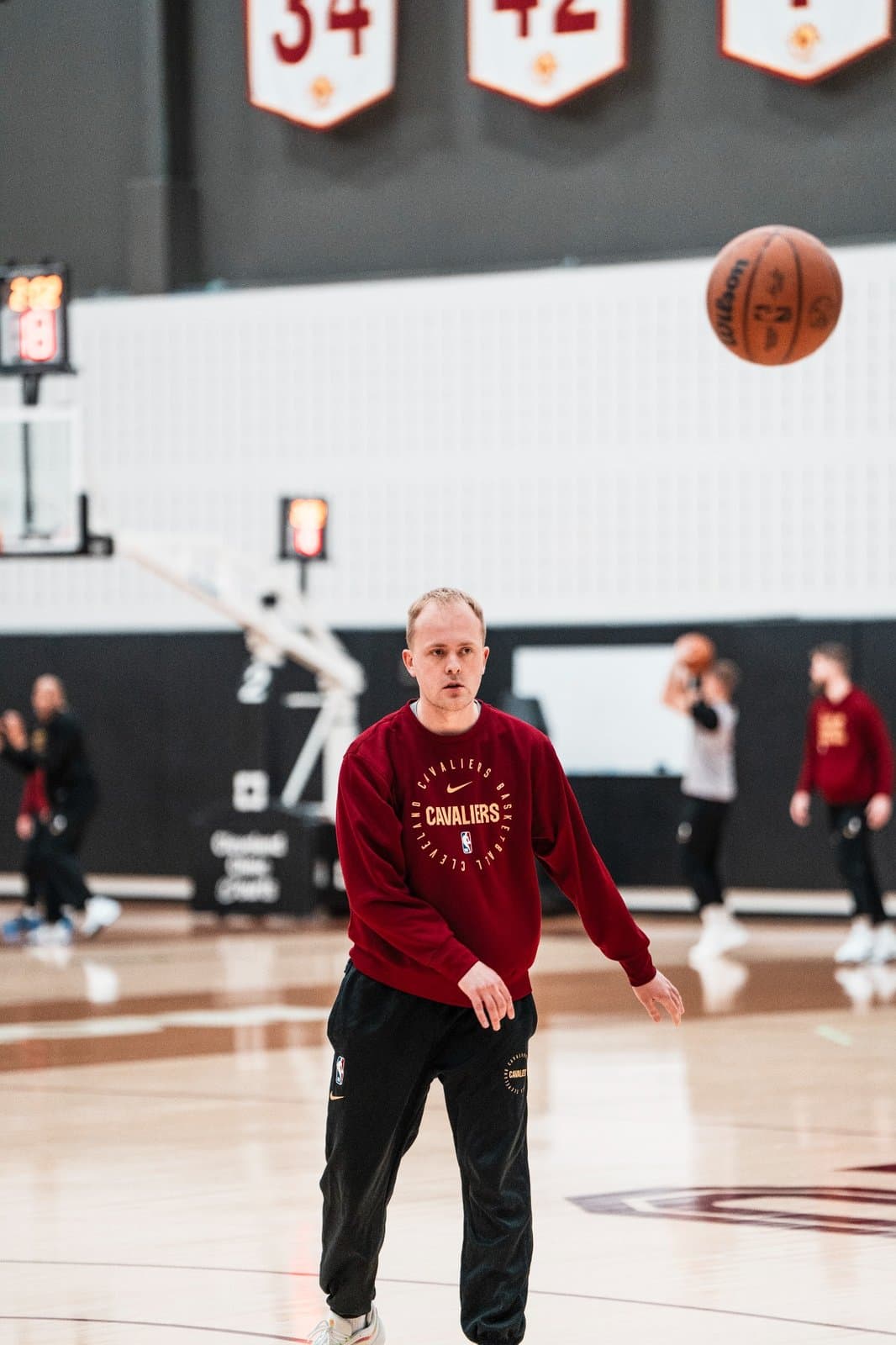

Alex Sarama
Founder, Transforming Basketball · Head Coach, Portland Fire
Alex Sarama is the founder of Transforming Basketball and Head Coach of the WNBA's Portland Fire. Previously, he served as Assistant Coach and Director of Player Development with the Cleveland Cavaliers.
His wider experience includes NBA Europe in Madrid, Paris Basketball in the EuroCup and the Rip City Remix, the Portland Trail Blazers' G League affiliate. Alex has delivered clinics in over 40 countries and has written three books on the constraints-led approach in basketball, including the Amazon bestselling Transforming Basketball (2024) and A Constraints-Led Approach to Coaching Basketball (2026).