Transforming Basketball
Join MembershipAlready a member? Log in

Coaching Guide

U10 Basketball Practice Plan

A U10 basketball practice should give players repeated opportunities to move, handle the ball and interact with opponents. Players of the same age can differ considerably in experience, confidence and physical capabilities, so the conditions need to be adjustable.

3 min read
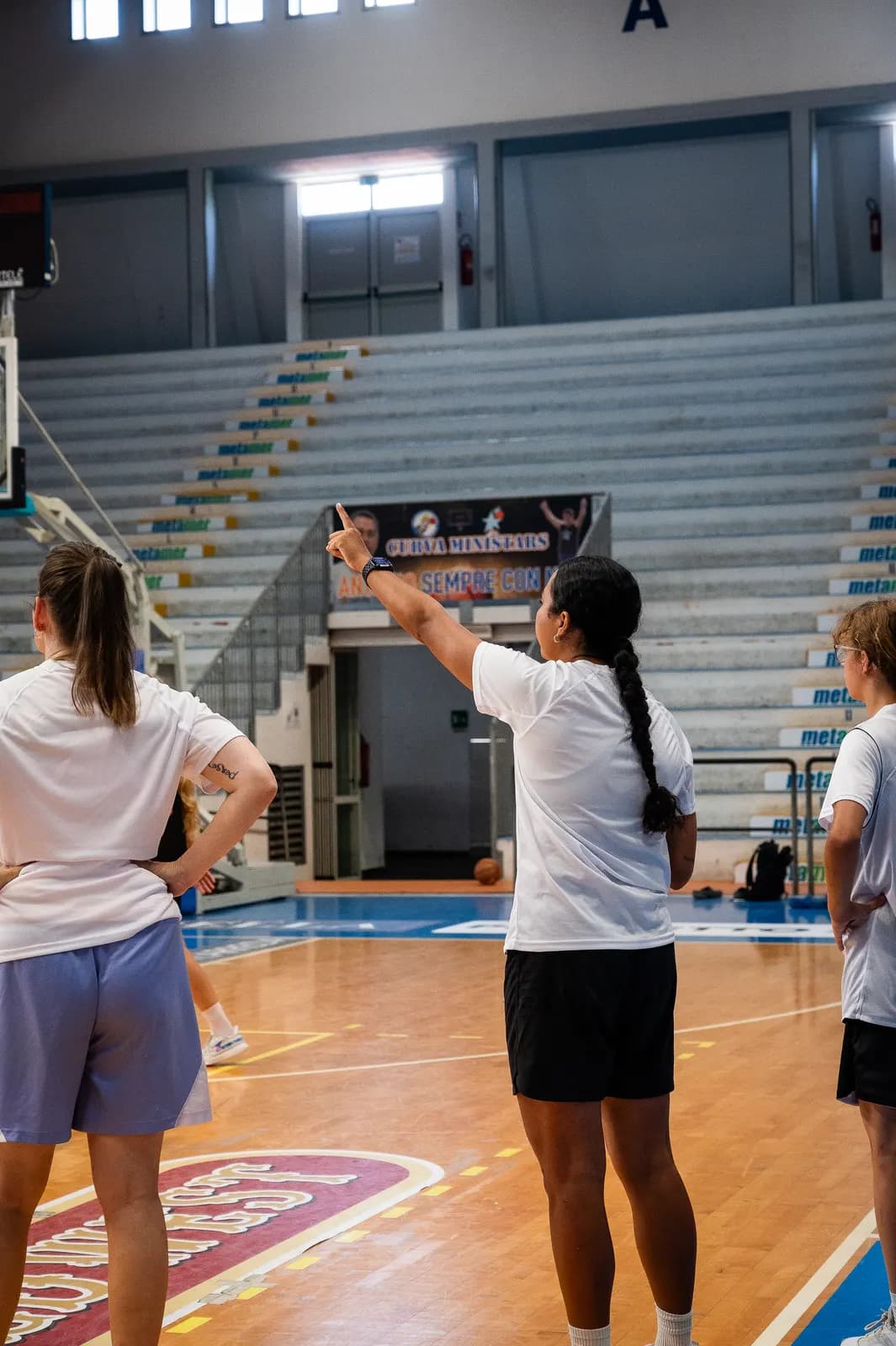
A coach giving a short instruction to a group of young players at the 2026 Transforming Basketball camp in Roseto

The example below combines exploration with the ball, constrained defenders and small-sided play. Use it as a starting point, then adjust the space, equipment and defensive pressure for your players.

A Suggested 60-Minute Session

Dribble and Explore

Give each player a ball and a shared area in which they can move without bumping into others. Begin with room to explore, then introduce one signal at a time. One whistle could mean a jump stop; two could mean changing hands twice. Let players find ways to make the changes.

Another option is to ask players to exchange a high-five as they dribble past one another. Watch whether the space and speed allow them to keep playing. Enlarge the area if the traffic is too difficult.

A defender does not have to appear in every beginner activity. Other moving players and changing tasks can already present a varied challenge.

What YOUTH PRACTICES Really Need to Look Like - U11 Dribbling Activities with George VazU11 examples to adapt to your younger players.

Protect the Ball Against a Dribbling Defender

Work in pairs inside marked spaces. Both players dribble, but one tries to steal the other's ball. The defender's own dribble limits how easily they can apply pressure. Swap roles frequently so both players explore each task.

If the offensive player immediately loses the ball on nearly every attempt, give the pair more space. If protecting it becomes easy, try removing the defender's ball for a short round.

Keep the task simple enough for the children to start after a brief demonstration. You can change the challenge once you see how they play.

Rock-Paper-Scissors Finishing

Start a pair near a basket with one ball on a floor marker. The rock-paper-scissors winner takes the ball and becomes the offense. The defender first steps back to touch a second marker, then recovers to defend the basket.

Change the distance to the defender's marker to change the advantage. Give the offense more time if the defender repeatedly stops the possession before a scoring chance develops; reduce the delay when the finish becomes too easy.

Allow the offensive player to choose how to finish. Use different starting locations and opponents. Keep groups small and use additional suitable baskets where available so children spend more time playing than waiting.

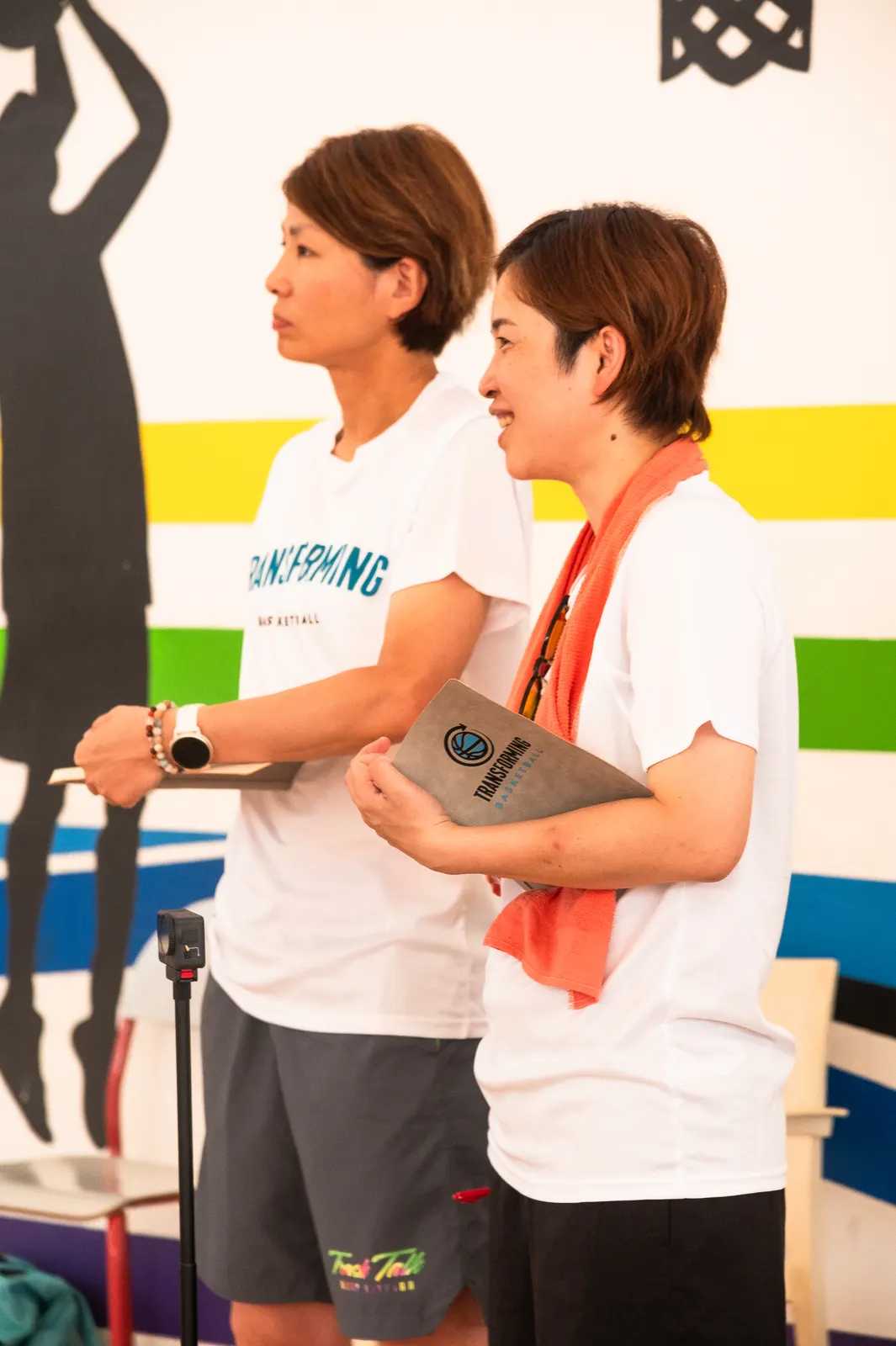
Coaches watching a practice game from the sideline at the 2026 Transforming Basketball camp in Roseto

Small-Sided Play with One Useful Constraint

Play 2-on-2 or 3-on-3 and begin with ordinary basketball. Observe before adding a rule. If everyone stands near the ball, try a simple spacing cue: the floor inside the paint is lava when players are standing still. They can still move through it and finish at the basket.

Floor markers can help players recognize available places to spread out. Put them at distances where the children can pass and catch; treat them as starting references, not places where players must remain rooted.

If one player dribbles through every possession, try a temporary five-dribble constraint before passing. Use it to invite teammates into play, then remove it and see what happens. Avoid adding several rules at once.

Transforming KnockoutA related example of changing a familiar game; adapt it to your group.

Adjust the Challenge for Individual Players

In rock-paper-scissors finishing, move the defender’s recovery marker farther away for a player who needs more time to attack. Bring it closer when another player can reach the basket without being challenged.

In ball-protection games, the defender can dribble their own ball to reduce the pressure on the offense. Remove that restriction when the offensive player is ready for a greater challenge.

Demonstrate the immediate task, let players try it and then adjust. Use a lower basket or a more suitable ball where needed so players can explore scoring opportunities within their capabilities.

How to Run a Basketball Practice using the CLASee how live practice activities give a coach opportunities to observe and adjust.

Explore U10 Practice

Keep Learning

Free

21 SSGs for Your Next Practice

21 small-sided games you can run and adapt at your next practice — representative, game-like activities built around the Transforming Basketball approach.

We'll email you the resource and occasional coaching insights. Unsubscribe anytime. Privacy policy.

Resource language: English. The free download and follow-up emails are currently in English only.

Cover of the Small-Sided Games Book PDF.

The Small-Sided Games Book

$49 USD

Go beyond your first 21 games. Build your practice around 50+ small-sided games, with diagrams and constraints you can adapt to your players.

U12 X20 Practice Plan Bundle

$99 USD

Twenty age-specific practice plans for U12 — each with activities, constraints, feedback and scoring.