
Coaching guide · Practice organization
Basketball Practice with One Basket
Got one hoop and twelve players? You still don't need layup lines. Several small games can share the rim while a three-team rotation keeps time on task high, and the rest of the floor is free for games that don't need a basket at all.
13 min read
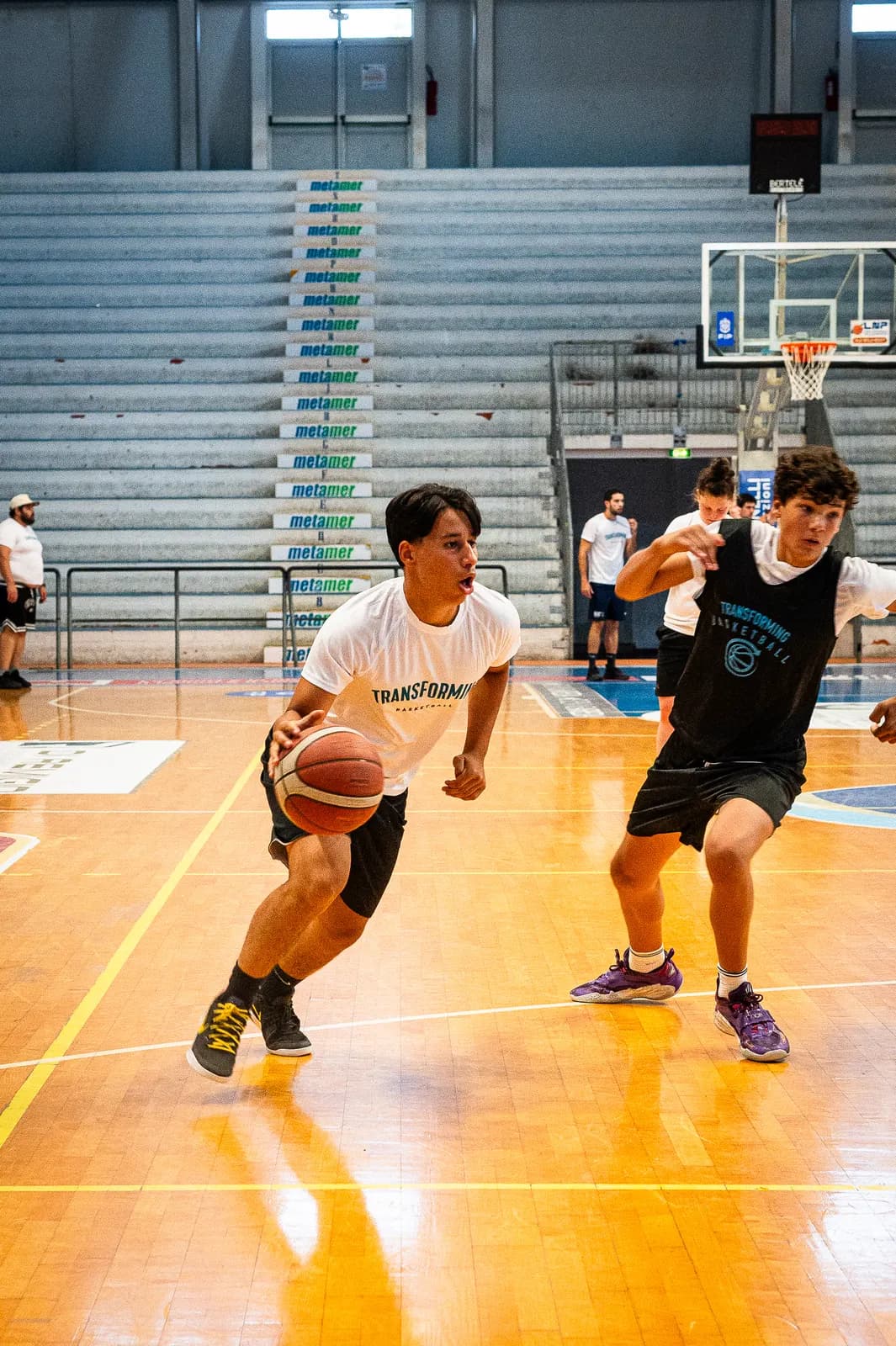
Alex Sarama did much of his early learning at one hoop. At St. Peter's Catholic School in Guildford, England, the outdoor hoops stood at the turning point of the school buses, each at a different height. At every break, Alex and his friends played on the only one the buses hadn't damaged. In the introduction to his first book, Transforming Basketball, which was read on EP57, he describes how they played: an imaginary three-point line, teams of mixed ages, sometimes 3-on-3, 5-on-3 or 8-on-8.
“We figured it out based on whoever was present.”
Looking back, he wrote that virtually all his improvement came from his backyard and those break-time games, while his organized practices, built on dynamic stretching, the shell drill, the three-player weave and 1-on-0 finishing, "simply limited me or possibly even made me worse."
Nobody at that hoop stood in a line, and nobody at yours needs to either. Later, coaching and running clinics in more than 40 countries, Alex kept seeing the same habits in very different gyms. One item on the list in the book's introduction is "players waiting in lines or practicing on one basket with low time-on-task rates." One hoop is common. Low time on task doesn't have to come with it.
The Real Problem Is the Waiting
Transcending Basketball measures practice by time on task: how much of the session players spend active, compared with waiting around or listening to instructions. The book names "keeping all the players on one basket for certain drills" as one of the habits that drags it down. It's the drill that causes the waiting. Run a layup line or around-the-horn at one basket and most of the group is standing still.
Youth coaches see this every week. On EP27, Alex described the familiar picture of a coach with a group of seven-to-ten-year-olds "keeping them all on one basket so they're easier to manage", and called it unrealistic for that age. On EP95, Jon Yu remembered seeing one hoop with 30 kids at it: "It's a lot of standing, a lot of lines."

Free
21 SSGs for Your Next Practice
21 small-sided games you can run and adapt at your next practice, each one keeping the defenders, decisions and scoring of the real game.
How Many Games Can One Rim Hold?
On EP37, a solo episode on drill makeovers, Alex said that if you're short of baskets, you're better off playing different advantage 1-on-1 games at the same hoop than running a layup line, as long as players understand when to start their rep. His limit for a normal setup is three 1-on-1 games at once.
“I would actually rather that we have maybe 3 games of one-on-one going on at a time, and there's an element of chaos versus players waiting in a layup line.”
When space is tight, he has run four:
Four 1-on-1s on one rim
8 players, one basketKeep time on task high when you have a lot of players and very few baskets. Alex has used it with high numbers and only two baskets in the gym.
How it works
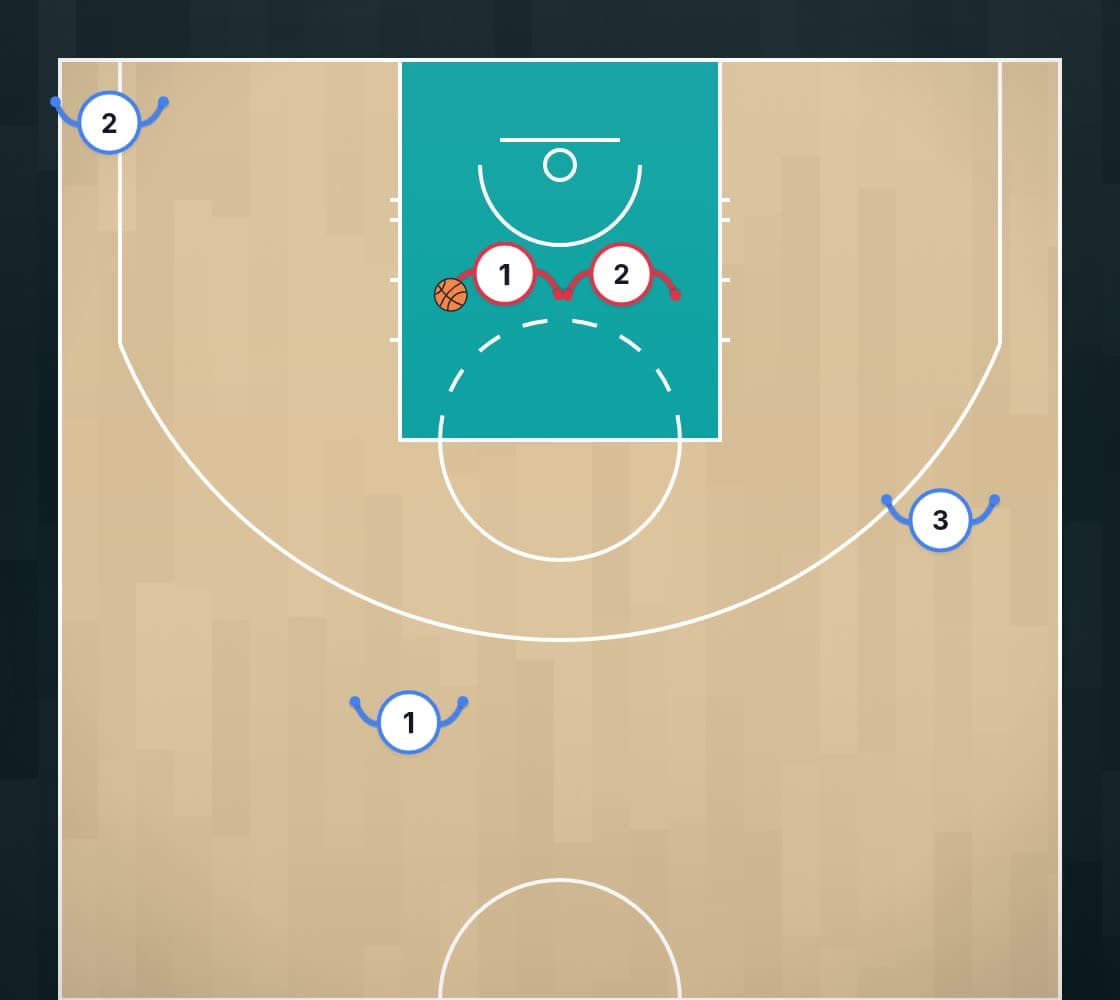
- Run four 1-on-1 games at the same time at the same rim, starting from different spots, such as the wings and corners.
- The games starting on the right wing and the left corner can score anywhere.
- The games starting on the left wing and the right corner can only score outside the paint.
Adapt it
- Alex's general advice for one hoop is to play different advantage 1-on-1 games. Our advantage starts article has a set of starts to choose from.
Watch for
- Are players finding their own space and timing their reps around the other games?
- Do the outside-only games still produce drives that create a shot?
At a live clinic recorded for EP13, a coach asked Alex how to keep time on task high with 20 or 30 teenagers who all want to get going. Alex's answer was that everything he was about to show could be done with 10 or 12 players on a hoop. He'd run tryouts at the Lions for around 120 players, maybe 140 on one day, with four hoops: "we made it work." The first game he demonstrated was this one.
Jungle finishing
10–12 players, one basketDrive and finish at the rim against live defenders, in bursts with almost no waiting.
How it works
- Three defenders stay on defense for a burst of 45 seconds or a minute. Everyone else is on offense.
- Offensive players can go at any time, but must drive from a different spot outside the three-point line each time.
- Only gold-medal shots count: finishes inside the smile (the restricted area).
- The first offensive player to score four layups wins. Players must call out their score each time (1, 2, 3, 4) or it doesn't count.
- Split the defenders by space: one can only defend outside the paint, one only in the paint but not in the smile, and only the third can defend in the smile.
Adapt it
- When players take the defenders' roles, give the defense one point per stop and let them keep a running score.
Watch for
- Are drivers picking different starting spots and reading which defender is in their way?
Alex's comment as the game ran: "you can see the time on task, it's sky high, and we get dribbling, finishing at the same time."
Bursts: Five Players, One Rim, No Resets
A burst keeps the same players in the same roles for a set time, usually a minute, while the reps run back to back. Nobody walks back to a line between reps, which is exactly what one basket needs. Two bursts from Transforming Basketball each use five players. Run one at the rim and a passing game away from it, then swap.
Jungle Shooting 3-on-2
5 players, one basket, two ballsShoot threes against live defenders, the way shots actually come in a game.
How it works
- Three shooters start anywhere around the arc. Two defenders start in random spots. The offense has two balls.
- Roles stay the same for 60 seconds.
- The offense can only shoot threes, but can move, drive and pass. Defenders try to block shots and steal passes.
- Everyone rebounds. Play continues once the ball is cleared outside the arc.
- The offense wins with five BRADs (back rim and down) or swishes in the minute. The defense wins with any three blocks or turnovers.
Adapt it
- Change the numbers: four shooters against three defenders, with two, three or four balls.
- Use half of the half court.
- Constrain the defenders' areas: one in the paint, two on the perimeter.
- Allow rim finishes too.
HC Bursts 3-on-2
5 players, one basketThe offense turns a numbers advantage into a good shot. The defense learns to stop it a player down.
How it works
- Three offensive players start around the arc. The two defenders start with the ball and pass it to the offense to go live.
- Play until the defense gets the ball or the offense scores. Then the offense sprints to new spots outside the arc for the next rep.
- Roles stay the same for one minute, then change.
- The offense calls its score after every basket, or it doesn't count.
Adapt it
- Only rim finishes and catch-and-shoot threes count.
- Scores off ghost cuts are worth double.
- Five points to the defense for every stop or defensive rebound.
- Floor is lava: after a drive and kick, the offense has three seconds to get out to the weak-side dunker spot or the perimeter, or it's a turnover.
Nine or Twelve Players: Teams, Not Lines
Once you move to team games, have a team waiting instead of a line. With a large group, use 3-on-3 or 4-on-4 with a team ready to come on. Keep the waiting team outside the playing area and agree before you start when they enter.
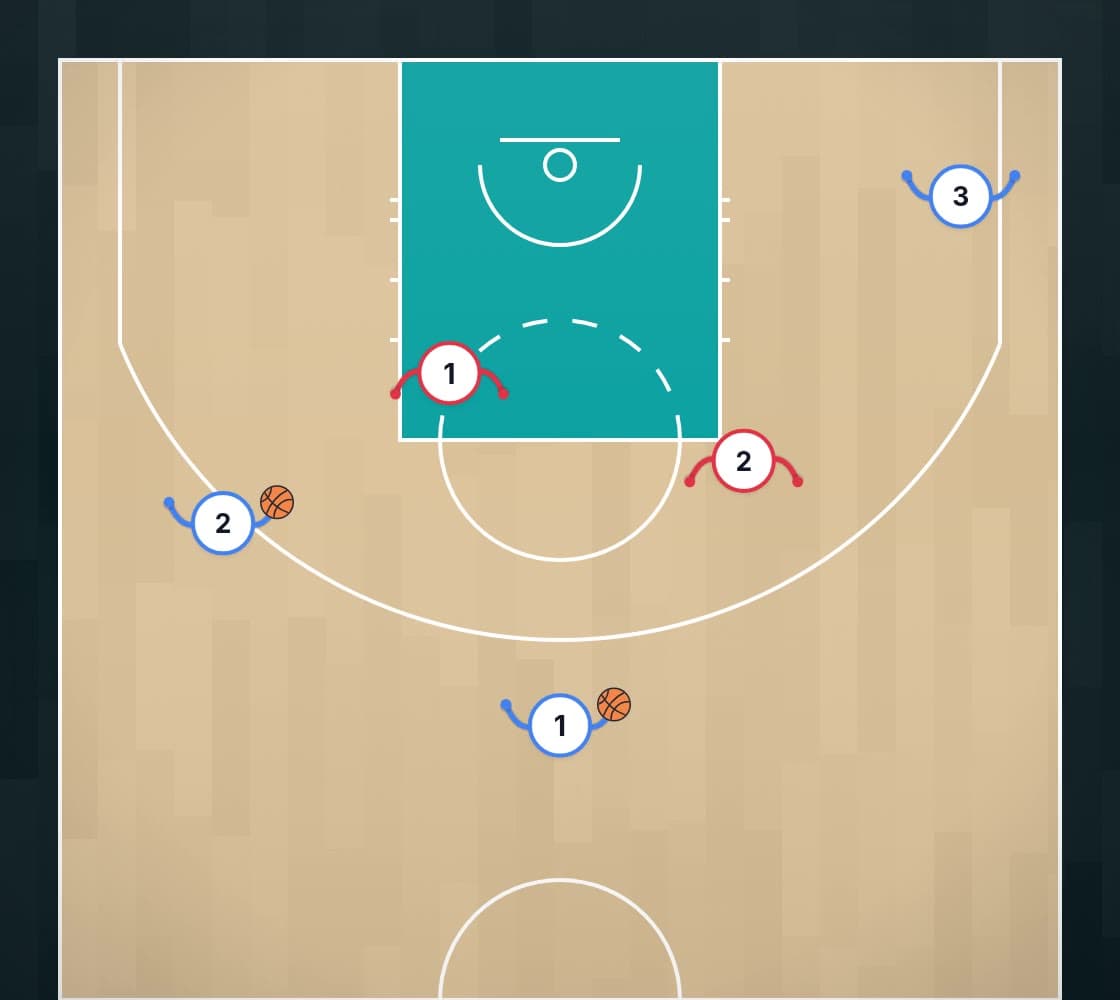
For 12 players, our default is 4-on-4-on-4 Defensive Shutdown: three teams of four, two playing on the half court and the third waiting, first team to five defensive stops. The full rules are in our small-sided games guide. Its rotation (a stop keeps the defense on, a score sends the scoring team to defense) means you work on creating an advantage, defending it and securing the rebound in one game.
With nine players, Alex uses a three-team version of his own as a replacement for the shell drill:
3-on-3-on-3 rapid fire
9 players, one basketBuild the team's concentration and commitment on defense without a defensive drill, by scoring the game for the defense.
How it works
- Half-court 3-on-3, with the third team coming on.
- The first team to five stops on defense wins.
- If you get a stop, you stay on defense. If you score, you go to defense.
Adapt it
- Constrain the offense to particular triggers when you need to work on your coverages against them.
- Constrain the space to make it look more like a real possession.
- With fewer players and two baskets, run two games of 3-on-3 instead.
Watch for
- Do the defenders talk and rotate, or do open shots keep sending them off?
Keep an eye on how playing time is spread. If one team spends too long waiting, adjust the rotation so every team gets repeated chances to play.
Keep the Rotation, Change the Constraint
Once players know the rotation, leave it alone. You can change the emphasis of a 3-on-3 or 4-on-4 game without reorganizing the group. To work on coverages, specify the trigger the offense has to use and the coverage the defense has to play, so players work on coverage solutions while their teammates work on spacing and off-ball movement. To emphasize rebounding, use the Shutdown rule that subtracts a stop when the defense gives up an offensive rebound.
Because players already know where to stand, the new constraint gets their attention, and no practice time goes on explaining the rotation.
“Unless rotating in an inefficient way, it is best to save time and promote problem-solving and communication by allowing players to figure it out.”
Alex's EP37 habit of having two ways to win works well here too: a team wins at 12 points, or by forcing three turnovers. A team on 11 points that commits its third turnover loses. Offense and defense are both live in every game, so you don't need separate offensive and defensive segments to share out the one rim.
Keep Rebounds Live to an Outlet
In the games at the basket, let the rebounder find a teammate after securing possession. It keeps the rebound tied to the next decision, the outlet pass, and gives teammates a reason to get open. Where space allows, add a breakout dribble.
This only covers the start of transition. Players still need full-court play to advance the ball against a recovering defense, which one basket can't give you. The same goes for Advance the Ball, the large-group game Alex describes for big numbers, which needs two baskets. Its setup is in using small-sided games with large numbers.
Use the Floor Away from the Hoop
If you have a separate area, part of the group can work on passing without the basket. Transcending Basketball suggests replacing chest passes in lines with piggy in the middle, the playground game, because players pass at different angles, speeds, heights and spins.
“Trying to drill specific pass techniques makes little sense when instead the coach can create environments where various passing solutions emerge.”
2-on-1 keepaway
3 players per group, no basketPass and support against a defender while the basket is in use.
How it works
- Two players pass while one defends.
- If the defender deflects the ball, or the receiver needs more than two steps to collect it, the passer becomes the defender.
Adapt it
- Harder: add another defender or reduce the space. With a second defender, the book suggests keep-away to eight passes in a row in a small space.
- Easier: increase the space or give the offense an extra player.
- Pass touchdown: one team scores a point by getting the ball to the other baseline.
Watch for
- Are players finding different passing angles and moving to give the passer a window?
For a bigger group off the basket, the warm-up chapter of A Constraints-Led Approach to Coaching Basketball uses a tag game that only needs one ball. The book's note for novice teams fits most one-hoop gyms: warm-up time is short, and avoiding traditional layup lines matters.
4-on-4 No Dribble Tag
8 players, no basketWarm up with passing, movement and some quick thinking, away from the hoop.
How it works
- Two teams of four, or whatever your numbers allow.
- The offense passes and moves. The defense tries to tag the player with the ball.
Adapt it
- Add a second ball, if you have one.
- Everyone must stay inside the three-point line.
- Play 30-second bursts, then switch. Most tags wins.
- Allow one dribble after the catch.
George Vaz's three-player passing warm-up from the best warm-ups for basketball practices works away from the hoop too: one player dribbles out, jump stops and pivots, a second defends the pass, and the third receives. Our passing drills guide has more.
A Shooting Game for the Whole Group
Knockout is the classic one-hoop game, and also a game where the players who go out stop playing. Our version keeps them in.
Transforming Knockout
Whole group, one basketA shooting game at one basket where players who are knocked out keep playing.
How it works
- Round one: nobody goes out. Players try to score as many points as possible in a set time.
- Next round: players go out as in normal knockout, but become extra defenders who try to block gold-medal shots (finishes inside the smile).
Watch for
- As the defenders pile up, do shooters change where and how they finish?
For the session around these games, our practice planning guide covers how to write the rotation into the plan, and the small-sided games guide has more formats that fit a half court.
Small-sided games library
Games from This Guide in the Library
Questions Coaches Ask
How do you run a basketball practice with one hoop?
Avoid layup lines and other drills where most of the group waits. Run several small games at the same rim, use a three-team rotation for team play, and give part of the group a passing game in a separate area. Keep the rotation the same and change the constraints to change what players work on.
How many players can use one basket at once?
Alex Sarama has said that everything in his EP13 live clinic could be done with 10 or 12 players on a hoop. He's run up to three 1-on-1 games on one rim, and four when space is tight, with two of the games only allowed to score outside the paint.
What is the best game for 12 players and one basket?
4-on-4-on-4 Defensive Shutdown. Two teams play while the third waits outside the playing area, and the first team to five defensive stops wins. A stop keeps the defense on; a score sends the scoring team to defense.
What can players do when they're not at the basket?
Passing games such as 2-on-1 keepaway, played in a separate area. If the defender deflects the ball or the receiver needs more than two steps to catch it, the passer becomes the defender. Keep the area clear of players driving or rebounding.
What are good rotations for 9 players at one basket?
3-on-3-on-3 rapid fire: half-court 3-on-3 with the third team waiting, first team to five defensive stops wins. A stop keeps you on defense and a score sends you to defense.
What can't you practice with one basket?
Full-court transition. You can keep rebounds live to an outlet and add a breakout dribble, but players still need full-court play to advance the ball against a recovering defense. Large-group games such as Advance the Ball also need two baskets.
Take It to Your Next Practice
Free
21 SSGs for Your Next Practice
21 small-sided games you can run and adapt at your next practice, each one keeping the defenders, decisions and scoring of the real game.
The Small-Sided Games Book
$49 USD
Build on your free games. Build your practice around 50+ small-sided games, with diagrams and constraints you can adapt to your players.
Sources
- Transcending Basketball, Alex Sarama (Wiley, forthcoming): chapters 3, 4, 5 and 6 and the glossary
- Transforming Basketball, Alex Sarama (2024): introduction, as read on EP57
- EP57: The Book is OUT!
- Transforming Basketball, Alex Sarama (2024): introduction and chapter 8 (Jungle Shooting 3-on-2, HC Bursts 3-on-2)
- A Constraints-Led Approach to Coaching Basketball, Sarama, Lascu, Vaz Rocha and Houghton (Routledge, forthcoming): 3.6.1, warm-ups (4-on-4 No Dribble Tag)
- EP37: How to Improve ANY Basketball Drill
- EP13: A Deep Dive Into the Constraints-Led-Approach (Live Clinic)
- EP27: Basketball Practice Ideas for U10's with Sam Funnell
- EP95: Developing a Youth Program with Jon Yu & Neil Houghton (Part 2)
- Using Small-Sided Games and the CLA in Large Numbers, Alex Sarama
- The Best Warm-Ups for Basketball Practices, George Vaz
- Uehara, L., Falcous, M., Button, C., Davids, K., Araújo, D., de Paula, A. R. and Saunders, J. (2021), "The Poor “Wealth” of Brazilian Football: How Poverty May Shape Skill and Expertise of Players", Frontiers in Sports and Active Living. doi:10.3389/fspor.2021.635241
- Robertson, S. and Woods, C. T. (2021), "“Learning by Design”: What Sports Coaches can Learn from Video Game Designs", Sports Medicine - Open. doi:10.1186/s40798-021-00329-3
Behind the methodology
About Alex Sarama
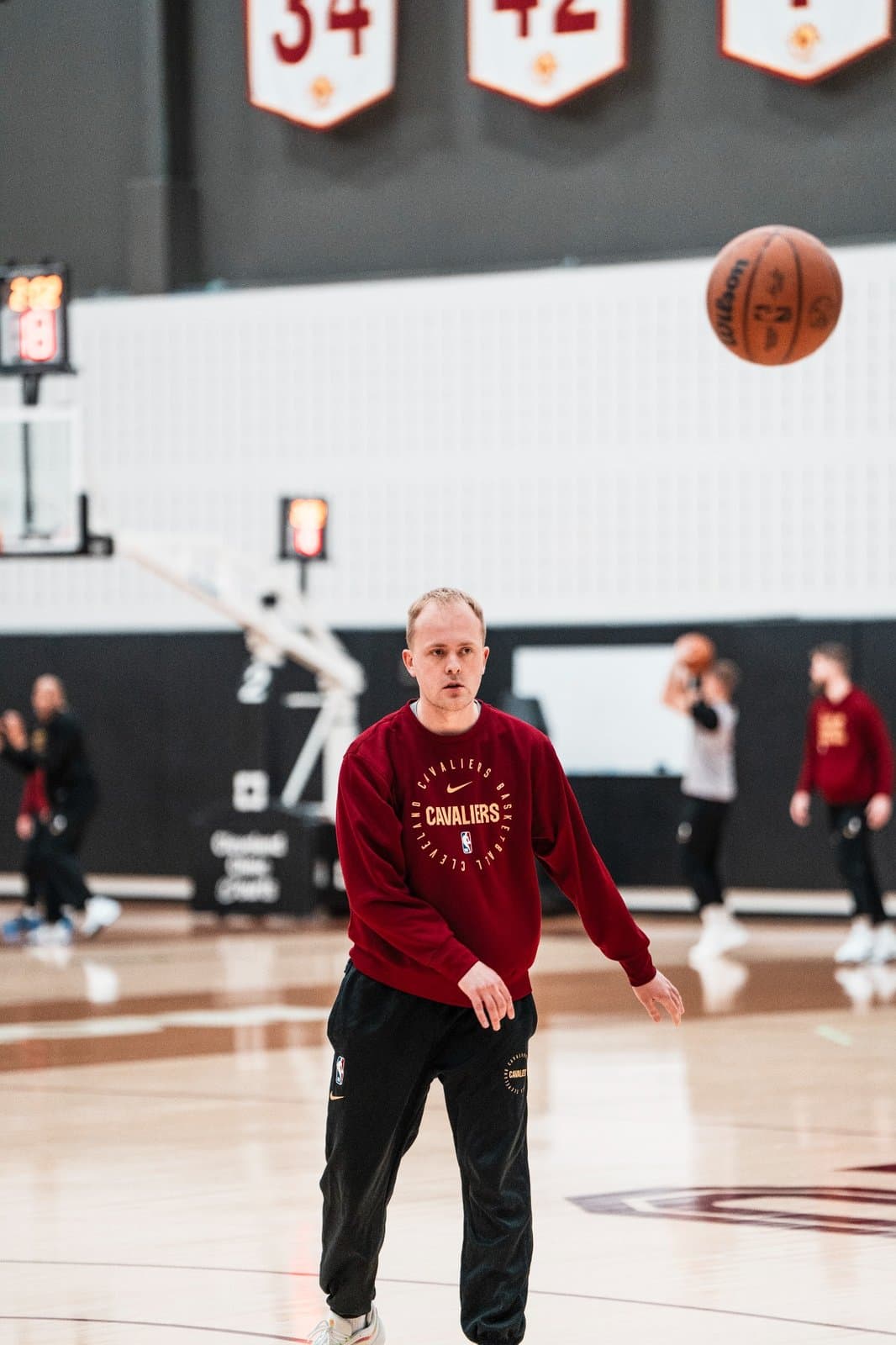

Alex Sarama
Founder, Transforming Basketball · Head Coach, Portland Fire
Alex Sarama is the founder of Transforming Basketball and Head Coach of the WNBA's Portland Fire. Previously, he served as Assistant Coach and Director of Player Development with the Cleveland Cavaliers.
His wider experience includes NBA Europe in Madrid, Paris Basketball in the EuroCup and the Rip City Remix, the Portland Trail Blazers' G League affiliate. Alex has delivered clinics in over 40 countries and has written three books on the constraints-led approach in basketball, including the Amazon bestselling Transforming Basketball (2024) and A Constraints-Led Approach to Coaching Basketball (2026).