
Coaching guide · Player development
Basketball Player Development
Every player walks into your gym with a history that shaped how they move, and a few rate limiters holding them back. Find out both. Then design practice around them, in line with the team's principles of play.
17 min read

Stephen Curry grew up shooting on his grandfather's court. In David Fleming's ESPN feature "The Full Circle", which Transcending Basketball draws on, the rim was thick steel with no margin for error: only shots through the middle went in. The backboard was unpredictable, and the court was perpetually muddy, its surface full of rocks and tire tracks.
“It was 'make it or chase it' out there, and if you missed, it was terrible. So you didn't miss. That instills something in you as a shooter without you even knowing it's happening.”
Alex's book suggests that court may have contributed to Curry's famously high arc. It tells a similar story about Kyrie Irving: on the All the Smoke podcast, Iman Shumpert described the rim Irving grew up on, with pieces missing from the backboard, as one explanation for the strange angles Irving finishes from.
Nobody designed either of those environments, but every player you coach arrives with a skill set shaped by where and how they played. Bernstein's line, which the book borrows, is that "skills have a history", and player development starts by finding out what that history is.
Start with the Player's History
Transcending Basketball calls these influences forms of life: the values, traditions and behaviors that shape how players play and coaches coach in a particular place. Martí Cañellas described them on EP50 as "invisible backpacks" every athlete carries. The book's position is that you can't understand a player without considering their form of life.
The research it leans on comes mostly from outside basketball. Luiz Uehara and colleagues studied pelada, the pick-up football played in Brazil's streets, beaches and backyards. One player recalled playing every day from age six with one rule, no blood no foul. Another explained that if he bumped into a 15-year-old he'd get hurt, so he had to look over his shoulder all the time and anticipate moves to avoid contact. Avoiding the tackle became the constraint that shaped deceptive play.
Mark O'Sullivan, Vladislav Bespomoshchnov and Clifford Mallett did the same kind of work on Pavel Datsyuk, the NHL's "Magic Man". Growing up in the Soviet Union, Datsyuk played in felt boots with a rubber ball, so opponents couldn't stop quickly and fakes worked. Sticks were scarce and slow to replace, so he never learned a slap shot, which risked breaking his. He told the researchers he was "even a little happy" about that, since the wrist shot is so valuable in modern ice hockey.
Dr. Alex Lascu made the same point on EP8: you're never talking to a player in isolation.
“They're a function of every parent conversation, peer conversation, school conversation that they've ever had.”
The practical question the book asks is whether a staff can value what a player brings. Its example is an Argentinean player who throws one-handed, no-look passes to teammates others don't see. Does the staff build on that, or tell the player to "perform the fundamentals" and pass off two feet? Grayson Boucher, the streetball player known as "The Professor", couldn't make his high school team in Oregon because his coach didn't value his ball manipulation. On the AND1 circuit, the same player flourished.
Find the Rate Limiters
Once you know the player, the next job is to find their rate limiters. Alex's keynote on the subject defines a rate limiter as a factor shrinking the affordance landscape, the set of opportunities a player can act on, in a particular context. On EP101 he gave the working version:
“a rate limiter is just a really specific thing reducing the opportunities that a player can act on.”
It's either an affordance the player isn't perceiving, or one they perceive but can't yet act on. "Needs to get better at shooting" or "ball handling isn't good enough" don't count; Alex calls that kind of thing generic and says it doesn't mean anything. The keynote groups rate limiters by where they come from: the individual (intention, attention, action capabilities), the task (boundaries, opponents, time, types of offense and defense) and the environment (safety in exploration, role identification).
Alex's first book, Transforming Basketball, adds where they come from: a shortfall in action capabilities such as flexibility, speed or strength, or a player not perceiving attractive affordances, or both. It also points out that a rate limiter doesn't have to be something bad. For a good shooter averaging 36% from three, getting to 39% may be the most important thing for that player and their role on the team.
On the same episode Alex read several straight from the database he kept at College Prep in Italy. They show how specific the language gets:
| Area | Rate limiter |
|---|---|
| Screen defense | Cancel on-ball screens through better positioning and agility, without trailing excessively and conceding big advantages |
| Closeouts | Prone to conceding blowbys; more of a focus on KYP and maintaining neutral |
| Rim finishing | Off the dribble, rolls and cuts at full speed: the intention to get all the way into the smile instead of settling for mid-range floaters |
| Against switches | Punish switches through decisive dribble isolations and off-the-dribble threes |
| Off screens and DHOs | A one-dribble push-out for more separation, staying behind the three-point line instead of drifting into the mid-range |
| Dominoes | Quicker decisions when a closeout exists; prone to jab steps and fakes that give the advantage back |
How to Spot Them
Alex had no analytics at all until he reached the NBA, so at College Prep everything came from watching film, and he believes the rate limiters they identified were accurate. At the NBA level, tracking data like Second Spectrum can point straight at a rate limiter, but he says you still need a deep dive into why the number is what it is, and that step is often missing. For youth coaches his advice is to skip box scores, use film, find three rate limiters per player, keep them in a shared sheet and review them every month.
How Many, and Which First
Alex works on three at a time. Players should take those three into games as intentions, and be able to tell you what they are and how they're trending. To choose the three at the professional level, he links rate limiters to upcoming opponents. If four teams this month switch a lot in pick and roll, pick-and-roll offense against the switch moves up the list. At youth level the question is what matters most for this player in five years.
The Six Phases
Transforming Basketball sets the process out as a player development framework in six phases. Staff cycle between them over different timescales rather than working through them once in order.
- Identify the rate limiters most relevant to the player's development.
- Build a case with supporting material such as film and data, and look for the cause: missing action capabilities, a lack of attunement to affordances, or both.
- Design a variety of activities that target the rate limiter.
- Observe the changes over time, and manipulate the constraints again in response to the new behaviors.
- Report back to the head coach, because fixing the rate limiter may change how the player is used within the team's principles of play.
- Identify new rate limiters as they appear, and prioritize them around the schedule and the team's needs.
Build the Plan with the Player
A player development plan (PDP) is where the rate limiters live. Alex's view on EP101 is that you tell players what they are and show them you're tracking them. Professional players are smart, and simply knowing can help. At College Prep, staff sat down with players and presented the PDPs to them. George Vaz's article on co-designing player development describes the same two-way conversation, with the player helping to name their own rate limiters, strengths and role.
The PDP format in Transforming Basketball, shaped by Sefu Bernard, Mike MacKay and Ashley Cookson, sorts a player's game into three groups. Anchors are the player's greatest strengths. Building blocks are things they already do well but could do even more skillfully. Growth areas are the pervasive rate limiters that need the most time and attention. The plan also records the player's action capabilities, the forms of life that may explain their tendencies, how a rate limiter could be disguised within the team's principles of play until it's overcome, and a filmed history of the activities used.
Transcending Basketball adds an organizational point through Karamvir Gill, an NBA athletic performance coach who has worked with RJ Barrett and Canada's men's national team. Plans tend to get split by department: a shooting plan, a weight-room plan, a treatment-room plan. Gill argues for the opposite.
“I would argue that a player development plan shouldn't be categorized by departments but rather rate limiters, which feed into the global organizational principles.”
In that model, medical and performance staff help design on-court activities with the coaches, and everyone is working on the same few problems. Kareem Kalil's series The Human Development Playbook for Sport includes a piece on PDPs that goes beyond the end-of-season exit interview.
Design Sessions Around the Rate Limiter
On EP12, Alex laid out ten takeaways for player development. The first was that it isn't about breaking down moves. Any move you see in a game emerged from the constraints of that moment, a player solving a problem against a particular defender, so drilling the move without the defender strips out the information that produced it. Coaches over the summer kept asking him how he'd teach a Eurostep.
“And I say, I don't teach one. I let it develop.”
His setup: the player starts close to the basket and runs at the rim, he passes from the smile and defends with two steps but stays live. Players find several variations of the Eurostep instead of one rehearsed pattern. That's repetition without repetition: the same problem, a different solution each rep. Two-Step Defender uses the same idea:
Two-Step Defender
2 playersThe defender's limited steps give the offense room to try different angles, footwork and release points.
How it works
- Start a defender in the restricted area and an offensive player approaching the basket.
- The defender passes to the offensive player, then has two steps available to defend.
- The offensive player must find a way to finish based on the defender's position and movement.
Adapt it
- As the coach, you can demonstrate a possible solution when needed, then let the player find out when it works against the defender.
Watch for
- Watch whether the player adjusts to the defender. Are they attempting the same finish regardless of where the defender moves, or finding a solution that allows them to reach and use the available space?
For a specific rate limiter, Alex sketched an activity live on EP101 for a player who struggles going left. He draws activities on paper first because it helps him be creative.
Going-left 1-on-1
2 playersTarget a player who can't go left consistently, with a defender who has their own rate limiter to work on.
How it works
- The offensive player starts in a different spot outside the paint each rep.
- The defender always starts at a 45-degree angle, shading them to their left hand.
- The offense goes when it wants, has two dribbles and must finish inside the smile.
- The offense needs 12 points before the defender gets 3 stops.
Adapt it
- Use different basketballs to develop touch.
- Constrain the finish: no backboard, must use the backboard, must be above the square, or one hand only.
- Add a second defender stunting or helping (1-on-2), or add a passing option.
Watch for
- Pair the defender with someone whose rate limiter is fouling on drives, verticality or one-on-one containment, so both players are working on something.
You can also hit two rate limiters at once. Alex's example combines going left with creating advantages against drop coverage: a 1-on-2 plus 1 where the defense always sends the handler left, the screener sets the screen but can't score, and the handler has five seconds to take a pull-up three or get all the way to the smile.
The Routledge book Alex co-wrote works through a youth version. A player whose anchor is ball handling (good change of direction and speed to get by a defender) drives into the paint, the help defender reacts, and the result is a heavily contested shot. Two rate limiters come out of that one possession: passing solutions once both feet are in the paint, and shot selection. If the player can't yet get the ball to the weak-side corner, a teammate in the dunker spot is a more attractive affordance, so the game puts one there.
2-on-2 with Weakside Dunker
4 playersTarget passing solutions in traffic, such as passing around and over taller defenders, and ball protection when the help arrives.
How it works
- Advantage start: one offensive player starts with the ball on the back of a defender.
- The second offensive player starts in the weak-side dunker spot. Their defender guards that player and the basket as the MIG (most important guy or girl).
- Live after the offense drives. The player in the dunker spot must create a window for the pass.
Adapt it
- Remove the on-ball defender if it's too difficult (2-on-1).
- One pass max.
- A 3-second shot clock.
- A score out of a Nash dribble, a way of protecting the ball, counts double.
Watch for
- The book suggests pairing the driver with a teammate who needs to improve their on-ball defense, as long as the challenge point is right for both of them.
Individualize Inside a Small Group
Another of Alex's EP12 takeaways: a global, positionless player still learns in an individual way. In a group of four, one player might start a small-sided game from one situation and another from a different one, because one needs to finish with a defender tight on their hip and the other needs better kick-out passes. The work still happens with teammates and opponents, because they're the information sources the solutions emerge from.
Development and Team Practice Are One Program
Alex opens the player development chapter of Transforming Basketball with the problem:
“Catalogs of techniques are frequently imparted onto players despite many of these moves having little relevance to the affordances encountered within a team’s offensive and defensive concepts.”
A development session is wasted on things the team will never ask the player to do. Alex's example on EP101 is the contested fadeaway isolation: a shot his coaches in Italy never practiced, yet one you'll see players drilling in workouts all over social media. The head coach would be unhappy if a role player started taking it in games. Player development, he says, has to be reverse-engineered from the head coach's vision, whether or not you agree with it.
“anything you see in a PD environment is reflective of what you want the guys to do in a real game.”
Transcending Basketball traces the problem to structure. In the NBA and WNBA, each roster player is commonly assigned to one assistant for development and film, which deepens the silos. Gill lists other examples:
- Conditioning and running separate from "skill" work
- Working joint range of motion and biomechanics in the treatment room
- Force plates and vertical-jump training
- Player development plans organized by department instead of rate limiter
- Practice plans split into 20/20/20 silos of film, court and weight room
Alex's answer at College Prep was to do most of the development himself as head coach while delegating plenty of coaching, so his staff learned the principles of play quickly. Transforming Basketball gives a worked example of the joined-up version. An assistant coach sees a player struggling to finish against taller help defenders and starting to turn down drives. Analytics confirms it, and shows the player finishes better when rejecting the pick and roll. The rate limiter goes on the PDP, the athletic performance staff look at power, vertical and lateral movement, and the coaches design constrained 1-on-1s and 1-on-2s, especially out of transition. Chapter 7 of the book goes further and proposes a director of methodology to link coaching, performance, analytics and the front office around one theoretical framework.
The Same Approach in the NBA
Transcending Basketball notes that the Cleveland Cavaliers were the first NBA team to openly embrace the constraints-led approach. Alex was an assistant coach and director of player development there before becoming head coach of the WNBA's Portland Fire. On EP101, recorded during his time in Cleveland, he was asked whether young players adapt to this kind of practice. His answer was that it makes no difference whether he's running an activity with Donovan Mitchell, Evan Mobley and Darius Garland or with 12-year-olds at the Roseto camp in Italy.
“They all learn the same way. They all move their bodies in the same way, aka self-organization through constraints.”
What changes is the scaling and the messaging. To get buy-in, he suggests showing a player six of their own shots from the last game: a different spot every time, the pass from a different distance, the defender arriving from a different angle. Then ask how that fits what you're doing in practice. He also uses MAYA, "most advanced yet acceptable". He admits trying different-sized balls with one player too early; they didn't like it. They loved contested shooting games, which he counted as an enormous win over spot shooting. By the time of the episode, his players were changing range on every shot and moving around the floor in a nonlinear way without being reminded.
Be Humble About Talent
Player development is tied up with talent identification, and both are worse at prediction than most programs assume. On EP8, Dr. Lascu described Australian talent searches ahead of the Brisbane 2032 Olympics, and how long it took to convince a diving program to admit someone who excelled on every skill test but was one centimeter too tall. Her summary of the research: we're really bad at predicting. Alex added an example from his time with Paris Basketball: David Holston, a 5-foot-6 American point guard who was one of the best imports in France.
Transcending Basketball makes a related point about free play and early specialization: a multisport upbringing expands a player's range of solutions, and the decline of informal play is one more reason organized practice should be representative of the game. As Alex puts it in the book:
“In attempting to understand every player's unique history, organizations may also gain an insight into how certain limiting factors (i.e., rate limiters) emerge and how these could potentially be addressed.”
For the learning science behind all of this, read our skill acquisition guide. For finishing-specific ideas, see the finishing guide and George Vaz's article on guided defense in player development.
Questions Coaches Ask
What is a rate limiter in basketball?
A rate limiter is something specific that reduces the opportunities a player can act on. It's either an opportunity they don't perceive or one they can't yet act on. "Gets blown by on closeouts" is a rate limiter; "needs better defense" is too generic.
How many things should a player work on at once?
Alex Sarama recommends three rate limiters at a time, reviewed monthly. Players should know their three and take them into games as intentions.
What should a basketball player development plan include?
The player's anchors (greatest strengths), building blocks and growth areas, with each rate limiter described specifically, game examples and how you'll track it. Organize it by rate limiter rather than by department, link it to the team's principles of play, and build it with the player.
How do you find a player's weaknesses without analytics?
Watch film. Alex Sarama identified rate limiters at College Prep in Italy with no analytics, purely from detailed film study. Look for recurring possessions where the player misses an affordance or can't act on it.
Should player development workouts teach moves?
We don't teach moves in isolation. Moves emerge from the constraints a player faces, so we manipulate the constraints instead, such as a finishing game against a defender limited to two steps, and let different solutions develop.
Does the constraints-led approach work for NBA players?
Yes. The Cleveland Cavaliers were the first NBA team to openly embrace it, and Alex Sarama says NBA players and 12-year-olds learn the same way. Only the scaling and the way you present it change.
Take It to Your Next Practice
The Player Development Blueprint
$499 USD
For coaches who want a complete framework for developing more adaptable players.
Sources
- Transcending Basketball, Alex Sarama (Wiley, forthcoming): chapters 1, 7 and 9, with guest contribution by Karamvir Gill, and the glossary
- Rate Limiters, Alex Sarama, keynote slides
- EP8: How Do Basketball Players Develop Skill with Dr. Alex Lascu
- EP12: The New Moneyball in Basketball? A Practical Guide to Skill Acquisition
- EP50: "Invisible Backpacks" and Forms of Life with Marti Canellas
- EP101: Identifying & Targeting Rate Limiters with Alex Sarama
- Effective Player Development: The Essential Shift from "Drilling" to "Co-Designing", George Vaz
- The Human Development Playbook for Sport, Kareem Kalil
- Fleming, D. (2015), "Stephen Curry: The Full Circle", ESPN
- Uehara et al. (2021), Frontiers in Sports and Active Living
- O'Sullivan, Bespomoshchnov and Mallett (2021), Case Studies in Sport and Exercise Psychology
- Morganti, Lascu et al. (2023), Sport, Education and Society
- Transforming Basketball, Alex Sarama (2024): chapter 6, Contemporary Player Development (player development framework, PDP format, worked example)
- A Constraints-Led Approach to Coaching Basketball, Sarama, Lascu, Vaz Rocha and Houghton (Routledge, forthcoming): section 4.7.1, Tables 4.9 and 4.10 (rate limiters, 2-on-2 with Weakside Dunker)
Behind the methodology
About Alex Sarama
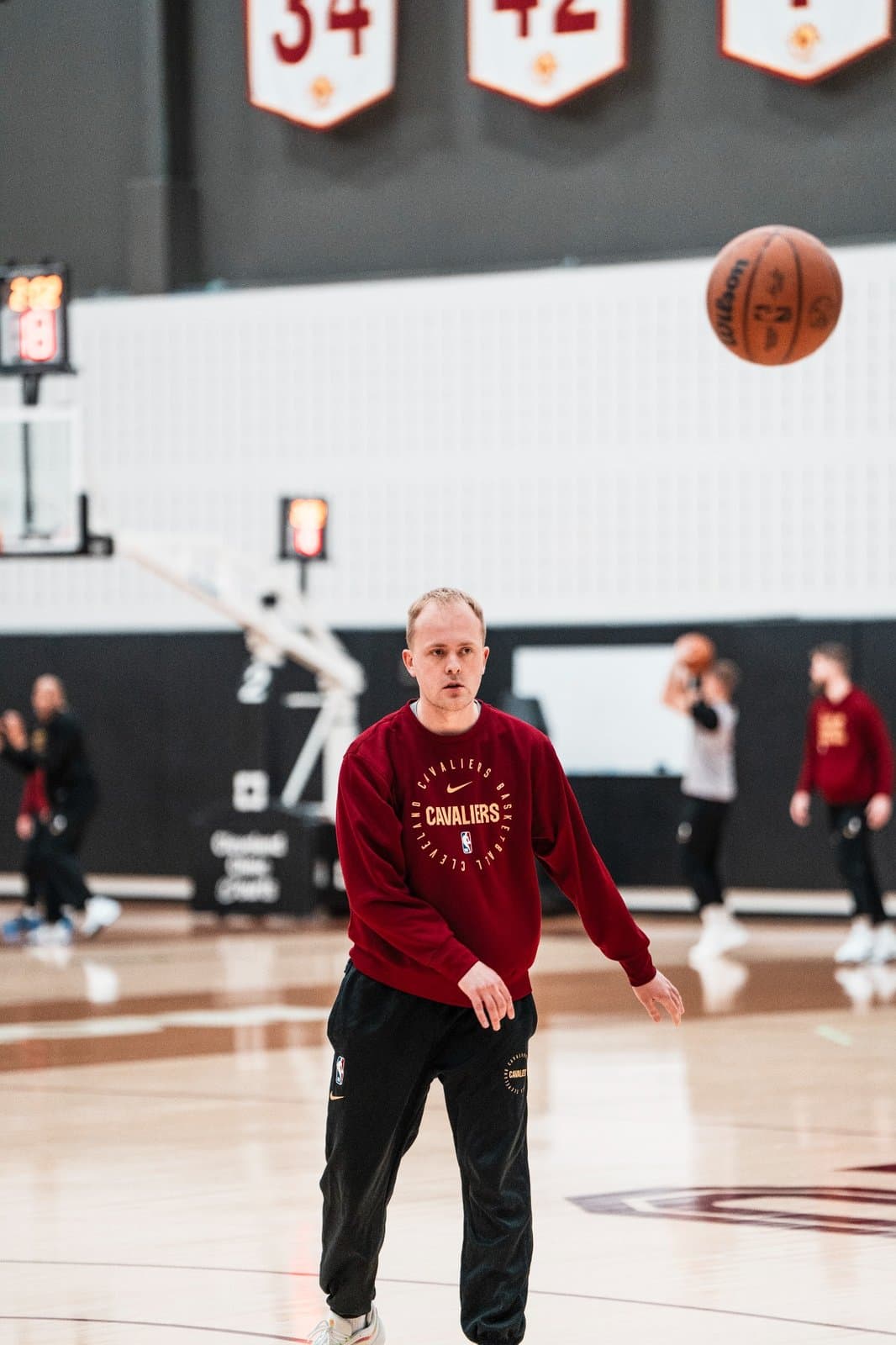

Alex Sarama
Founder, Transforming Basketball · Head Coach, Portland Fire
Alex Sarama is the founder of Transforming Basketball and Head Coach of the WNBA's Portland Fire. Previously, he served as Assistant Coach and Director of Player Development with the Cleveland Cavaliers.
His wider experience includes NBA Europe in Madrid, Paris Basketball in the EuroCup and the Rip City Remix, the Portland Trail Blazers' G League affiliate. Alex has delivered clinics in over 40 countries and has written three books on the constraints-led approach in basketball, including the Amazon bestselling Transforming Basketball (2024) and A Constraints-Led Approach to Coaching Basketball (2026).