
Coaching guide · Practice plans
U14 Basketball Practice Plan
This is Plan #1 from our U14 plans, written out in full. Six games take players from differential-learning shooting up to 3-on-3 with gets. After that, we show what the rest of a U14 season adds.
15 min read
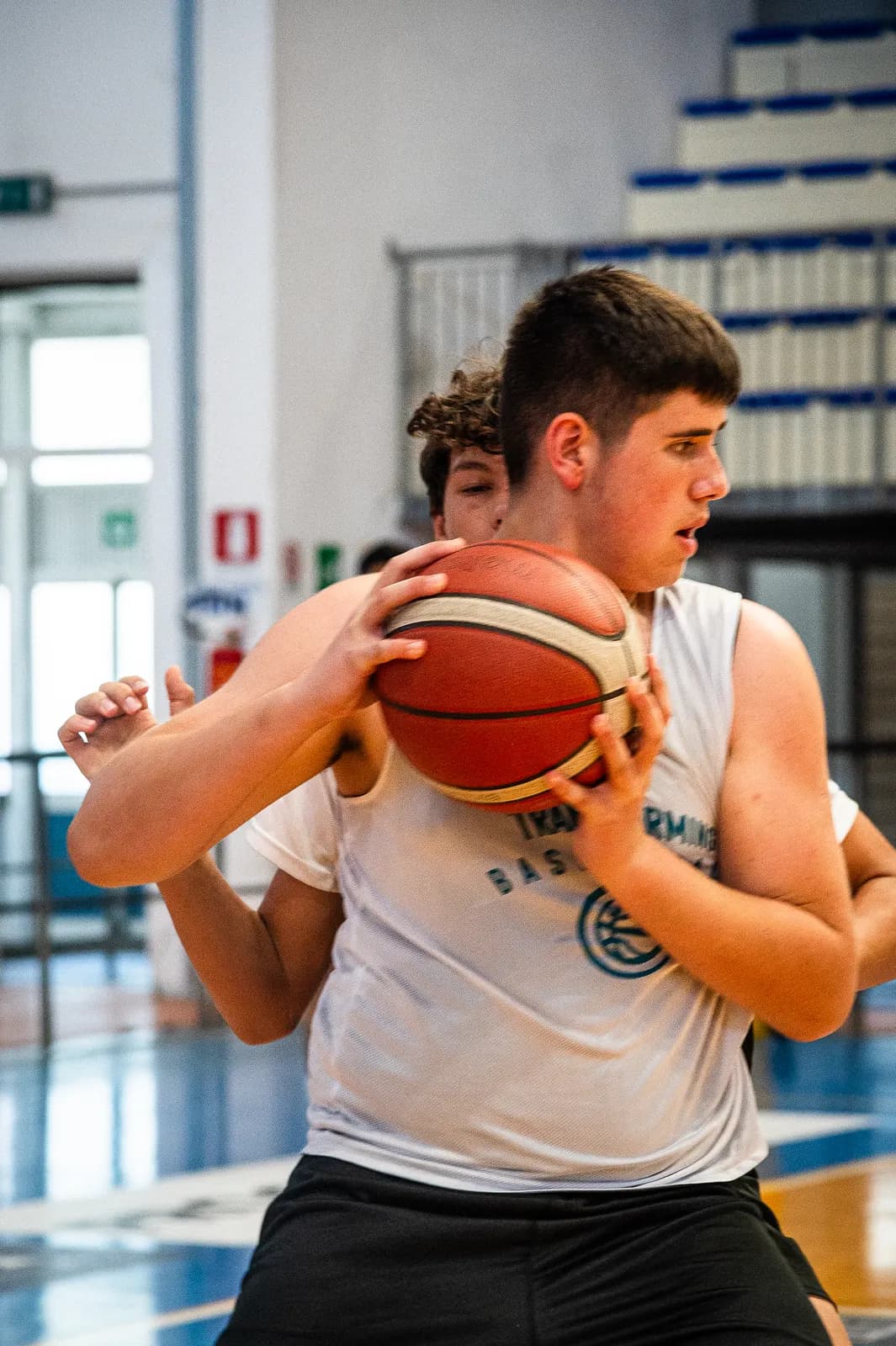
When Alex Sarama worked with the London Lions academy, its under-14 boys got blown out in their first EYBL game. Their coach, Will Twigg, remembered it on EP72 of our podcast. After a couple of weeks of 1-on-1 at the start of the year, the team played out of exactly one trigger, the get, through to December, and that season shaped this plan. Alex credited that restraint for what followed:
“So I think it was really well done because we were so intentional on doing less, but doing it really well. And that's why their shot selection became amazing.”
Plan #1 of our U14 plans starts with shot selection and gets. Its three written outcomes are to introduce players to the practice methods, ROB shots and shot selection (gold and silver medals), and getting out to space (floor is lava). We've written the session out as it was in December 2024. The rest of the U14 season comes after it. Our basketball practice planning guide covers how we plan any session and lists our plans for every age.
Three Terms the Whole Plan Depends On
| Term | What it means | Source |
|---|---|---|
| ROB shot | Range, open, balanced: a shot within the player's range, without a contest, from a balanced position | U14 Plan #1 |
| Gold and silver medals | Gold: free throws and finishes inside the smile (the restricted arc). Silver: catch-and-shoot threes, particularly in the corners. Bronze (off-the-dribble threes, non-rim paint shots) usually doesn't count in this plan. | How to Coach Basketball Shot Selection |
| Get | A two-person trigger. In Will Twigg's example from EP72, a player passes from the 45 to the trail spot and the ball is pitched back to create a 2-on-1. | EP72 |
A trigger, in George Vaz's definition, is a simple action designed to start movement, force a defensive reaction and create an offensive advantage. Once the advantage exists, players play dominoes: drive, pass or shoot in zero seconds, space so one defender can't guard two, and get out of the lava.
Why silver medals now? The Routledge book Alex co-wrote explains the progression. Beginners mostly score layups, so their games reward gold. At the youth level, defenses get better at taking gold away, so players need the catch-and-shoot three as another way to create space, and they start meeting late-clock situations where the whole shot spectrum may be needed. The book's simplest constraint is the one this plan leans on: only gold and silver medals score.
The Session at a Glance
Unlike the U12 plan, Plan #1 for U14 gives no station length or total time. The clocks and point targets below are the only timings it contains, so we've left minutes out. The ceiling we'd apply comes from the "3, 10, 30" framework in Transcending Basketball: no more than ten minutes on an activity before changing it, no more than thirty seconds to explain it.
| # | Activity | Format | Clock or target on the plan | Scoring | TLC |
|---|---|---|---|---|---|
| 1 | DL Finishing and Shooting | Individual | None | None | None given |
| 2 | Around the Arc 1-on-1 | 1-on-1, then 2-on-2 | Added rules: 3-second shot clock once inside the arc; defensive scoring to 3 | Gold medal only | None given |
| 3 | 2-on-1 Shooting: Find the ROB Shot | 2-on-1, groups of four | First player or team to 10 | 2 points per basket and per defensive stop; only ROB shots count; two-pass max | Learn |
| 4 | 2-on-2 into Two 1-on-1s | 2-on-2 that splits | Added rule: 6-second shot clock in the 1-on-1s | 2s and 3s | Learn |
| 5 | FIBA 3-on-3 | 3-on-3 | First team to 12 | Gold and silver medals from gets only; no score call, no basket | Learn |
| 6 | Battleship 3-on-3 | 3-on-3 | First team to 16 | Gold | Compete |
The TLC column comes from Mike MacKay of Basketball Canada and appears in his section of Transcending Basketball. Teach: the coach can stop the activity to draw attention to something. Learn: don't stop it; cue on the fly or when players are subbed off. Compete: don't stop and don't give feedback, like a road game. The pre-practice checklist is the same as our U12 plans (coaches arrive 15 minutes early, high-five and greet every player, an area for bags and water), with one addition: DL shooting as players arrive.
1. Dl Finishing and Shooting
DL Finishing and Shooting
Differential learning: as much variety in the finish and the shot as possible before the live games start.
How it works
- Weak-hand layups, one-foot, two-feet and euro finishes, all as randomly as possible.
- Change stance and movement before each shot.
- Slow, quick, high and low dribbles before shooting. A different location each time.
Watch for
- Cue on the plan: "Maximum variability".
Transcending Basketball is careful to separate DL from the constraints-led approach: there's no defender and no attempt to make the shot representative of a game. The aim is to vary the movement so much that players find ways to shoot they wouldn't otherwise use, and then take that wider range back into the live games.
“DL is essentially variability on steroids!”
2. Around the Arc 1-on-1
Around the Arc 1-on-1
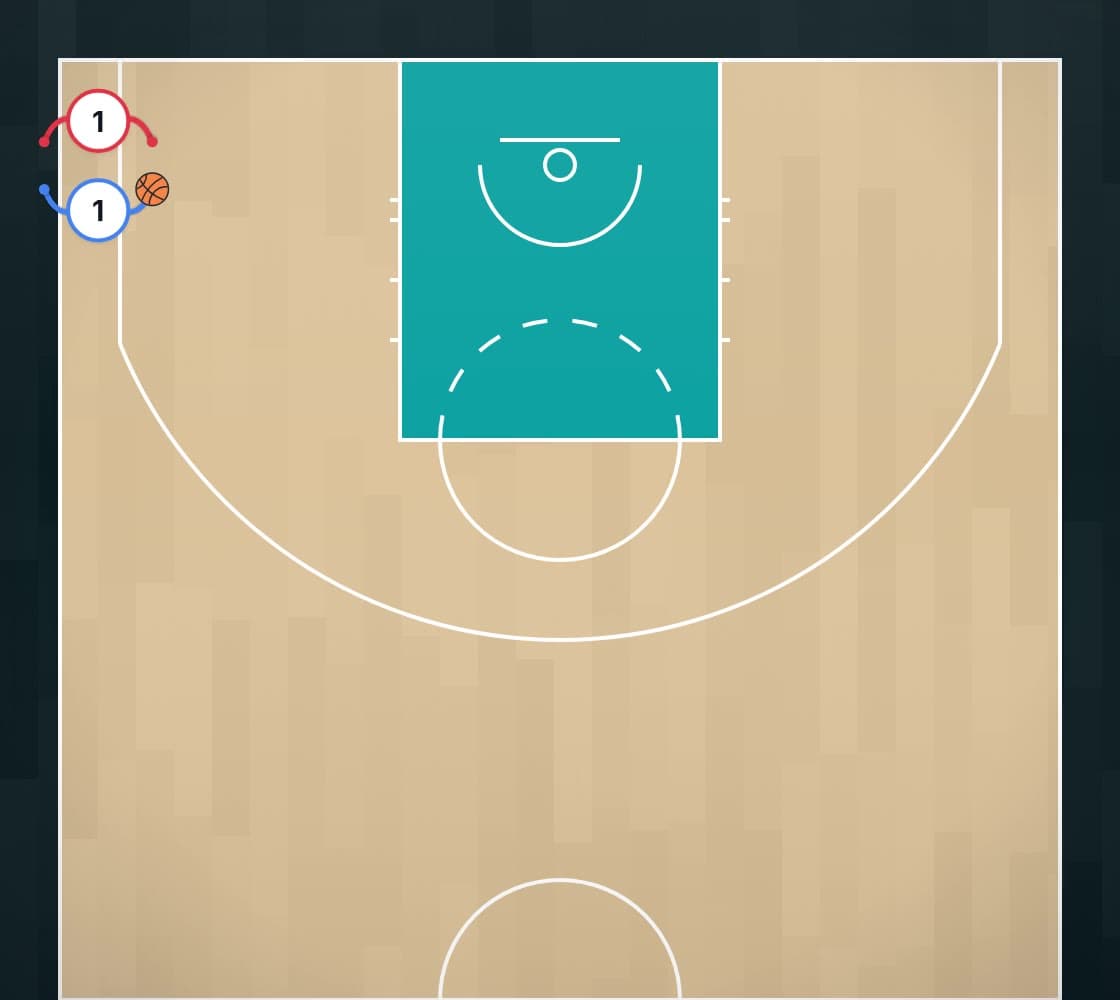
1-on-1, then 2-on-2Play with an advantage that comes from a dynamic start, where both players are already moving, rather than from a rule. The defender is chasing, so the offense has the advantage until it wastes it and lets the defense get back to neutral.
How it works
- Offense and defense start in the deep corner.
- The defense chases the offense until the offense steps inside the arc. Then it's live, with the offense trying to score a gold medal.
- Rotate players so they play against a different opponent each time.
- Scoring: gold medal only.
Adapt it
- A 3-second shot clock after the offense steps inside the arc.
- The defender can start one foot inside the arc.
- Defensive scoring: every stop is 1 point, first to 3 wins.
- The same concept as 2-on-2.
Watch for
- Cue on the plan, for the 2-on-2 version: "Push/pull or find a window in 2-on-2".
- Does the offense use the head start, or let the defender recover?
Choose the add from what you see, to keep the game at the optimal challenge point, where it's neither too easy nor too hard for the offense. A closer defensive start or defensive scoring makes it harder for the offense.
Around the Arc is also one of the activities in Alex's first book, Transforming Basketball, with more ways to scale it. There the offense dribbles around the arc with the defender trailing and can break the arc at any time. For beginners the defender keeps both feet outside the three-point line; for advanced players one or both feet start inside. The book's other constraints include extra points for an uncontested layup or for faking the defender inside the arc before driving, 3 points for a one-dribble rim finish and 2 for a two-dribble finish, a set area where the offense must break the arc (corner to 45, or 45 to 45), and a shot clock of three to seven seconds after breaking the arc.
3. 2-on-1 Shooting: Find the Rob Shot
2-on-1 Shooting: Find the ROB Shot
Groups of four; two games per basketRecognize who has the better shot. The defender passes the ball in and then tries to steal it or contest, so every catch is a decision: shoot it, or move it to the teammate who's open.
How it works
- Two games of 2-on-1 can be played at the same time on each basket.
- Players space from the short corner to elbow extended on both sides, or elbow to elbow.
- The offense can only pass or shoot: no drives, no cuts.
- One defender starts with a ball, passes it in and tries to steal the pass or block the shot. A second defender with a ball goes next.
- Scoring: 2 points per basket and per defensive stop. Only ROB shots count. Two passes maximum. First player or team to 10 wins.
Adapt it
- Players are allowed to cut, but still can't drive.
- Players are allowed to pass, shoot, drive and cut.
- Add a +1 who makes a skip pass to the two side from half court to start the 2-on-1, emphasizing the two-side break.
Watch for
- TLC: Learn.
- At the catch: is the receiver in range and open, or does the defender make the teammate the better option?
The plan also gives a rotation for the offense, but it's written two ways (stay for six reps; rotate after two), so we've left it out. Set a rotation that keeps your groups of four moving.
4. 2-on-2 into Two 1-on-1s
2-on-2 into Two 1-on-1s
4 players and a coachAttack a closeout, then attack again. One drive creates two separate 1-on-1s, so both players get a live rep off the same possession.
How it works
- The offense starts in optimal spacing around the three-point line.
- One offensive player drives to the basket and passes to their teammate.
- The receiver of that first pass plays 1-on-1 off the closeout against the off-ball defender.
- The driver relocates outside the three-point line, receives a pass from the coach and plays 1-on-1 against their original on-ball defender.
- Scoring: 2s and 3s.
Adapt it
- A 6-second shot clock in the 1-on-1s.
- Gold or silver medals only.
Watch for
- TLC: Learn. Cues on the plan: "Find windows" and "Escape lava as quickly as you drove into it".
5. FIBA 3-on-3
FIBA 3-on-3
6 playersScore from gets, and only take gold and silver medals.
How it works
- A team can only score a gold or silver medal by using gets.
- If no score is called, the basket doesn't count.
- First team to 12 points wins.
Adapt it
- Floor is lava, and pass and cut is a turnover.
- Varied spacings, and the offense can only create dominoes through 1-on-1 (solos).
Watch for
- TLC: Learn. Cue on the plan: "Reinforce shot selection".
Alex's U14 group at London Lions showed how much one trigger can hold. On EP72 he counted the coverage solutions he'd see in a single practice out of the get: rejects (not using the get at all), backdoor cuts, keeps (not pitching it back), the pitch and slip, twists and curls. Alex's principles-of-play workshop deck lists the get solutions as reject, cut, pitch and slip, keep and twist, with a note: no pops.
When Will's players weren't direct on the drive after the pitch, the staff added constraints. The one Alex singled out was the wall constraint: instead of letting players take a loopy drive, they shrank the space so the drive had to be direct.
6. Battleship 3-on-3
Battleship 3-on-3 (Plan #1 version)
6 playersCreate advantages from different places on the floor, against a defense that has to talk.
How it works
- The offense uses solos to create an advantage.
- The offense has to run gets from a different location each time.
- On gets, the defense has to go over or under: no switching.
- The defense must call out the MIG (most important guy or girl). If they don't, the offense gets a point and possession.
- Scoring: gold. First team to 16 wins.
Watch for
- TLC: Compete. Don't stop it and don't coach it; referee it.
The plan lists both solos and gets as the offense's ways to create an advantage; we've reproduced both lines as written. This isn't the Battleship in our small-sided games guide, where a team needs a qualifying basket from each of four locations to win. Transcending Basketball names Battleship as one of three Transforming games built on the principles of popular video games, and it has more than one version. In the version in Alex's first book, the only trigger is the get, and a team needs four scores from four strike locations (the wing, both 45s and the trail) to win. Any other score doesn't count, but the team keeps possession. Run whichever one fits your session.
The Debrief
- What is a get?
- What is MIG, and why is it important?
Both questions are about language the team will use for the rest of the season. Keep them short and change them through the year, as Mike MacKay suggests in the book, so players think rather than recite.
What a U14 Season Adds
Plan #1 is the first week. The U14 season plan in Alex's principles-of-play workshop deck shows where it's heading. It's written as additions: everything listed for U12 still applies.
| Area | U14 additions |
|---|---|
| Shot selection | Only gold and silver medals |
| Dominoes | Push, pull, hold, with special emphasis on ghost cuts |
| Transition offense | Get to the nail; keep the highway clear; two-side break; clap-backs |
| Triggers, in order of priority | Turtle or Mouse; gets; Flare and Wide; Side, Rub; no pass and cut |
| Half-court defense | Intense ball pressure; closeouts; shade positioning; denying effective players; active MIG; random hits |
| Transition defense | Ball, basket and FMD; aggressive crashing; trail traps |
Some of those terms are defined in our other material:
- Push, pull, hold: how off-ball players react when the ball is driven into the paint, to keep the best spacing for the driver and the team (as described on EP113). Alex's pass-and-cut article describes players reacting to dribble penetration with a push, a pull or a ghost cut.
- Ghost cut: George Vaz's description is a cut where the offense disappears and reappears somewhere spooky, like under the basket.
- Keep the highway clear: keep the middle of the floor free for the dribble push. Clap-back: score within five seconds of being scored on. Both are from George Vaz's Principles Over Rules.
- Two-side break: filling the 45 and the corner on the weak side in transition (Two Side Break, George Vaz).
- Ball, basket, FMD: in emergency transition defense, someone protects the basket, the next player picks up the ball, and the next finds the most dangerous player.
- Turtle: on EP72 Alex describes turtle spacing as the ball on the side with the strong-side corner, two players on the weak side and the dunker, with the offense going to work for a paint touch. Will's players would call "turtle" when a bigger, slower player was guarding one of them.
- Side and Rub: pick-and-roll spacings. Side has the ball on the side with the two side ahead; Rub has the ball in the middle with the two side behind (Alex, EP72).
Pick and roll is on the list deliberately. At London Lions, the U14 group moved on from gets to picks out of side and rub spacing, reading rejects, crack and slip, crack and roll, flips and tags. Alex's response to coaches who think that's too much at that age:
“people say, oh, they're under 14, you can't do pick and roll. And I think that's rubbish.”
Defense at U14: Get Up on the Ball
The season plan's half-court defense starts with intense ball pressure. Alex explained on EP72 why that mattered in England: young players were used to guarding inside the three-point line and sagging heavily, because many opponents couldn't shoot well. The staff demanded players get right up on the ball, because they wanted to develop adaptive ball-handlers who can handle pressure.
Will said they built it through constraints. They played 1-on-1 in the full court, off a rebound or from a different starting position each time. When a defender switched off, got beaten to their strong hand or was late to recover, they were subbed off straight away and the next pair came on.
Adapting the Plan
- Not ready for gets? Alex's alternative in the pass-and-cut article is to start from 1-on-1 and dominoes, and introduce a get only when players show they can handle basic spacing. Use FIBA 3-on-3's second add (dominoes through solos only) as the base game.
- Move the challenge point in the shooting game. Make it harder by allowing cuts, then drives, in 2-on-1. Make it easier by keeping the no-drive, no-cut rule longer.
- Shrink the space when drives get loopy, as London Lions did with the wall constraint.
- Keep the age plans in sequence. If your players haven't had the U12 principles, start with the U12 practice plan: the U14 season plan assumes them.
If the get in FIBA 3-on-3 is too much at first, the Routledge book has a smaller game that builds it. It sits in the book's youth section on creating dominoes, after players have learned to keep an advantage they're given.
2-on-1 Gets into 2-on-2 Gets
3 players, then 4Create dominoes out of the get. Solutions to look for: pitch and slip, keep, curl and race the under.
How it works
- The offense starts in the corner and at the 45, with the ball in the corner.
- The defender guards the player on the 45, who doesn't have the ball.
- The pass is made to the player on the 45, and it's live from there. No backdoor cut in the 2-on-1.
- Scoring: 2s and 3s. Games to 12.
Adapt it
- Progress to 2-on-2, live after the pass.
- The offense must pitch the ball on the get and slip, or it's a turnover. No hand-off.
- Guided defense: the defense goes over, goes under or switches.
Plan #1 is one of twenty in the U14 bundle. For the bigger picture, our conceptual offense guide covers triggers and dominoes, and the youth coaching guide covers how principles build from U8 up.
Small-sided games library
Games from This Guide in the Library
Questions Coaches Ask
What should a U14 basketball practice include?
Our U14 Plan #1 has six activities: differential-learning finishing and shooting, Around the Arc 1-on-1, 2-on-1 shooting for ROB shots, a 2-on-2 that becomes two 1-on-1s, FIBA 3-on-3 scoring only from gets, and Battleship 3-on-3. Every live game has a defender and most count only gold and silver medal shots.
What is a ROB shot in basketball?
ROB stands for range, open and balanced: a shot within the player's range, without a contest, taken from a balanced position. Our U14 2-on-1 shooting game only counts ROB shots.
Should U14 players learn pick and roll?
Alex thinks so. At the London Lions academy, the U14 boys moved from gets to pick and roll out of clearly defined spacings and read rejects, slips, rolls and tags. Pick and roll is so complex to do well, he argued, that it has to start early.
What is a get in basketball?
A two-person trigger used to create an advantage. In one London Lions example, a player passes from the 45 to the trail spot and the ball is pitched back to create a 2-on-1. Defenses can switch, go over or go under, and the offense reads which.
What offense should a U14 team run?
Principles of play rather than set plays or pass and cut: dominoes, floor is lava, push, pull and hold, and a short list of triggers starting with 1-on-1 and gets. The London Lions U14 team played out of one trigger, the get, from August to December.
How long should each U14 practice activity last?
Our U14 plan doesn't set station lengths; its games end at a points target instead, such as first to 10 or 12. As a ceiling, the 3-10-30 framework says change an activity within ten minutes and explain it in thirty seconds.
Take It to Your Next Practice
U14 X20 Practice Plan Bundle
$99 USD
Twenty age-specific practice plans for U14 — each with activities, constraints, feedback and scoring.
Sources
- Transforming Basketball U14 practice plans, Plan #1, plan as written in December 2024
- Transcending Basketball, Alex Sarama (Wiley, forthcoming): chapters 2, 4 and 6, including Mike MacKay's section on planning and TLC
- Principles of Play workshop deck, Alex Sarama: U14 season plan and coverage solutions slides
- Reconceptualising Shooting, Alex Sarama, keynote slides
- EP72: Transforming U14 Basketball with Will Twigg
- EP113: Principles of Play for U16s
- Why Pass and Cut Motion Offense Is Harming Youth Basketball, Alex Sarama
- How to Coach Basketball Shot Selection, Alex Sarama
- Coaching the Dribble Hand-Off in Basketball With the CLA, George Vaz
- Principles Over Rules, George Vaz
- Two Side Break: Transition Principles, George Vaz
- Understanding the Ghost Cut in Basketball, George Vaz
- Schöllhorn, Davids and Hegen (2012), "The Nonlinear Nature of Learning - A Differential Learning Approach", The Open Sports Sciences Journal
- Gorman and Maloney (2016), "Representative design: Does the addition of a defender change the execution of a basketball shot?", Psychology of Sport and Exercise
- Transforming Basketball, Alex Sarama (2024): chapter 8 (Around the Arc 1-on-1, Battleship 3-on-3)
- A Constraints-Led Approach to Coaching Basketball, Sarama, Lascu, Vaz Rocha and Houghton (Routledge, forthcoming): chapter 4, section 4.2.1 and Figure 4.7 (2-on-1 Gets into 2-on-2 Gets)
Behind the methodology
About Alex Sarama
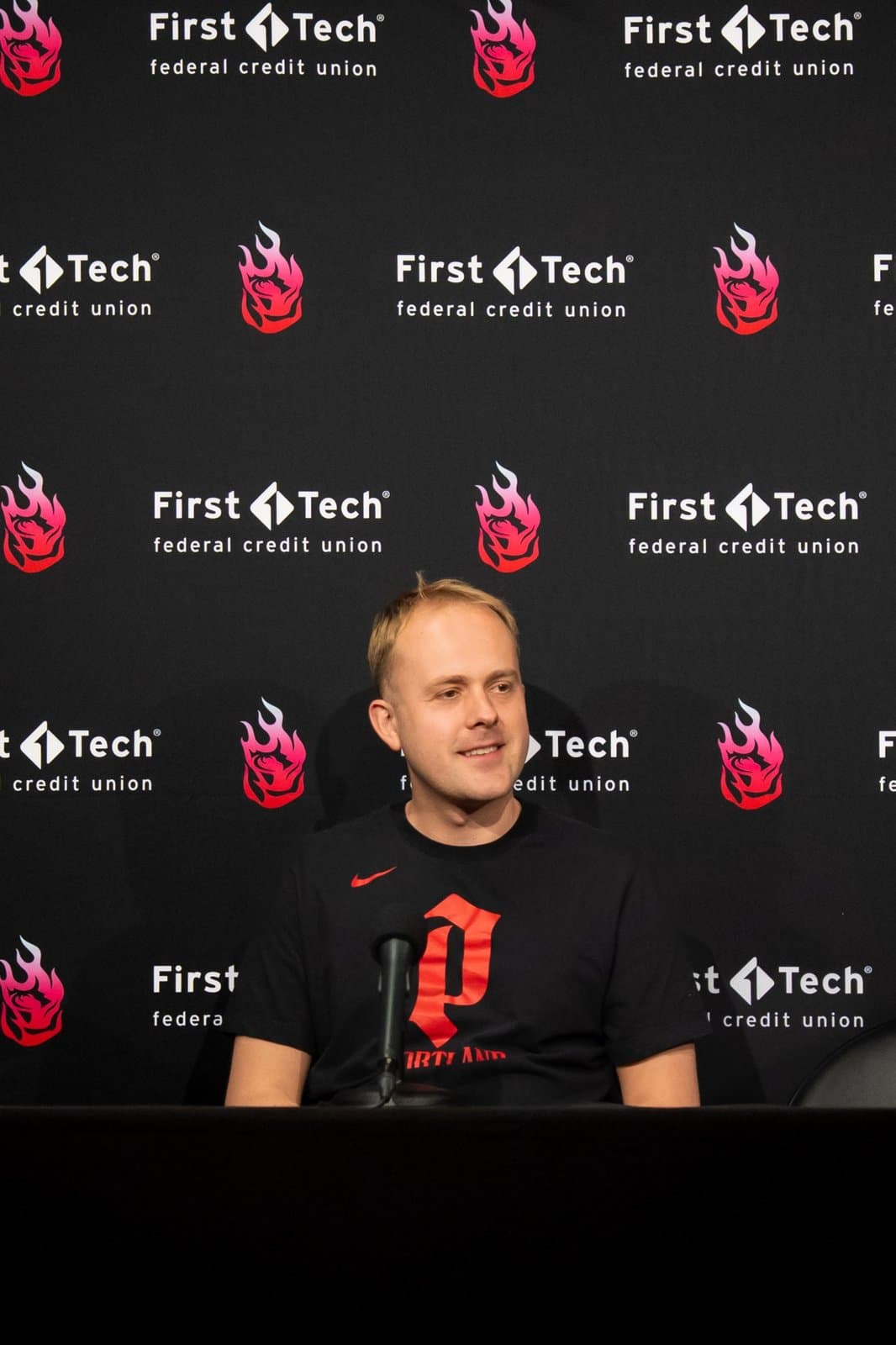
Alex Sarama
Founder, Transforming Basketball · Head Coach, Portland Fire
Alex Sarama is the founder of Transforming Basketball and Head Coach of the WNBA's Portland Fire. Previously, he served as Assistant Coach and Director of Player Development with the Cleveland Cavaliers.
His wider experience includes NBA Europe in Madrid, Paris Basketball in the EuroCup and the Rip City Remix, the Portland Trail Blazers' G League affiliate. Alex has delivered clinics in over 40 countries and has written three books on the constraints-led approach in basketball, including the Amazon bestselling Transforming Basketball (2024) and A Constraints-Led Approach to Coaching Basketball (2026).