
Transforming Basketball
Assine agoraJá é assinante? Entrar

Coaching Guide

Basketball Practice Planning

Planning a basketball practice begins with identifying what your players need to work on. Categories such as shooting, passing and finishing help organize a plan, but they do not explain the situations players will encounter. A player finishing against a recovering defender faces a different challenge from a player finishing over a defender already protecting the rim.

3 min read
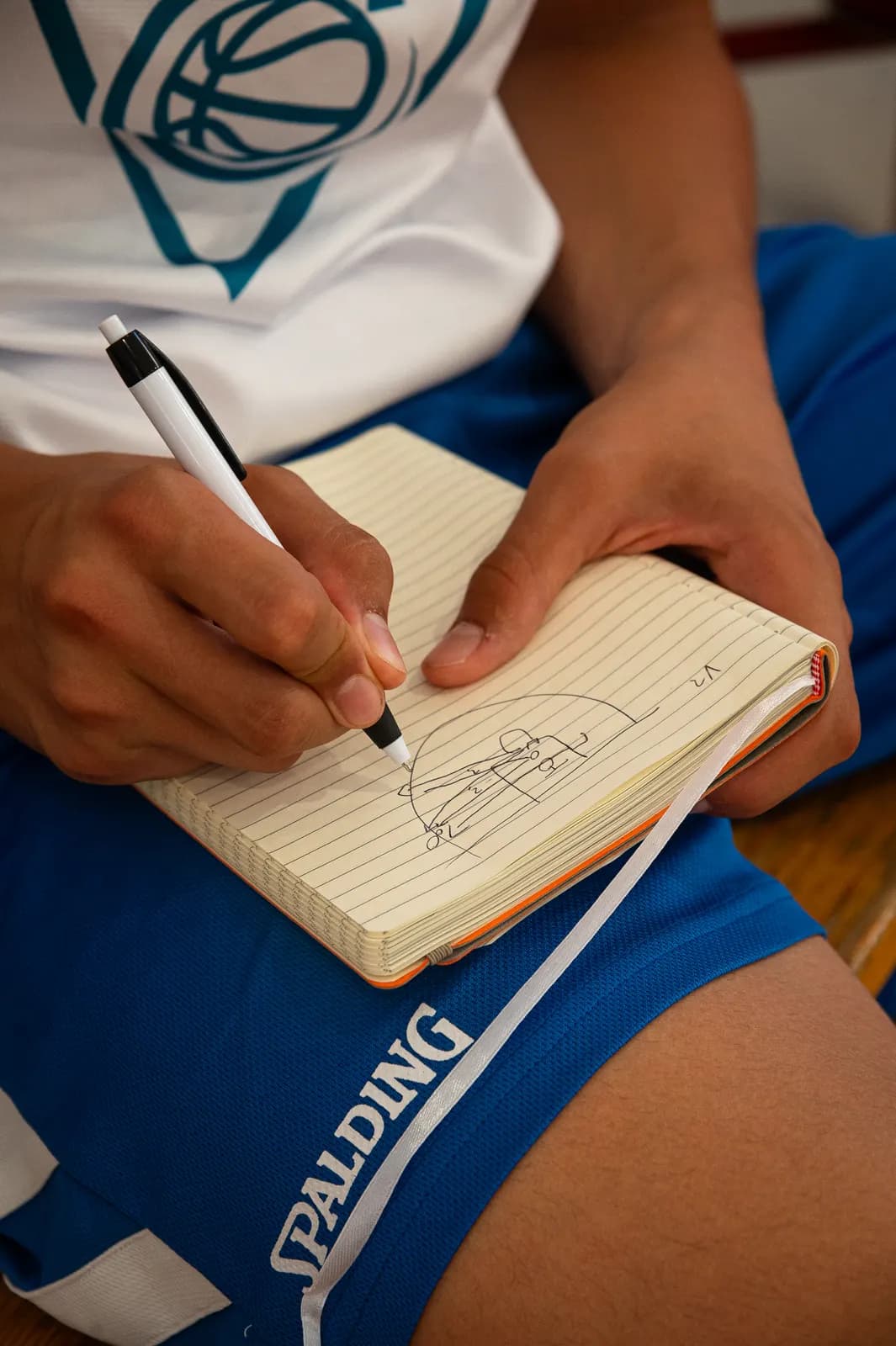
Sketching a play diagram in a notebook during a Transforming Basketball camp session in Roseto

At Transforming Basketball, we plan activities around these interactions. The constraints should help players experience situations that relate to their individual development and the team’s principles of play.

Define What You Want Players to Work On

Be specific about the behavior you want to develop. If your team loses an advantage after a drive and kick, consider what happens before adding another passing drill.

Is the receiver holding the ball? Is the pass arriving outside their shooting pocket? Are teammates standing where one defender can guard two players?

These observations help determine the activity. A temporary advantage game can emphasize zero seconds and spacing. A passing constraint can emphasize whether the receiver can use the ball immediately.

Plan the Activity and Its Organization

Record the player numbers, available baskets, starting positions, scoring rules and rotation. Include the constraint you intend to use and what would cause you to adjust it.

For example, with 12 players and one basket, three-team 4-on-4 Shutdown provides a clear rotation. With several baskets available, smaller groups can play simultaneously.

Establish who enters next and how each possession restarts. These details influence how much time players spend playing and how often they experience the intended situation.

4-on-4-on-4 Defensive ShutdownStudy a team rotation in which the scoring system reinforces the defensive intention.

Connect Individual Priorities With Team Practice

Players can work on different priorities within the same activity. In a drive-and-kick game, the ball-handler may be working on recognizing help, the receiver on making a zero-seconds decision, and another teammate on moving so one defender cannot guard two.

This allows individual development to connect with the team’s offense. Players experience how their actions influence the opportunities available to their teammates.

Use starting positions and defensive constraints to adjust the challenge for individual players. They do not all need identical conditions to work on the same team principle.

Try It in Practice: Plan Around a Drive and Kick

If your team struggles to maintain an advantage after a drive and kick, use a temporary advantage game such as 3-on-2+1. Start two defenders matched up with three offensive players, with the third defender recovering from behind when play begins.

The offense must recognize and use the advantage before the recovering defender gets back to neutral. Watch the receiver’s decision and how the other players adjust their spacing as the ball moves.

Move the recovering defender’s starting position to change how long the advantage lasts. Starting farther away gives the offense more time. Starting closer places greater pressure on the first pass and the receiver’s next action.

Later, return to equal numbers and observe whether players maintain an advantage when they create it themselves.

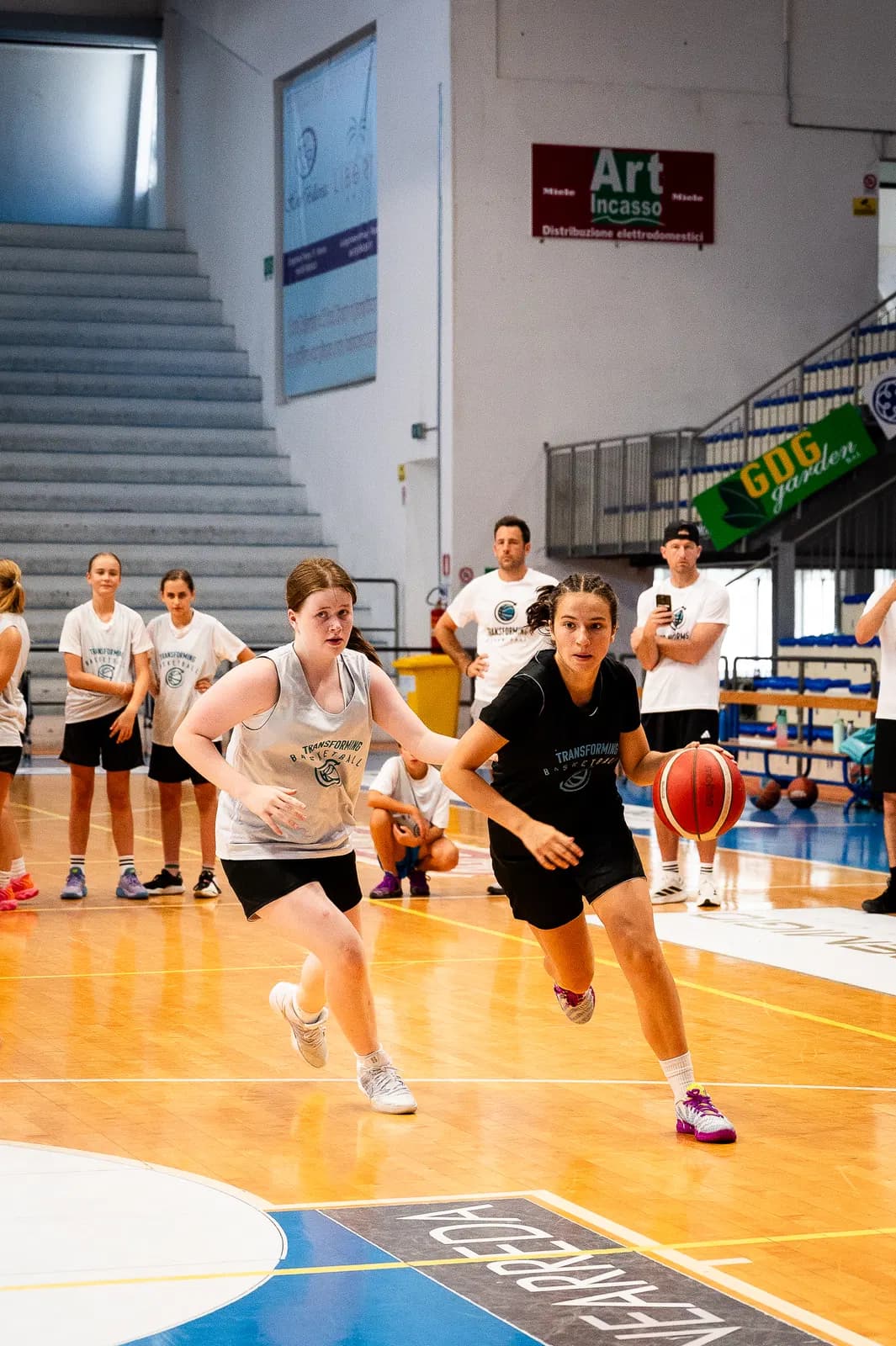
Players waiting in lines while a live one-on-one plays out during an organized practice

Leave Time to Repeat an Activity

Players may need more time with an activity than the written plan allows. If they are beginning to recognize the intended opportunities, keep the game going and adjust the constraint where needed.

You can also return to the same activity across several practices. Changing the starting positions or defensive coverage allows players to encounter different situations without learning a completely new set of rules.

How to Run a Basketball Practice using the CLAWatch the coach organize and adapt a sequence of practice activities.

Record What Happened

After practice, note the constraint you used and how players responded. For example: “Moving the recovering defender farther back gave the receiver time to attack, but the weak-side players still stood where one defender could guard both.”

That observation gives the next practice a specific focus. You can retain the activity and adjust the spacing conditions, rather than replacing it simply because the team has already played it.

Explore practice planning

Read

Keep learning

Free

Free U12 Practice Plan Template

A practice plan template designed for the U12 age group.

Enviaremos o recurso por e-mail e, ocasionalmente, ideias de treino. Cancele quando quiser. Política de Privacidade.

Idioma do recurso: inglês. O download gratuito e os e-mails de acompanhamento estão atualmente apenas em inglês.

U12 X20 Practice Plan Bundle

$99 USD

Twenty age-specific practice plans for U12 — each with activities, constraints, feedback and scoring.

U14 X20 Practice Plan Bundle

$99 USD

Twenty age-specific practice plans for U14 — each with activities, constraints, feedback and scoring.