
Coaching guide · Practice plans
U12 Basketball Practice Plan
Practice 1 from the Transforming Basketball U12 plans, written out in full. Every live game has a live defender, the focus is dominoes, and the coach asks questions instead of problem-solving for the players.
15 min read
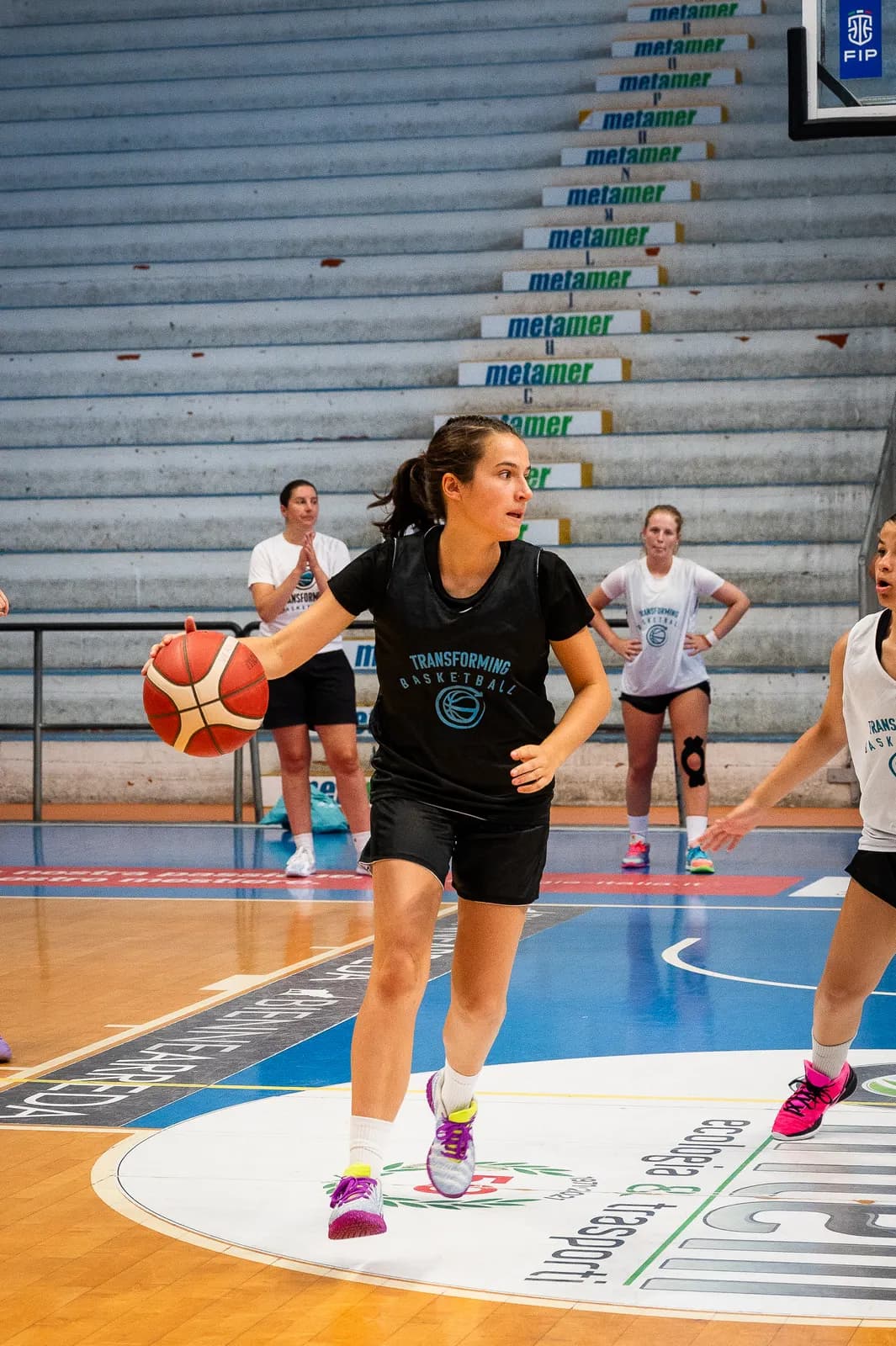
Practice 1 of our U12 plans opens with an instruction to the coaches, printed under the session outcomes:
“Avoid the usage of instructive feedback and telling players what to do. Ensure players understand the activities, but avoid giving them the answers and problem-solving for them.”
The rest of the session follows from that line. Every live game has a defender in it. The coach sets up the problem, keeps the clock and the score, and changes a constraint when the game is too easy or too hard, rather than stopping play to demonstrate the answer.
We've reproduced the session as it was written in December 2024. Some of these games have newer versions in Alex Sarama's book and on our blog, and we've kept them apart on purpose, so the rules here are the ones on the plan. Our basketball practice planning guide covers how we plan any session and lists our plans for every age.
The Session at a Glance
The plan is marked as a moderate day, and one of its four written outcomes is "10-min changing stations, time on task". That's the only timing it gives for the session as a whole, so the time column below is our suggestion built on that ten-minute station. Any other timing in the table is printed on the plan itself.
| # | Activity | Format | Suggested time | Timing written in the plan | Scoring |
|---|---|---|---|---|---|
| 1 | DL Shooting | Pairs | Up to 10 min | Rotate after 6 shots | None |
| 2 | Shield Tag 1-on-1+1 | Groups of 3 | Up to 10 min | Escaper has 6 seconds to score after the shield says "go" (added rule) | 1 point for knocking the ball away, 2 for scoring |
| 3 | 1-on-1 Varied Starts | 1-on-1 | Up to 10 min | None | Gold medals only |
| 4 | 1-on-1 Changing Advantages | 1-on-1, then 2-on-2 | Up to 10 min | Max 3 dribbles to the basket (added rule) | Gold medals only |
| 5 | 3-on-2 Dominoes Bursts | 3-on-2 | Up to 10 min | One-minute bursts; 8-second shot clock | Gold = 2, silver = 1; first to 10 |
| 6 | 5-on-5 with Constraints | 5-on-5 | Up to 10 min | Rotate teams every 3 minutes | Gold = 4, silver = 3, mid-range = 1; first to 15 |
Ten minutes is a ceiling. In the "3, 10, 30" framework Mike MacKay of Basketball Canada sets out in Transcending Basketball, ten minutes is the most you'd spend on an activity before changing it, either with a new constraint or a new game, and some coaches move on sooner. Thirty seconds is the most it should take to explain one and get players started.
Before Players Arrive
The plan's pre-practice checklist is three lines long: coaches arrive at least 15 minutes early, high-five and greet players as they arrive, and have an area ready for bags and water. Its four outcomes are to welcome everyone into the first week, implement the team's principles of play, run 10-minute changing stations with high time on task, and focus on dominoes, our name for extending an advantage catch after catch so the defense never gets back to neutral.
Each activity also carries a letter in a column headed TLC. It tells the coach how much to intervene:
| Letter | What the plan says | Used in Practice 1 for |
|---|---|---|
| T (Teach) | Can stop an activity to help place attention on affordances or cue accordingly. | 1-on-1 Changing Advantages |
| L (Learn) | Don't stop the activity; cue on the fly or when players are subbed off. | Shield Tag, Varied Starts, 3-on-2 Dominoes Bursts |
| C (Compete) | Don't stop or give feedback; a real road environment. | 5-on-5 with Constraints |
TLC also comes from Mike MacKay. In his section of Transcending Basketball it sits alongside the 3-10-30 rule as part of planning what the coach will do, say and show. George Vaz, who uses the same template for his own plans, wrote in How to Plan Your Youth Basketball Practices that it helps him know when to step in and when to let players figure it out, and with load management: on a low-stress day he might include more teaching.
1. Dl Shooting
DL Shooting
PairsStart the practice with as much variety in the shot as possible. DL stands for differential learning: changing the movement on purpose rather than repeating one form.
How it works
- Players shoot using different arcs, stances, release points and movements before the shot.
- Change location every time, in pairs.
- Rotate after six shots.
Watch for
- Cues on the plan: "Max variability" and "Lag free".
Keep the locations inside each player's range. On EP26, Alex's point about players 12 and under practicing with a regulation-sized ball was blunt: they're not going to be able to shoot threes or make skip passes. Scale the equipment first.
2. Shield Tag 1-on-1+1
Shield Tag 1-on-1+1
Groups of 3A tag game with a teammate in it. One player escapes, one hunts, and the third protects the escaper, so even the warm-up has an offense, a defense and a decision about where to stand.
How it works
- One player is the defender, who tries to tag the escaper.
- One player is the shield, protecting the escaper so they don't get tagged.
- Play inside the three-point line and adjust the space as you see fit.
- Change roles if the escaper gets tagged or commits a violation.
- Scoring: 1 point if you knock the ball away, 2 points if you score.
Adapt it
- The escaper dribbles and the defender tries to steal the ball.
- The escaper dribbles with their weak hand.
- When the shield randomly says "go", the escaper must try to score within six seconds.
Watch for
- TLC: Learn. Let it run and cue on the fly.
The three "Add" rules are a menu. The scoring line (points for knocking the ball away or scoring) only makes sense once the escaper has a ball, so the first add is usually where the game becomes basketball.
Transforming Basketball has its own version of Shield Tag 1-on-1+1, and we've kept it separate from the plan's rules. In the book, the defender dribbles a ball too, the shield is the only player without one, and roles change after a steal or after 30 seconds without one. Its constraints are worth borrowing once your group knows the game: play in the center circle or the paint, make players dribble with one hand, put crash mats or chairs in the space and move them around, or play two defenders, two escapers and two shields in the same area.
3. 1-on-1 Varied Starts
1-on-1 Varied Starts
1-on-1Finishing against a defender, from a start that's different every time. Only gold medals count: finishes inside the smile, the restricted arc under the basket.
How it works
- The offense starts from the three-point line in a different start position each time: two feet really wide, really narrow, split stance, one leg, even sitting down.
- The defender stays in the smile and cannot jump.
- Scoring: gold medal only.
Adapt it
- The offense has to use their weak hand, or the defense plays with hands behind their back and can only remove them on the rebound attempt.
- The defense starts outside the paint and can move as soon as the offense goes.
- The defense can jump.
Watch for
- Cues on the plan, asked as questions: "How can you score a gold medal?" and "How else could you finish?"
Varied Starts is what we'd run instead of a Mikan drill. Transcending Basketball points out that the Mikan is typically performed at close to 100% success, with the defense, the ball's location, time and score and teammates all removed. Varied Starts keeps a defender and changes the start every rep. That's repetition without repetition: the same goal of scoring a gold medal, reached a different way each time.
If players still can't finish with the no-jump rule, keep it and change the starting position before you change anything else. Give the defender the right to jump back when the game gets too easy.
4. 1-on-1 Changing Advantages
1-on-1 Changing Advantages
1-on-1, then 2-on-2Attack the advantage before the defender gets back to neutral. Starting with the ball on the defender's back or hip hands the offense a head start that disappears fast.
How it works
- Ball on the back of the defender.
- Ball on the hip of the defender.
- Players start from a different spot every time.
- Scoring: gold medals only.
Adapt it
- The offense has to get to the basket in a maximum of three dribbles.
- No backboard when trying to score, including on offensive rebounds.
- Same concept but 2-on-2, using the same advantages. Pass and cut in the 2-on-2 is called a turnover.
Watch for
- TLC: Teach. This is the one activity on the plan where the coach may stop play.
- Cue on the plan: "Explode fast", or in its own words, "Super Mario Turbo Boost".
Alex has a version of the same idea for a mixed group. On EP26 he described a coach on the wing holding the ball on their inside hip for the offense and an outside hand up that the defender has to high-five before recovering. Hold the hand farther back for a player who needs a bigger head start, closer for one who doesn't. For one or two strong players in a U12 team, he suggested the coach stand in the smile so their 1-on-1 becomes a 1-on-2.
“Now you are not making it blatantly obvious that they are doing a different activity, but you are subtly increasing the challenge point without even making the kids conscious of it.”
5. 3-on-2 Dominoes Bursts
3-on-2 Dominoes Bursts
5 playersPlay dominoes with a 3-on-2 advantage, keeping it alive catch after catch until it becomes a gold or silver medal shot. This is where the session's focus gets its most repetitions.
How it works
- Players play offense and defense continuously for one minute until the coaches yell time.
- The offense can only score gold and silver medals (finishes inside the smile, catch-and-shoot threes).
- The floor is lava: any catch in the mid-range is a turnover, except on a ghost cut.
- Eight-second shot clock.
- Scoring: gold medal = 2, silver medal = 1. First team to 10 wins.
Adapt it
- The offense must be in different spacings every time. A weak-side dunker can be used.
- The same bursts concept as 4-on-3 out of varied spacings (not just both wings and both corners every rep). It could also be 5-on-3 or 5-on-4.
Watch for
- Cues on the plan: floor is lava (in the three-point line) and no pass and cut. TLC: Learn.
- Can the receiver shoot, drive or pass in zero seconds, before the defense recovers?
- If one defender is guarding both off-ball players, address their spacing at the next stoppage.
Our site has two versions of this game, with different rules. The plan's floor-is-lava rule makes any mid-range catch a turnover except on a ghost cut. The 2026 floor-is-lava article scores twos and threes, plays to 12 and adds a 4-on-3+1 start, and Transcending Basketball describes floor is lava as getting back out to space after a drive or cut. Pick one version and officiate it consistently.
The "no pass and cut" rule in activity 4 and the 5-on-5 is the same argument. In Why Pass and Cut Motion Offense Is Harming Youth Basketball, Alex wrote that when he runs 3-on-2 or 4-on-3 advantage games, youth players often pass and cut straight away, in multiple countries on multiple continents. The pattern lets one defender guard two, and the advantage of the extra player is lost.
6. 5-on-5 with Constraints
5-on-5 with Constraints
10 playersFull 5-on-5, with the session's constraints carried into it.
How it works
- If no score is called, the basket doesn't count.
- Rotate teams every three minutes.
- Scoring: gold = 4, silver = 3, mid-range = 1. First team to 15 wins.
Adapt it
- Floor is lava (inside the three-point line) and pass and cut is a turnover.
- The defense has to cover ball and basket immediately and be vocal in transition. Otherwise they lose three points and the offense gets possession on the sideline.
- Maximum three dribbles per catch in the half court.
Watch for
- Cues on the plan: floor is lava, ball and basket, no pass and cut. TLC: Compete, so no stopping and no feedback: referee it like a road game.
Choose the adds that match what you saw earlier in the session. Loading all three into one scrimmage turns it into a rules test.
"Ball and basket" is the same pair of jobs Alex turned into a story for a U12 and a U14 team at London Lions. In The Medieval Siege and Transition Defense, the first player home is the goalie who lifts the drawbridge (protects the basket), and the nearest defender slows the battering ram (the ball) and pushes it toward the sideline while the reinforcements sprint back. His view was that for a U12 and U14 team, that's far more exciting than talking in basketball terms.
The Debrief
The plan ends with three questions for the players:
- What is dominoes?
- What are the three concepts of dominoes?
- What two things should the offense cover immediately after they finish or lose the possession?
The answers are in the session. Transcending Basketball credits the dominoes analogy to Ross McMains and lists its three concepts:
| Dominoes concept | What it means in the book |
|---|---|
| Zero seconds | Drive, pass or shoot in zero seconds on each catch to keep the dominoes falling and stop the defense getting back to neutral. |
| Expand the defense | Space to a location where one defender can't guard two offensive players. |
| The floor is lava | After a drive or cut, get back out to space quickly by imagining the mid-range is lava. |
Mike MacKay's advice in the book is to keep debrief questions specific and to vary them through the season, so players don't learn to recite one answer.
Where Practice 1 Sits in a U12 Season
Practice 1 is the opening week. The principles it introduces come from a U12 season plan in the principles-of-play workshop deck Alex built for an academy's coaching staff, which lists what U12 teams should be working toward across the year:
| Area | U12 priorities |
|---|---|
| Shot selection | ROB shot focus (range, open, balanced); prioritize gold medals above everything else |
| Dominoes | Recognizing an advantage; zero seconds; floor is lava (step in from the three-point line); 1 can't guard 2 (windows and ghost cuts) |
| Transition offense | No outlet: break-out dribbles; lag-free reaction and bolts; optimal spacing (floor is lava, sprint up the sideline); kick-ahead passes; quick inbounds |
| Triggers | Static 1-on-1; dynamic 1-on-1; no pass and cut |
| On-ball defense | Intense ball pressure; shade positioning; denying effective players |
| Transition defense | Ball and basket |
A few of those terms in plain English. A ghost cut, in George Vaz's description, is a cut where the offense disappears and reappears somewhere spooky, like under the basket. Lag-free reaction means sprinting immediately after a possession change, and a bolt is a full-speed sprint. Static 1-on-1 starts from a stationary catch; dynamic 1-on-1 creates the advantage on the move, for example with a blast cut from a double gap to a single gap.
The point of a season plan like this is that the language carries over. The last chapter of Transforming Basketball makes the case for a whole program sharing it:
“If shared principles of play are created, then the same concepts and terminologies from U12 to U18 can promote further alignment.”
Set plays, motion offense and zone defense are not on the list. Alex's alternative for U13 and younger, in the pass-and-cut article, is dominoes spacing, the weak-side dunker, every player encouraged to beat their defender in a few dribbles, and a more complex trigger such as a get only once players show they can handle basic spacing. That's where the U14 practice plan picks up.
Adapting the Plan to Your Group
"U12" tells you the players' birth year, not their range, size or experience. So match the constraints to their action capabilities (how big, quick and strong they are right now). We'd start with these three.
- Scale the equipment. Transcending Basketball notes that in mini-basket (under 11 basketball in Europe) many federations make a shorter court, a smaller ball, an 8 ft rim and a shorter three-point line the rules of the game. On EP26 Alex said he has used floor mats to mark a closer three-point line.
- Constrain the defender before removing them. The plan already does this: the no-jump rule, hands behind the back, a defender who starts outside the paint.
- Change the challenge point for individuals discreetly. Move the coach's hand in the high-five start, or step into the smile against a strong finisher.
Practice 1 is one of twenty plans in the U12 bundle, each built the same way. If you have one basket, our one-basket practice guide has rotations, and the youth basketball coaching guide covers the thinking behind all of this.
“Organizations, coaches, and league officials are merely setting children up for failure when constraints are not matched according to children's action capabilities.”
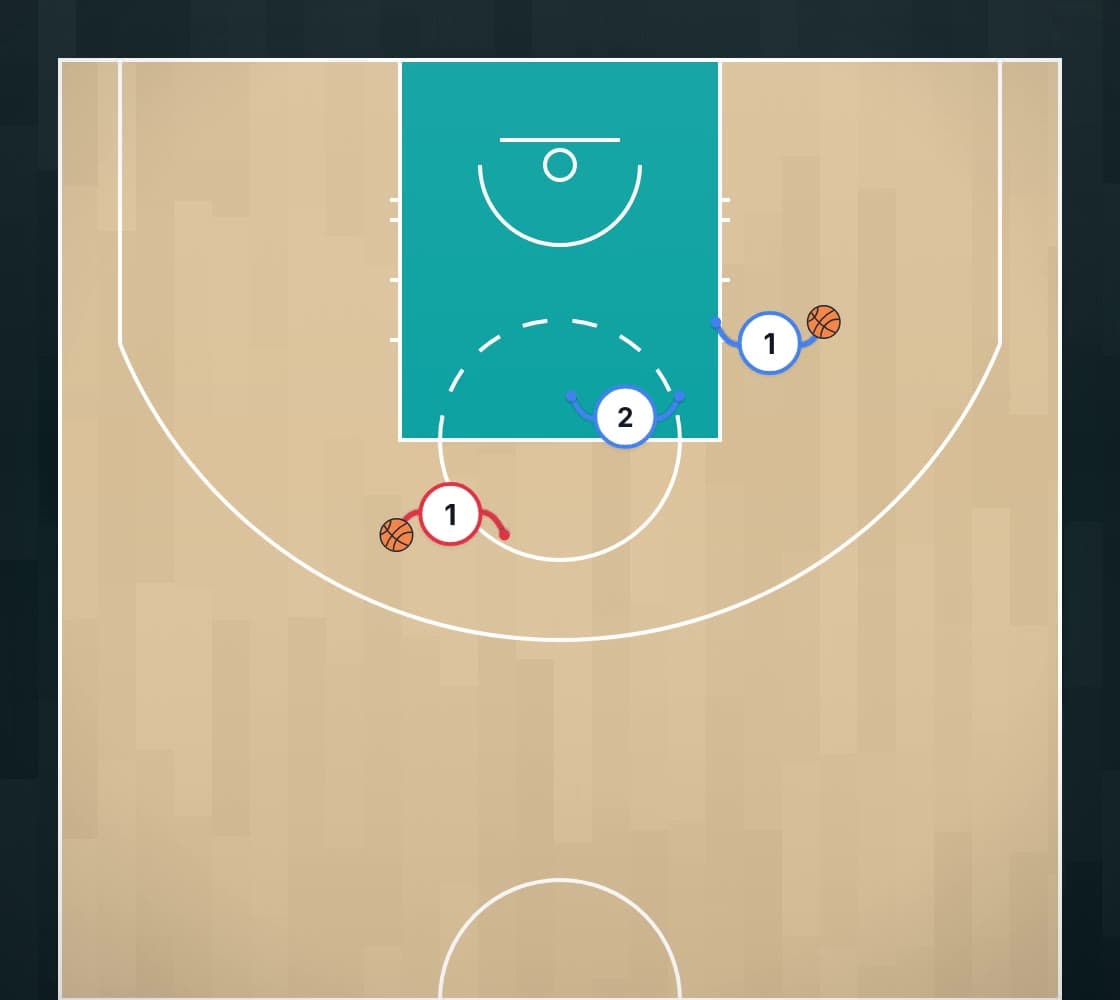
Small-sided games library
Games from This Guide in the Library
Questions Coaches Ask
What should a U12 basketball practice include?
Our U12 Practice 1 has six activities: differential-learning shooting, Shield Tag, two 1-on-1 finishing games, 3-on-2 Dominoes Bursts and a constrained 5-on-5. Every live game has a defender, scoring rewards gold and silver medal shots, and the coach avoids giving players the answers.
How long should a U12 basketball practice be?
Our plan doesn't give a total length. It asks for 10-minute changing stations, so six activities fill about an hour, and the 3-10-30 framework caps any activity at ten minutes before you change it. Some coaches move on sooner.
What does TLC mean on a basketball practice plan?
Teach, Learn, Compete, a framework from Mike MacKay of Basketball Canada. Teach means the coach can stop the activity to cue, Learn means cue on the fly without stopping, and Compete means no stopping or feedback at all, like a road game.
What are gold and silver medal shots?
It's our shot-selection system. Gold medals are free throws and finishes inside the smile, the restricted arc under the basket. Silver medals are catch-and-shoot threes, particularly from the corners. In the U12 plan, many games only count gold, or gold and silver.
Should U12 teams run pass and cut offense?
We don't think so. In 3-on-2 and 4-on-3 advantage games, youth players who pass and cut straight away let one defender guard two and lose the advantage. The U12 plan calls pass and cut a turnover in its 2-on-2 and 5-on-5 games and builds offense from 1-on-1 and dominoes instead.
What is floor is lava in youth basketball?
A spacing constraint. In the U12 plan, any catch in the mid-range is a turnover unless it comes from a ghost cut, which pushes players out to the perimeter or into the dunker spot. Other versions on our site use slightly different rules, so choose one and officiate it consistently.
Take It to Your Next Practice
U12 X20 Practice Plan Bundle
$99 USD
Twenty age-specific practice plans for U12 — each with activities, constraints, feedback and scoring.
Sources
- Transforming Basketball U12 practice plans, Practice 1, plan as written in December 2024
- Transcending Basketball, Alex Sarama (Wiley, forthcoming): chapters 3 and 4, including Mike MacKay's section on planning and TLC
- Principles of Play workshop deck, Alex Sarama: U12 season plan slide
- Transforming Basketball, Alex Sarama (2024): chapter 8, Shield Tag 1-on-1+1, and chapter 9, Considerations for Youth Programs
- EP26: How to Use the CLA with Beginners
- Why Pass and Cut Motion Offense Is Harming Youth Basketball, Alex Sarama
- The Medieval Siege and Transition Defense, Alex Sarama
- Using Floor is Lava in Youth Basketball, Alex Sarama
- How to Plan Your Youth Basketball Practices, George Vaz
- Understanding the Ghost Cut in Basketball, George Vaz
- Principles Over Rules, George Vaz
- How to Coach Basketball Shot Selection, Alex Sarama
- Chow, Davids, Hristovski, Araújo and Passos (2011), "Nonlinear pedagogy: Learning design for self-organizing neurobiological systems", New Ideas in Psychology
- Myszka, Yearby and Davids (2023), "(Re)conceptualizing movement behavior in sport as a problem-solving activity", Frontiers in Sports and Active Living
- Gentner (1983), "Structure-mapping: A theoretical framework for analogy", Cognitive Science
Behind the methodology
About Alex Sarama
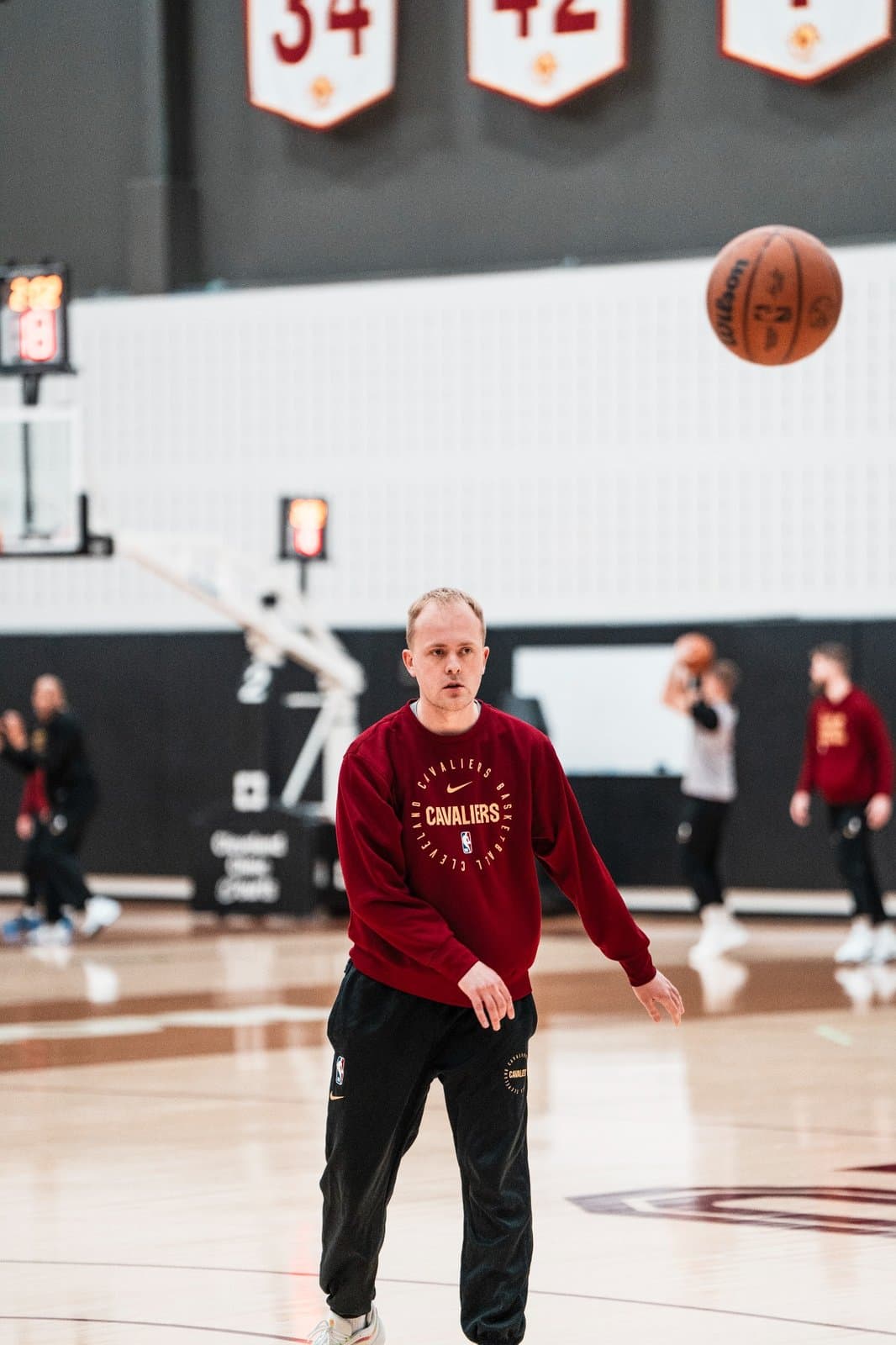
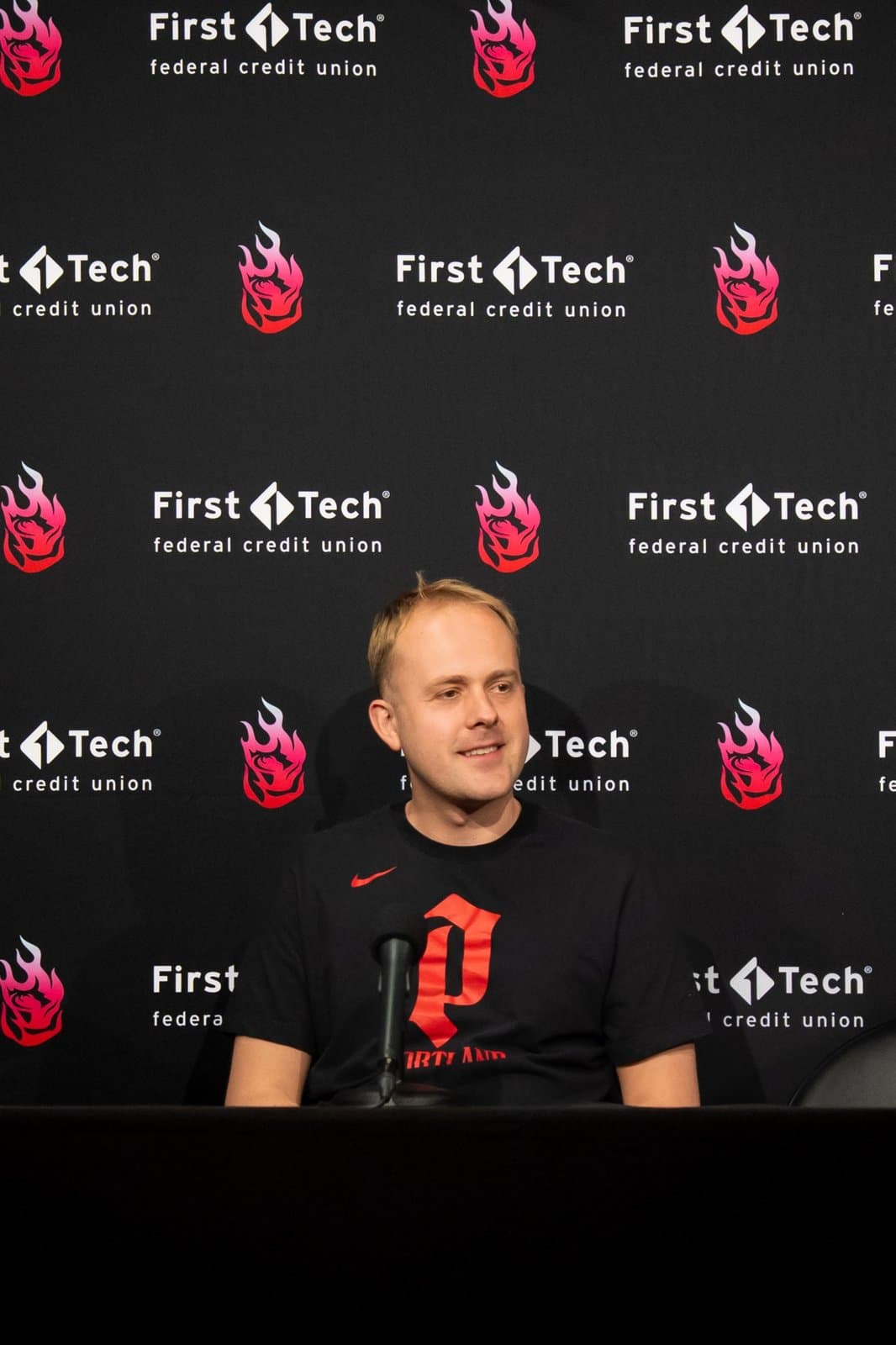
Alex Sarama
Founder, Transforming Basketball · Head Coach, Portland Fire
Alex Sarama is the founder of Transforming Basketball and Head Coach of the WNBA's Portland Fire. Previously, he served as Assistant Coach and Director of Player Development with the Cleveland Cavaliers.
His wider experience includes NBA Europe in Madrid, Paris Basketball in the EuroCup and the Rip City Remix, the Portland Trail Blazers' G League affiliate. Alex has delivered clinics in over 40 countries and has written three books on the constraints-led approach in basketball, including the Amazon bestselling Transforming Basketball (2024) and A Constraints-Led Approach to Coaching Basketball (2026).