
Coaching guide · Coaching courses
Basketball Coaching Courses
Pick a course for one specific problem in your team. We have four complete courses, and each one goes deep on a single priority, whether that's shooting, the pick and roll, individual player development or a conceptual offense.
11 min read
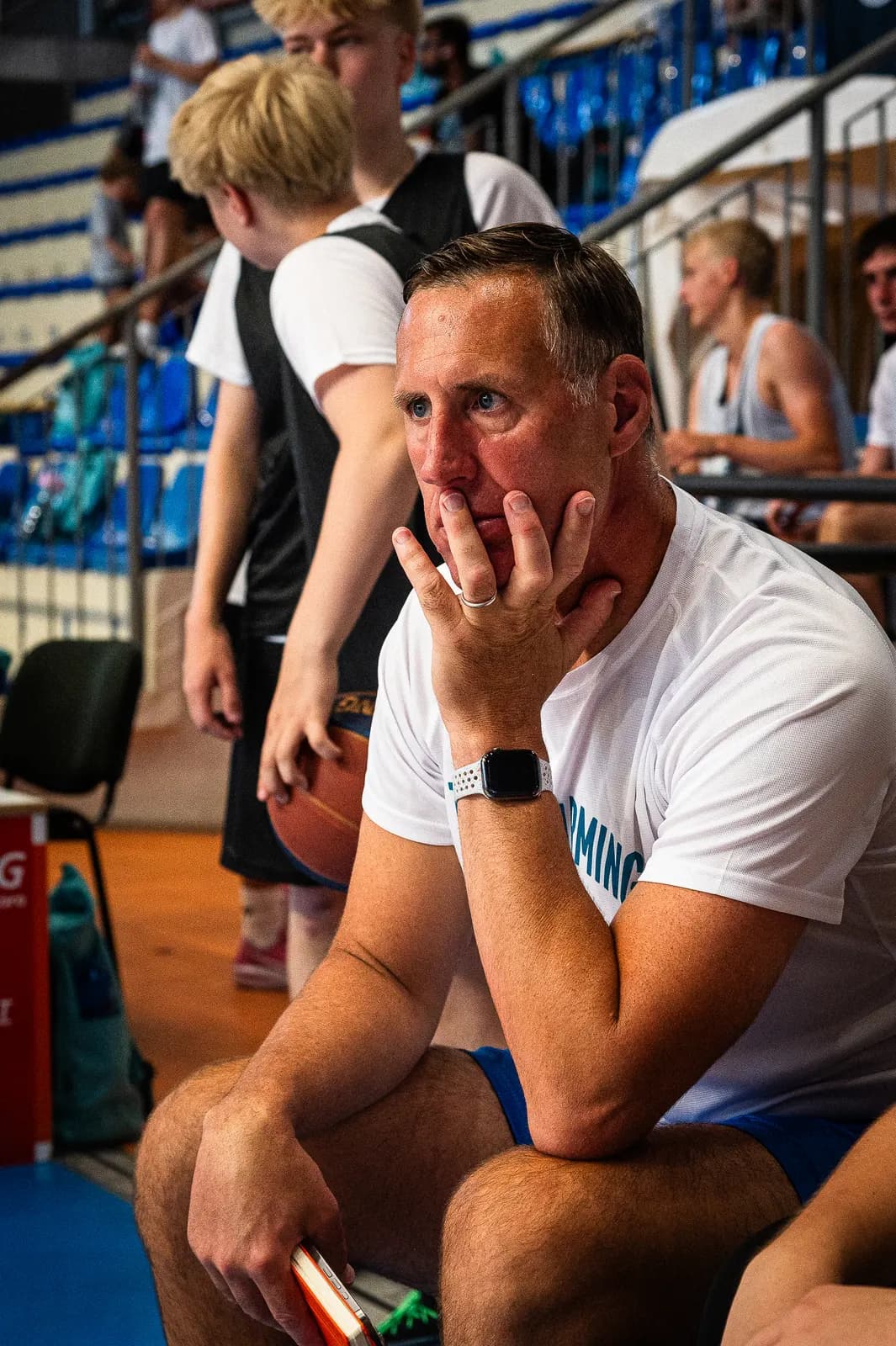
More coaches now put a live defender into shooting practice. Alex Sarama's article on Jungle Shooting points out what can go wrong next: take away the option to pass, and players end up taking poor-quality shots.
“While it’s great to see coaches incorporating live defenders, the over-constraining nature of the game leads to players shooting poor quality shots.”
A good course gives you that level of detail. It tells you why each constraint is there and how to manipulate it when your players find different solutions. When you compare courses, look for representative examples against live defense, and preview the teaching. Check the topics, instructor, access and refund terms on the course page before you buy.
How to Judge Any Course
Alex's first book, Transforming Basketball, gives a yardstick you can hold any course up to: the representative dial, inspired by the nonlinear pedagogy work of Jia Yi Chow and colleagues. At the least representative end are 1-on-0 and training props. At the most representative end is the game itself. Every activity in the book sits somewhere in between, from Mosquito Shooting to Three Lives 5-on-5, and the book's advice is that whatever the scenario, you avoid sliding back to the far left of the dial with highly repetitive on-air practice.
Two questions follow from that. How much of what the course shows has a defender, teammates and a decision in it? And does it explain why each constraint is there? The book says plainly that its own activities shouldn't be copied identically, because the theory behind each one matters more than the activity. A course that only hands you drills to copy leaves you stuck the first time your players solve the problem differently.

Free
Skill Acquisition Workshop
An online workshop on contemporary skill-acquisition principles for coaches.
Name the Problem First
Before choosing, write down one situation you want your players to handle better. For example: "our offense can't create an advantage when a ball screen is switched." If you can't name it yet, start with the free decision-making guide and practice design guide, then come back.
| Course | Price | Who it suits |
|---|---|---|
| The Shooting System | $499 | Coaches whose main priority is shooting development. |
| The Pick and Roll Offense | $499 | Coaches ready to study ball-screen offense and defensive coverages in depth. |
| The Player Development Blueprint | $499 | Player-development coaches working on individual needs within basketball situations. |
| Youth Conceptual Offense | $499 | Youth and team coaches developing a complete offensive framework. |
If Shooting Is the Priority
The Shooting System is for coaches who want a complete shooting-development framework rather than isolated drills. It takes the free A Better Shooting Practice video further: a full course on constraints-based shooting, differential learning and competitive challenges. It's built for coaches and trainers developing shooters in individual, small-group or team settings.
Differential learning (DL) is the part most coaches haven't met before. Transcending Basketball describes it as practicing with as much variability as possible: changing range, stance, release and arc on every shot. Many DL activities aren't meant to look like a game shot at all. In the book, Alex presents DL as a complement to the constraints-led approach, not a replacement for it.
“DL is essentially variability on steroids!”
The other half of the shooting work is representative: shooting against defenders, with the passing option the Jungle Shooting article says players need. Transforming Basketball includes the full game. Its target is the BRAD (back rim and down), a made jump shot that hits the back of the rim dead center before bouncing down.
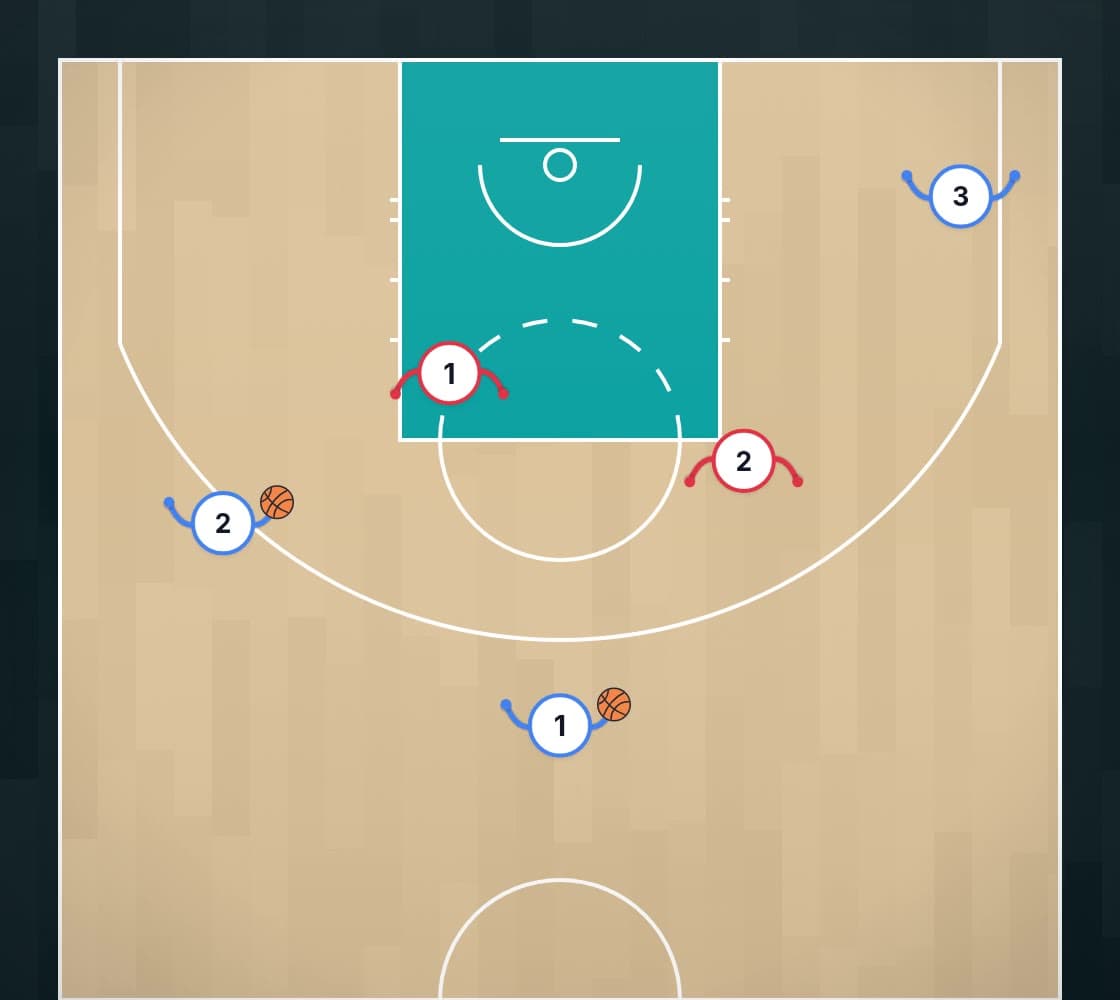
Jungle Shooting 3-on-2
5 players, 2 basketballsA representative shooting game. Shooters never shoot in a predetermined way in a game, so here they move, drive and pass to find their threes against live defenders.
How it works
- Three shooters start anywhere around the three-point line, with two defenders in random spots. The offense has two basketballs.
- When the timer starts, both teams stay in their roles continuously for 60 seconds.
- The offense can only shoot threes, but can move, drive and pass. The defense tries to block shots and steal passes.
- Both teams rebound, and play continues as soon as the ball is cleared outside the three-point line.
- The offense wins with five BRADs or swishes in 60 seconds. The defense wins with a combination of three turnovers and blocked shots.
Adapt it
- Change the numbers, such as four shooters and three defenders with two, three or four basketballs.
- Constrain the triggers the offense can use, such as flare screens, exit screens or gets.
- Reduce the space to half of the half court, or let the offense also score rim finishes.
- Play loud music or crowd noise.
Our shooting development guide covers shot selection and varied practice for free.
If Your Offense Runs Through Ball Screens
The Pick and Roll Offense is for coaches who want to develop better decision-makers in pick-and-roll situations. It suits coaches whose players are learning or already using ball screens, and developing and senior teams can scale the same spacing and partnership principles. The course is organized around coverages, because players only learn to read a coverage when the defense in practice can change it, guided or live.
George Vaz's article on prevent vs punish gives the framework those reads hang on. To prevent a coverage, the offense acts before the defense can set it up, such as screening the ball handler's defender so the handler can attack downhill. To punish it, the offense lets the defense set the coverage and then uses a coverage solution against it: a reject, a slip, a crack and roll, a relay pass, a curl, a split or a pull-up, depending on the coverage and the players.
How the defense plays in practice decides how much of that transfers. The Routledge book Alex co-wrote sets out three options:
| Defense | What it is | Strength | Limit |
|---|---|---|---|
| Scripted | The offense knows what the defense will do. | Highlights one coverage solution players are struggling with. | Least representative of the game; use it sparingly. |
| Guided | The defense presents a menu of coverages, and the offense has to find a solution. | Attunes the offense to the most attractive affordance in a specific context. | Not the intensity of a live game. |
| Live | The defense has full freedom within the team's principles of play. | The most representative, with the most transfer. | Players may struggle to see the affordance, or to act on it. |
If you want games rather than a full course, the Pick and Roll Small-Sided Games Collection ($49) is a collection of 40 small-sided games for teaching pick-and-roll reads to ball handlers, screeners and defenders. The free PNR Coverage Solutions PDF and our pick-and-roll guide are good places to start.
If You're Building Individual Players
The Player Development Blueprint is for coaches who want a complete framework for developing more adaptable players. It's built for team coaches and individual trainers working on finishing, ball manipulation, shooting and decisions.
Individual development starts with a rate limiter, which the book defines as a factor that affects a player's ability to express a skill. It might be an action capability such as speed or strength, or a player not perceiving the affordances in front of them, the opportunities for action the defense is giving them. Alex explains how he identifies and targets them on EP101 of the podcast. For a shorter starting point, Contemporary Player Development ($39) is an in-depth clinic, recorded for the German Basketball Federation, on developing players and teams through small-sided games. The player development guide is free.
The plan format in Transforming Basketball is a good test of whether you need the full course. It sorts each player's game into anchors (greatest strengths), building blocks (things they do well that could get better) and growth areas (the pervasive rate limiters that need the most time). It then cycles through six phases: identify the rate limiter, build a case for its cause, design activities, observe the change, report back to the head coach and look for the next one. If your staff already works that way, the Blueprint adds activities. If it doesn't, the course is where that process gets built.
If You Want a Whole Offense
Youth Conceptual Offense is for coaches who want a complete framework for building a conceptual offense. It suits middle-school, high-school and senior teams building a shared offensive language. If you'd like a focused introduction first, Implementing a Conceptual Offense ($49) takes offensive principles, triggers and coverage solutions onto the court in a single clinic. The free Conceptual Offense Starter Kit and conceptual offense guide come before both.
Conceptual offense has its own vocabulary, and a course should teach it. The Routledge book organizes youth offense into three phases and a short set of dominoes rules for playing with an advantage:
| Idea | What it means |
|---|---|
| Green | Transition offense, where dominoes can start with speed. |
| Yellow | The end of transition, or a lost advantage, when the team flows into a trigger such as a pick and roll or a screen away. |
| Red | Set plays as triggers, used sparingly, on dead balls or referee touches. |
| Zero seconds | Shoot, drive or pass in under a second. |
| 1 can't guard 2 | Space so one defender can't guard two offensive players. |
| Floor is lava | Anywhere inside the three-point line except the dunker spot. Players can't catch there unless they're cutting to the rim. |
Triggers come in sizes. Solos are one-player actions, duos include the get, the blast cut and the pick and roll, and three-player triggers such as Spain or stack pick and roll can sit in red, or in yellow once a team can find a coverage solution. The conceptual offense guide goes through them.
Not Ready for a Full Course?
If you want to design practice around game decisions but aren't sure where to begin, start with Introduction to the Constraints-Led Approach ($49), an on-demand clinic taught by Alex. It covers why the CLA matters, functional versus fundamental skills, designing small-sided games and applying the approach with youth players. Our clinics each take one topic, while the four courses above are complete coaching systems for a broader subject. The basketball coaching clinics guide lists every clinic, and you can compare all our coaching resources side by side.
We also have five on-demand workshops:
| Workshop | Price | What it's for |
|---|---|---|
| Workshop: All Access Youth Camps | $99 | Watch how Alex Sarama uses constraints and small-sided games in a youth camp. |
| Workshop: The Small-Sided Games Collection | $199 | Build your practice around 100 small-sided games. |
| Workshop: Coaching Beginners and Youth Basketball | $249 | 140 activities for beginners and youth players, with ways to adjust constraints as players develop. |
| Workshop: Basketball Athletic Performance | $249 | Alex Sarama and Jamie Smith on how basketball coaches and strength coaches can link their work. |
| Workshop: Championship Culture | $149 | How Alex Sarama approached team culture through meetings, player leadership and everyday communication. |
Whichever you choose, treat it like a practice plan. Find an activity for the situation you wrote down, run it, and watch whether players perceive the affordance when the defense gives it to them. A player who sees it but can't act on it may need a different starting position or less defensive pressure, such as a more passive guided defender. Then go back to the material with what you saw.
Small-sided games library
Games from This Guide in the Library
Questions Coaches Ask
What are the best basketball coaching courses for developing decision-making?
Pick the one built around the decisions your players need to improve. Look for examples against live opponents, explanations of why each constraint is used and guidance on adapting activities, and check the topics, instructor, access and refund terms first. At Transforming Basketball, start with Introduction to the Constraints-Led Approach, or choose The Shooting System, The Pick and Roll Offense or The Player Development Blueprint for a narrower priority.
Which Transforming Basketball course should I take?
Match it to your players' biggest problem. The Shooting System covers shooting, The Pick and Roll Offense covers pick-and-roll decisions, The Player Development Blueprint covers individual development and Youth Conceptual Offense covers a whole offensive framework. Each is $499.
What's the difference between a basketball coaching clinic and a course?
At Transforming Basketball, a clinic is an on-demand session on one topic, such as the constraints-led approach or shot selection. A course is a complete coaching system for a broader subject, such as shooting, the pick and roll or player development.
What is differential learning in basketball shooting?
Differential learning means practicing with as much variability as possible, such as changing range, stance, release and arc from shot to shot. In Transcending Basketball, Alex Sarama presents it as a complement to the constraints-led approach. It's one of the ideas The Shooting System is built on.
Where can I learn the constraints-led approach for basketball?
Start with the free constraints-led approach guide and the 21 SSGs for Your Next Practice resource. For a structured introduction, Introduction to the Constraints-Led Approach ($49) is an on-demand clinic taught by Alex Sarama covering the reasoning behind the CLA, functional versus fundamental skills, small-sided games and youth players.
Is there a cheaper option than a full course?
Yes. The on-demand clinics cost $29 to $49 and each take one topic, such as Implementing a Conceptual Offense or the Pick and Roll Small-Sided Games Collection. Free resources such as A Better Shooting Practice and PNR Coverage Solutions are a good first step.
Take It to Your Next Practice
Free
Skill Acquisition Workshop
An online workshop on contemporary skill-acquisition principles for coaches.
The Shooting System
$499 USD
Take A Better Shooting Practice further with The Shooting System: a full course on constraints-based shooting, differential learning and competitive challenges.
The Pick and Roll Offense
$499 USD
For coaches who want to develop better decision-makers in pick-and-roll situations.
The Player Development Blueprint
$499 USD
For coaches who want a complete framework for developing more adaptable players.
Youth Conceptual Offense
$499 USD
For coaches who want a complete framework for building a conceptual offense.
Sources
- Transcending Basketball, Alex Sarama (Wiley, forthcoming): chapter 2 and the glossary
- How to Use Jungle Shooting to Improve Your Team's Shooting, Alex Sarama
- EP101: Identifying and Targeting Rate Limiters
- Schöllhorn et al. (2012), "The Nonlinear Nature of Learning - A Differential Learning Approach", The Open Sports Sciences Journal
- Transforming Basketball, Alex Sarama (2024): chapter 6 (PDP format and framework) and chapter 8 (representative dial, Jungle Shooting 3-on-2)
- A Constraints-Led Approach to Coaching Basketball, Sarama, Lascu, Vaz Rocha and Houghton (Routledge, forthcoming): Tables 4.2, 4.3, 4.4 and 4.7
- Pick and Roll Offense: Prevent vs Punish, George Vaz
- Common Triggers for a Conceptual Offense, George Vaz
Behind the methodology
About Alex Sarama
Alex Sarama
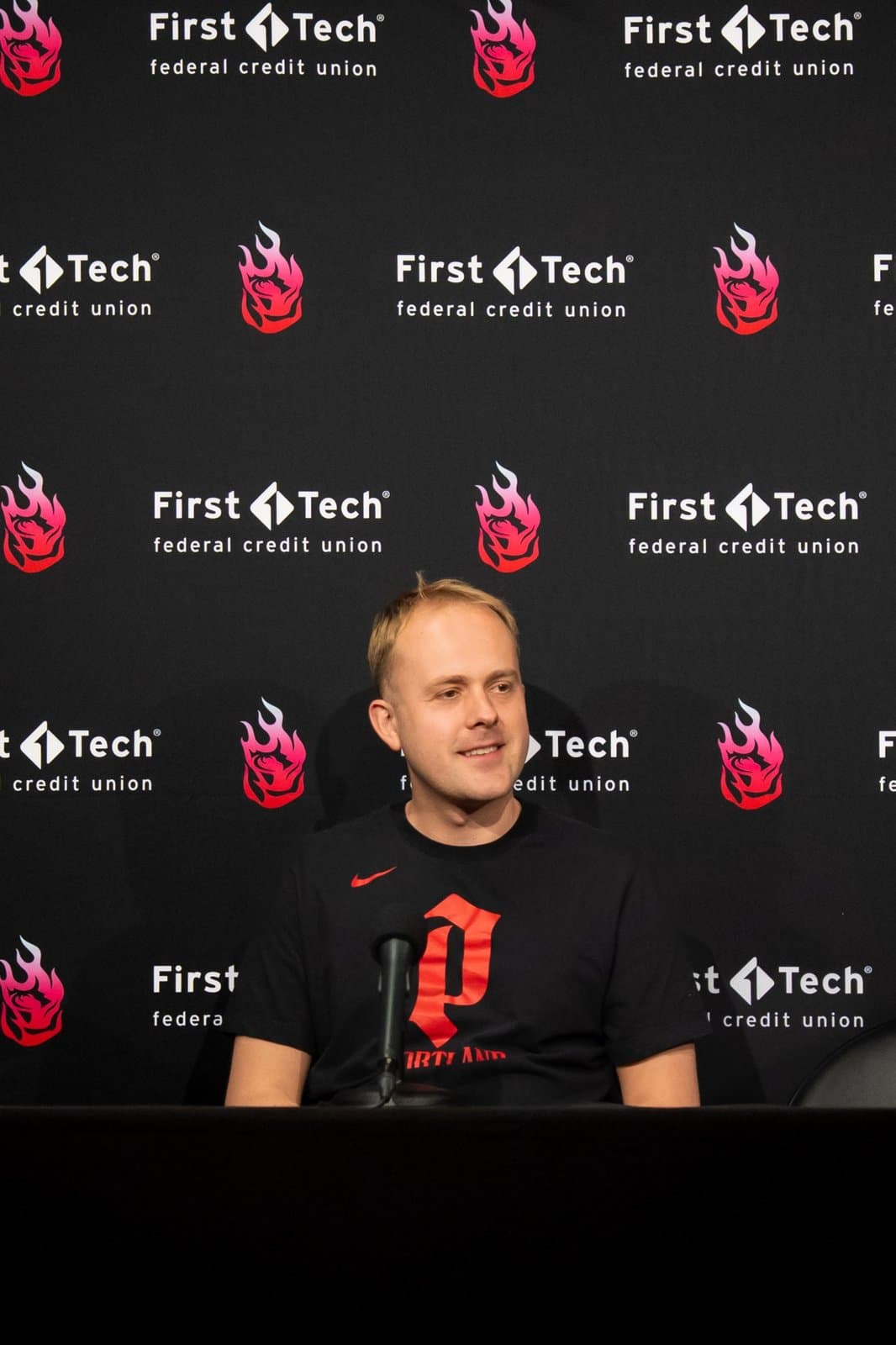
Founder, Transforming Basketball · Head Coach, Portland Fire
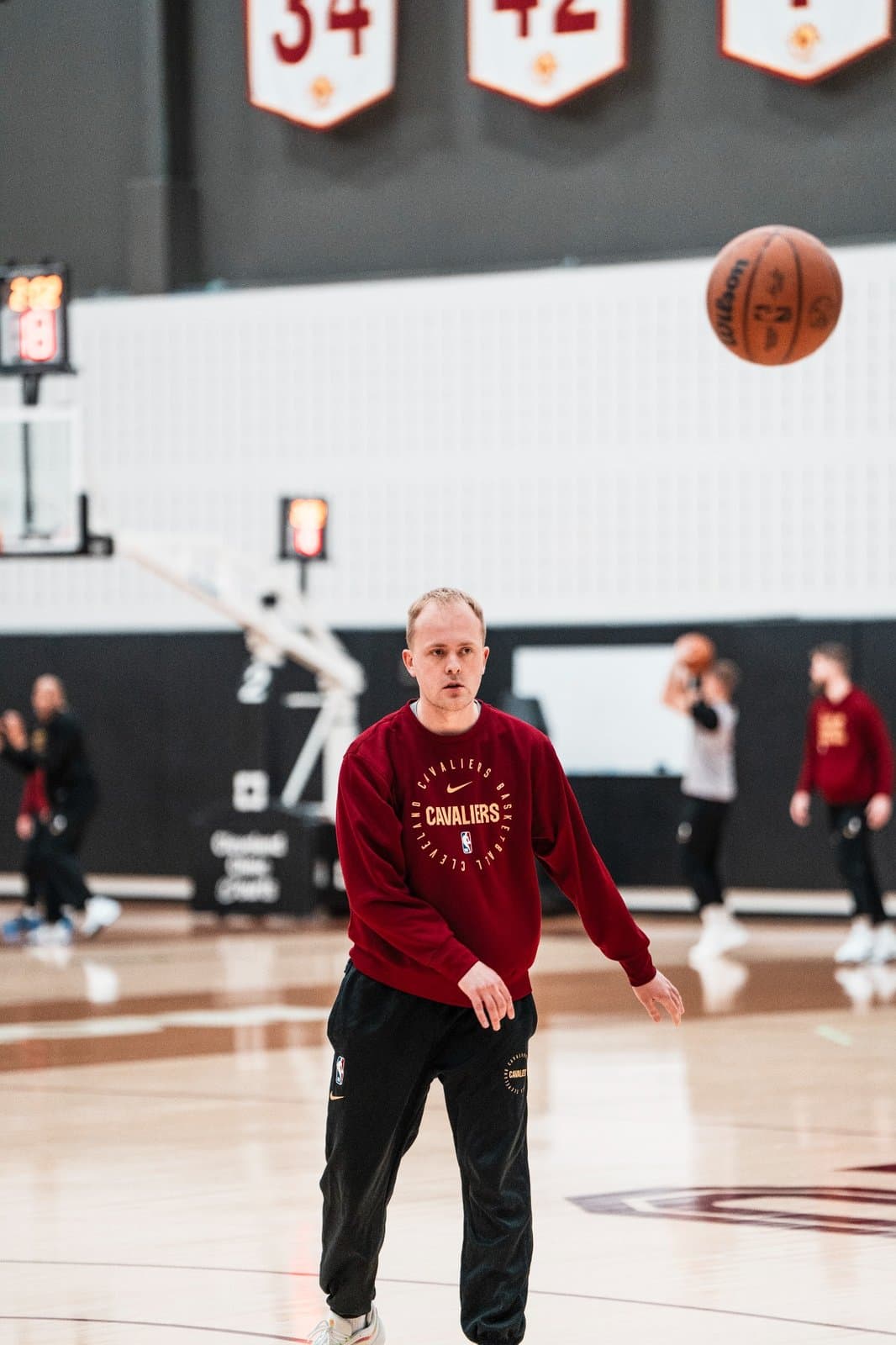
Alex Sarama is the founder of Transforming Basketball and Head Coach of the WNBA's Portland Fire. Previously, he served as Assistant Coach and Director of Player Development with the Cleveland Cavaliers.
His wider experience includes NBA Europe in Madrid, Paris Basketball in the EuroCup and the Rip City Remix, the Portland Trail Blazers' G League affiliate. Alex has delivered clinics in over 40 countries and has written three books on the constraints-led approach in basketball, including the Amazon bestselling Transforming Basketball (2024) and A Constraints-Led Approach to Coaching Basketball (2026).