
Coaching guide · Decision-making
Basketball Decision-Making
Telling a player the right read doesn't mean they'll make it. Players learn reads in live games and against guided defense, where the defender can take the read away and no two reps look the same.
13 min read
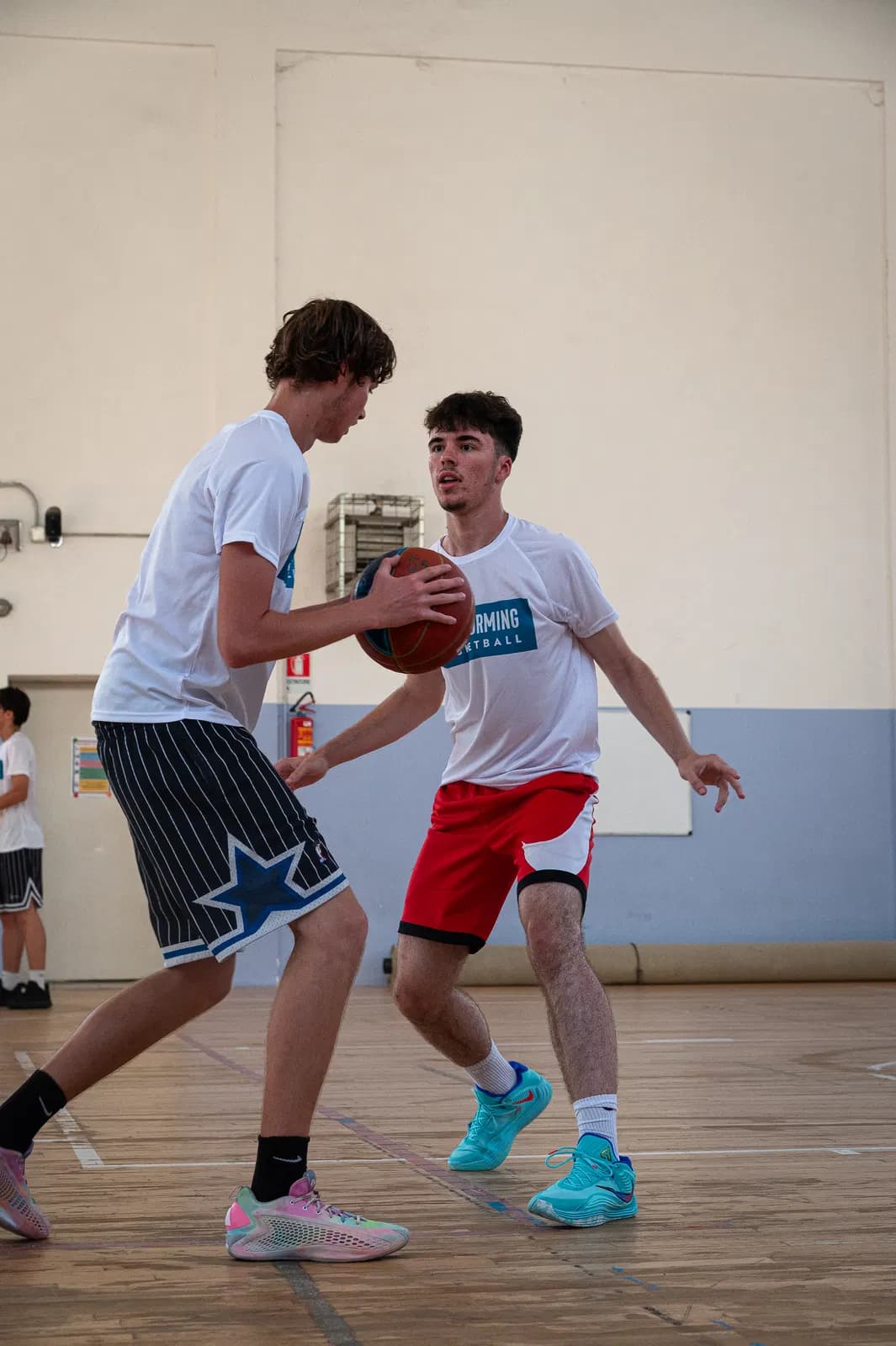
Picture a 2-on-1 in transition. The ball-handler has a teammate running alongside, open. They keep dribbling, go all the way to the rim and miss the layup. From the sideline it looks obvious, and it looks selfish.
Alex uses exactly this example in Transcending Basketball, and his point is that the coach can't know what was going on inside the player's head, or whether the player even scanned to see the teammate. If that player has never practiced the situation in a game-like environment, instruction on its own won't change what happens next time. The book puts it this way:
“Just because a coach says it, it does not necessarily prepare the players to do it effectively!”
Transforming Basketball also questions how player development usually files decisions: shooting, dribbling and finishing in one list, and "decision-making" in a box of its own. Players are reading their environment and acting on it every moment of a possession, so every shot, drive and pass is already a decision. A technique learned out of context has to be relearned in context. That is why every game below has a defender in it.
You Can Know the Read and Still Miss It
The ecological psychologist James Gibson separated two kinds of knowledge, and chapter 4 of Transcending Basketball is built around them.
| What it is | Where it comes from | |
|---|---|---|
| Knowledge about | Information players receive indirectly | Film, scouting reports, whiteboards, team meetings, a player's answer to a coach's question |
| Knowledge of | What players actually do in the game | Their movement solutions and behavior on the floor |
Most decision-making work in basketball builds the first kind. The book's example is the scouting report: coaches label an opposing player a "hot shooter" who needs a closeout that takes away the catch-and-shoot three. Whether the team is attuned to that shooter once the game starts is a separate question.
Knowledge about gives a team shared language, and it can direct a player's attention to what matters, but it's always secondary. Alex's view is that the best way to develop decision-making is to spend practice time in representative games, where players face the same information they'll see on game night, and less of it explaining.
“Players learn far more effectively within highly specific environments with well-designed constraints compared to receiving lots of instruction and detailed knowledge imparted by a coach.”
The First Question: Do We Have an Advantage?
Every offensive decision starts from one question: do we have an advantage right now, or is the defense neutral, with every defender guarding their player and nobody scrambling? On EP30, Alex put the purpose of offense this way:
“I consider the concept of offense to create an advantage because as soon as we create one advantage, we are looking to extend that advantage until we score.”
An advantage might be a 2-on-1, a defender recovering on a closeout or a matchup your player can attack. Playing with that advantage is what we call dominoes, an analogy Transcending Basketball credits to the coach Ross McMains. One defender has to help, another has to rotate, and the last domino to fall should be a high-value shot. The three dominoes concepts in the book are adapted from McMains's original ideas:
- Zero seconds. Drive, pass or shoot in zero seconds on each catch, so the defense can't get back to neutral. George Vaz's article on playing with advantage notes the San Antonio Spurs called these ".5" decisions.
- Expand the defense (1 can't guard 2). Space to a spot where one defender can't guard two offensive players.
- The floor is lava. After a drive or cut, get back out to space quickly, as if the mid-range were lava, so a teammate can use the space you left.
These concepts tell players what to look for while the advantage lasts, rather than which decision to make. How each possession plays out depends on where the ball is, where the empty space is and how the defense rotates, which is why the book is clear that the interactions will always be different.
Mike MacKay of Canada Basketball has his own way of putting the same idea to players. Batman is the player with the current advantage. The skill is knowing when Batman has to defer to Robin, the teammate who now has a better one.
When the Defense Is Neutral
If there's no advantage, you have to create one. A trigger (a pick, a get, an off-ball screen, a 1-on-1) forces the defense into an interaction, and how they choose to guard it decides what's available. The offense's answers to each coverage are its coverage solutions.
This is where a lot of decision-making teaching goes wrong. Coaches turn coverage solutions into "if X, then Y" rules: if they switch, do this. Transcending Basketball argues that coverage solutions are possibilities, not musts. Even a team that switches every screen will switch differently each time, depending on the defenders, the spacing, the time and score and how tired everyone is.
“Authentic decision-making means that players have the freedom to act on several affordances as opposed to being forced into a very narrow range of solutions.”
Transforming Basketball shows how one coverage solution opens several others. Say the picker slips. If the defense tags from the single side, the handler may have a throwback pass to the open teammate. If the tag comes from the two side, there may be a skip to the weak side. If nobody tags, the handler may hit the roller with a pocket pass. And if players don't see any of it, they re-trigger and try to start dominoes again.
“Coverage solutions guide players in their exploration of the environment, focusing attention and providing hints as to where and what it may be useful to look for.”
Beware of automatics. In Transforming Basketball, NBA assistant coach Charles Klask describes rules like "never drive the drive", where players must wait for another pass before driving. Rules like that leave players with one solution. If a player drives, kicks and gets straight out to space, driving again could be a great option.
Our pick-and-roll guide goes through coverage solutions coverage by coverage, and the conceptual offense guide shows how triggers fit into a whole offense.
Games That Train Decisions
If you want better decisions, design games where the read you care about keeps coming up against live defense. That gives players repetition without repetition, the same decision with a slightly different picture every time. Each of these three targets a different moment in a possession.
3-on-2 Advantage Bursts
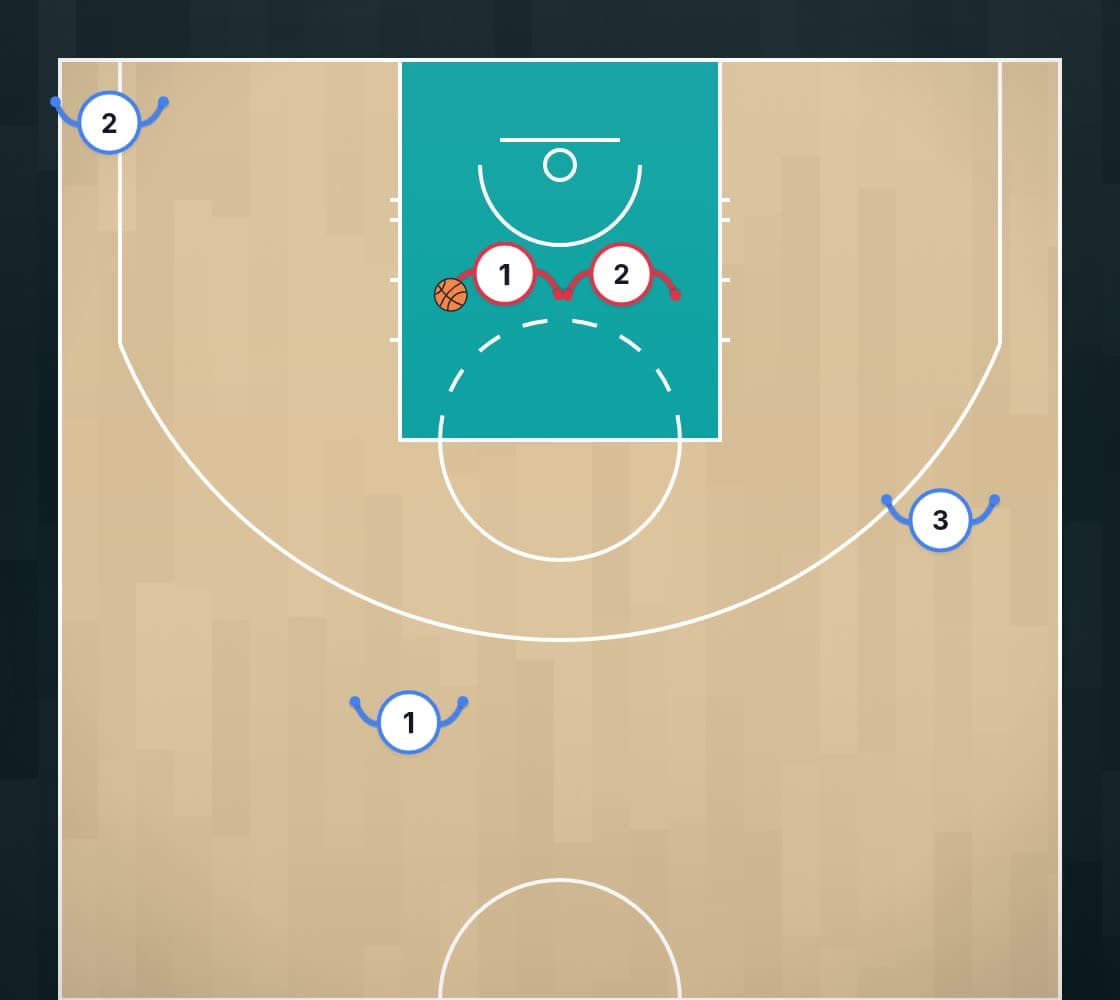
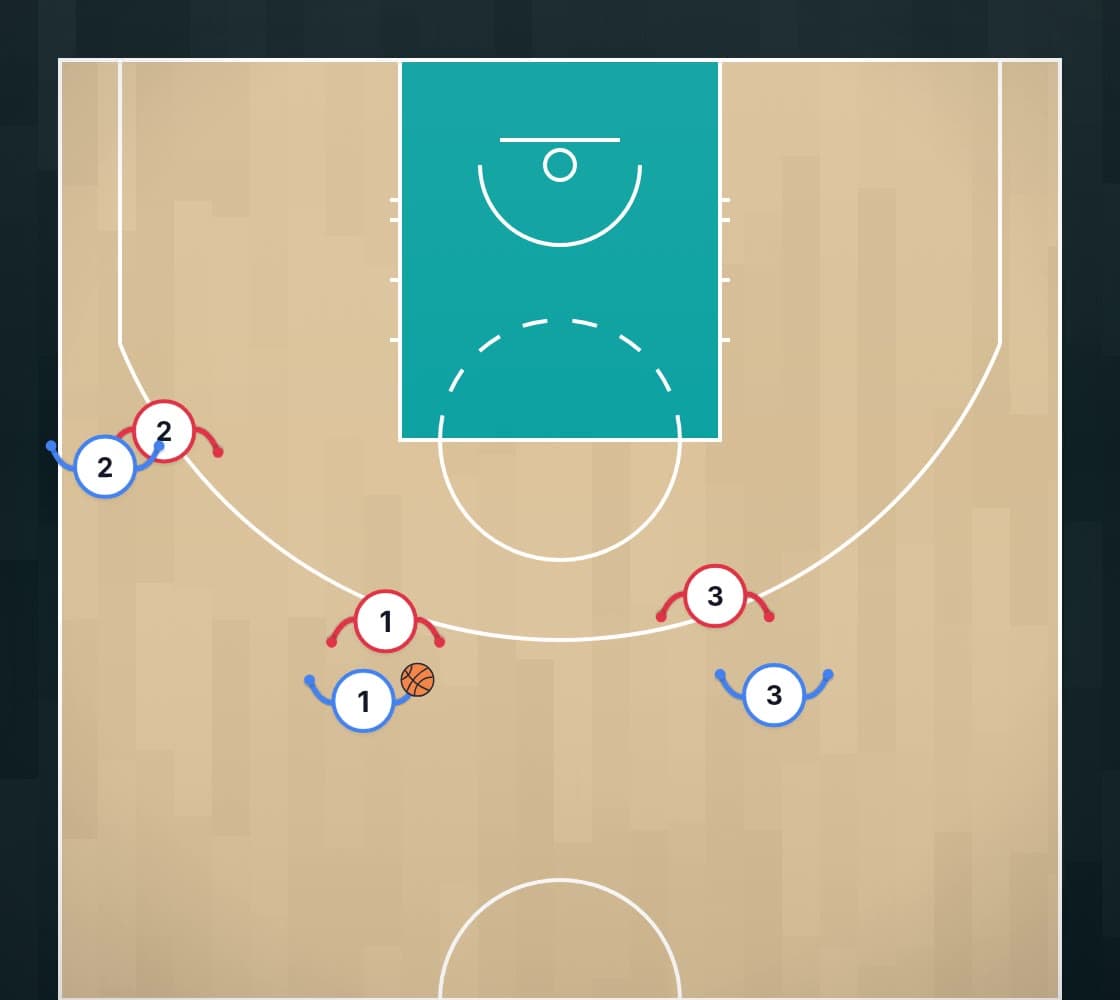
5 playersRecognize an advantage and use it before the defense gets back to neutral.
How it works
- Start three offensive players in different locations outside the three-point line.
- Two defenders begin with the ball and pass to the offense to start the possession.
- Play until a score or defensive possession.
- Reset with the offense in different starting locations, keeping the same roles for one minute before changing.
Watch for
- Can the receiver make the correct decision to shoot, drive or pass before the defense recovers back to neutral?
- Are teammates adjusting their spacing as the ball moves?
3-on-3 Continuous Advantage
6 playersPlay dominoes and keep the defense from getting back to neutral, possession after possession.
How it works
- The offense goes around a cone or a coach, and the defender follows. The coach can change locations.
- If the offense loses the advantage, it's a turnover, and the defense continues by going around the cone.
- Make it, take it. If the defense rebounds, they go on offense and must go around the cone or coach first.
Adapt it
- Turnover for not making a zero-second decision.
- Gold medal finishes (inside the restricted area) are worth double.
- Only a ROB shot (rhythm, open, balanced) keeps the offense on for the next possession.
Watch for
- Do players recognize the moment the advantage is gone, or keep forcing it?
2-on-2 Train to Trigger
4 playersUse a trigger to create an advantage from neutral, then play in zero seconds.
How it works
- Play 2-on-2 with a two-pass limit, so the pair has to create something with a trigger rather than swing the ball until it happens.
Watch for
- Does the pair create an advantage and use it, or swing the ball until the passes run out?
Transforming Basketball also warns against teams that run lots of triggers without creating an advantage from any of them. If that's your team, constrain the offense to a few triggers until they start dominoes reliably. Battleship does exactly that, and it makes the defense smarter too.
Battleship 3-on-3
6 playersStart dominoes out of one trigger from different spots, against a defense that knows what you need.
How it works
- Play 3-on-3 in the half court. The offense can only use the chosen trigger, for example a get.
- To win, a team needs four strikes: a score from dominoes started straight out of the trigger, from four different locations (for example the wing, both 45s and the top).
- Any other score doesn't count as a strike, but the offense keeps the ball.
- When the defense gets a stop, they go straight to offense.
Adapt it
- Use a different trigger or a mix: pick and roll, gets, screen aways, flare screens.
- Constrain the defense to one coverage: only switch, drop or show.
- Add a 10-second shot clock.
- Let the offense pick its strike locations secretly, like the board game, so the defense can't prepare its coverages.
Watch for
- Late in the game, the defense knows exactly what the offense needs and will pressure on and off the ball. Does the offense find answers to that pressure?
Fixing a Decision Without Stopping the Game
When players keep missing the same read, the instinct is to stop practice and explain it again. Change the game first. If the ball-handler struggles to recognize help, a numerical advantage can make the available pass easier to identify. If teammates aren't providing passing options, changing the space can emphasize their positioning. You can show a possible solution when it's needed, then let players use it against guided defense, where the defender keeps changing coverage and the offense doesn't know which one is coming.
Sometimes the solution you want never shows up, and you can't wait forever. Transforming Basketball gives an example. A team wants to punish the ice coverage, so it plays 2-on-2 pick and roll in a tight half-court space, with a six-second clock and the defense always icing. After a few minutes the coach steps in. Praise what worked (fighting the ice and using the pick before the ice defender gets there), then mention two more options, flipping the pick or bringing the ball down for a get, and ask players to try them. Present them as possibilities, not as a pattern to repeat every time.
On timing, Transcending Basketball argues that even a very small number of live reps before you introduce a solution is better than teaching it immediately and assuming players can't come up with their own. If they still can't solve it after a fair amount of time, be more explicit, because repeated failure is discouraging and players stop learning.
Questions and Debriefs, Used Sparingly
Questions develop knowledge about, which has its place, but they cost time. The book warns against importing classroom techniques like cold-calling wholesale. Used well, a cold call is targeted: one player who isn't seeing the passing options against a blitz gets a question that points them at another part of the floor, asked during a break or while they wait on the sideline.
Mike MacKay's short debriefs are the model we like. The questions change through the season so there's never one right answer, for example "What game principles do you think we need to work on before our next game?" or "What are some of the reasons as to why our transition offense was so effective today?" Players might get a few seconds to think, or 30 seconds in pairs, before sharing. Alex suggests using debriefs as breaks during intense parts of practice, so they don't eat into live play.
“Coaches must remember that every second spent instructing players takes valuable time away from players developing “knowledge of.””
For more on how to phrase what you do say, read Alex's article on better coaching feedback and informational constraints.
What Doesn't Train Decision-Making
Flashing lights. Reaction-light drills are sold as decision training. Transcending Basketball is blunt about them:
“Lights are no better than static cones and do not provide authentic decision-making opportunities.”
The passive shell drill. It teaches where to stand, which is knowledge about. But players don't move the way they would in a game, and the offense isn't trying to score, so there's nothing real to read. The book argues that whatever you want from shell can be done in live play with a constraint.
Memorized patterns. Memory and pattern recognition help, but they can't replace looking. The book describes a team running a set that starts the same way over several possessions and then ends differently. A defense relying on what it remembers from the last three times gets caught when the play changes. The same goes for offenses: rigid patterns are easy for a well-attuned defense to remember and shut down.
What to Emphasize at Each Age
Decision-making principles should build across a program rather than all arrive at once. In a Principles of Play presentation to an academy coaching staff, Alex laid out offensive season plans like this, with each age group keeping everything from the levels below it:
| Age | Shot selection | Dominoes | Triggers |
|---|---|---|---|
| U12 | ROB shot focus; gold medals above everything else | Recognizing an advantage; zero seconds; floor is lava; 1 can't guard 2 (windows and ghost cuts) | Static and dynamic 1-on-1. No pass and cut |
| U14 | Only gold and silver medals (bronze with five seconds or less) | Push, pull, hold; special emphasis on ghost cuts | In order: turtle or mouse, gets, flare and wide, side, rub. No pass and cut |
| U16 | As U12 and U14 | More paint touches (hammer, exit screens, Curry gets) | Gets; side, rub, clear, angle; flare, wide; pistol, point; double, away. Sets added |
Gold medals are rim finishes and free throws, silver medals are catch-and-shoot threes. The U12 and U14 practice plans show how these principles turn into sessions.
Small-sided games library
Games from This Guide in the Library
Questions Coaches Ask
How do you improve basketball decision-making?
Put players in live games where the right read changes from possession to possession, then change a constraint so the read they're missing becomes easier to see. Film and explanation can direct attention, but players learn decisions by making them against live or guided defense.
What is "knowledge of" vs "knowledge about" in basketball?
The terms come from the psychologist James Gibson. Knowledge about is information players receive indirectly, such as film, scouting reports and whiteboards. Knowledge of is what players actually do in the game, and it's the one that decides performance.
What is dominoes in basketball?
Dominoes is Transforming Basketball's term, credited to coach Ross McMains, for playing with an advantage until the defense breaks down and a high-value shot appears. It has three concepts: zero seconds, expand the defense (1 can't guard 2) and the floor is lava.
What does zero-second decision mean in basketball?
Drive, pass or shoot in zero seconds on each catch while the offense has an advantage. Holding the ball, even briefly, gives the defense time to get back to neutral.
Do reaction lights improve basketball decision-making?
Alex's view in Transcending Basketball is that they don't: lights are no better than static cones and offer no authentic basketball decisions, and there's no research showing they transfer to the game. Live games against defenders are a better use of the time.
At what age should players learn decision-making principles?
From the start. In Alex's season plans, U12 players work on shot selection, recognizing an advantage and the three dominoes concepts with 1-on-1 as the trigger. Push, pull, hold and more triggers come at U14, and more paint touches and sets at U16.
Take It to Your Next Practice
Playing With Advantage
$39 USD
An on-court clinic on creating, keeping and extending advantages — spacing, zero-second decisions and the Floor Is Lava.
Sources
- Transcending Basketball, Alex Sarama (Wiley, forthcoming): chapters 3, 4 and 8
- EP30: What are Principles of Play & Why Are They SO Important For All Coaches?
- Transforming Basketball, Alex Sarama (2024): chapter 6 (decision-making in player development), chapter 7 (coverage solutions, Charles Klask) and chapter 8 (Battleship 3-on-3)
- Principles of Play, Alex Sarama, coaching presentation (season plans for U12, U14 and U16)
- What is the Concept of "Playing with Advantage" in Basketball?, George Vaz
- How to Give Better Coaching Feedback & Informational Constraints, Alex Sarama
- Jacobs and Michaels (2007), "Direct Learning", Ecological Psychology 19(4), 321–349. doi:10.1080/10407410701432337
- Araújo, Hristovski, Seifert, Carvalho and Davids (2019), "Ecological cognition: expert decision-making behaviour in sport", International Review of Sport and Exercise Psychology 12(1), 1–25. doi:10.1080/1750984X.2017.1349826
- Passos, Araújo, Davids and Shuttleworth (2008), "Manipulating Constraints to Train Decision Making in Rugby Union", International Journal of Sports Science & Coaching 3(1), 125–140. doi:10.1260/174795408784089432
Behind the methodology
About Alex Sarama
Alex Sarama
Founder, Transforming Basketball · Head Coach, Portland Fire
Alex Sarama is the founder of Transforming Basketball and Head Coach of the WNBA's Portland Fire. Previously, he served as Assistant Coach and Director of Player Development with the Cleveland Cavaliers.
His wider experience includes NBA Europe in Madrid, Paris Basketball in the EuroCup and the Rip City Remix, the Portland Trail Blazers' G League affiliate. Alex has delivered clinics in over 40 countries and has written three books on the constraints-led approach in basketball, including the Amazon bestselling Transforming Basketball (2024) and A Constraints-Led Approach to Coaching Basketball (2026).