
Coaching guide · Team offense
Conceptual Offense
The dominant approach to team offense is a pattern: pass and cut, a continuity motion or a playbook of random set plays. A conceptual offense is built on principles of play, such as creating advantages and using triggers with coverage solutions, so players act off what the defense gives them.
10 min read
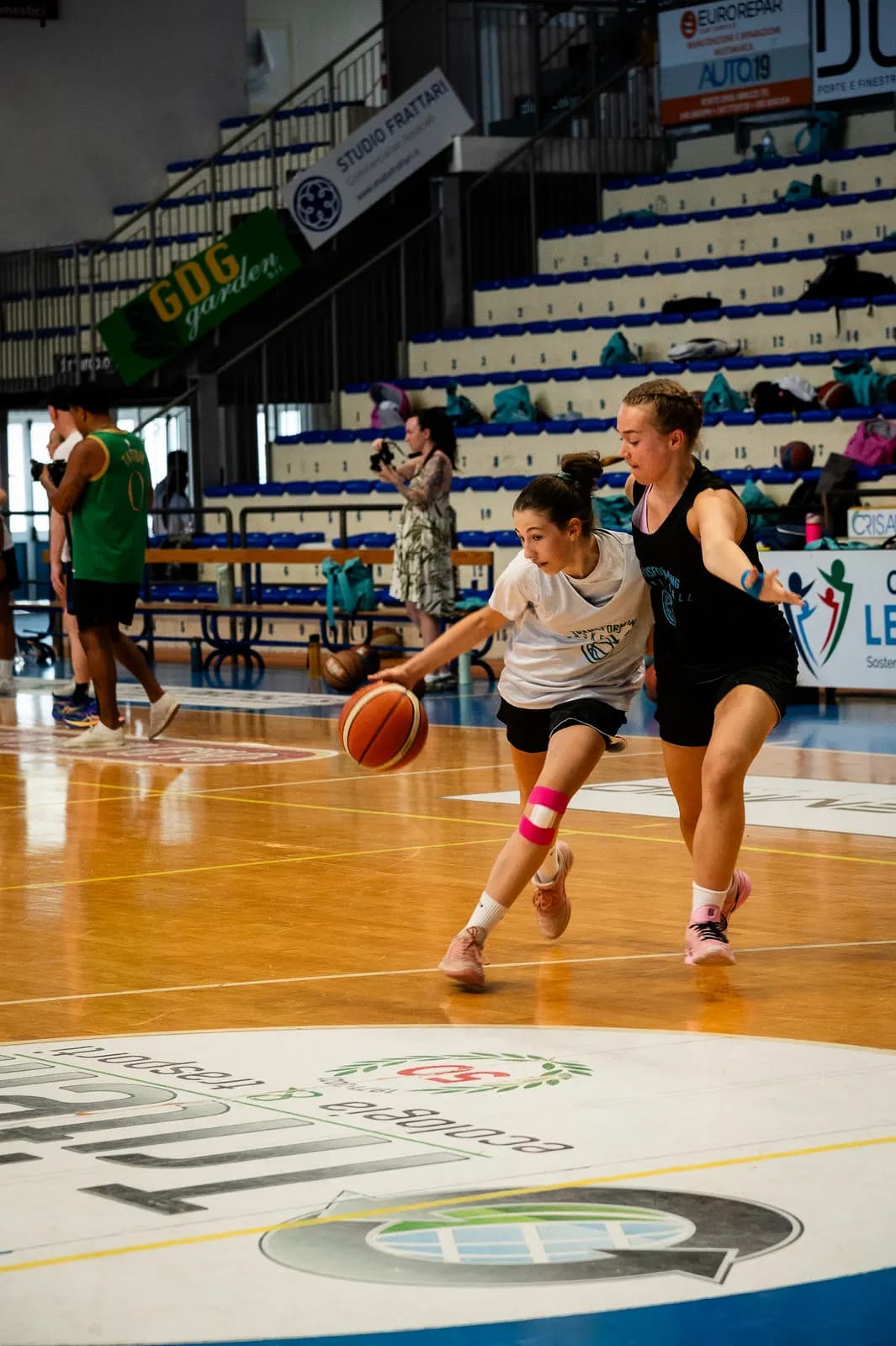
In this guide, learn how to build a conceptual offense. This starts with understanding principles of play such as dominoes (using an advantage), triggers (actions in the half court used to create an advantage) and coverage solutions (ways to punish every type of defensive coverage).
The best way to start teaching conceptual offense is reverse engineering. Start by teaching your players how to convert advantages. This covers principles such as shot selection and spacing. A great starting point is 3-on-2 Dominoes Bursts.
3-on-2 Dominoes Bursts
5 playersPlay dominoes: use the numbers advantage before the defense recovers, over several possessions in a row.
How it works
- The offense stays on for a continuous burst of 45 seconds.
- Teach one principle at a time. Start with floor is lava: players must get back out to space within 2 seconds after a drive or cut, or it's a turnover. Then add zero seconds as the next constraint: shoot, pass or drive straight away, otherwise it's a turnover. Then add 1 can't guard 2: space so one defender can't cover two players.
Adapt it
- Too hard for the offense: play 4-on-2, and move to 4-on-3 as they improve.
Watch for
- Does the offense use the advantage effectively?
Why Set Plays and Patterns Break Down
In a heavily patterned offense, the next action is always predetermined. For example, a pass, cut, fill, repeat in a 5 out motion offense. Players spend their attention reproducing the pattern, rather than acting on what is in front of them, such as the defender who just left a teammate open or a free lane to drive to the rim.
Patterns also depend on one rehearsed solution. When the defense takes that solution away, the offense has nothing else to go to. And when a score does occur within a heavily patterned motion offense, it is commonly because individual players break away from the pattern to act on an opportunity that appeared naturally. Behavior on offense is driven by how the defense responds, so with no defense, players simply learn to robotically run offenses without attuning to the defense.
A conceptual offense still has a detailed structure, covering concepts such as spacing templates, triggers, coverage solutions and sets on dead balls. This allows players to create and extend advantages without the coach calling a set every possession. The premise is to help players discover "how to play, not what to play".
| Offense | What decides the next action | What it costs |
|---|---|---|
| Pattern (pass and cut, continuity motion) | The pattern: pass, cut, fill, repeat | Players reproduce the pattern instead of reading the defense, and when the defense takes away the rehearsed solution there is nothing else to go to |
| Read and react | Layers of "if X, then Y" rules based on teammates and the ball | Players focus on running the rules rather than on what the defense gives them |
| Conceptual | The defense: how it guards each trigger, and whether there is an advantage | Needs a detailed structure (spacing templates, triggers, coverage solutions and sets on dead balls), and a short adjustment period while players learn it |

Free
Conceptual Offense Starter Kit
A starting point for building an offense around shared principles, spacing, and player decisions.
Where to Start, and What to Add Next
Don't introduce every action at once. Start with shot selection, dominoes and one trigger that suits your players, then build from there.
1. Decide Which Shots You're Trying to Create
Every domino sequence should end with a good shot, so decide what a good shot is first. A ROB shot is in range, open and balanced. Medals are a simple way to rank shots: gold is a rim finish or free throw, silver is a catch and shoot three, bronze is an off the dribble three or a midrange two. Prioritize rim finishes and open catch and shoot shots within each player's range. For younger players, that may mean a shorter shot rather than a three. Our shot selection article goes into more depth.
2. Look for the Advantage Before the Defense Is Set
The easiest place to find an advantage is transition, which is why we want youth teams playing fast. After a rebound, the player with the ball can push or pass ahead. Teammates sprint to create space for the next decision. Filling a corner and the wing on the same side creates a two side: two receivers the defense must account for. If the defense loads toward the ball, a skip to the two side can start dominoes. If no advantage appears, flow into a trigger from wherever the players arrive, without stopping to move everyone to a prescribed starting spot.
3. No Advantage? Use a Trigger
A trigger is an action that causes the first domino to fall. Start with actions that suit your players, then develop coverage solutions for the way the defense guards them.
- 1-on-1. Space the floor and attack a matchup. This can be the main trigger for a U12 team.
- Pick and roll. The action creates different opportunities against different coverages.
- Get or handoff. Pass to a teammate and follow your pass into a handoff.
Run triggers out of known spacings, so everyone knows where they'll end up. We use four pick and roll spacings (rub, side, clear and angle), set out in the pick and roll spacings every coach needs to know. Give triggers one syllable names ("get," "rub," "side," "wide") and a rule: when the offense is neutral in the half court, it has three seconds to run a trigger, or it's a turnover. Start the season with one trigger, ask players to do it really well for two or three weeks, then add more. Our article on introducing triggers has the full method.
4. Give Players an Answer for Every Coverage
Players also need to read the coverage, the way the defense is guarding the trigger. Some basic pick and roll coverages are drop, under, down, switch, show and blitz, and the offense should have an answer for each, with clearly defined coverage solutions. Three examples:
- Reject. The priority coverage solution to use against any type of defense! If the defense takes away the side of the pick, the handler rejects the screen and attacks the other way. Emphasize this at all costs.
- Short roll. Against a show or blitz, the screener can become a receiver behind the two defenders. The next decision depends on where the help comes from.
- Read the tag. If an off the ball defender helps on the roller, a teammate becomes available. Without that help, the pass to the roller may be open.
These are possibilities rather than rules, because no two possessions against the same coverage are ever the same. The goal of a good conceptual offense is to avoid too much variance, and still have a structure, knowing how your team will create advantages against different types of defense. If players aren't attuned to each other's options, then random basketball occurs, which is little better than a heavily patterned offense. Our pick and roll guide goes coverage by coverage.
5. Use Sets on Dead Balls
A conceptual offense can still use sets. They fit on dead balls and slower possessions, when you still have to break down a half court defense. What changes is how they are run. A set should take a small advantage from the start and turn it into a bigger one later, with the end of the set shaped by your principles of play rather than a scripted last option. When players run a set just to get to the end, they aren't a threat to score off the early actions within the set, so time is simply wasted off the clock and a greater advantage is not created. Players should look for opportunities to start dominoes at every moment of the set, if the opportunity arises.
More Constraints for Conceptual Offense
The one-opportunity constraint turns any trigger into a decision, because the offense gets one chance to start dominoes out of it.
The one-opportunity constraint
3-on-3 up to 5-on-5Make every trigger intentional: use it to start dominoes, or lose the ball.
How it works
- Play any format from 3-on-3 to 5-on-5, with the offense constrained to running one, or multiple, triggers.
- The offense only has one opportunity to create dominoes from the initial trigger.
- If they are still neutral after running the trigger, this means they were not intentional enough with using a coverage solution.
Watch for
- Is the offense reading the coverage and choosing a solution, or running the trigger and hoping?
Battleship 3-on-3 asks the offense to be unpredictable inside a clear structure.
Battleship 3-on-3
6 players, half courtScore out of one trigger from different spots on the floor, so the offense stays unpredictable inside a clear structure.
How it works
- Play 3-on-3 in the half court. The only trigger is a get.
- To win, a team needs four scores from four different strike locations: the wing, both 45s and the trail.
- Dominoes must start immediately out of the trigger for a strike to count.
- A score from any other trigger or location doesn't count, but the offense keeps the ball. If the defense gets a stop, they go straight to offense.
Adapt it
- Use other triggers, or mix them: for example two get strikes and two screen away strikes to win.
- Constrain the defense to one coverage, such as switch, drop or show.
- Add a shot clock, for example 10 seconds.
- Let the offense pick its strike locations in secret, like the board game, so the defense can't prepare.
- Play it over three transition trips instead of the half court.
Watch for
- Late in the game the defense knows exactly what the offense needs and will pressure hard. Does the offense find a coverage solution, or force the strike?
Here is an example of half court conceptual offense with Alex Sarama's College Basket Borgomanero team in Italy.
Adapt the Constraints to Your Team
Watch your team for the one habit that stops the offense from improving, and describe it specifically rather than as "we don't move the ball." Then match it to a rule change:
| If the team... | Try this |
|---|---|
| Settles for contested midrange shots | Only rim finishes and catch and shoot threes count, or only a ROB shot keeps the offense on |
| Passes and cuts out of habit with an advantage | Make pass and cut a turnover. A backdoor cut or ghost cut is still a good solution, but not the scripted version |
| Runs triggers but stays neutral | The one-opportunity constraint: one chance to create dominoes out of the trigger |
| Runs too many triggers and creates an advantage from none | Limit the offense to a few triggers until dominoes start reliably |
| Takes four dribbles and passes just because the rule says so | Give the offense two chances to create dominoes, and a turnover if the second doesn't |
| Is predictable to scout | Battleship 3-on-3 with the strike locations picked in secret |
Other constraints help too. Losing dominoes can be a turnover: if the offense has an advantage and loses it, the ball goes over. A three second limit to create dominoes can replace a dribble limit. And in a 3-on-3 or 4-on-4 where the main trigger is 1-on-1, the weak side dunker spot must be filled when a player attacks, or it's a turnover.
Making the Switch
Moving away from a pattern offense doesn't have to happen overnight. Expect a short adjustment period while players learn to read the defense instead of following a pattern. That's a normal part of learning, and it passes quickly once players start finding advantages for themselves. Two things make the switch smoother.
- Be transparent up front. Give players and parents a short presentation on how the team will practice, what it will look like and why, including the research behind the constraints-led approach.
- Meet people in the middle. Use the MAYA principle (most advanced, yet acceptable). One way is to start every possession with a set; as soon as the set breaks, the players play dominoes, and if they lose the advantage they re-trigger from the team's spacings.
Small-sided games library
Games from This Guide in the Library
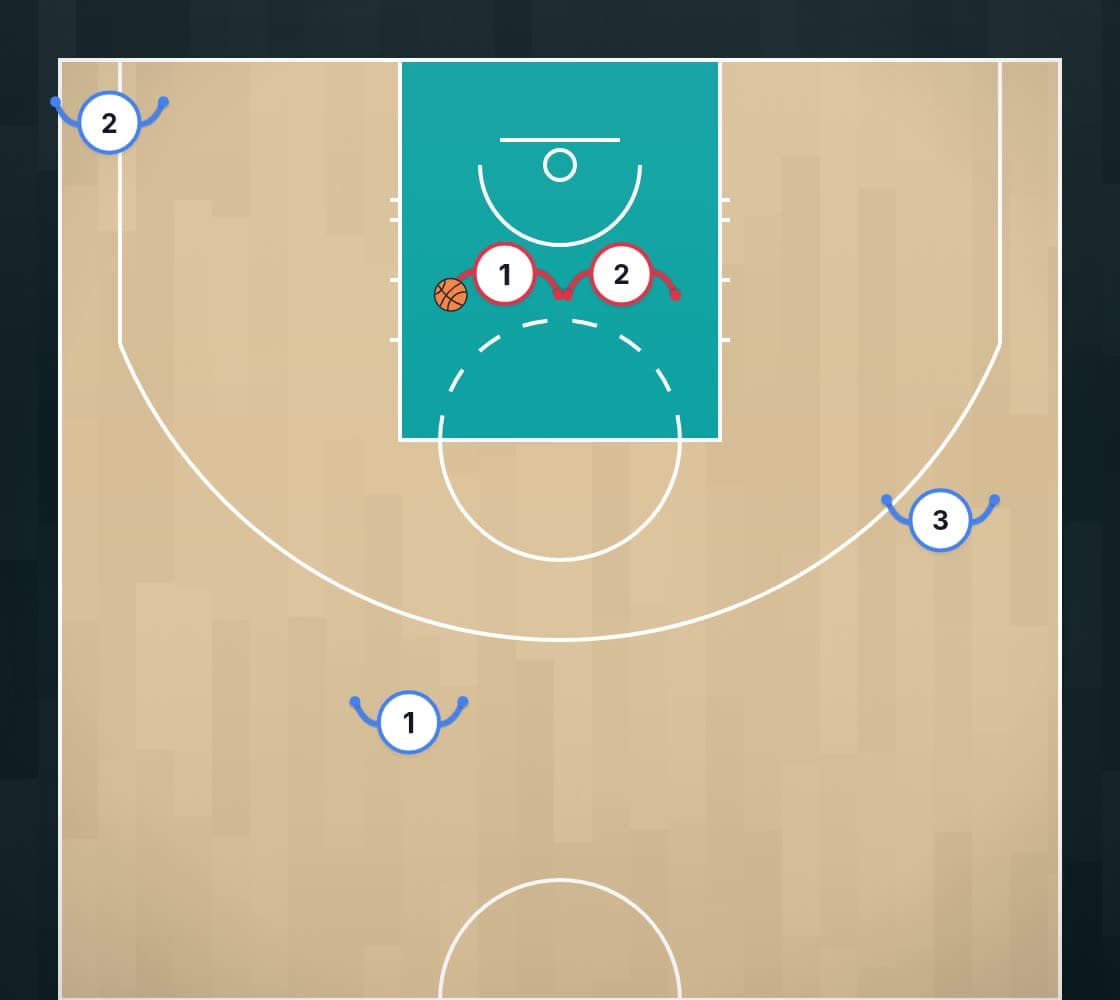
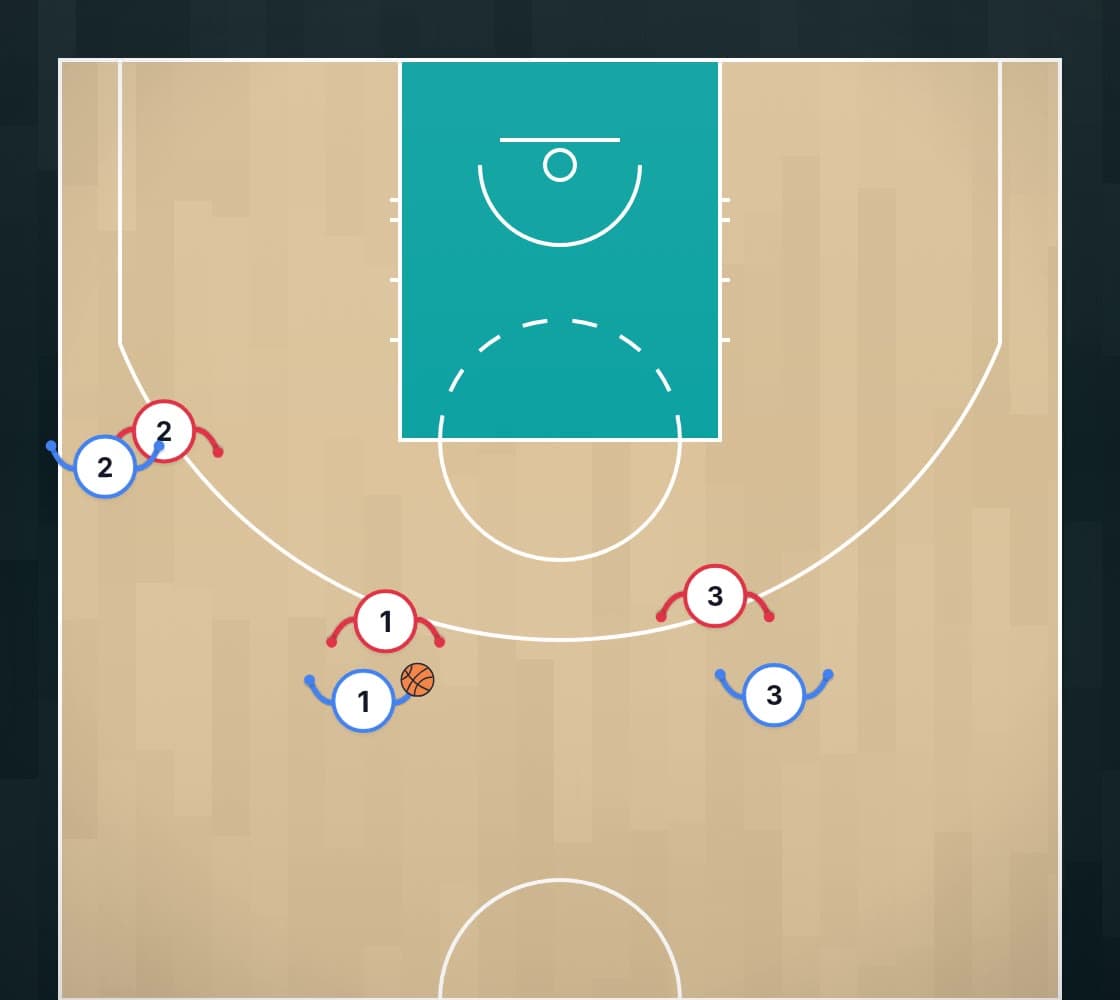
Questions Coaches Ask
What's the difference between a conceptual offense and motion offense?
A motion or pass and cut offense tells players what to do based on a pattern: pass, cut, fill. A conceptual offense uses principles, triggers and coverage solutions, so the next action depends on what the defense gives the offense.
Is a conceptual offense the same as read and react?
No. Read and react decides most actions through layers of "if X, then Y" rules based on teammates and the ball. A conceptual offense asks players to read the defense instead. Our comparison of the read and react offense and a conceptual offense is linked above.
Can you run set plays in a conceptual offense?
Yes, on dead balls and slower possessions. The set should turn a small advantage into a bigger one, and players should go off script when a better opportunity appears.
Take It to Your Next Practice
Free
Conceptual Offense Starter Kit
A starting point for building an offense around shared principles, spacing, and player decisions.
The Conceptual Offense Playbook
$49 USD
Build on the Conceptual Offense Starter Kit with the full playbook. Explore the principles and decisions that help your players create and maintain advantages.
Implementing a Conceptual Offense
$49 USD
Take the Starter Kit onto the court. Alex explains how to teach shared principles, triggers and coverage solutions through game examples and small-sided games.
Sources
- Transforming Basketball, Alex Sarama (Wiley, 2024)
- A Constraints-Led Approach to Coaching Basketball, Sarama, Lascu, Vaz Rocha and Houghton (Routledge)
- Transforming Basketball podcast, episodes 7, 30, 51, 158 and 169
- How to Introduce and Run Triggers in Your Basketball Conceptual Offense
- The Read and React Offense vs. a Conceptual Offense
- How To Introduce Conceptual Offense With Your Team
Behind the methodology
About Alex Sarama
Alex Sarama
Founder, Transforming Basketball · Head Coach, Portland Fire
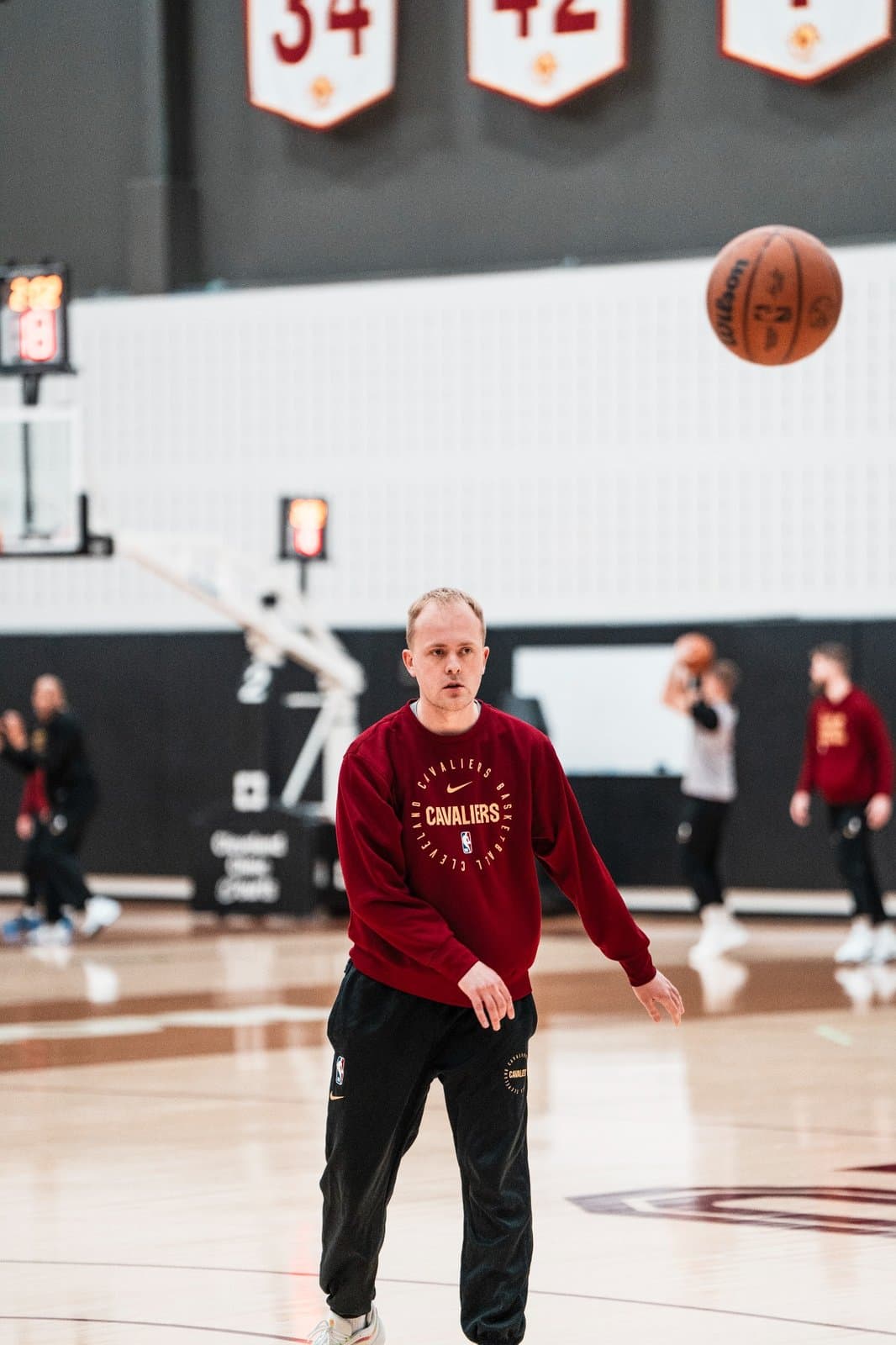
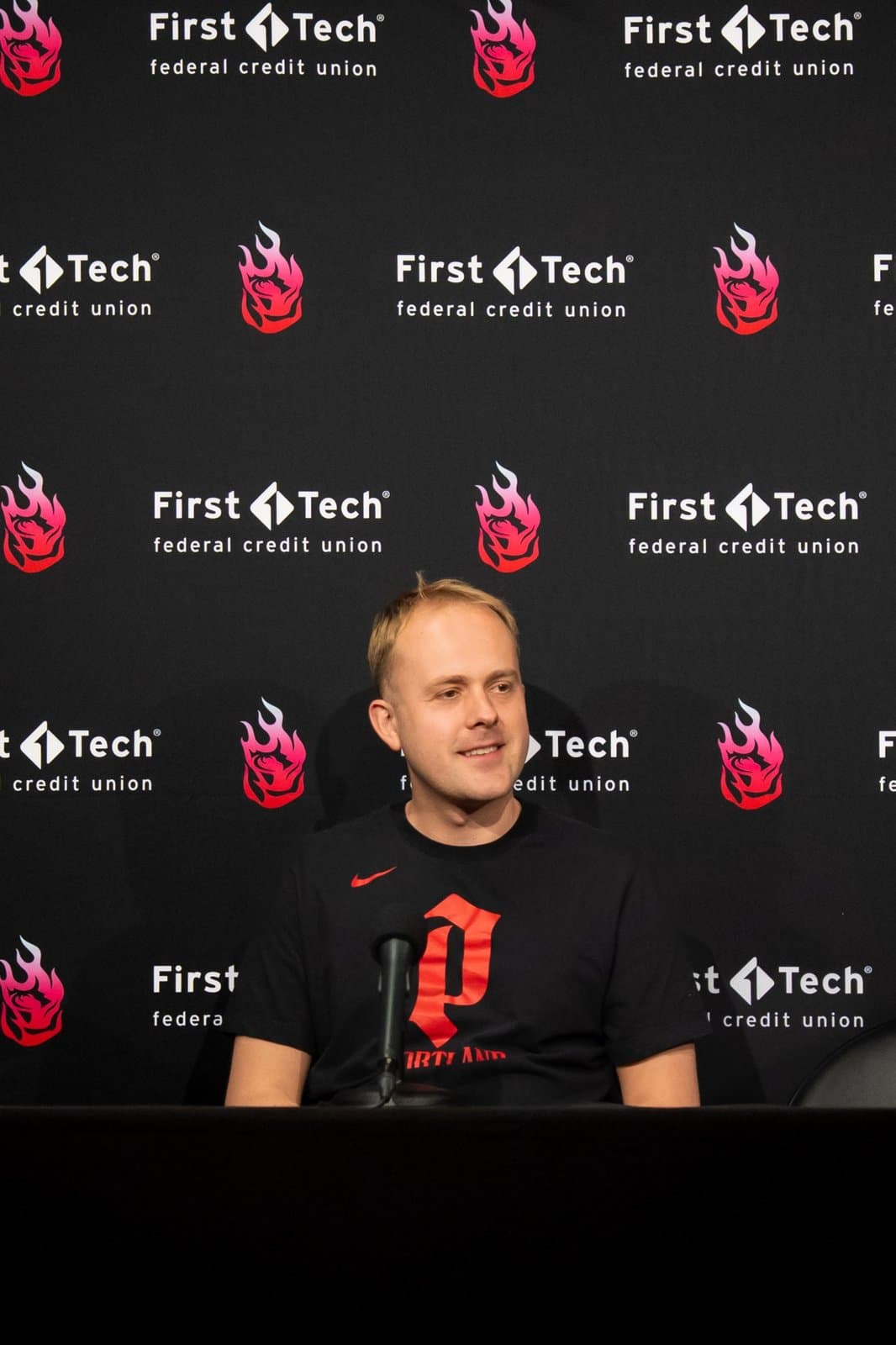
Alex Sarama is the founder of Transforming Basketball and Head Coach of the WNBA's Portland Fire. Previously, he served as Assistant Coach and Director of Player Development with the Cleveland Cavaliers.
His wider experience includes NBA Europe in Madrid, Paris Basketball in the EuroCup and the Rip City Remix, the Portland Trail Blazers' G League affiliate. Alex has delivered clinics in over 40 countries and has written three books on the constraints-led approach in basketball, including the Amazon bestselling Transforming Basketball (2024) and A Constraints-Led Approach to Coaching Basketball (2026).