
Coaching guide · Team offense
The Pick and Roll in Basketball
A pick and roll asks two defenders to guard one action together. What the offense gets out of it depends on how the handler, the screener and the three players off the ball read the coverage. We coach players to punish that coverage with whatever it leaves open.
17 min read
Zico Coronel tells a story on EP51 about two point guards he coached against the same coverage. One was 6'6", long, with great vision. Against a show, his most common pass was what Zico calls the maestro: the direct pass to the roller. The other was a 6'1" Japanese point guard with limited length, for whom that same direct pass was very difficult. His best answer was to move the ball around the perimeter and let a teammate make the next pass into the 4-on-3.
Same coverage, two different answers. That's the trouble with teaching the pick and roll as a list of reads. The coverage tells you what the defense is trying to take away. The affordances, the opportunities for action that are actually there, depend on the player with the ball.
What Players Are Reading in a Pick and Roll
The pick and roll is used at every level because it's one of the easiest ways to create an advantage. A Constraints-Led Approach to Coaching Basketball lists what both teams have to keep perceiving during a single possession:
- The spacing the offense is running: middle, side, empty corner, Spain.
- How close the on-ball defender is to the handler, and what they do at the moment of the screen (over or under, in a drop).
- The coverage and the offense's response. If the guard uses a hostage dribble, the drop defender has to hold position longer to guard two without letting the roller get behind.
- What the screener does: slips or holds the screen, flips the angle, re-screens or pops.
- Who they're playing against. An athletic roller is a lob threat; a slower screener who shoots well will pop more.
“The majority of mistakes made in a game are not due to deficiencies in technique, but due to inabilities of players to perceive and act upon the relevant opportunities that the offense and defense provide.”
So we don't install the pick and roll as a sequence of reads. We put players in games where the coverage is real and let them find what's there.
Coverage Solutions Are Possibilities
A coverage solution is how the offense punishes the way the defense guards a trigger. Transcending Basketball reframes them as attractive affordances that may appear: opportunities a team has agreed to look for. None of them is a must. Against a switch, plenty of things can work.
The trouble with "if X, then Y" (if they go under, shoot; if they switch, post the mismatch) is that no coverage is ever identical. A team that switches every pick still switches differently each time, depending on how aggressive the switching defender is, who's involved, the spacing, how the roller and handler interact, the time and score, and fatigue.
“Players must be aware of the need to use different coverage solutions, even if playing against the same defense, as the constraints are ever-changing and no possession will ever be the same.”
Coverage solutions don't have to be the same for every player either. In Transforming Basketball, Alex frames them as functional solutions that suit the skills and action capabilities of particular players, instead of asking the whole roster to run the same two or three answers. That's Zico's two point guards again.
“If principles of play are effectively underpinned by the ideas of ecological psychology, then the outcome of each pick and roll will not be highly scripted because every player perceives affordances differently.”
On EP169 Alex talked about wanting everyone to know what the team does against each coverage, so nobody surprises a teammate (a phrase he credits to Zico). Coverage solutions narrow the options to a shared few without dictating which one a player must use on a given possession.
Prevent or Punish
There are two ways to deal with a coverage. You can prevent it, by acting before the defense gets into it, or punish it once it's there. George Vaz's article on prevent vs punish calls a team that can't solve a coverage "prisoners of the coverage". The fix is either a better coverage solution or stopping the defense from playing it at all, for example by turning an aggressive switch into a late one.
Zico builds his whole offense on this split. Before the season he writes a two-page template with every spacing the team will play, every coverage it might see, and how it will prevent and punish each one. The template is for the staff, not the players. If time is short, he'd rather a team had one or two ways it's extremely competent at than five it isn't.
Solutions by Coverage
Here's the coverage-solution menu from Alex's Principles of Play presentation. Choose from it. You don't have to install every line.
| Coverage | Ways to punish it |
|---|---|
| Switch | Reject; crack and roll, slip, touch or ghost; punish tags; seal; relay pass behind or ahead; iso spacing and boomerang |
| Show or blitz | Reject; crack and slip; dribble over; short roll and cut and slide; relay pass |
| Drop | Reject; crack and fast roll; hostage; snake; veer; ghost or pop and cut the pop |
| Gets (any coverage) | Reject; cut; pitch and slip; keep; twist; no pops |
| Prevent (any coverage) | Flip; arrive alone; use or set a screen |
Against the Switch
Switching is meant to take away the advantage and flatten the offense into a stagnant 1-on-1. George Vaz's article on punishing the switch gives four answers. The reject: if the on-ball defender jumps early to prepare for the switch, go away from the pick. The crack and slip: set a good crack angle and slip to the rim before the new defender can attach. The relay pass: if the pocket pass is gone, pass ahead (side spacing) or behind (rub spacing) to a teammate who relays it to the roller. And the boomerang: pass to a perimeter teammate and get it straight back, so the bigger defender who switched has to close out again.
All of these depend on the pick. Transcending Basketball points out that a screener who sets the pick too high rarely gets behind the defense, and against a switch the defense can then contain the action within the 2-on-2. Two outcome cues help: "screen the backpocket" of the on-ball defender, and "race to the rim" to win the short sprint behind the defense.
Against Show and Blitz
When two defenders go to the ball, someone is open. The short roll is the classic answer: the screener stops short, catches behind the two defenders and plays a 4-on-3. Transcending Basketball pairs it with the cut and slide, a principle for teams facing aggressive coverages. Here is how the book suggests a coach might explain it during practice:
“As the short roll pass occurs, one possibility could be the baseline cut off the two-side, leaving space for the wing player to slide into the empty corner. From here, the short roll receiver must be prepared to make a decision based on what they see with the defense.”
Note the word possibility. If both defenders on the two side tag in, two shooters may be open instead, and the cut isn't the answer. Zico's version against a show in his shake spacing (both corners filled, a high wing, and the pick bringing the handler toward the middle) prioritizes two passes: the "messy" pass back to the high wing, which isolates the single-side tag, and the short roll. If the defense takes away one, the other tends to open.
George Vaz's article on mastering the short roll has more on timing and where the roller should catch.
Against Drop
Drop gives the handler space and protects the rim, so the menu changes: reject, crack and fast roll, hostage, snake, veer, and ghosting or popping with a teammate cutting the pop. Zico starts preseason with his own team playing show rather than drop, partly because it's easier to tone back to a conservative coverage later than to ask bigs who've dropped all season to suddenly show.
Against a drop, the fastest decision isn't always the best one. Transforming Basketball walks through a handler who hostage dribbles, sealing the trailing on-ball defender behind them. The mid-range pull-up is on offer, but the handler sees their defender recovering to contest and declines it. They keep the dribble alive and wait for something better: a lane to the rim, a pass to the roller behind the drop defender, or a kick-out if a helper over-helps or tags the roller. Quick decisions fit once the advantage exists. Creating it can take patience.
2-on-1 (+1) Guided Defense: PNR Drop
4 players (handler, screener, on-ball defender, drop defender)Explore ways to score against a drop while the drop defender's depth keeps changing.
How it works
- The handler starts in a rub, angle or side spacing with the +1 guarding. After the pick, the +1 is out of the game.
- The screener can start in the dunker spot or one gap away, with their defender guarding.
- Live once the pick is set.
- The drop defender plays deep, mid or up to touch.
- Games to 12, scoring 2s and 3s.
Adapt it
- Only gold medals count.
- One pass maximum.
- One dribble to score after coming off the pick.
Watch for
- Is the handler creating contact on the pick and attacking downhill?
The Routledge book uses this game with youth players: the coach tells the defense which coverage to play and the offense works out how to score against it.
Against Ice
Transforming Basketball uses ice, a coverage against the side pick and roll, to separate a concept from a technique. A 2-on-2 side pick and roll against ice invites the snake dribble, but how the handler snakes is left to them, and other answers stay available, such as fighting the ice or the 3PT pull-up. A short clock pushes the handler to make the next pass quickly once they're out of the snake.
The book also shows how a coach can still teach solutions inside the CLA. Play 2-on-2 pick and roll in a constrained half court, with a six-second clock and the defense always in ice. After a few minutes, step in with an intervention based on what you saw: praise the handler who fought the ice and used the pick before the ice defender got there, then offer two more solutions to try, flipping the pick or bringing the ball down into a get. They're offered as possibilities to explore, not a pattern to repeat.
The Reject, Against Everything
The reject sits in every row of the table. Zico says it's emphasized in almost every pick and roll his teams run, with one exception: if the ball is already moving into a tactical advantage (say a wing-to-middle pick and roll where the defender has pinched down to help), stopping to set up a reject only buys the defense time to recover.
How a player rejects shouldn't be taught as a move. Transcending Basketball argues that a crossover, a between-the-legs or a behind-the-back reject emerges from the constraints at that moment: the distance of the defenders, the coverage, the spacing, the time and score. Naming every reject technique, or drilling one against a cone, leaves out the constraints that produced it.
Start with Spacing
Zico is clear about the order. "So for me, there's knowing spacings. This is very important that it comes first." Then a platform (for him, the shake pick and roll), then one aggressive or one conservative coverage, then that coverage's solutions, then the next coverage. Once players know one spacing, he finds a lot of positive transfer to the next.
Transforming names four pick-and-roll spacings: rub (a middle pick and roll with the ball going toward the single side), side (a side pick and roll with the handler going toward the two-person side), clear (a side pick and roll with the strong-side corner emptied) and angle (a side pick and roll with the handler going toward the corner, like a step-up). George Vaz's pick-and-roll spacings article has the diagrams.
How to Build It in Practice
Transcending Basketball suggests flipping the usual order. Instead of explaining the coverage solutions first, design small-sided games where the defense plays the coverages you expect to see early in the season, add a variable shot clock so the offense has to be decisive, and let solutions emerge. Some of those games use a guided defender, who changes their positioning or coverage from rep to rep so the offense never knows exactly what's coming. Then name the ones that work best for your players, and those become your coverage solutions.
Reject 1-on-1 + 1
3 players (handler, screener, defender)Amplify the reject against a guided defender, so the handler solves the same problem a different way each rep.
How it works
- Play 1-on-1 where the +1 is the screener.
- A guided defender allows the handler to reject, but still tries to steal the ball or contest the finish, so the handler has to reject differently every time.
Adapt it
- Make it more representative with 2-on-2, where the reject is one possibility among others for the handler.
- Keep the reject attractive by awarding a bonus point for a reject that leads to a score.
Watch for
- Is the handler going away from the screen because they see the opening, or because it's the drill?
If a player has the reject available in games but rarely takes it, Transforming Basketball suggests scripting it in short doses. The handler knows the reject is coming but has to reject a different way on each of a burst of three reps. Nobody tells them to use a behind-the-back. The defense still moves realistically and tries to steal the ball, so the offense isn't attuning to a passive defender.
2-on-2 Wall Pick and Roll
4 playersPunish (or prevent) an aggressive switch in a representative space.
How it works
- Play 2-on-2 pick and roll, with cones creating an invisible wall (such as the lane line extended) that players can't cross. The wall simulates the presence of a tag defender.
- The defense switches every action aggressively.
- Use a 4-second shot clock. The offense can only score a rim finish (a gold medal) inside the smile.
Adapt it
- To work on preventing the coverage, make a successful aggressive switch a turnover for the offense, and give players ram screens and wides to stop it happening.
- To work on punishing it, give the offense one opportunity to create dominoes out of the trigger, or it's a turnover.
The Routledge book runs a rub version against drop: an imaginary wall slightly wider than the lane lines, live only once the trigger happens, with 6 seconds to score, gold medals only, or the defense forced to go over the pick as add-ons. Players know no third defender is coming to tag the roller. Taking that information away keeps them at the right challenge point while they learn coverage solutions that start dominoes.
3-on-3 Scripted Start: Rub PNR
6 playersAdd the tag defender back in once players can start dominoes in the 2-on-2.
How it works
- The offense starts in rub spacing. Live after the trigger.
- The third offensive player starts in the weak-side corner.
- The defense is in switch coverage.
- Games to 12, scoring 2s and 3s.
Adapt it
- Start the third player on the opposite 45 instead of the corner, which can open the relay pass.
- The handler starts at the half-court line.
Watch for
- With a tag defender on the roller, do the skip pass and the short roll start to appear?
Punishing hedges and blitzes (5-on-5)
10 playersMake the short roll the most attractive answer to aggressive coverage without making it the only one.
How it works
- The defense must hedge or blitz.
- The offense plays from the team's different pick-and-roll spacings across three reps.
- Double points for a short roll pass that leads to a rim finish.
- A three-second shot clock starts if the ball enters the roller.
Watch for
- After the short roll catch, is the roller reading the defense, or forcing the planned pass?
Basketball Fortnite
Any format from 2-on-2 to 5-on-5Collect a variety of coverage solutions (the "weapons") against a constrained defense.
How it works
- Half court, or full court over successive trips.
- The defense is constrained to particular coverages.
- The offense must score a set number of times using different pick-and-roll coverage solutions.
- The first team to score off two dominoes-starting sequences out of each weapon wins the Battle Royale.
- If the defense doesn't play the specified coverage, the offense automatically gets one weapon of its choice.
Adapt it
- Let each team choose its weapons before the game, with input from the coaches. If the next opponent mostly shows, pick three weapons to punish the show.
- Make sure the weapons aren't so specific that the game becomes over-constrained.
Watch for
- Do players remember which weapons they and the other team still need, without being reminded?
Fortnite is one of three games in Transcending Basketball built on video games, alongside Battleship and Hitman. Alex notes it will probably land better with a young team than a team of veterans.
Battleship 3-on-3 Pick and Roll (FIBA rules)
6 playersMake the offense score out of every pick-and-roll spacing, and make the defense communicate its coverage.
How it works
- To win, the offense must score from angle, clear, rub and side.
- The defense plays switch.
- The weak-side corner or dunker spot must be filled during the trigger, or it's a turnover.
Adapt it
- The offense gets a battleship score immediately if the defense isn't pressuring the ball, concedes the reject and doesn't communicate the coverage.
- Change what counts as a battleship: score with the coverage solutions curl, flip and shoot.
Watch for
- Is the defense talking about the coverage, pressuring the ball and taking away the reject?
Zico adds one more format: 2-on-2 pick-and-roll tournaments early in preseason, rotating every handler with every screener the team expects to use. Partners attune to each other's habits (who likes the lob, who likes a particular angle) and build shared affordances faster by playing than by being told.
Mistakes We See Most
Demonstrating the answer. A demonstration implies one ideal solution. If players need to see one, say clearly that it's one option and they shouldn't repeat it every time.
Coaches as defenders who can't show the coverage. At the professional level, to manage load, coaches often play defense. Zico described a very intellectual player telling his staff they were too slow to show accurate coverage, so he was playing off his imagination. A younger player on the same team started turning down openings in games that he'd learned to ignore against the coaches. If coaches defend, the guided defense has to be realistic, or players attune to pictures they'll never see in a game.
Making every player a pick-and-roll player. Zico won't give a player a primary pick and roll until they can read closeouts and make dominoes decisions, and that can take seasons.
“There's many guys in the NBA making $26, $35 million who are not pick and roll players, but they're great dominoes players and they play good defense.”
For how the pick and roll fits into a whole offense, read our conceptual offense guide. For the decision side, see basketball decision-making.
Questions Coaches Ask
How do you teach the pick and roll?
Start with a spacing and one coverage, often show or drop. Play small-sided games where the defense uses that coverage and a variable shot clock forces quick decisions, let solutions emerge, then name the ones that work as your team's coverage solutions.
What are coverage solutions in basketball?
Coverage solutions are the ways an offense punishes how the defense guards a trigger, such as a reject, short roll or relay pass. A team looks out for them, but they aren't fixed "if X, then Y" reads, because no two possessions against the same coverage play out alike.
How do you beat a switch in the pick and roll?
Options include rejecting before the switch happens, a crack and slip before the new defender attaches, a relay pass to the roller, and a boomerang pass to make the switched defender close out again. A good screening angle, screening the defender's backpocket, makes all of them more likely.
How do you attack a show or blitz?
Two defenders on the ball means someone is open. The short roll creates a 4-on-3, and it can be paired with a cut and slide from the two side. Relay passes, crack and slips, rejects and dribbling over the show are other solutions.
How do you beat drop coverage in the pick and roll?
Be patient with the dribble: a hostage dribble keeps the on-ball defender behind you while you wait for a lane to the rim, a pass to the roller behind the drop, or a kick-out when a helper tags the roller. Rejects, a crack and fast roll, a snake, a veer, and ghosting or popping are other options. If the defense is still getting into the coverage, prevent it by flipping the screen or arriving alone.
What are the main pick and roll spacings?
Transforming uses four: rub (a middle pick and roll toward the single side), side (toward the two-person side), clear (a side pick and roll with the strong-side corner emptied) and angle (toward the corner, like a step-up).
Take It to Your Next Practice
The Pick and Roll Offense
$499 USD
For coaches who want to develop better decision-makers in pick-and-roll situations.
Pick and Roll Small-Sided Games Collection
$49 USD
Build on your PNR Coverage Solutions with 40 small-sided games for ball handlers, screeners and defenders.
Sources
- Transcending Basketball, Alex Sarama (Wiley, forthcoming): chapters 4 and 6
- Transforming Basketball, Alex Sarama (2024): chapters 3, 6 and 7
- A Constraints-Led Approach to Coaching Basketball, Sarama, Lascu, Vaz Rocha and Houghton (Routledge, forthcoming): chapter 4, Figures 4.9, 4.10, 4.13 and 4.30
- EP51: How Basketball Coaches Can Implement Clear Principles of Play with Zico Coronel, with Zico Coronel and Adam Omiecinski
- EP169: Alex Sarama on Principles of Play and his Coaching Journey, with George Vaz
- Principles of Play, Alex Sarama, coaching presentation (coverage solutions slide)
- Prevent vs Punish: Making Decisions in Pick and Roll, George Vaz
- Four Ways to Attack Switching Without Stopping Offensive Flow, George Vaz
- The Pick and Roll Spacings Every Coach Needs to Know, George Vaz
- Basketball Short Roll: Reads Against Aggressive Coverage, George Vaz
- Rietveld and Kiverstein (2014), "A Rich Landscape of Affordances", Ecological Psychology 26(4), 325–352. doi:10.1080/10407413.2014.958035
- Robertson and Woods (2021), "“Learning by Design”: What Sports Coaches can Learn from Video Game Designs", Sports Medicine - Open 7, 35. doi:10.1186/s40798-021-00329-3
Behind the methodology
About Alex Sarama
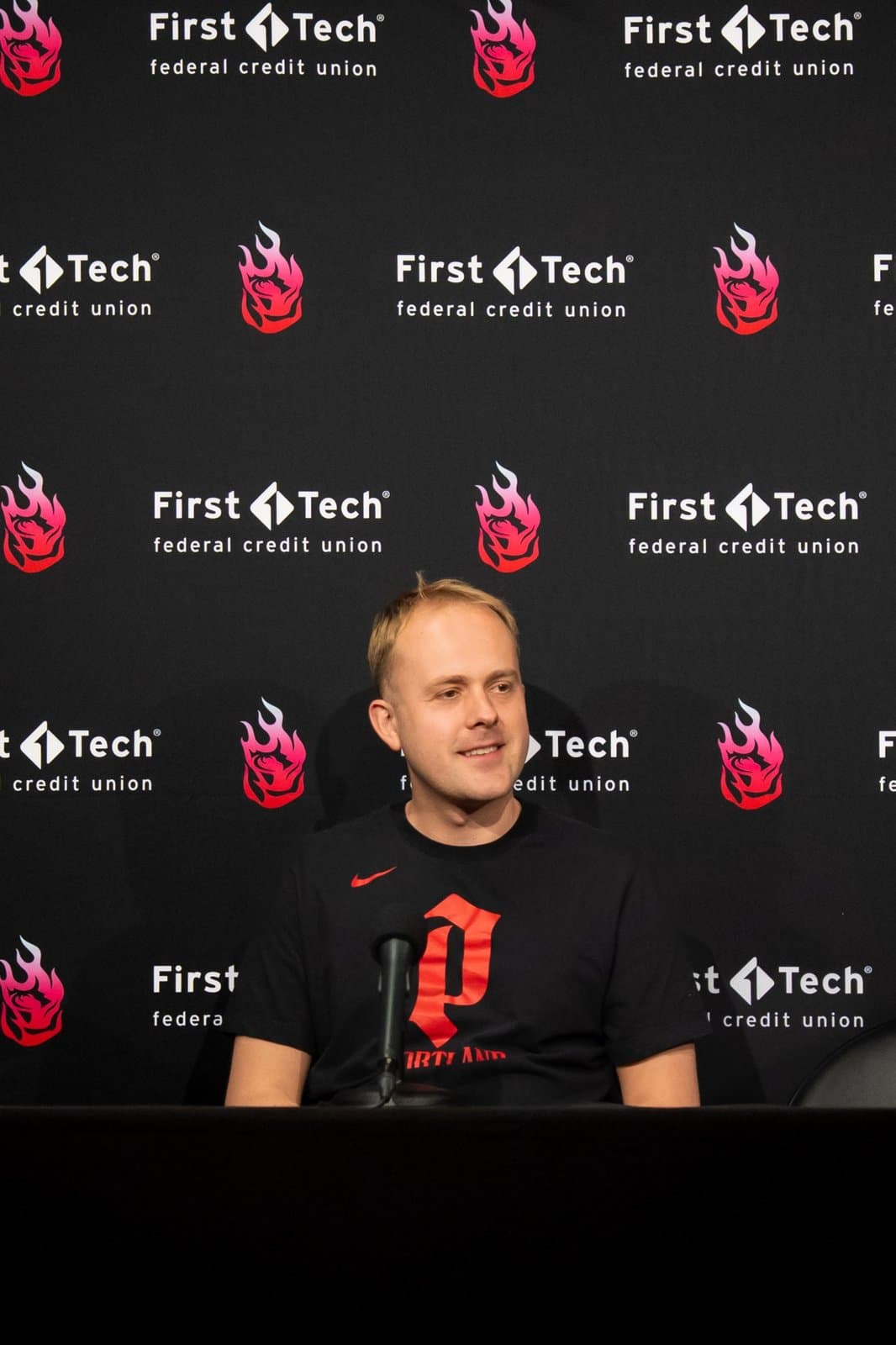
Alex Sarama
Founder, Transforming Basketball · Head Coach, Portland Fire
Alex Sarama is the founder of Transforming Basketball and Head Coach of the WNBA's Portland Fire. Previously, he served as Assistant Coach and Director of Player Development with the Cleveland Cavaliers.
His wider experience includes NBA Europe in Madrid, Paris Basketball in the EuroCup and the Rip City Remix, the Portland Trail Blazers' G League affiliate. Alex has delivered clinics in over 40 countries and has written three books on the constraints-led approach in basketball, including the Amazon bestselling Transforming Basketball (2024) and A Constraints-Led Approach to Coaching Basketball (2026).