
Coaching guide · Coaching clinics
Basketball Coaching Clinics
Each of our on-demand clinics takes one coaching problem. Pick the one your players keep running into, then take one activity from it straight into your next practice.
9 min read
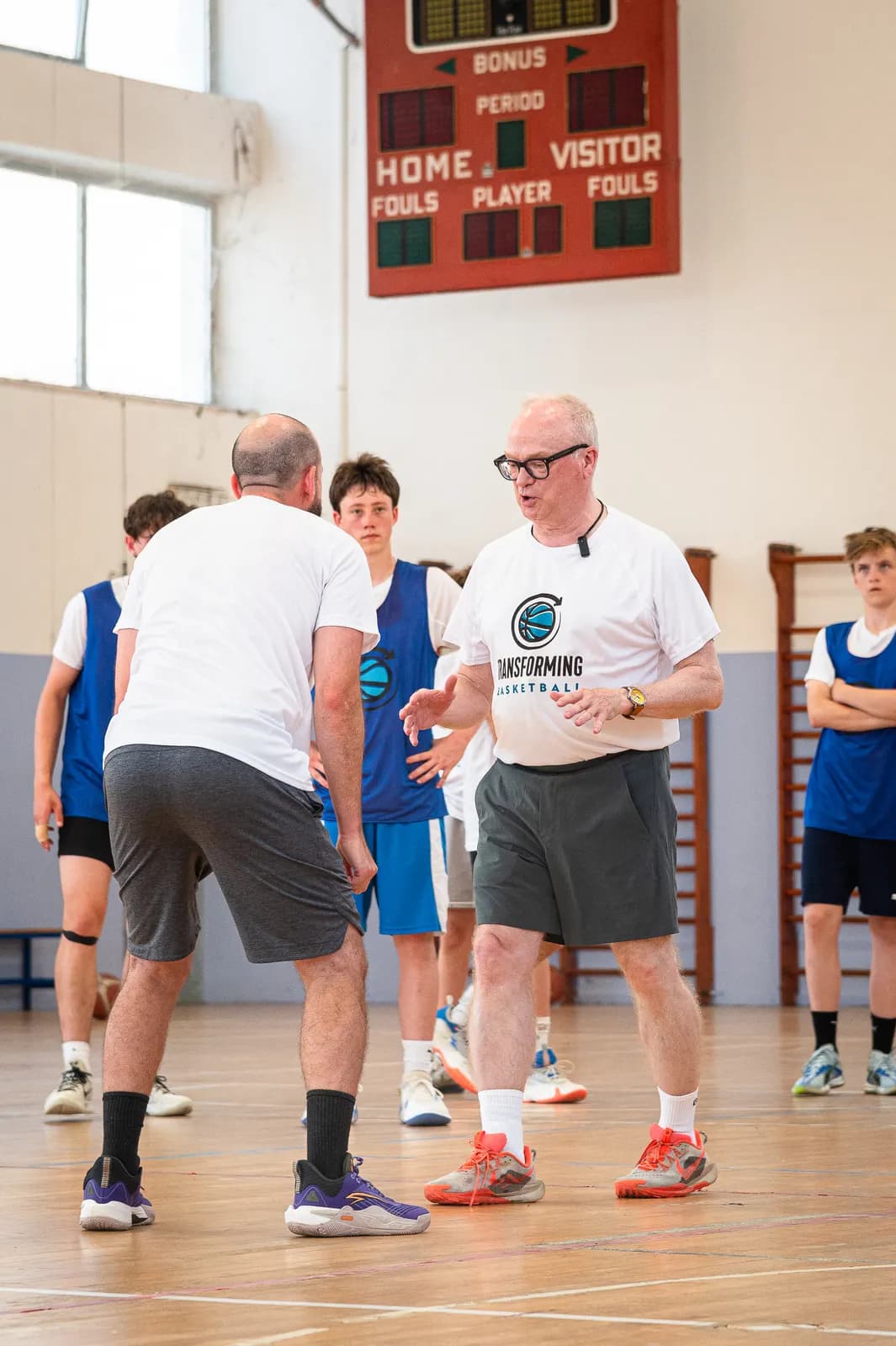
In April 2023, Alex Sarama and Kareem Kalil ran player clinics and coaching workshops in Beirut. Two of the player camps were 25 minutes apart, with players of the same ages, and Alex ran the same activity in both: a half-court 3-on-2 dominoes burst.
The two groups showed completely different behaviors. One group was evasive and creative with the advantage, and was content to keep passing without much intent to score, so Alex shortened the shot clock. The other group was extremely physical and attacked the rim relentlessly, so he steered their attention toward open, balanced shots and added a points system that devalued heavily contested ones. His conclusion, in his Lebanon recap:
“This just provides more evidence as to why one size fits all coaching approaches are so limited.”
The activity itself is simple enough to run on Monday. In a version Alex shared on social media in 2022, the offense had 7 seconds to find a high-value shot and the defense rotated in shifts every minute. The Routledge book Alex co-wrote with Alex Lascu, George Vaz Rocha and Neil Houghton writes it up like this:
3-on-2 Dominoes Bursts
3 offense, 2 defense, with defenders waitingPlay with an advantage: zero-second decisions, 1 can't guard 2, the floor is lava, and gold and silver medal shots.
How it works
- The offense stays on for a set number of reps or a set time, such as 60 seconds or 5 possessions.
- After a stop, that defense comes off and a new defense comes in.
- When the time is up, a new offense comes on.
- Scoring: 2s and 3s. Games to 12.
Adapt it
- Floor is lava: catching the ball inside the three-point line is a turnover, except on a cut to the rim.
- Turnover if the offense doesn't make zero-second decisions.
- Turnover if off-ball players don't push, pull or hold when a teammate drives.
- Only gold and silver medals count (rim finishes, free throws and open catch-and-shoot threes).
- A non-ROB shot (not in range, open and balanced) sends the offense off before its time is up.
Watch for
- Which way does the group lean? In Lebanon, the passing group got a shorter shot clock and the physical group got a points system that devalued heavily contested shots.
Any clinic is worth watching with that in mind. The activity on screen worked for those players, in that gym. What you're there to learn is why the coach manipulated each constraint and what made them change it. The first chapter of Transcending Basketball is titled "Why We Can't Copy and Paste", and it opens with a line from Joan Cortes:
“You may not be effective if you only copy and paste something because it worked well…this is because you are unaware of the causes and effects which may have contributed to that success.”
Alex's first book opens its chapter of activities with the same warning:
“The activities in this chapter should not be used as a guide for coaches to copy identically. The underlying theories behind each activity and why they have been designed are far more important.”
If You're New to the Approach, Start Here
Introduction to the Constraints-Led Approach ($49) is for coaches who want to understand how the Constraints-Led Approach applies to basketball. It suits coaches starting with the CLA and coaches reconsidering how they design practice. The on-demand clinic covers why the CLA matters, functional versus fundamental skills, designing small-sided games and applying the approach with youth players.
If you'd like to read first, our free constraints-led approach guide explains the player, task and environment and the ideas underneath them. The small-sided games guide shows what designing a game involves.

Free
Coaching Clinic with Alex Sarama
A coaching clinic session with founder Alex Sarama covering the Transforming Basketball approach.
If Your Offense Keeps Stalling
Implementing a Conceptual Offense ($49) is for coaches ready to take conceptual offense from theory into practice. It takes the free Conceptual Offense Starter Kit onto the court: Alex explains how to teach shared principles, triggers and coverage solutions through game examples and small-sided games. It suits coaches who want a focused introduction before a complete offense course such as Youth Conceptual Offense.
Before you watch, decide which problem your team has. A team that can't create an advantage against a neutral defense needs triggers, such as a ball screen. A team that gets one and then loses it needs dominoes, Ross McMains's concept that Transcending Basketball uses for playing with an advantage: drive, pass or shoot in zero seconds, space so one defender can't guard two, and get back out to space after a drive or cut. The conceptual offense guide covers both.
Clinics on One Specific Problem
The rest of our on-demand clinics are narrower. Pick the one that matches your team's rate limiter, the specific thing holding your players back.
| Clinic | Price | What it's for |
|---|---|---|
| Playing With Advantage | $39 | An on-court clinic on creating, keeping and extending advantages: spacing, zero-second decisions and the Floor Is Lava. |
| Developing Shot Selection | $39 | A clinic on coaching better shot selection through representative practice. Includes a shot-selection worksheet. |
| Running Set Plays Creatively | $39 | A clinic on when and how to use set plays inside a conceptual offense so a scripted action flows back into reads. |
| Using the Low Post in a Conceptual Offense | $39 | An on-court clinic on using the low post inside a conceptual offense: T-post entries, post triggers and small-sided games. |
| Contemporary Player Development | $39 | An in-depth clinic, recorded for the German Basketball Federation, on developing players and teams through small-sided games. |
| Pick and Roll Small-Sided Games Collection | $49 | A collection of 40 small-sided games for teaching pick-and-roll reads to ball handlers, screeners and defenders. |
| The Basketball Warm Up Collection | $29 | A collection of 50 basketball warm-up activities that get players moving, thinking and ready to compete. |
Playing With Advantage and Implementing a Conceptual Offense sit close together. If your players already create advantages but can't keep them, the narrower clinic is the better fit. If the whole offense needs shared principles, start with Implementing a Conceptual Offense.
Clinics in Person
Some of what a clinic teaches is easier to feel on the court. On EP13 of the podcast we released raw audio from a Transforming Basketball event in Egham, Surrey, where Alex introduced the constraints-led approach to coaches who hadn't come across it before. Early on, he told the room what he was there to do:
“I'm not here today to tell you what's right and what's wrong. That's not my job. My job is really just to show you another approach that you can use in your coaching, and then it's for you to decide what you like and what you don't like.”
If you'd like to bring the approach to your club, academy or federation, our events, camps and clinics page explains how to host a multi-day player camp at your venue, led by Transforming Clinicians.
What to Watch for in Any Clinic
Online or in person, a clinic shows you a coach's decisions in real time, so watch the coach as much as the players. Three things are worth noting.
- How fast the activity starts. Transforming Basketball challenges coaches to start each activity in 20 seconds or less, using short prompts instead of long explanation and demonstration. If a clinician spends five minutes setting up a game, notice it.
- What the coach changes, and when. The point of a clinic is the constraint manipulation: the shorter shot clock in one gym, the points system in the other. Write down what the coach saw just before each change.
- Which kind of defense is in the game. The Routledge book separates scripted defense (the offense knows what's coming), guided defense (a menu of coverages the offense has to read) and live defense (full freedom). Scripted is the least representative and the book says to use it selectively; live transfers most, but players may struggle to see or act on the affordance.
The book also recommends writing every small-sided game down in the same three parts: the game and its possible constraints, the intention, and the scoring, with the cues you'll use. Those parts should line up. If the intention is creating advantages out of a get, the constraints and cues are about the get, not about off-ball movement or the defense. That alignment is what keeps a coach from confusing and overwhelming players while they're still learning, and it's the first thing to copy from any clinic.
Take One Idea Back to Practice
Later in the same EP13 session, Alex showed a constraint called Octopus: a defender who can't move. Then one defender gets one step and another gets two. Each change keeps a defender in the activity and moves the challenge point, how hard the problem is for the offense. That kind of detail is worth writing down, more than the name of the game. Rather than running the whole clinic on Monday, take one activity:
- Pick one activity and name its intention.
- Record the starting positions, defensive restrictions and scoring rules that shape what players do.
- Choose the start for your players' rate limiter. A defender starting beside the ball-handler creates a different finishing problem from a defender starting under the basket.
- Adjust as you watch. If it's too hard, change where the defender starts or how freely they can move.
- Note what you changed and what happened, so you know how to use the activity next time.
If you'd like to try one first, the free Coaching Clinic with Alex Sarama is a clinic session covering the Transforming Basketball approach. For more on building clinics into your own learning, read the basketball coach development guide.
Questions Coaches Ask
Which basketball coaching clinic should I watch first?
If you're new to the constraints-led approach, start with Introduction to the Constraints-Led Approach ($49). If your offense needs shared principles, start with Implementing a Conceptual Offense ($49), which covers principles, triggers and coverage solutions through game examples and small-sided games.
Who teaches the Transforming Basketball clinics?
Introduction to the Constraints-Led Approach and Implementing a Conceptual Offense are taught by Transforming Basketball founder Alex Sarama, head coach of the WNBA's Portland Fire and previously an assistant coach and director of player development with the Cleveland Cavaliers.
Are there online basketball clinics on specific topics?
Yes. Besides the two introductory clinics, there are on-demand clinics on playing with advantage, shot selection, set plays, the low post, player development, pick-and-roll small-sided games and warm-ups, priced from $29 to $49.
How do I use what I learn at a basketball coaching clinic?
Take one activity, name its intention and write down the starting positions, defensive restrictions and scoring rules. Run it with your players, change the defender's start or freedom if it's too hard, and note what happened.
Can a clinic activity be copied straight into my practice?
Rarely. In Lebanon, Alex ran the same 3-on-2 game at two camps 25 minutes apart and had to manipulate different constraints for each group. Use the clinic to understand why each constraint is there, then adapt it to your players.
Can Transforming Basketball run a clinic for my club?
Yes. Clubs, academies and federations can host a multi-day player camp at their venue, led by Transforming Clinicians. The events, camps and clinics page explains how to apply.
Take It to Your Next Practice
Free
Coaching Clinic with Alex Sarama
A coaching clinic session with founder Alex Sarama covering the Transforming Basketball approach.
Introduction to the Constraints-Led Approach
$49 USD
Explore the framework behind representative practice with Alex Sarama's Introduction to the Constraints-Led Approach clinic.
Implementing a Conceptual Offense
$49 USD
Take the Starter Kit onto the court. Alex explains how to teach shared principles, triggers and coverage solutions through game examples and small-sided games.
Sources
- Transcending Basketball, Alex Sarama (Wiley, forthcoming): chapter 1 and chapter 4
- Taking Transforming Basketball On the Road: Lebanon Recap, Alex Sarama
- EP13: A Deep Dive Into the Constraints-Led-Approach (Live Clinic)
- Host a Basketball Camp
- Rothwell, Stone and Davids (2019), "Exploring Forms of Life in Player Development Pathways: The Case of British Rugby League", Journal of Motor Learning and Development
- Transforming Basketball, Alex Sarama (2024): chapter 8 opening and activity prompts
- A Constraints-Led Approach to Coaching Basketball, Sarama, Lascu, Vaz Rocha and Houghton (Routledge, forthcoming): Figure 4.4 (3-on-2 Dominoes Bursts), Table 4.7 and section 4.7.2
Behind the methodology
About Alex Sarama
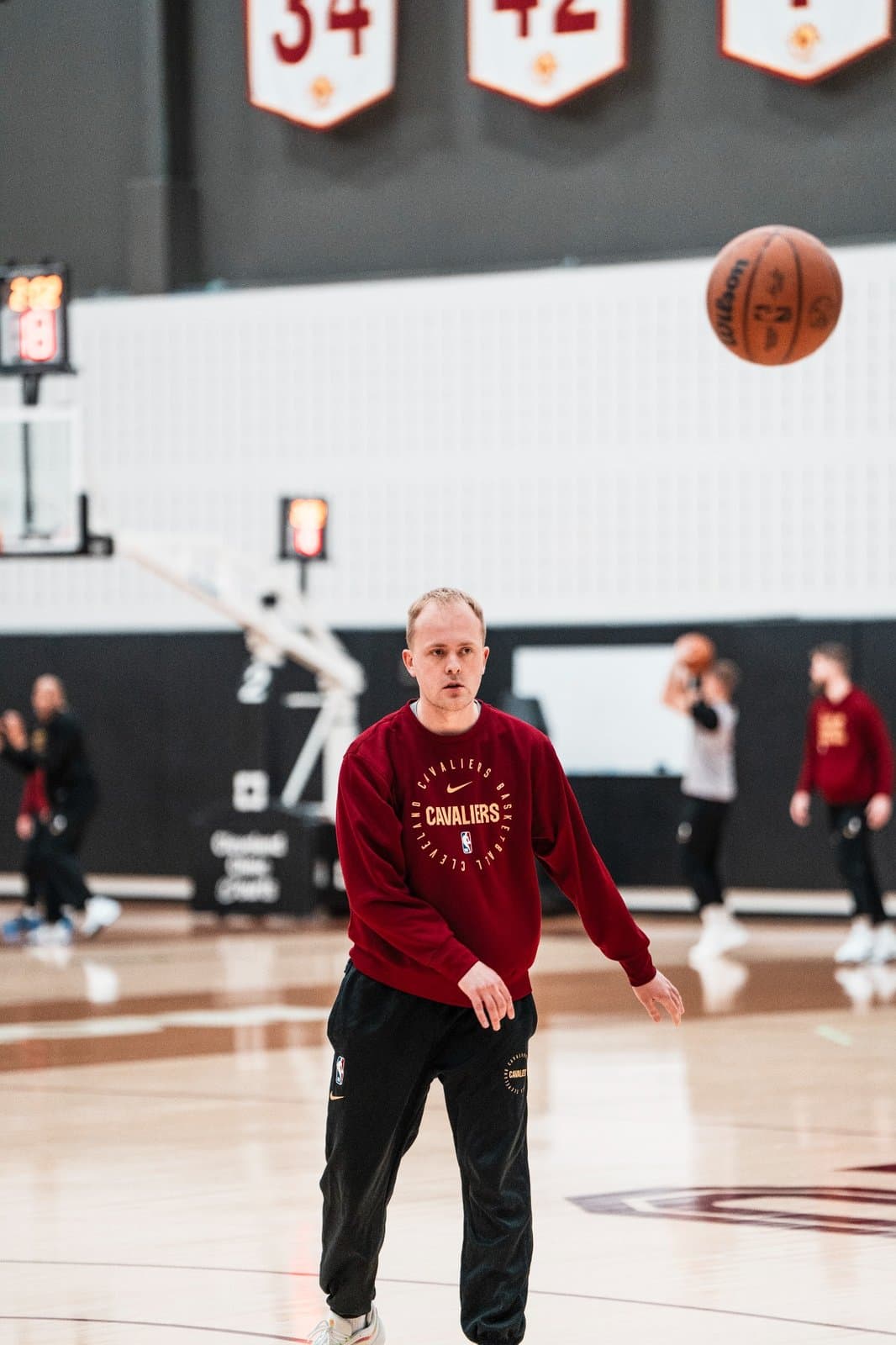
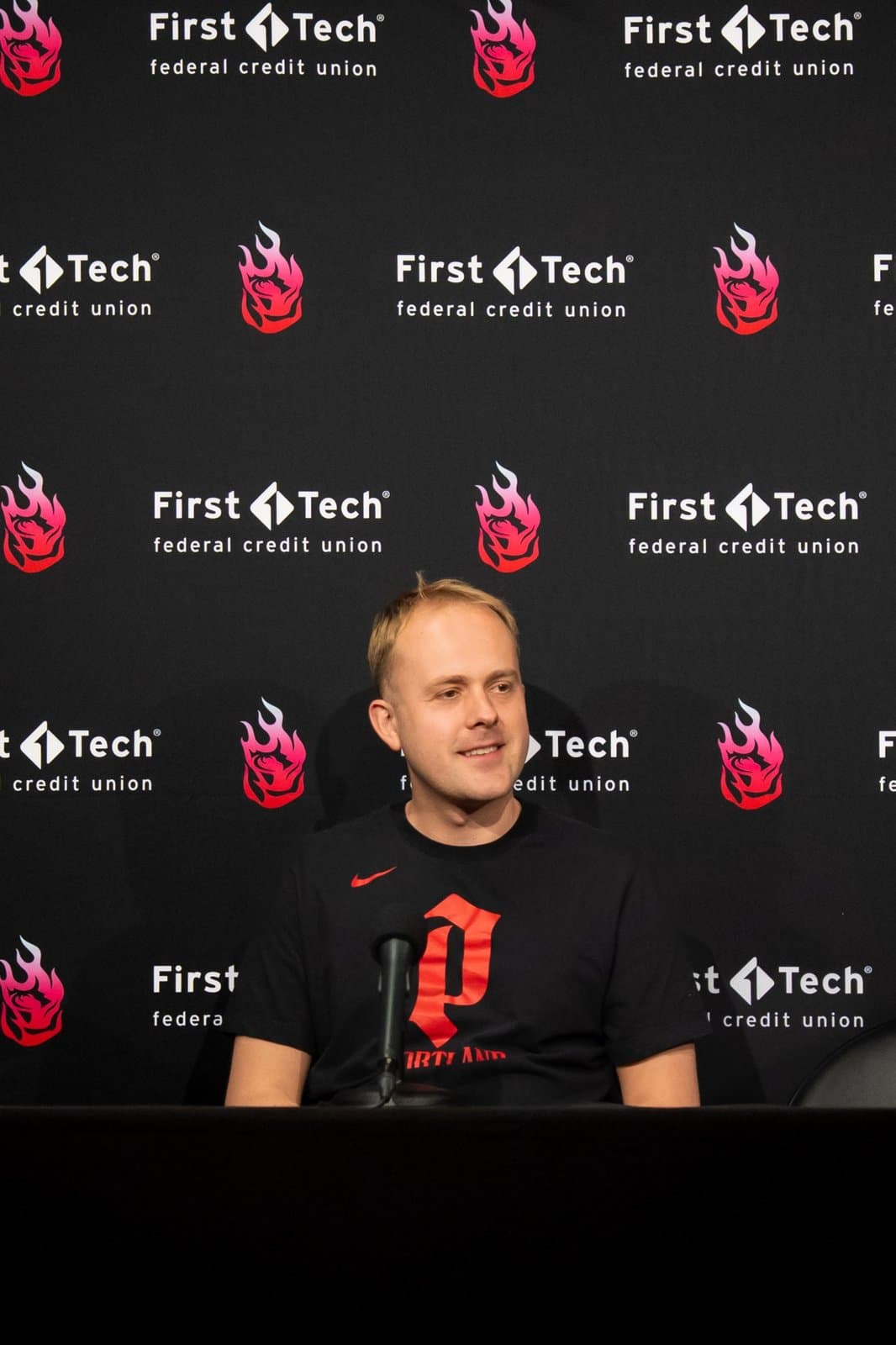
Alex Sarama
Founder, Transforming Basketball · Head Coach, Portland Fire
Alex Sarama is the founder of Transforming Basketball and Head Coach of the WNBA's Portland Fire. Previously, he served as Assistant Coach and Director of Player Development with the Cleveland Cavaliers.
His wider experience includes NBA Europe in Madrid, Paris Basketball in the EuroCup and the Rip City Remix, the Portland Trail Blazers' G League affiliate. Alex has delivered clinics in over 40 countries and has written three books on the constraints-led approach in basketball, including the Amazon bestselling Transforming Basketball (2024) and A Constraints-Led Approach to Coaching Basketball (2026).