
Coaching guide · Shooting
Basketball Shooting Development
The traditional approach to shooting builds one correct form through repetition: form shooting close to the rim, then spot shooting with nobody closing out. We develop shooters with two methods instead: a constraints-led approach (CLA) and differential learning (DL).
18 min read
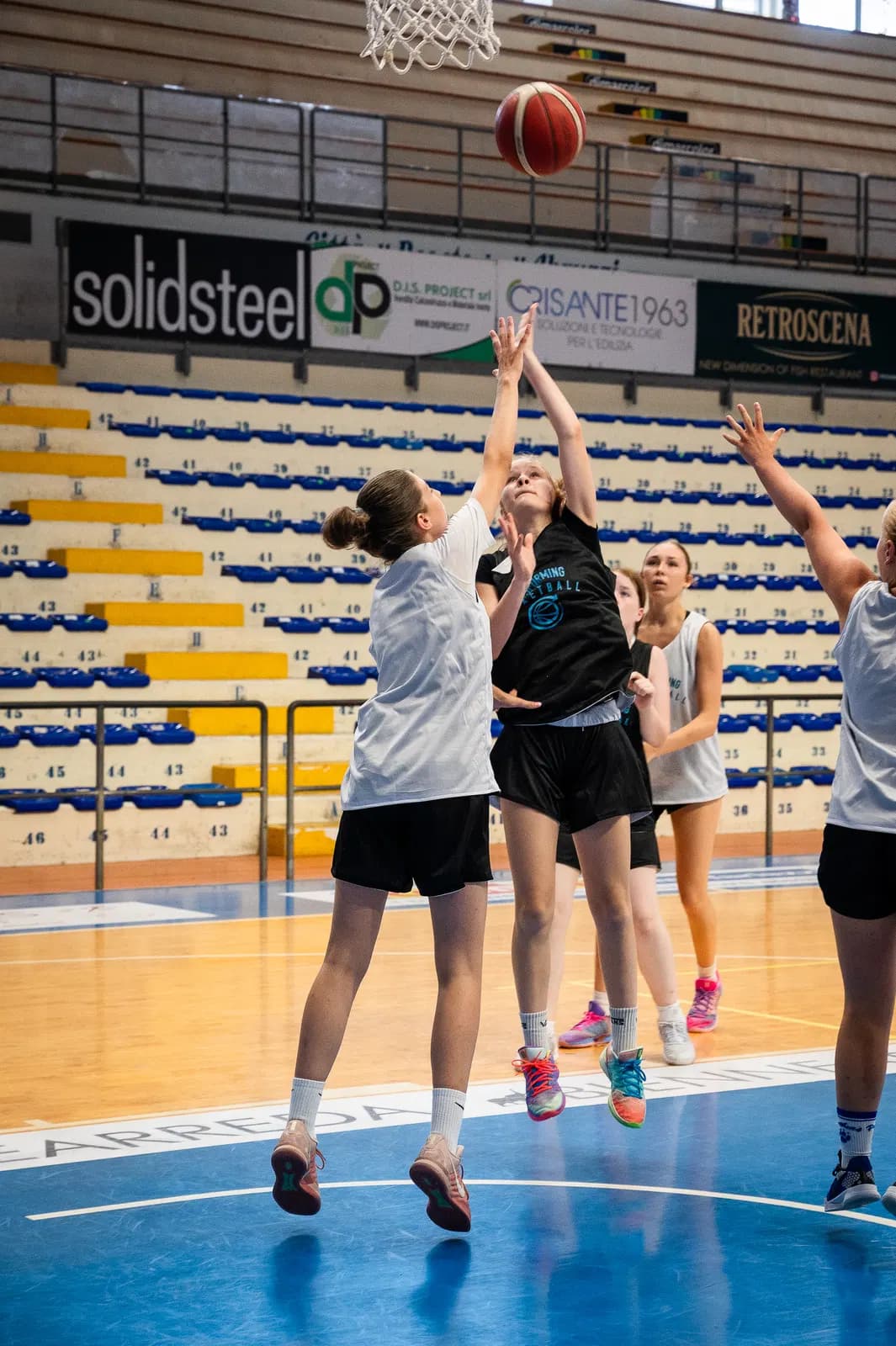
In this guide, learn why more reps from the same spot don't build better shooters in games, and how to use a constraints-led approach and differential learning together. A constraints-led approach uses live shooting games with defenders, so every shot starts with a decision. Differential learning has the player shoot a different way on every repetition, with no correction. You'll also see how to coach the result of the shot rather than the shooter's body, and how to match each method to what a shooter needs.
A simple place to start with the CLA is 1-on-1 Mosquito. Players still get plenty of shots, but no two shots are the same, and the defender bothers the shooter without blocking the shot. A simple place to start with DL is a different stance on every shot, which you will find in its own section below.
1-on-1 Mosquito
2 playersA high volume of shots, each one different, with a defender who can distract but not block.
How it works
- The defender passes to the shooter from different places, and the shooter changes location and range every time.
- The "mosquito" tries to distract the shooter (a little push, hands near the eyes, a clap, a loud noise) but can't block the shot.
Adapt it
- Too easy for the shooter: the defender can block, so the shooter has to get the shot off before it's heavily contested.
- Play 2-on-2 with two mosquitoes, two shooters who can pass and move, or add a pick and roll.
Watch for
- Is the shooter finding a way to release the shot against a defender, rather than repeating one ideal form?
Reps or Representative Repetitions?
In the traditional approach, coaches assume a player improves the more shots they take. If that were true, player development would be very simple. So shooting practice gets judged by volume, and the same activities come back year after year: team shooting in practice, spot shooting after it, and the same routine before games. Many professionals cycle through those same few drills for their whole careers.
The problem is what those drills leave out. In a game, a player never shoots from exactly the same spot, never receives the ball in the same place, and never gets a perfect pass from a coach standing in the same place, which is what we see in a lot of NBA pregame warm ups. A game shot also starts before the catch. The player perceives whether or not they are open, and then self-organizes, which means their body finds a way to coordinate the shot without conscious control of the "form". Spot shooting practices none of these changing variables. In fact, research shows us that blocked practice (doing the same thing over and over again) is not effective for learning.
Adding a defender only helps if the contest is real. In a typical pregame warm up, a coach waves a hand in front of the shooter. That contest is never threatening enough to change how the player shoots, so it teaches nothing about a real closeout. Not every shot needs to be heavily contested, but a real closeout from a real distance is far more representative, meaning it looks like what players face in games. Even a wide open shot in a game has an element of time pressure, because the defense is always recovering. Shooters need practice with some time pressure in it.
1-on-1 Mosquito can be played in many different ways by changing one constraint at a time. The table below shows a few options, and our guide to the constraints-led approach explains the approach in more detail.
| Constraint | What may emerge |
|---|---|
| The shooter changes location and range every time | A high volume of shots where no two are the same |
| The defender can distract but not block | Shooters learn to release with a defender in their space without being blocked every time |
| The defender can block | Quicker releases, because the shooter has to get the shot off before it's heavily contested |
| Two mosquitoes, two shooters who can pass and move, or a pick and roll | Shots that come off passes, screens and decisions, not only off a defender's feed |

Free
A Better Shooting Practice
Rethink shooting practice with a free video on meaningful variation, player decisions, and game situations.
Constrain the Contest, Don't Remove It
A defender who blocks everything is too much for a young shooter. But taking the defender away removes the closeout, which is the information the shooter needs to read. Make the contest easier instead, and always give the shooter a way out, such as a pass back to a teammate or coach, so they can get open again instead of forcing a bad shot. Here are different ways you can constrain the defender in a shooting game:
- A mosquito who can distract but not block
- A defender who can block, but only after the shooter has had a chance to get the shot off
- Closeouts that start from a different distance each time: long, medium, short or from neutral
- A defender who starts with their back to the shooter, so they have to react
- No help behind the defender, so they have to navigate screens on their own
The 1-on-1 Shooting Ladder puts several of these together, with closeouts that keep changing.
1-on-1 Shooting Ladder
2 playersShots at three ranges against closeouts that keep changing.
How it works
- The defender guards the shooter, who can catch and shoot from the defender's pass or shoot off the dribble.
- To finish the ladder, the shooter scores a short (a midrange shot), a medium (a three) and a long (a deep three).
- The defense arrives from different places: sometimes a long closeout, sometimes medium or short, sometimes from neutral. The shooter has to create separation before releasing.
Adapt it
- After the first shot the coach feeds a second ball, the defender relocates to shoot their own ladder shot, and the first shooter becomes the defender.
Watch for
- Is the shooter creating separation before releasing, rather than waiting for a perfect position?
This shooting game puts the decision first. The player has to read the situation before the shot.
Differential Learning: A Different Shot Every Time
A player might read the game well and still shoot poorly, due to deficiencies in self-organization. For those players we use differential learning (DL), developed by German researcher Wolfgang Schöllhorn. DL features no defense, but instead exaggerated variability. For example, the player shoots a different way on every repetition: a different stance, arc, release speed, landing spot or movement before the shot. There is no correction, because there is no right answer that we are looking for!
The aim is to let the player explore their solution space. This is all the different ways they can coordinate their body to shoot. Over time, a more effective coordination can emerge without a coach telling the player how to shoot (which disrupts the natural process of self-organization). DL also keeps the whole shot together instead of breaking it into parts, as form shooting does.
DL adds variability, sometimes called noise, on purpose. The theory behind it is stochastic resonance, the idea that adding variability to practice strengthens a player's movement solutions. That is why DL tasks are often exaggerated, and why many of them would never appear in a game, such as shooting with different arcs, different release points or different sized balls. The goal is to perturb coordination within the jump shot, not to replicate game conditions as the CLA does.
DL and the CLA both value variability, but they are different methods. In the CLA, variability comes naturally from a game with a defender in it. In DL, the coach and player create it on purpose, usually without a defender.
| Constraints-led approach | Differential learning | |
|---|---|---|
| What it is | Representative games with a defender, where constraints shape what players try | A different way of shooting on every repetition, set by the coach and the player |
| Where the variability comes from | It arises naturally in the game | It is created on purpose and is often exaggerated |
| Defender | Yes | Usually not |
| What it develops | Developing adaptability and shooting in game representative settings | A wider range of shooting solutions, especially useful for poorer shooters |
How to Run a Dl Shooting Block
Always change range and location too, even if that means taking one or two steps between shots, and have the passer pass from different angles. These tasks work for DL:
- Shoot using a different stance every time.
- Shoot with varying arcs on each shot.
- Do a different movement every time before the shot.
- Shoot at different speeds, from as slow as possible to as fast as possible.
- Shoot around a partner's hand without touching them.
- Touch the floor before the shot, or throw the ball, then catch and shoot.
- Jump off two feet and land on one, or jump 180 degrees and shoot.
- Change the dip, the off hand placement or the follow through.
You can give players a task and ask them to experiment with three versions of it. In the arc task, they choose a flat arc, their normal arc and the highest arc they can shoot, and alternate between them. In pairs, one player shoots 3 shots from a different location every time and then switches, or shoots for 60 seconds and then switches. Sometimes the coach sets the task, and sometimes players invent their own variations.
Our article on applying differential learning to shooting has more examples. There is also a differential learning shooting drill and an activity page where players invent their own.
Using Dl and the CLA Together
A DL block may fit perfectly between small-sided games, where it gives players extra shooting reps and rest before another intense live small-sided game. On a lighter day, use more DL. On a high intensity day, players use more CLA tasks. The idea of going from a DL task back to a CLA environment is that when players return to a CLA task, they can use the wider range of solutions they "unlocked" within DL to self-organize into a more functional shot.
DL complements using a constraints-led approach to develop shooting. It also gives coaches who find it hard to leave form shooting behind a modern alternative to traditional 1-on-0 practice. You may wish to introduce DL gradually: start with the less extreme versions, such as changing range every shot or using different pass types, then move to the more extreme ones, such as different floor surfaces or basketballs.
Teach the Decision to Shoot
A player who takes better shots becomes a better shooter before their shooting coordination changes. The only place to practice that decision is a game with a defender in it, and what counts as open is different for each player. For example, an open shot for Steph Curry isn't the same as for a role player.
We give players two pieces of shared language. The first is ROB: is the shot within my range, am I open, am I balanced? A beginner can't learn that in a spot shooting line, where nobody closes out and there is nothing to tell them whether they are open. The second is the medal system from our article on coaching shot selection. Gold medal shots are free throws and finishes in the smile (the restricted area). Silver medals are catch and shoot threes, especially from the corners. Bronze medals are off the dribble threes and non rim paint shots. To shape shot selection, limit which medals count in your small-sided games and scrimmages, for example long stretches where only gold and silver shots score.
Functional Shooting, Not the "Correct" Form
The traditional model teaches one correct way to shoot: elbow in, hold the follow through, legs under you. But the best shooters don't share one form. Their elbow angles differ, as does where the shooting hand sits under the ball, where the ball sits above the head, what the guide hand does, and how much the shoulder and wrist flex. Each of them solves the same problem differently, because each body is different: height, wingspan, hand size, joint flexibility, strength, even which eye is dominant. There is no one shooting technique that applies to every player.
In a CLA, the word functional replaces fundamental. A fundamental shot is the idealized technique. A functional shot is a coordination that works for that player at a good rate, even if it looks different from what you were taught. If a shooter is successful, why does it matter what the shot looks like? Coaches who chase the fundamental can coach effective shooters out of solutions that suit their own bodies. Coaches often fix a "thumb flick" on the ball, yet Steph Curry often does it. A coach also can't see what the player sees or feel what they feel, so it's impossible to know which elbow angle suits that body better.
Something should stay consistent, though, and that is the outcome. A ball released high and with enough arc has a bigger opening to enter the rim. To get that outcome every time, the technique has to vary, because the distance, the pass, the defender and the shooter's own movement keep changing. So coach the outcome and let the technique take care of itself. It's also physically impossible to repeat the exact same shot, which is why we talk about repetition without repetition.
Inside every shooter, some parts of the shot stay stable, such as the release height, while other parts change from shot to shot to deal with the defender, the pass and the distance. Researchers call the stable parts attractors and the flexible parts fluctuators, and both are different for every player. Coaches often demand that the flexible parts look the same every time, hoping to build "muscle memory". At Transforming Basketball we reject that term, and you can read why in our guide to ecological dynamics. Drilling out the natural variation takes away the adaptability players need when a defender arrives. If a part of the shot that should flex has become stuck, we don't correct it. We use differential learning, covered earlier in this guide, so the player finds their own way out.
Coach the Outcome: BRADs, Not Body Parts
Most shooting feedback is about body parts: get your legs under you, tuck the elbow, hold the follow through. This is called an internal focus. When players think consciously about how to control a specific limb, it gets in the way of self-organization, and players are more likely to choke when they think about how to perform the skill. An external focus points the player at the result instead.
The external focus we use most is the BRAD, short for back rim and down: a made shot that hits the back of the rim dead center and drops. Shots reach the rim at an angle, so the biggest opening is not the middle of the hoop but toward the back. The higher the arc, the wider that opening gets. To score a BRAD, a player has to shoot with a higher arc, and nobody has to tell them how to move to do it.
BRADs also give feedback without a coach. If a BRAD trickles straight back to the shooter, it was clean. If it kicks back and to the right, the shot was a little left. If it kicks back and to the left, it was a little right. To value them, count only BRADs in a shooting game, or give them extra points. That one change moves the shooter's attention from just making shots to making them cleanly.
Beyond BRADs, no list of external cues suits everyone. A cue should match the player and leave room for them to find their own solution. For a player who struggles to generate power, "shoot like a spring" might help, as we explain in what external cues are optimal for shooters.
Games with a High Volume of Varied Shots
Players want their reps, and a game where they shoot twice in a minute won't meet players where they are at. Therefore, it's important to design CLA activities like Jungle Shooting, which still provide volume. This small-sided game features two balls and a minute on the clock. The offense can still drive and pass, but players never know when or where they will get their next shot.
Jungle Shooting
5 players (3-on-2), two ballsUnpredictable shots: nobody knows when or where the next one is coming from.
How it works
- Three offensive players and two defenders, with two basketballs in play.
- Play in bursts: the offense stays on offense and the defense on defense for 60 seconds, then a short rest of about 10 seconds.
- The offense can shoot threes, drive and pass, but can't finish at the rim.
- The defense tries to force turnovers, contest and block shots, and must rebound and pass the ball back in.
- Two ways to win, for example: the offense scores 8 BRADs from three within the minute, or the defense gets 5 steals or blocks.
Adapt it
- Younger players: allow midrange shots.
- Play 2-on-2, 3-on-3 or 4-on-3 depending on your numbers and baskets, and use two or three balls.
- Start without music so players can talk, then add loud music or arena noise so they have to talk over it.
Watch for
- Are shooters deciding quickly between a BRAD attempt, a drive and a pass?
Curry Shooting 1-on-1+1 is for older players. It gives one shooter the kinds of shots Steph Curry has to find: off the catch, off the dribble, off picks, gets and dribble handoffs, from different spots at different speeds. The offense can still drive, and the defender has to navigate screens with no help behind them.
Curry Shooting 1-on-1+1
3 players, older playersShots out of many different scenarios (catch, dribble, picks, gets and dribble handoffs) from varied locations and speeds, against a defender with no help.
How it works
- The defender starts on the block facing the three point line, blind to the offensive player, who starts behind them with the ball.
- The +1 stands in a different spot every rep, either in the midrange or outside the three point line.
- Play starts as soon as the defender senses the offensive player has moved. The offense must get outside the three point line, off the dribble or off a pass to the +1, before they can score. The defense can steal and disrupt before then.
- Once the offense touches the three point line, they can score however they want. The +1 screens, runs dribble handoffs and gets, and re-triggers if the offense is neutral, but can't score.
Adapt it
- Too hard for the offense: the offense doesn't need to escape the three point line before scoring, or the +1 is limited to one action, such as only gets, hand-offs or picks.
- Add a second passer or screener (1-on-1+2) for off ball screens, or a third (1-on-1+3) for staggers, floppy and elevators.
- Add an extra defender to stunt and disrupt.
- Award extra points for specific scenarios, for example a shot off an off ball screen.
- Limit the offense's dribbles or play with a shorter shot clock.
Watch for
- Is the shooter finding their own way into each shot, whether off the catch, the dribble or a screen?
Match the Method to the Shooter
Two shooters can miss for very different reasons. One player may need more shots coming off a screen to their left, while another needs to develop a pull up three against drop coverage. The thing holding a player back in one specific situation is their rate limiter. Here are common shooting problems and the method or constraint we may use:
| If the player… | Try this |
|---|---|
| Shoots well undefended but not against a defender | 1-on-1 Mosquito with the defender allowed to block, or closeouts from different distances in the Shooting Ladder |
| Takes poor shots | Limit which medals count in small-sided games, and use ROB as shared language |
| Reads the game well but shoots poorly, or has hit a plateau | Differential learning, with a different stance, arc or speed every rep, then back into live games |
| Is new to shooting | Live games such as 1-on-1 Mosquito first, and DL added gradually, starting with the less extreme versions |
| Struggles to generate power | An external cue such as "shoot like a spring" |
| Only gets shots off the catch | Curry Shooting 1-on-1+1, with the +1 limited to one action at a time |
| Forces shots when the defense takes the shot away | Jungle Shooting, where the offense can also drive and pass |
Shooting with Youth Players
Young players need shots they can reach and a game that makes them decide. Smaller balls and lower hoops are among the most important constraints to change at this age.
| Age group | Ball | Rim height |
|---|---|---|
| U8 | Size 5 | 8 feet |
| U10 | Size 5 | 8 feet 6 inches |
| U12 | Size 5 | 10 feet |
These recommendations come from Table 3.5 of A Constraints-Led Approach to Coaching Basketball (Routledge), written by Alex Sarama, Alex Lascu, George Vaz Rocha and Neil Houghton.
Questions Coaches Ask
What is differential learning in shooting?
A method developed by Wolfgang Schöllhorn in which the player shoots a different way on every repetition and nobody corrects the shot. It widens the ways a shooter can get the ball off, and it can help a plateaued shooter. We use it alongside live games, not instead of them.
What is the difference between the CLA and differential learning?
The CLA uses representative games with defenders, where variability comes naturally from the game. DL creates variability on purpose, usually without a defender, to widen a shooter's range of solutions. Live games build decisions, and DL gives the player more ways to get a shot off.
Is form shooting good for basketball players?
We don't use it. Form shooting is taken so close to the basket that it's a different movement from a game jump shot, it has no defender to read, and it's usually coached by correcting body positions. Live shooting games and differential learning are the two methods we use instead.
Is there a correct way to shoot a basketball?
No single technique suits every player. The best shooters differ in elbow angle, hand position, guide hand and release point because their bodies differ. What matters is a consistent outcome, a ball released with good arc and release height, which players reach in their own way.
What does BRAD mean in shooting?
Back rim and down: a made shot that hits the back of the rim dead center and drops. Because the ball approaches the rim at an angle, the back of the rim offers the biggest target. It also gives the shooter instant feedback without a coach.
How should I teach shot selection?
Give players shared language and then shape it in games. We use ROB (range, open, balanced) and a medal system that ranks rim finishes and foul shots first, catch and shoot threes second and off the dribble threes and non rim paint shots third. Limit which medals count in your small-sided games.
Take It to Your Next Practice
Free
A Better Shooting Practice
Rethink shooting practice with a free video on meaningful variation, player decisions, and game situations.
Developing Shot Selection
$39 USD
A clinic on coaching better shot selection through representative practice — includes a shot-selection worksheet.
The Shooting System
$499 USD
Take A Better Shooting Practice further with The Shooting System: a full course on constraints-based shooting, differential learning and competitive challenges.
Sources
- Transforming Basketball, Alex Sarama (Wiley, 2024)
- A Constraints-Led Approach to Coaching Basketball, Sarama, Lascu, Vaz Rocha and Houghton (Routledge)
- Transforming Basketball podcast, episodes 10, 26, 32 and 61
- How to Use Jungle Shooting to Improve Your Team's Shooting
- How to Apply the Theory of Differential Learning in Basketball Shooting
- What External Cues Are Optimal to Develop Better Shooters?
- How to Coach Basketball Shot Selection
- Gorman and Maloney (2016), Psychology of Sport and Exercise
Behind the methodology
About Alex Sarama
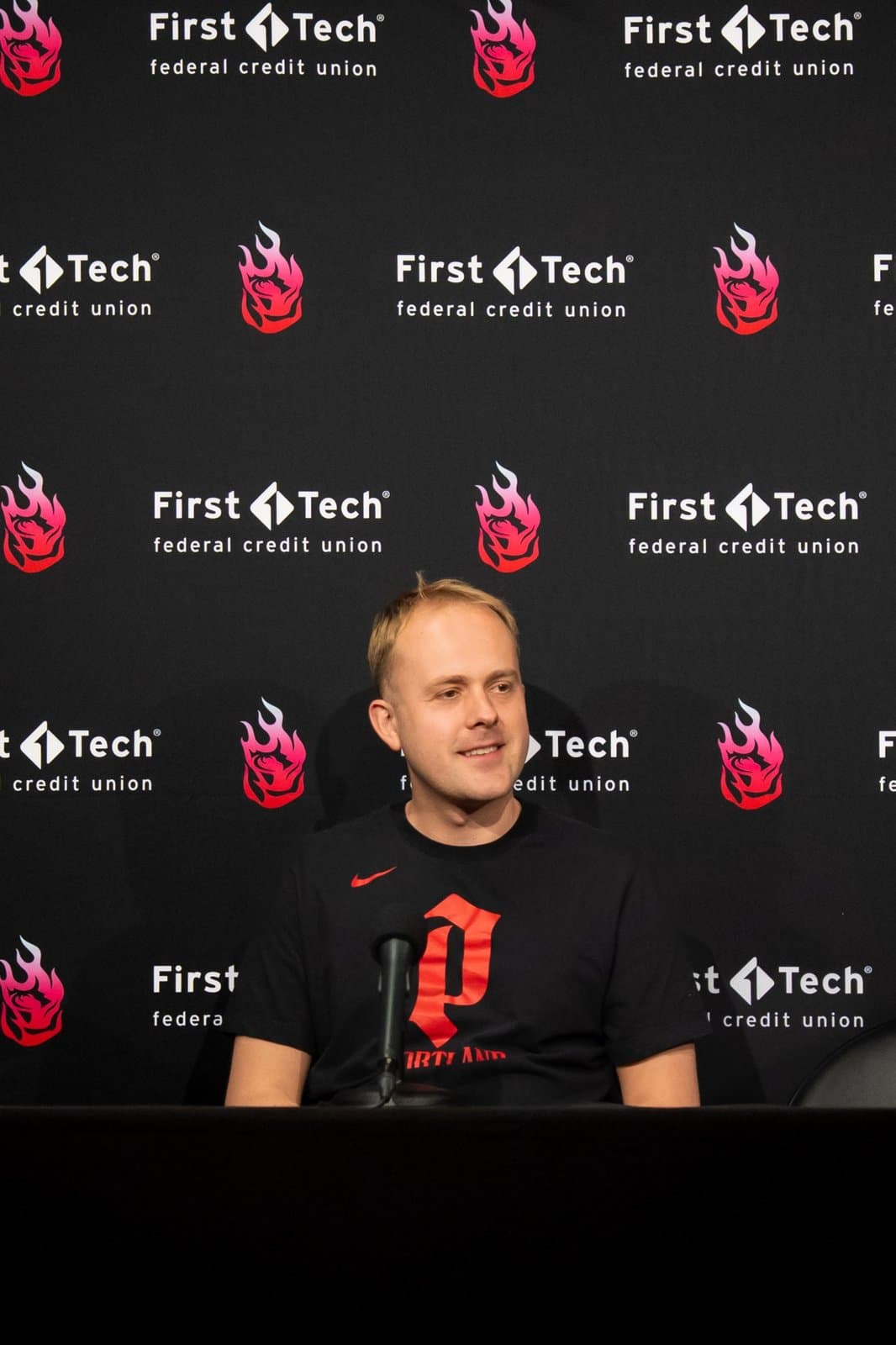
Alex Sarama
Founder, Transforming Basketball · Head Coach, Portland Fire
Alex Sarama is the founder of Transforming Basketball and Head Coach of the WNBA's Portland Fire. Previously, he served as Assistant Coach and Director of Player Development with the Cleveland Cavaliers.
His wider experience includes NBA Europe in Madrid, Paris Basketball in the EuroCup and the Rip City Remix, the Portland Trail Blazers' G League affiliate. Alex has delivered clinics in over 40 countries and has written three books on the constraints-led approach in basketball, including the Amazon bestselling Transforming Basketball (2024) and A Constraints-Led Approach to Coaching Basketball (2026).