
Coaching guide · Skill development
Basketball Passing Drills
A good pass reaches a teammate at a time and place they can use it, past a defender trying to take it away. Passing lines and partner chest passes strip that defender out. We've taken five familiar drills and put a live defender and a moving receiver back in.
13 min read
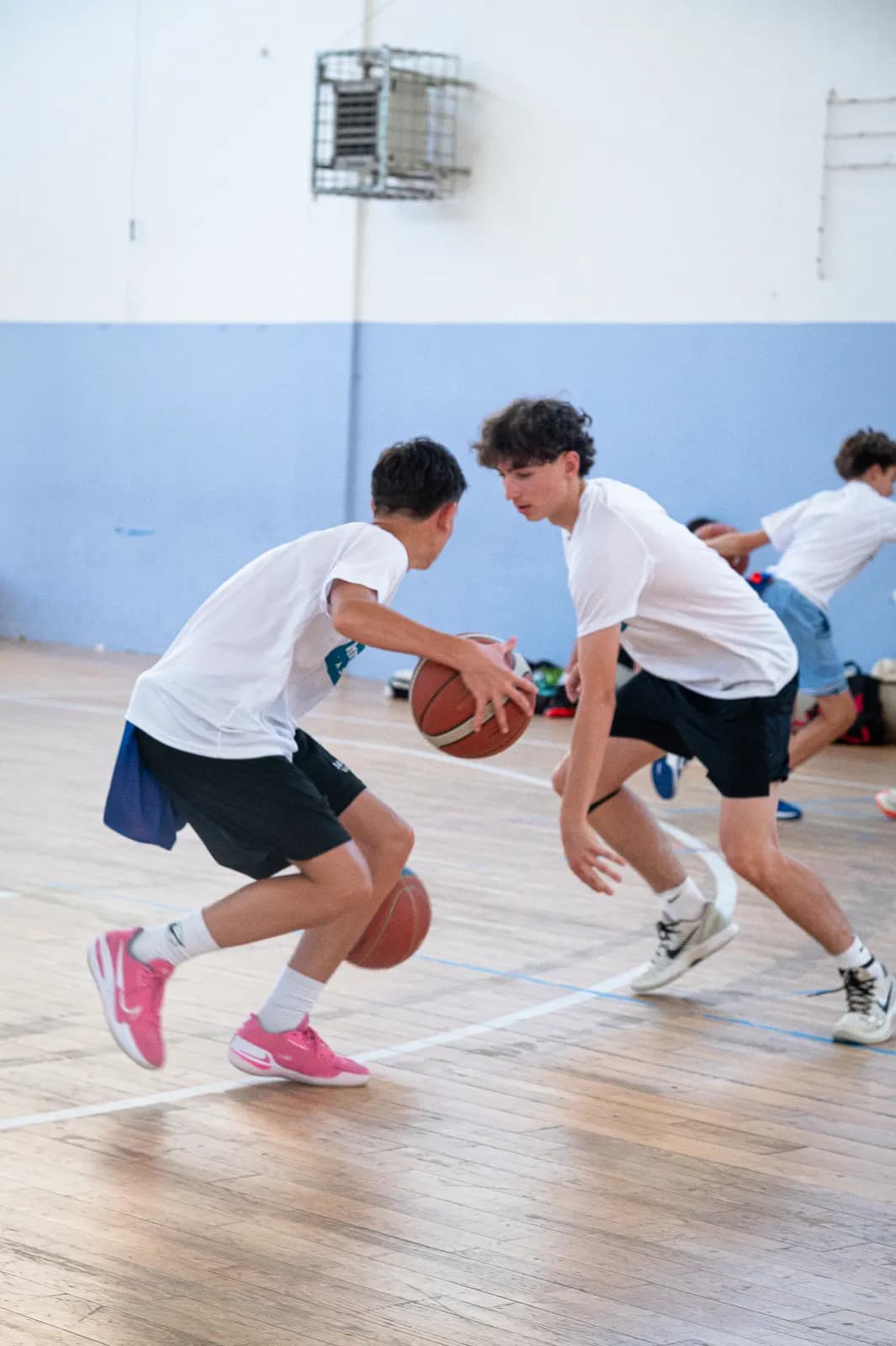
Sean Keating coaches high school varsity in St. Peter, Minnesota, and runs a youth league where third- and fourth-graders don't play 5-on-5. They play a continuous fast-break game, 4-on-3 one way and 3-on-2 the other. Defenders can steal passes but aren't allowed to reach in for the ball. On EP92 Sean described what happened when his fourth-grade boys, after four weeks of it, played their first 5-on-5 tournament. Parents were texting him during the game to say the team looked different.
“Like they're passing the ball ahead. They know how to pivot and pass and move.”
With an extra player on every trip, as Sean put it, there's always somebody open, and there's always a defender trying to intercept the pass. Every game below keeps both: a receiver to find and a defender in the way.
Why the Chest Pass in a Line Doesn't Show Up
The line drill is popular because it seems to cover several fundamentals at once: dribble out, jump stop, pivot, chest pass back to the next player. Transcending Basketball argues that in a game, defenders and teammates are always changing, so players can't reproduce what the drill rehearsed.
“The straight line chest pass used in a line drill is never going to be replicated in the game.”
Alex asked the practical version of the question in his article on line and box drills: when in a game does a player start from the sideline, dribble out, jump stop, pivot and pass back in the direction they came from? He doesn't use these drills even for warm-ups. The book adds that players don't need to master a chest pass before they can make a one-handed pass or find other ways to get the ball there.
The three-player weave has the same problem. Transforming Basketball lists it with the zig-zag as a "timeless classic" of on-air practice: players throw accurate chest passes to teammates and run behind the player they passed to, with nobody trying to take the ball. The book calls this blocked constant practice, the same action repeated many times with minimal variance.
“Skilled passers do not repeat an identical passing technique across multiple possessions, such as how the “fundamentals” of the chest pass are commonly taught.”

Free
21 SSGs for Your Next Practice
21 small-sided games you can run and adapt at your next practice, each one keeping the defenders, decisions and scoring of the real game.
Passing Has Three People in It
Every pass in a game involves a passer, a receiver and at least one defender. The defender changes the angle, speed and trajectory the pass needs. The receiver decides where the pass can go by where they move. Take either one away and players lose the information they use to pass in a game, so the drill stops being representative (close enough to the game for the skill to carry over).
The book's glossary borrows a word from the Russian scientist Nikolai Bernstein for what we want instead: dexterity, the ability to solve whatever movement problem comes up. For passing, that means getting the ball to teammates in different spots, at different speeds, heights and angles, against defenders pressuring from different directions. A passing line, the glossary says, doesn't help develop it.
Small rule changes shift all three roles at once. A Constraints-Led Approach to Coaching Basketball gives an example from a possession game with three offensive players and one defender: tell the players they can only pass below shoulder level. The overhead pass disappears, so the receivers have to reposition to open a window with a clear line for a low pass. Nobody is told where to move. The rule makes the movement worth finding.
Make-Over 1: Passing Lines Become Piggy in the Middle
Players standing in two lines throwing chest passes is the classic passing drill. The book replaces it with the playground game piggy in the middle. Players pass at different angles and speeds, on the move, in different planes and with different spins, because the defender in the middle makes them.
Piggy in the middle
3 playersMake the receiver part of the problem, not just a target.
How it works
- Two players keep the ball away from a defender in the middle.
- If the defender deflects the pass, or the receiver needs more than two steps to catch it, the passer becomes the defender.
Adapt it
- For players who can't yet keep the ball, start with guided defense: the defender can't steal, only show their hands. Then let them play live.
Watch for
- Are passes ones the teammate can collect without chasing the ball out of the situation?
- Is the receiver moving into a window, or waiting behind the defender?
The two-step catch rule changes what counts as a good pass: getting it past the defender isn't enough if the teammate can't use it. The guided-defense step comes from EP136, on how to simplify a passing game without stripping out the defender.
Make-Over 2: The Line Drill Gets a Defender
If you like what the dribble-stop-pivot-pass drill is trying to do, keep the movements and add the information. George Vaz's version from the best warm-ups for basketball practices takes a drill he spent nearly an hour on at a camp as a kid and puts a defender in it.
Dribble, Pivot and Pass, live
Groups of 3Passing and pivoting against someone trying to deflect the pass.
How it works
- Three players in a line instead of two. The first dribbles out, jump stops and pivots.
- The second follows as a defender and defends the pass back to the third.
- Players decide for themselves how to rotate.
- First player to five on-target passes in a row wins, or reward the defense: first to two deflections wins.
Adapt it
- Simplify: the defender plays with one hand behind their back.
- Progress: the defender earns a point for touching the ball, so the offense has to pivot more quickly and protect it.
Alex's article offers a 1-on-1 alternative inspired by the box drill. The offense self-passes out from under the basket with a live defender following, then plays 1-on-1 with a five-second clock, starting from a different spot each time. To get pivoting without teaching it, he adds a rule like "stay for three reps, and you must pivot a different way every time or it's a turnover". Try it with ten-year-olds, he writes, and reverse and forward pivots emerge without players knowing what they're doing.
Make-Over 3: Piggy in the Middle Grows into Keepaway
Passing problems also involve the players without the ball. If one defender can guard two receivers, the passer has fewer options. We use "1 can't guard 2" to help players see why their spacing matters: their positions should change as the ball and the defenders move, and the right distance depends on the space and how far players can pass.
Keepaway
3-on-2 and upOff-ball players keep creating passing windows as the defense shifts, so 1 can't guard 2.
How it works
- Add a second defender and challenge the offense to complete eight consecutive passes in a small playing area.
- Passers can move but can't dribble, and play stays inside the three-point line.
Adapt it
- To make it harder, shrink the space. That leads to more pivots and harder catches.
- To make it easier, play in more space or allow a permanent +1: 3-on-3+1, 4-on-4+1.
Watch for
- Do teammates get open before the passer runs out of options? Are players cutting and finding a window, or standing still?
Played the same way every day, Alex warned on EP22, even keepaway becomes a games approach rather than the constraints-led approach. His suggestions for keeping it alive:
- Mark out irregular playing areas with cones and change area every minute.
- After every pass, the passer has to leave the area before coming back in to receive again. For a moment the defense has a +1, which can invite them to trap.
- Allow one dribble, which opens up different ways to pass and create space.
A rondo is the same idea with the defenders inside the circle. The Routledge book uses it as a warm-up for first-touch, zero-second decisions, where the ball moves on before the defense recovers.
Basketball Rondo
4-on-2, or 5-on-3 or 5-on-2 depending on numbersPass on the first touch where you can, before the defenders close the window.
How it works
- The offense keeps the ball away from the defenders by passing.
- If the defense deflects the ball or tags the passer in possession, they change out.
- The first team to 10 straight passes wins.
Adapt it
- Say the name of the person you are passing to.
- Dribble before making a pass.
- Change spots with someone after every pass you make.
Make-Over 4: Give the Passing a Direction
Keepaway is about keeping the ball, while games are about getting it somewhere. The book's next step is pass touchdown: one team tries to get the ball to the other baseline through passing to score a point. Players now notice when moving away from the ball opens a forward pass, and when coming closer gives the passer a safe option.
Francesco Rossi's Animals game, from EP39, takes direction the full length of the floor: three offensive players have to score at the far basket using only passes, against one defender in each half and one free defender. It's the passing game we recommend against full-court pressure, and the rules are in our press-break guide.
Make-Over 5: Drive and Kick Needs Defenders
3-on-0 drive and kick is built on a good principle: dominoes, keeping an advantage alive until a good shot appears. But without defense, the book points out, players can't attune to the information they need, like where the open teammate is, what space there is to attack and how to pass around defenders. Its replacement is 3-on-2 Bursts, where the offense stays on for several possessions in a row, covered in our small-sided games guide. A smaller version ties the pass to the shot.
2-on-1 Closeouts
3 playersTie passing to shot selection: the "one more" pass.
How it works
- Two players space on the perimeter and receive a pass from a defender who closes out.
- The offensive players can shoot or pass, but they can't drive or cut.
- If the pass isn't on target, the defender earns a point.
Watch for
- Does the receiver recognize an open shot? Does the passer read the closeout or just move the ball on?
For passing in traffic after a drive, the Routledge book names passing solutions as one of the most common rate limiters in youth players, and gives a game built around the dunker spot.
2-on-2 with Weakside Dunker
4 playersPassing solutions in traffic: the driver has to find a teammate the help defender has left.
How it works
- Advantage start: one offensive player starts with the ball on the back of a defender.
- The second offensive player starts in the weak-side dunker spot. Their defender guards both that player and the basket as the help defender.
- Play goes live when the offense drives. The player in the dunker spot has to create a window for the pass.
Adapt it
- If it's too difficult, remove the on-ball defender and play 2-on-1.
- One pass maximum, with a three-second shot clock.
- Scoring out of a Nash dribble counts double.
Alex and George used a harder version with the London Lions U16 girls, described on EP108. Many of the girls didn't yet have the strength for the skip pass when the defense collapsed on a pick-and-roll. The handler came off a pick with a switched defender on them and had to make the skip pass to a shooter in the corner while that defender tried to steal it, earning a point for a strike-zone pass to the shooter's hand. Alex called it a good example of task simplification.
Pass and Cut Isn't Passing Practice
Plenty of youth teams think they're developing passing through a pass-and-cut offense. On EP7 Alex explained why he disagrees. When the cut is filled in a pre-programmed pattern, there's no reason for a real off-ball cut, and the receiver often can't drive because they have to wait for the cutter to clear. He'd rather players simply pass and space, find their window outside the three-point line, and learn real off-ball cuts like the ghost cut, a term he borrows from Mike MacKay.
His practical rule, from a presentation on the topic, is that pass and cut is a turnover. Encourage players to find other solutions, even if that "only" means spacing. The full argument is in why pass-and-cut motion offense is harming youth basketball.
Passing with Young Players
Sean Keating's league is a good model. Besides the odd-numbered fast-break format, defenders don't guard beyond the three-point line, they can steal passes but can't reach in for the ball, and the hoops are lowered to eight or nine feet. The no-reaching rule came from his assistant, Josh, and Sean admitted he resisted it at first. He came around because it gives kids time to learn to pivot and pass, even if it takes five, six or seven seconds. One more rule, borrowed from another coach:
“if you just throw a chuck it up pass, that's a turnover automatically.”
Check distances too. A pass that's open in theory may be beyond a young player's range. Then the rate limiter (the thing stopping the pass from happening) is strength rather than perception, so shrink the space or scale the ball before deciding a player can't see the pass. For more games with beginners, see our youth basketball coaching guide.
Questions Coaches Ask
What are the best passing drills for basketball?
The best passing drills are small-sided games with a live defender and a moving receiver, such as piggy in the middle, keepaway, a rondo, pass touchdown and 2-on-1 closeouts. Each makes players choose the angle, speed and timing of the pass, which passing lines can't do.
Are passing lines and partner passing drills useless?
Not useless, but they aren't representative of the game. The straight-line chest pass to an unguarded teammate they rehearse doesn't happen in games, so we replace passing lines with piggy in the middle. If you use partner passing, vary the height, angle and trajectory of every pass.
How do you teach passing to beginners?
Keep the defender, but limit them. Start with guided defense, where the defender can only show their hands and can't steal, or make them play with one hand behind their back. Use a smaller space and a lighter ball so the passes are within range.
What is a good keepaway passing game?
Play 3-on-2 or bigger and challenge the offense to make eight consecutive passes in a small area inside the three-point line, moving but not dribbling. Shrink the space to make it harder, or add a permanent extra offensive player to make it easier.
How do you practice passing under pressure?
Use a rule that makes pass quality count. In piggy in the middle, if the defender deflects the pass or the receiver needs more than two steps to catch it, the passer becomes the defender.
Does pass-and-cut offense help youth players learn to pass?
We don't think so. Scripted pass-and-cut takes away real off-ball cuts and the chance to drive on the catch. Teach players to pass and space, and treat pass and cut as a turnover in practice games.
Take It to Your Next Practice
Free
21 SSGs for Your Next Practice
21 small-sided games you can run and adapt at your next practice, each one keeping the defenders, decisions and scoring of the real game.
The Small-Sided Games Book
$49 USD
Build on your free games. Build your practice around 50+ small-sided games, with diagrams and constraints you can adapt to your players.
Sources
- Transcending Basketball, Alex Sarama (Wiley, forthcoming): chapter 3 (line drill, passing lines, 3-on-0 drive and kick) and the glossary (dexterity)
- EP92: Sean Keating 4v3 3v2
- EP22: How do Games-Based Approaches Differ from the CLA?
- EP7: Why You SHOULDN'T Run Pass and Cut Offense
- EP108: A New Chapter with George Vaz
- EP136: Traditional vs CLA Drills
- EP39: How Does a Small Italian Town Produce So Many Professional Players? With Francesco Rossi
- Are Line and Box Drills Effective in Basketball Practice?, Alex Sarama
- The Best Warm-Ups for Basketball Practices, George Vaz
- Why Pass and Cut Motion Offense Is Harming Youth Basketball, Alex Sarama
- Is Pass and Cut Useful for Youth Basketball?, Alex Sarama, presentation
- Chow, Davids, Button and Renshaw, Nonlinear Pedagogy in Skill Acquisition: An Introduction, 2nd edition (Routledge, 2021)
- Bernstein, O lovkosti i ee razvitii [On dexterity and its development] (Physical Culture and Sport, 1991)
- Transforming Basketball, Alex Sarama (2024): chapter 1 (three-player weave, blocked constant practice), chapter 2 (dexterity) and chapter 8 (Close-Out Bursts)
- A Constraints-Led Approach to Coaching Basketball, Sarama, Lascu, Vaz Rocha and Houghton (Routledge, forthcoming): chapter 2 (the below-shoulder passing constraint), Table 4.10 (2-on-2 with Weakside Dunker) and Figure 4.27 (Basketball Rondo)
Behind the methodology
About Alex Sarama
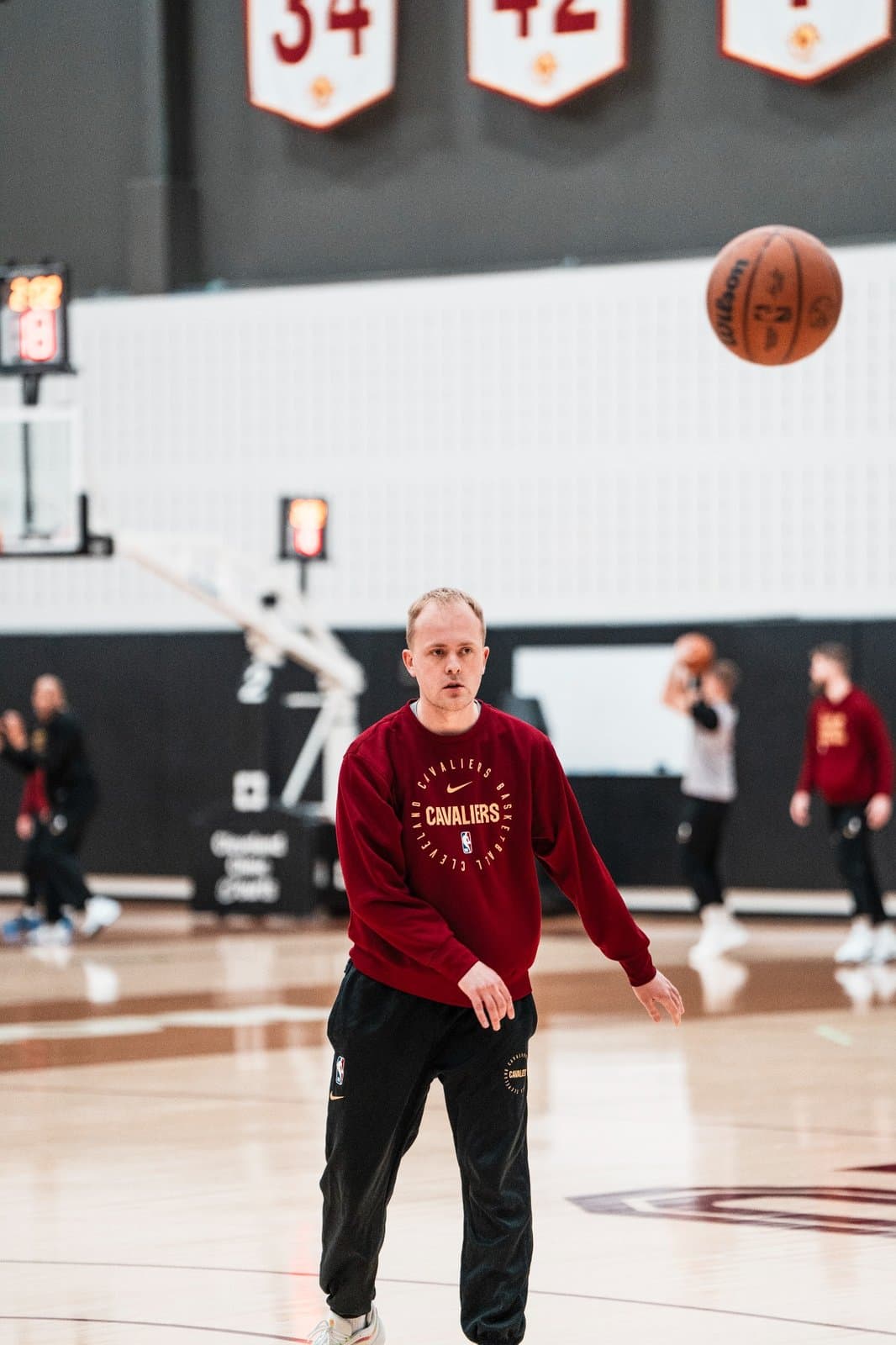

Alex Sarama
Founder, Transforming Basketball · Head Coach, Portland Fire
Alex Sarama is the founder of Transforming Basketball and Head Coach of the WNBA's Portland Fire. Previously, he served as Assistant Coach and Director of Player Development with the Cleveland Cavaliers.
His wider experience includes NBA Europe in Madrid, Paris Basketball in the EuroCup and the Rip City Remix, the Portland Trail Blazers' G League affiliate. Alex has delivered clinics in over 40 countries and has written three books on the constraints-led approach in basketball, including the Amazon bestselling Transforming Basketball (2024) and A Constraints-Led Approach to Coaching Basketball (2026).