
Coaching guide · Skill acquisition
Skill Acquisition in Basketball
Skill acquisition, also called motor learning, is the study of how players get better. In the ecological view we coach by, players don't store moves and replay them. They get better at spotting the opportunities defenders and teammates create and scaling their movement to fit, which is why practice has to keep those defenders and teammates in.
16 min read
When Alex asked Dr. Alex Lascu to explain skill acquisition on EP8 of the podcast, the skill acquisition specialist started by taking a shot at the name of her own field.
“I actually think the people who came up with the term skill acquisition probably regret it now”
The old picture, she explained, was that learning meant taking something in and saving it "like a file on a computer," then downloading it when you need it. The picture she uses instead is fit: players learn how they, as individuals, fit within their environment through the tasks they do, and they fit a little better every time.
If skill is a file, practice is about loading it in cleanly. If skill is fit, practice has to be representative of the game, putting players in the situations they need to fit again and again in slightly different forms. Nikolai Bernstein called that repetition without repetition.
From Acquiring Skill to Adapting It
Transcending Basketball defines skill acquisition as an evidence-based, interdisciplinary science studying how athletes become more skillful, and uses it interchangeably with motor learning. The book defines skill itself as an emergent behavior: a perception, decision or action that comes out of the interaction between the player, the task and the environment, not a movement pattern performed identically across controlled repetitions.
On EP45, Alex pointed coaches to a paper by Duarte Araújo and Keith Davids, "What exactly is acquired during skill acquisition?" Their argument is that the term grew up in the information-processing era and carries a bias: it treats skill as an internal state a player owns, when it is better described as an adaptive, functional relationship between a player and their surroundings. On EP87, Alex said he had started watching a presentation in which Davids described the shift in ecological dynamics over the last 20 years as a move from skill acquisition to skill adaptation, and went a step further himself:
“I think along with ditching muscle memory, we have to ditch this idea of acquiring something. I think maybe even in the future, we've got to use skill adaptation more than skill acquisition.”
Basketball has been slow to catch up. Transcending Basketball notes that at the time of writing, 3 of the 30 NBA teams had a staff member with a skill acquisition background. Our constraints-led approach guide covers the coaching framework that grew out of this research. Here we'll stick to the learning. What actually changes in a player as they improve, and how can you tell?

Free
Skill Acquisition Workshop
An online workshop on contemporary skill-acquisition principles for coaches.
What Players Actually Get Better At
So if nothing is stored, what changes as a player gets better? The ecological account gives three answers, and you can see each of them in your gym.
- Attunement: the ability to detect the relevant information sources and the affordances (opportunities for action) they offer. The help defender who is a step late, the teammate drifting into space, the closeout coming in too fast.
- Calibration: scaling actions to your own body and capabilities. Knowing how much space you need to get a shot off over this defender, or whether you can finish before the help arrives.
- Education of intention and attention: changing what a player is trying to do and what they look at while doing it. Transcending Basketball treats coach feedback as a constraint for exactly this purpose.
The book borrows a line from David Jacobs and Claire Michaels: "learning to make successful decisions is concerned with the education of intention, attunement and calibration." On EP87, Adam Omiecinski described calibration in plain basketball terms: your first three of a shooting session is different from your second and third, because you're tuning into the information. Getting out of bed works the same way. Nobody sprints in their first step; you calibrate to gravity.
Rob Gray, author of How We Learn to Move, added a fourth idea on EP25. Under the heading of skilled intentionality, he described what the best players do with the opportunities they perceive:
“Really skilled players keep as many of those open for as long as possible until one kind of jumps out as being stronger or more inviting.”
Gray also separated skill from what he called action capacities: how high you jump, how fast you run. Capacities give a player "the potential to be more skillful" by widening the range of solutions available, but they aren't skill on their own. An affordance outside a player's action capabilities often isn't perceived at all. Gray, by his own admission, can't dunk, so the dunk is not an option he sees. So when a player seems to miss something obvious, ask yourself: can they not see it, or can they not do it yet? Either one can be the rate limiter, the factor stopping a skill from emerging. Transcending Basketball makes the same distinction in its glossary: action capabilities shape the movement solutions a player can perform; they are not skills.
Muscle Memory Doesn't Exist
Ask most coaches how a player makes a move in a game and you'll hear "muscle memory". Alex made the same point on EP87: ask 99% of coaches, from beginners to NBA staff, how human movement occurs, and muscle memory will probably come up. You hear it in the gym as "repeatable mechanics" and "shoot the same way each time", and in drills that repeat one movement so the muscles will reproduce it. Alex's first book, Transforming Basketball, calls that a flawed concept, and Transcending Basketball rejects it outright.
“Muscle memory does not exist, and such concepts do not align with contemporary skill acquisition.”
That line comes from a passage about shooting technology. Alex quotes a shooting-tracking company promising to help players build "muscle memory for the perfect shot". He says the tracking itself could be valuable, but not the muscle-memory explanation behind it.
The clearest argument against it came from Greg Thomas on EP87. He described a Kevin Durant game-winner: Durant rose up, saw the shot would be blocked or badly altered, pump-faked, rotated his elbow to the left and rose again over the defender. Thomas asked whether Durant had rehearsed that exact sequence enough times to pull it "out of the muscle memory file cabinet". This is known as the storage problem. If every movement were stored, the body would need a separate file for every version of every situation it might ever meet. Alex put it this way:
“if muscle memory really was a plausible theory, how could it be that a human body could store all these movements? It's just impossible because every movement, as we know, is going to be different.”
None of this means coaches are wrong to want quick, thoughtless action. Thomas made the point that what people usually mean by muscle memory is automaticity, and nobody disputes that goal. The disagreement is about where the speed comes from. On the ecological view it comes from being well attuned to the information sources on the court (defenders, teammates, open space), not from fetching a stored plan. As Transcending Basketball puts it, players do not have a folder system in the brain storing various techniques.
Memory still has a job. Transforming Basketball is careful here: players do remember the rules of the game, the team's principles of play and the tendencies of opponents. What they don't store is a motor pattern for each move. The ball arrives at a different speed and angle every time, with defenders and teammates coming from different places, so the book's conclusion is that practice should help players adapt to changing constraints rather than chase automaticity.
Repetition Without Repetition
Nikolai Bernstein's 1967 description of good practice was "repetition without repetition": producing the same outcome again and again with movements that are never quite the same. Transcending Basketball builds its whole player development framework on that phrase.
The phrase came out of a study of blacksmiths in the Soviet Union. Transforming Basketball tells the story: the authorities assumed novices were less efficient because their hammering wasn't consistently repeatable, and that experts used the same technique every time. Bernstein compared the two and found the experts were even more variable than the novices! What the experts repeated was the outcome, hitting the iron with the same part of the hammer. They used different movements to get there. The basketball version is that skilled players use a wider range of movement solutions to reach similar outcomes, not the same technique over and over.
“Repeating the same movement in the game is simply impossible because the constraints are never identical.”
The book applies it even to the free throw, the most repeatable shot in the game: fatigue, confidence, pressure, time and score are never quite the same twice. It also quotes Harjiv Singh, the NBA's first skill acquisition specialist, who worked for the Orlando Magic: "We don't learn by repetition, but by differences in repetition."
Two related ideas help explain why. Degeneracy is the ability to reach the same result in structurally different ways, such as shooting with more upper body when the legs are tired. It gives a player a way out: if one solution doesn't work, they can switch to another. And within any one action, some parts are stable (the book calls them attractors) while others have to stay flexible (fluctuators). Coaches who demand that every part of a shot look identical are often trying to freeze the parts that need to move.
Linus Holmström, who played two years in Alex's program at College Prep in Italy, put it from the player's side on EP15: his favorite shooting work was always changing range and footwork, because "you're never getting the same shot twice in a row in basketball." The book's criticism of shooting machines follows the same logic. The pass always comes from the same place, at the same height, speed and spin, so the machine gives repetition after repetition instead of repetition without repetition.
George Vaz's article on repetition without repetition in basketball goes further into Bernstein's work and how to build it into finishing and shooting.
When Practice Looks Better Than It Is
Plenty of coaches judge learning by how practice looks. Blocked practice (form shooting, or the same shot from the same spot off the same pass) tends to look great on the day. On EP77, Alex responded to the common claim that it builds confidence: he doesn't think there's research behind it, and he sees it as false confidence, a false sense of competency.
“I would rather a player shoots less but in a more representative scenario than developing this kind of fake aura through easy 1-on-0 drills.”
Linus said the same thing as a player. He liked shooting uncontested threes from one spot and felt like a better shooter doing it, "even though I make more 3s uncontested staying in the same spot, that will never transfer to the game."
Transcending Basketball discusses a test case. James Clear has written about two shooters. Player A takes 200 shots with a teammate rebounding and another recording how each one misses. Player B takes 50 shots, rebounds their own, dribbles around in a relaxed way and stops to talk to friends. Clear says it's obvious A will improve more. Alex's reply is that basic motor learning principles point the other way: B's practice is more variable, and the breaks make it more representative of a game.
Two practical consequences follow from the book. First, be careful with instant feedback. Players never get a readout after every shot in a game, so a shot tracker that reports every attempt can create dependency. Alex's suggestion is to let staff see the data without handing it straight to the player, and to record the data in small-sided games rather than spot shooting. Second, be skeptical of anything that promises "far transfer". Reacting faster to colored lights makes players better at reacting to colored lights; Job Fransen's work, which the book cites, found no evidence of far transfer from cognitive training to sport performance.
What to Run at Your Next Practice
Chapter 8 of Transforming Basketball lays its activities on a representative dial, adapted from Jia Yi Chow and colleagues' Nonlinear Pedagogy in Skill Acquisition. The far left is the least representative practice: 1-on-0 and training props. The far right is the game itself. Every activity in the chapter sits somewhere in between, and the book's advice is to avoid drifting back to the far left with highly repetitive on-air practice, whatever the level or the time of season.
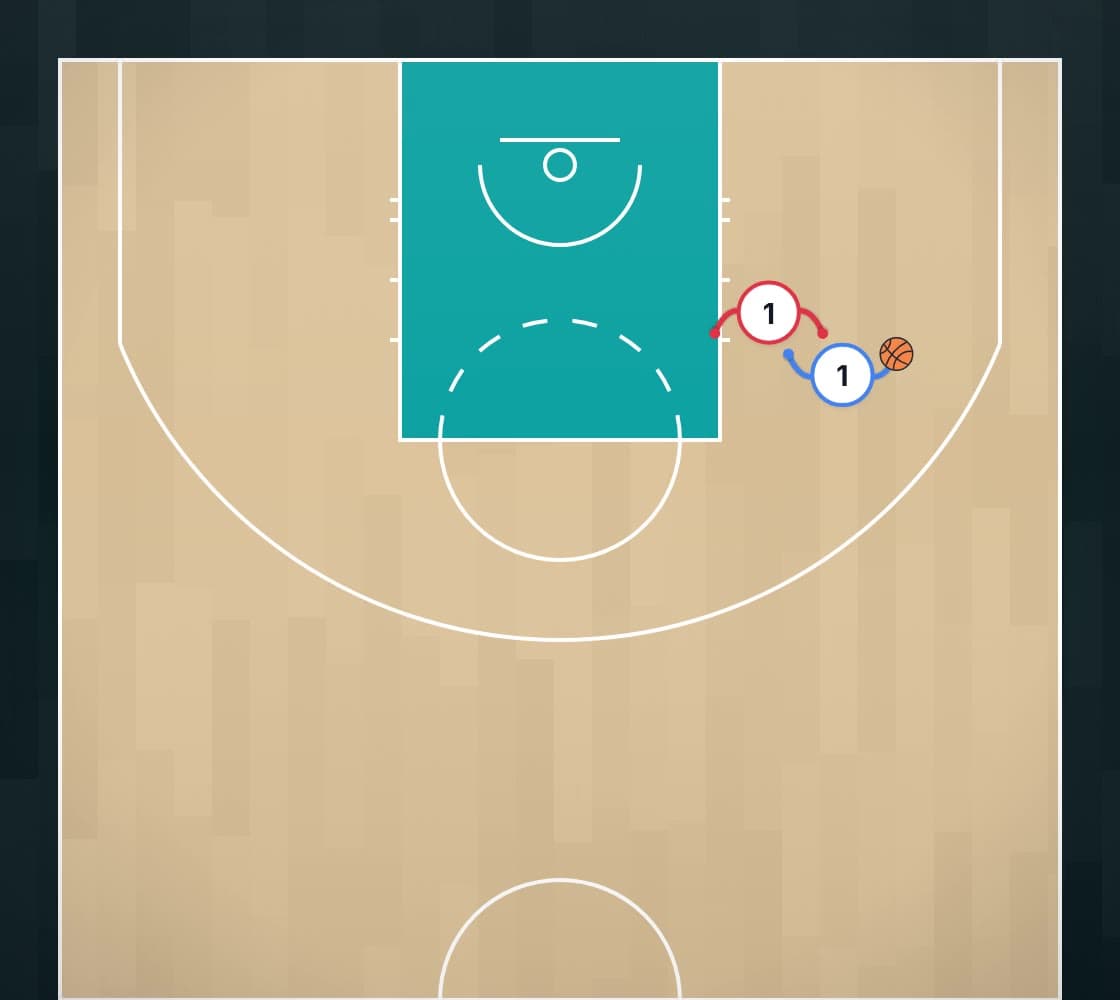
If you run spot shooting now, the first step along the dial is small. Keep the shooter shooting and add one player who makes every shot different. This is the book's Mosquito Shooting, which it describes as an activity that promotes repetition without repetition.
Mosquito Shooting 1-on-1
2 players: a shooter and a mosquitoRepetition without repetition in shooting: every shot comes from a new spot, range and pass, with a defender trying to put the shooter off.
How it works
- The shooter shoots continuously, changing location and range every time.
- The defender, the mosquito, tries to be as annoying as possible. In the base version they can say and do whatever they like without touching the shooter or the ball.
- The mosquito rebounds and only passes back when they're close enough to contest the shot, giving passes from varied angles.
- Play it as a burst, or alternate shooter and mosquito after every rep.
Adapt it
- Constrain the space the shooter can use.
- Add a +1 who passes or sets picks for the shooter.
- Constrain shots to specific movements, such as drifts, lifts, ghost screens or floppy.
- Alternate roles every rep. To win, a player has to score one BRAD (back rim and down) and then force a miss with one contest.
- Add pressure: the game is over if the shooter misses two or three in a row.
- Limit dribbles, for example to one, to emphasize catch and shoot.
Watch for
- Is the shooter changing spot and range every rep, or settling into one favorite shot?
Further along the dial is Jungle Shooting: three shooters and two defenders stay on for 60 seconds with two balls. The offense can only shoot threes but can move, drive and pass, and wins with five BRADs or swishes; the defense wins with three turnovers and blocks between them. Alex's Jungle Shooting article covers how to run it. For the bursts format behind both games, see the book's shooting bursts video.
Differential Learning
There's one deliberate exception to keeping practice game-like. Transcending Basketball calls differential learning (DL) the sole exception to maintaining perception-action coupling in practice. Developed by Wolfgang Schöllhorn, DL asks players to practice as variably as possible: shooting from different stances, with different arcs and release speeds, off one leg, with different balls. Many of these movements will never appear in a game, by design. The goal is to perturb the player's coordination so it settles into something new, giving self-organization "a push".
Rob Gray drew the line between the two approaches on EP25. Differential learning pushes players into parts of the movement space they may never go back to. The CLA is more about directing them to a particular part of it. He likes combining them, but finds the extreme versions a hard sell with high-level athletes, and prefers variability built around a specific problem. Alex described an example: a player with lots of front-rim misses shooting from different stances, then with no knee bend, then with an exaggerated bend, before moving into live 1-on-1 shooting. Gray's response:
“I like kind of focusing the variability a little around a problem you identify.”
Alex has also described how DL has gone with professionals. On EP101, he described trying different-sized balls with NBA players too early. They didn't like it, but they did love contested shooting games, so he settled for less advanced versions of DL (different stances, arcs and changing range) and kept the rest for later. His own article on applying differential learning to shooting suggests DL in warm-ups and on light training days, next to CLA shooting games.
The 10,000-Hour Myth
If skill were stored, more storing would be better, and the 10,000-hour rule would make sense. Transcending Basketball traces the rule to Malcolm Gladwell's Outliers and its reading of Anders Ericsson's 1993 study of musicians in Berlin, where 10,000 hours by age 20 was the average for the top violinists. The book notes that Gladwell has since apologized for the misinterpretation, and argues there is no such thing as a 10,000-hour rule: a player who finds the game late can still reach the NBA or WNBA without anything close to that number.
The book's conclusion, which applies to us as much as anyone selling a system, is that development depends on far more than the amount or type of practice. Using the CLA raises a player's odds; it doesn't guarantee anything.
“Ultimately talent development is akin to a lottery.”
George Vaz's 10,000-hour rule article goes through the research on sampling and early specialization, and Gabriel Millian's piece on survivorship bias explains why "that's how the greats trained" proves less than it sounds.
To put this into practice, our practice design guide covers how to build sessions around it, and the player development guide shows how to aim it at one player's rate limiters.
Small-sided games library
Games from This Guide in the Library
Questions Coaches Ask
What is skill acquisition in basketball?
Skill acquisition, also called motor learning, is the science of how players become more skillful. In the ecological view Transforming Basketball uses, skill is the relationship between a player and their environment, so players improve by becoming better attuned and calibrated to the information sources and affordances in a game, not by storing techniques.
Is muscle memory real?
Not as a stored movement that players replay. Every game situation is different, so the body would need a separate stored pattern for each one, which is known as the storage problem. The quick, automatic action coaches want comes from players being well attuned to the information sources in the game.
What does repetition without repetition mean?
It's Nikolai Bernstein's phrase for solving the same problem many times without repeating the exact same movement. In basketball it means practice where each shot, finish or pass comes with the constraints slightly changed (a different defender, angle or pass), instead of the same rep from the same spot.
Does blocked practice build confidence?
Not real confidence, in Alex Sarama's view. He knows of no research behind the claim and sees it as false confidence, because players never get the same shot twice in a game. He would rather a player shot less in a more representative situation.
What is differential learning in basketball?
Differential learning, developed by Wolfgang Schöllhorn, asks players to practice as variably as possible, for example shooting from different stances, arcs and release speeds. The aim is to unsettle a player's coordination so it reorganizes, and it works best focused on a specific problem alongside game-like practice.
Is the 10,000-hour rule true for basketball?
No. The 10,000-hour figure was an average from one study of violinists, and Malcolm Gladwell has since apologized for how it was read. A meta-analysis of sports research found deliberate practice explained 18% of performance differences overall and 1% among performers at the highest level.
Take It to Your Next Practice
Free
Skill Acquisition Workshop
An online workshop on contemporary skill-acquisition principles for coaches.
Introduction to the Constraints-Led Approach
$49 USD
Explore the framework behind representative practice with Alex Sarama's Introduction to the Constraints-Led Approach clinic.
Sources
- Transcending Basketball, Alex Sarama (Wiley, forthcoming): chapters 2, 4, 8 and 9 and the glossary
- EP8: How Do Basketball Players Develop Skill with Dr. Alex Lascu
- EP15: A Player's Perspective of Training with CLA with Linus Holmstrom
- EP25: How to Develop Skilled Basketball Players with Rob Gray
- EP45: Why Basketball Fundamentals are Outdated
- EP77: Why Players Don't Need Blocked Practice, with Greg Thomas
- EP87: Why Muscle Memory is Irrelevant, with Greg Thomas and Adam Omiecinski
- EP101: Identifying & Targeting Rate Limiters with Alex Sarama
- How to Apply the Theory of Differential Learning in Basketball Shooting, Alex Sarama
- Repetition without repetition in basketball practice, George Vaz
- The 10,000-hour rule: implications for basketball coaches, George Vaz
- Understanding Survivorship Bias, Gabriel Millian
- Araújo and Davids (2011), "What exactly is acquired during skill acquisition?", Journal of Consciousness Studies
- Jacobs and Michaels (2007), Ecological Psychology
- Schöllhorn, Davids and Hegen (2012), The Open Sports Sciences Journal
- Tassignon et al. (2021), Frontiers in Psychology
- Macnamara, Moreau and Hambrick (2016), Perspectives on Psychological Science
- Transforming Basketball, Alex Sarama (2024): chapter 2 (muscle memory, Bernstein's blacksmiths) and chapter 8 (the representative dial, Mosquito Shooting, Jungle Shooting)
- How to Use Jungle Shooting to Improve Your Team's Shooting, Alex Sarama
Behind the methodology
About Alex Sarama
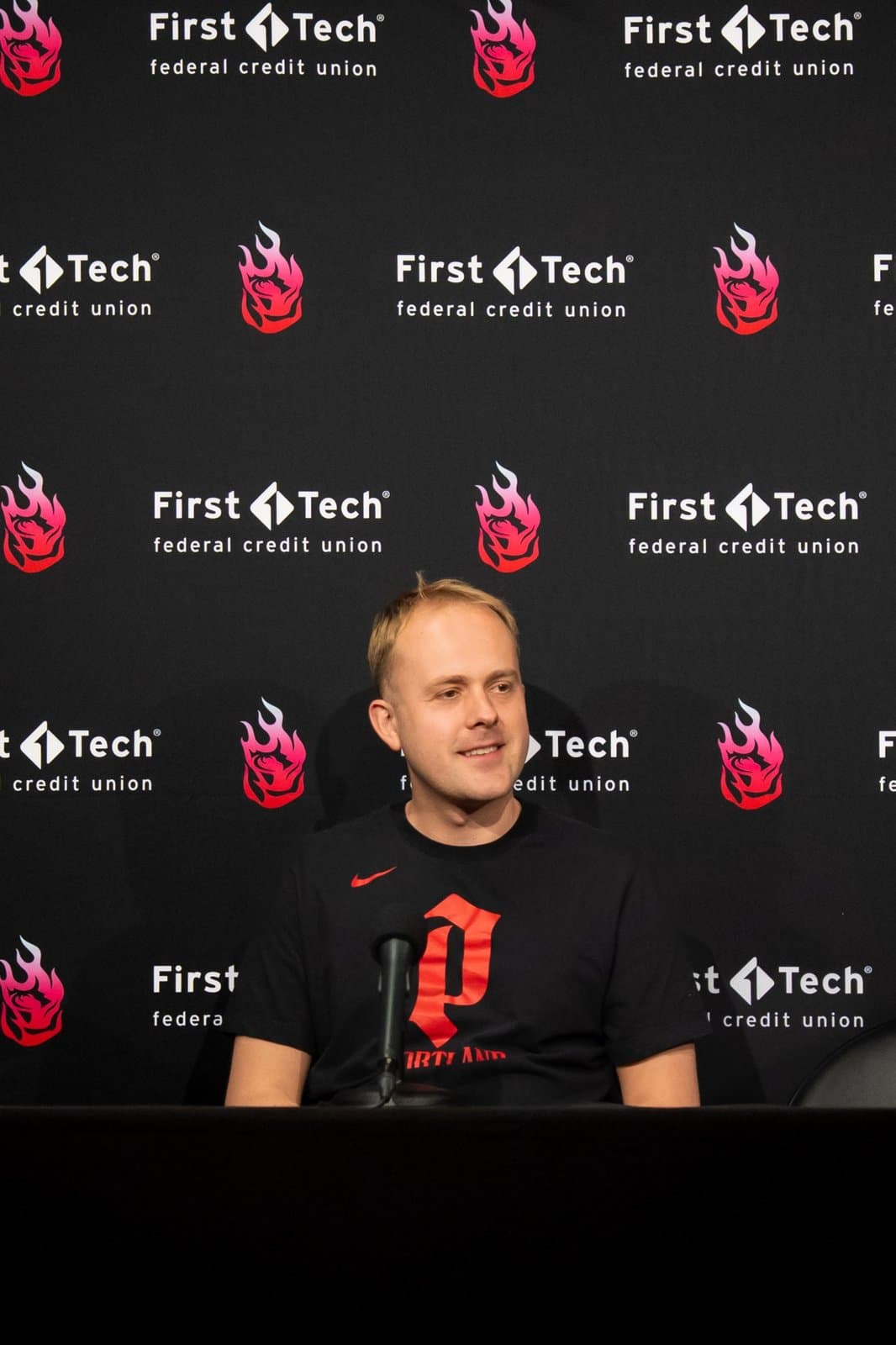
Alex Sarama
Founder, Transforming Basketball · Head Coach, Portland Fire
Alex Sarama is the founder of Transforming Basketball and Head Coach of the WNBA's Portland Fire. Previously, he served as Assistant Coach and Director of Player Development with the Cleveland Cavaliers.
His wider experience includes NBA Europe in Madrid, Paris Basketball in the EuroCup and the Rip City Remix, the Portland Trail Blazers' G League affiliate. Alex has delivered clinics in over 40 countries and has written three books on the constraints-led approach in basketball, including the Amazon bestselling Transforming Basketball (2024) and A Constraints-Led Approach to Coaching Basketball (2026).