Transforming Basketball
AbbonatiSei già abbonato? Accedi

Coaching Guide

Zone Offense in Basketball

Playing against a zone does not require your team to abandon its conceptual-offense principles. Players still need to create dominoes, maintain an advantage and convert it into a high-quality shot. The spacing, screening angles and coverage solutions need to account for how the zone responds.

4 min read
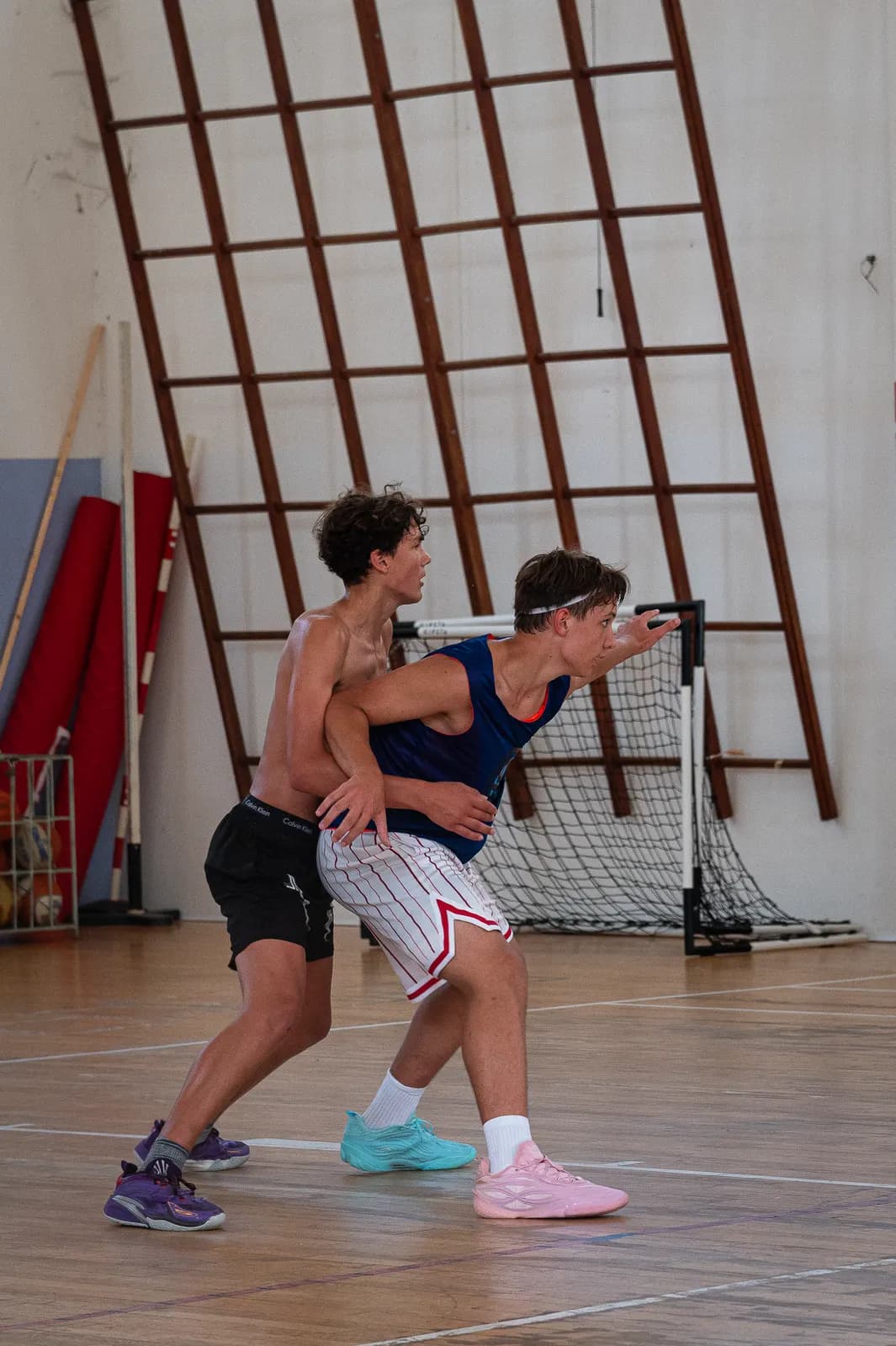
Players battling for position inside the paint during a live game at the 2026 Transforming Basketball camp in Roseto

At Transforming Basketball, we use constrained games to help players explore those interactions. A smaller game can emphasize the ball-handler, screener and weak-side dunker before adding the other players in the zone.

Give Players Space to Move Into

A player standing at the high post is not the only way to connect the offense. A player can flash into that space when the movement of the ball, screener and defenders makes the pass available.

One useful starting position is the weak-side dunker spot: near the baseline, outside the lane and opposite the ball. From there, a player can stay available near the basket, move into a passing window or help create room for a teammate. The position is available to different players, rather than reserved for the tallest player.

The timing matters. If the screener rolls toward the basket, the dunker can flash toward an open window and receive a pass to connect with the roller. If a teammate already occupies that window, moving into the same space lets one defender cover two offensive players.

Use the Pick and Roll to Create a Decision

Against a 2-3 zone, consider which front defender the screen engages and where the middle defender can help. Changing the angle or location of the screen changes the problem those defenders face.

Keep the ball handler's options open. They may use the screen, reject it or split a gap if the defense makes that possible. The screener may roll or slip into space when the defense anticipates the screen. Completing a planned action is less useful than recognizing the advantage already available.

Watch the player near the baseline as well. A timely flash can give the ball handler another passing option and connect the offense to the roller, rather than making every possession depend on the same short-roll pass.

A Practical Example: Simplify the Middle of a 2-3 Zone

This 3-on-2 game focuses on the relationship between the ball handler, screener and weak-side dunker. It is one part of the zone, so bring the missing defenders back as players become more capable of solving it.

Keep the ball-handler outside the 3PT line, allow a maximum of two passes and count scores at the rim. Prevent the front defender from entering the paint so that defender continues to represent the intended zone role.

These are rules for the practice task, not rules for how every zone should defend.

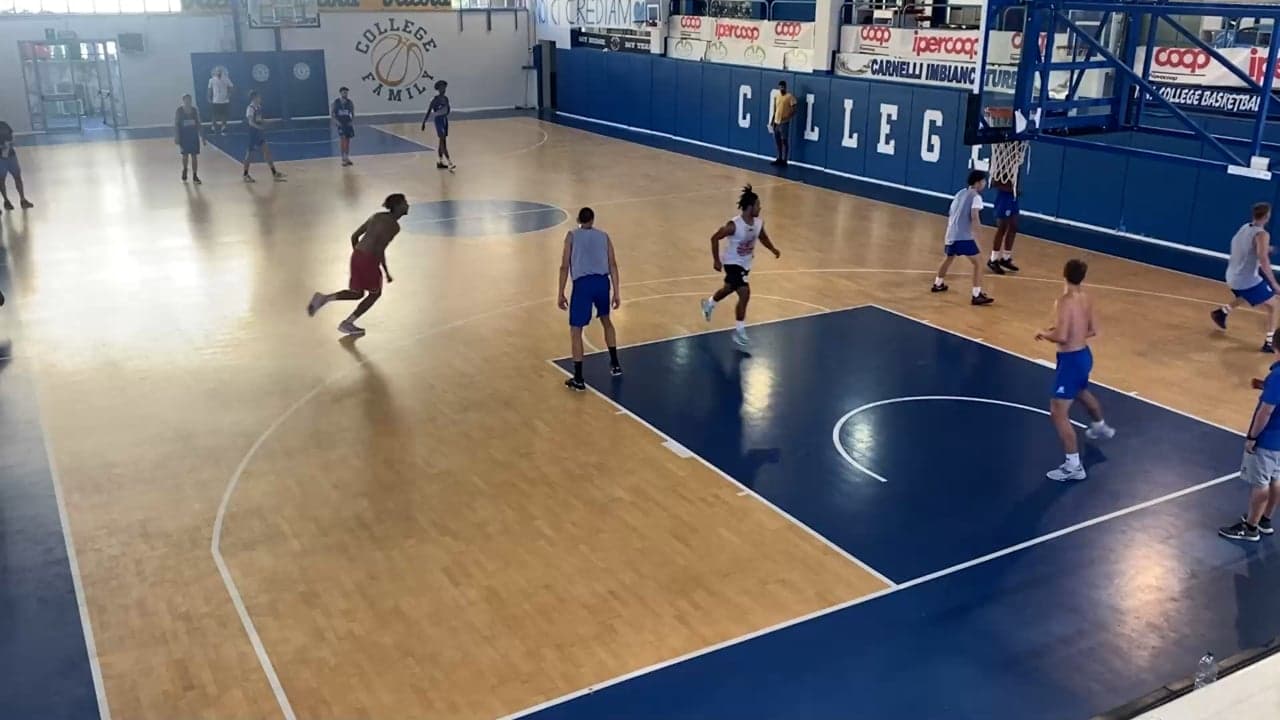
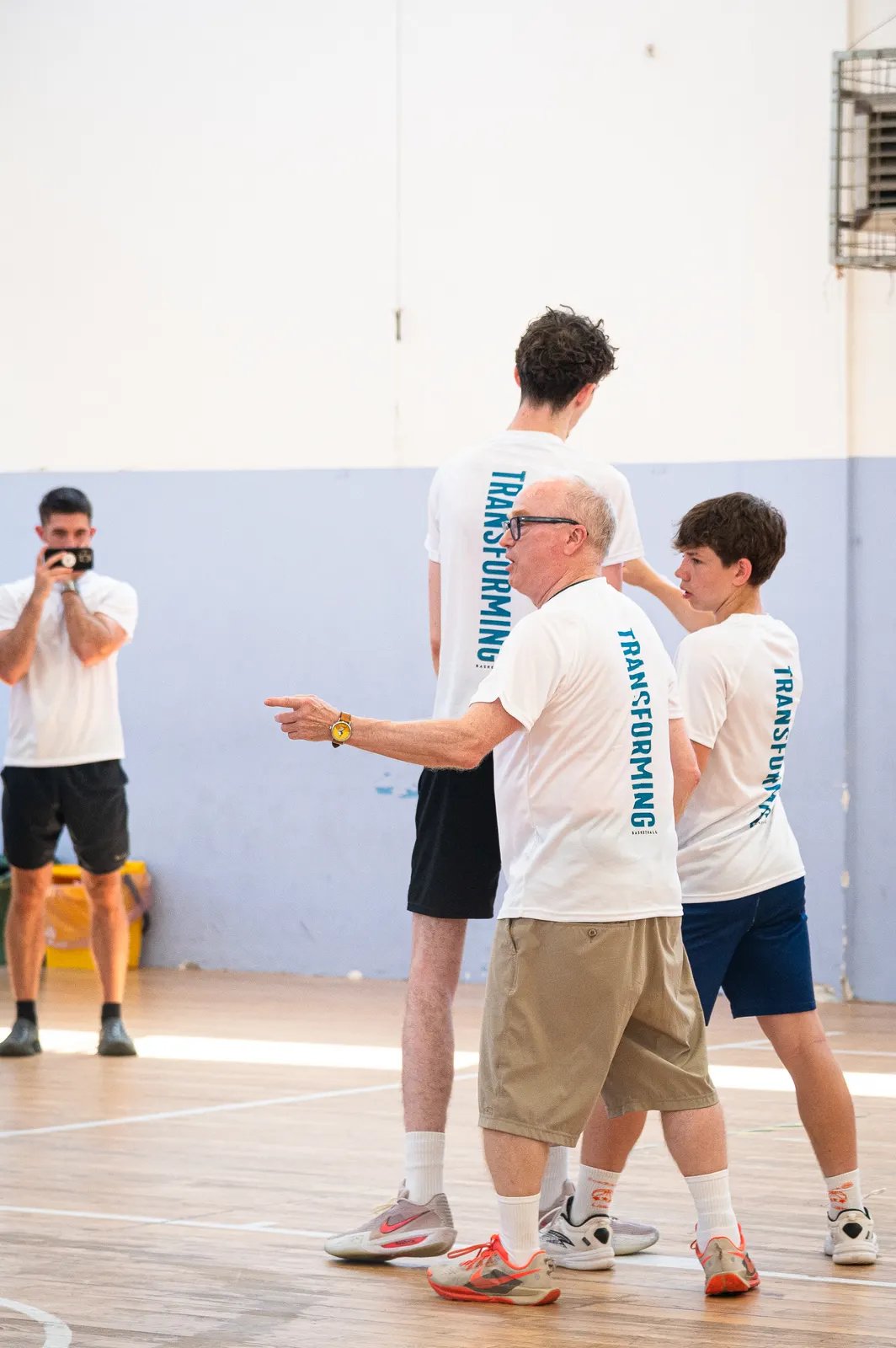
A coach directing a group of players on court at the 2026 Transforming Basketball camp in Roseto

Bring the Rest of the Zone Back

Add the second front defender to create 3-on-3 with the same offensive players. The ball handler now has another defender to read, while the screener and dunker still need to coordinate their movements.

Another option is to include the two back wing defenders with limited movement. They can show their presence, step toward the ball and intercept nearby passes without immediately collapsing on everything. This makes the spaces more like the full zone while keeping the task manageable.

Move to 4-on-4 by adding a perimeter player and defender on one side, then return to 5-on-5. Each addition changes the available passes, help and scoring options. Remove earlier restrictions when they no longer serve the problem you want players to explore.

These are options for adjusting a game, not a progression every team must complete in the same order.

When Three Players Arrive in the Paint

A drive, a roll and a player near the baseline can bring three offensive players into the paint together. Their positions and actions determine whether this creates an advantage or closes the space.

4-on-4 Hi-5 Advantage BurstsA general advantage game: the offense tries to score while the defense recovers.

Identify Where Your Offense Stays Neutral

Begin with 5-on-5 against the zone your team needs to face. Observe whether the offense moves defenders or simply passes around the perimeter. Are flashes timed with the ball movement? Does the ball-handler recognize the space created by a screen?

Choose a rate limiter from those possessions. If players catch and hold while a passing window closes, use a temporary turnover rule for catching and holding the ball. Watch whether the next pass, drive or shot maintains the advantage.

If the players have no available option, changing the clock will not solve the spacing problem. Adjust the numbers or defensive freedom so they can explore the interaction, then return to the full zone.

What is Conceptual Offense in Basketball - A Clinic by Alex SaramaA broader introduction to conceptual offense.

Keep the Challenge Within Reach

For younger players, consider passing distance, shooting range, equipment and the amount of defensive pressure. A crowded lane can leave players attempting shots they cannot reasonably make.

Adjust the space, numbers or pressure while keeping an opponent to read. Return to the full game to see whether the solutions remain available with everyone present. Look for the intent behind a decision as well as whether the possession ends in a basket.

Take It Into Practice

Start with the free Conceptual Playbook to connect zone offense with your team's shared principles.

For the full practice footage and Alex's explanation of these games, explore the membership and look for **May 2025 Masterclass: Zone Offense with Alex Sarama**.

The Conceptual Offense Playbook provides a paid next step for developing the wider offense.

Explore zone offense

Keep learning

Cover of the Conceptual Offense Playbook PDF.

The Conceptual Offense Playbook

$39 USD

For coaches building a more adaptable conceptual offense.

Still from the Implementing a Conceptual Offense clinic overview.

Implementing a Conceptual Offense

$49 USD

Take the Starter Kit onto the court. Alex explains how to teach shared principles, triggers and coverage solutions through game examples and small-sided games.