
Transforming Basketball
AbbonatiSei già abbonato? Accedi

Coaching Guide

Small-Sided Games in Basketball

Small-sided games allow coaches to emphasize particular interactions by reducing the number of players. However, playing 3-on-3 does not automatically mean players are working on what the coach intended. The starting positions, defensive behavior, space and scoring system all influence what happens. At Transforming Basketball, we use constraints to shape these interactions based on what players need to develop.

3 min read
Young players and coaches in Transforming Basketball shirts running multiple small-sided games on an outdoor court

Why Small-Sided Games Are Only the Starting Point

Consider two different ways to play 3-on-3. In the first, the offense starts with a defender recovering from behind. In the second, all three defenders are matched up and the offense must begin with a ball screen.

The first activity allows players to work on maintaining or converting dominoes. The second requires them to create an advantage through a trigger and an appropriate coverage solution. The player numbers are identical, but the situations are different.

Coaches do not need to progress through 1-on-1, 2-on-2 and 3-on-3 in a fixed order. Choose the format and constraints based on the interactions you want players to experience.

Nonlinear Pedagogy Explained with Small Sided GamesWatch how a pass-or-shoot game changes when the starting locations change.

Maintain the Advantage: 3-on-2 Bursts

Start three offensive players outside the 3PT line, with two defenders holding the ball. A defender passes to the offense to begin the possession. Play until a score or defensive possession, then restart with the offensive players in different locations. Keep the same roles for one minute before changing.

The offense has an initial numerical advantage. Can the receiver shoot, drive or pass before the defenders recover? Are teammates adjusting their spacing so one defender cannot guard both of them?

If you want to emphasize attacking the paint, require a paint touch before a basket counts. This changes the activity: an open perimeter shot is no longer enough to score. Use that constraint when it matches your intention, rather than adding it to every advantage game.

Players practicing on the outdoor basketball courts at Transforming camp

Create the Advantage: Battleship 3-on-3

Choose a trigger, such as a get or ball screen, and four locations from which the offense can initiate it. To win, a team must score from an advantage created by the trigger at each of the four locations.

A qualifying basket earns a strike at that location. A basket that does not meet the requirement keeps the offense in possession but does not earn a strike. A defensive stop changes possession.

You can specify the defensive coverage to emphasize a particular solution. For instance, requiring the defense to switch a ball screen allows the offense to explore how to punish the switch. The trigger gives players a shared starting point, while the defense influences what they do next.

2-on-2 Train to TriggerA two-pass limit changes the urgency of creating an advantage.

Finish the Possession: Defensive Shutdown

For 12 players, organize three teams of four at one basket. Two teams play while the third waits outside the playing area. The first team to earn five defensive stops wins.

A stop counts when the defense forces a turnover or secures a rebound after a contested miss. An open miss does not count as a stop.

After a stop, the defense stays on and the waiting team enters on offense. After a basket, the scoring team becomes the defense, the previous defense leaves and the waiting team enters.

To emphasize rebounding, subtract one stop whenever the defense concedes an offensive rebound. Contesting the shot is only part of the possession; the defense still needs to secure the ball.

4-on-4-on-4 Defensive ShutdownFollow the possession through the shot: the defense still needs the rebound.

Change the Constraint Based on What You See

If the offense cannot use an initial advantage, start the recovering defender farther behind. If the offense scores without being challenged, bring that defender closer.

In a trigger game, keep one coverage consistent while players explore the available solutions. Then allow the defense to vary its coverage so the offense must recognize what is happening.

As the coach, you can demonstrate a possible solution when needed, then give players opportunities to use it against different defensive coverages.

Explore small-sided games

Keep learning

Free

21 SSGs for Your Next Practice

21 small-sided games you can run and adapt at your next practice — representative, game-like activities built around the Transforming Basketball approach.

Ti invieremo la risorsa via email e, di tanto in tanto, spunti di coaching. Puoi disiscriverti in qualsiasi momento. Informativa sulla privacy.

Lingua della risorsa: inglese. Il download gratuito e le email successive sono attualmente solo in inglese.

Cover of the Small-Sided Games Book PDF.

The Small-Sided Games Book

$49 USD

Go beyond your first 21 games. Build your practice around 50+ small-sided games, with diagrams and constraints you can adapt to your players.

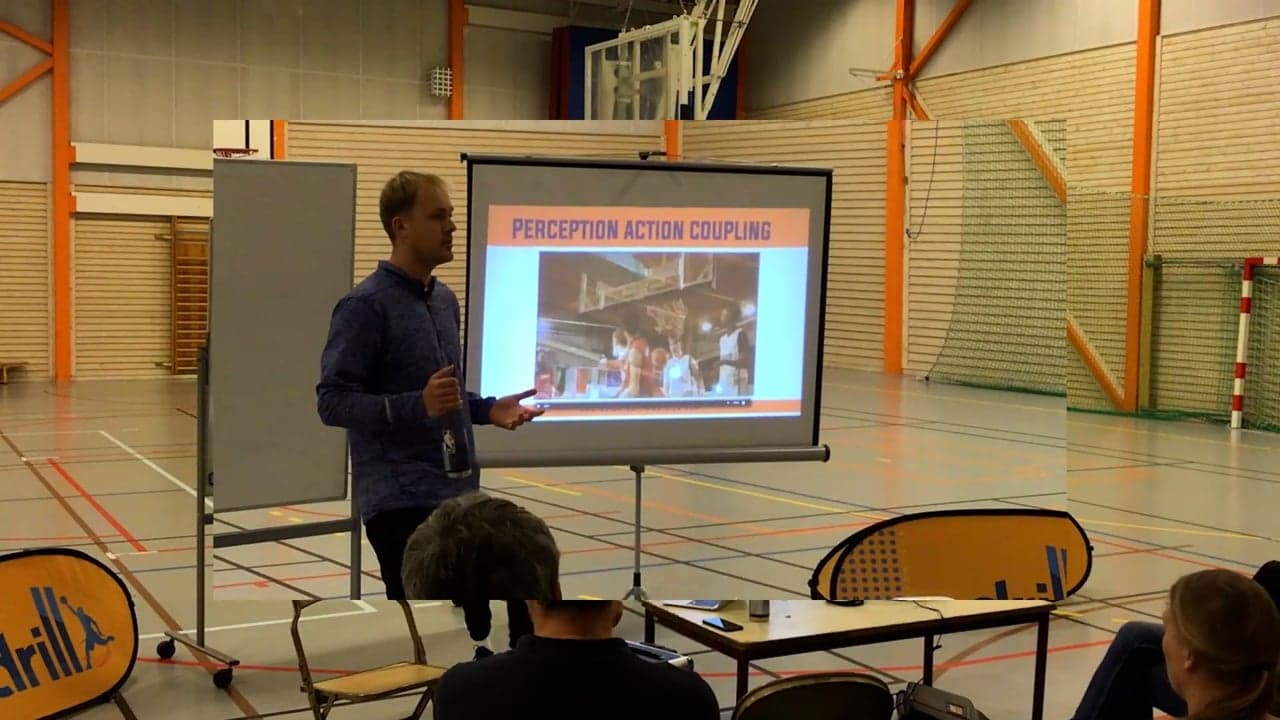
Still from the Introduction to the Constraints-Led Approach clinic overview.

Introduction to the Constraints-Led Approach

$49 USD

For coaches who want to understand how the Constraints-Led Approach applies to basketball.