Transforming Basketball
AbbonatiSei già abbonato? Accedi

Coaching Guide

Basketball Practice With One Basket

Having one basket changes how a coach organizes practice, but there are still many ways to use small-sided games. The key is to select activities that fit the number of players and create clear rotations. Some activities need the basket, while passing and ball-handling games can use other available space.

2 min read
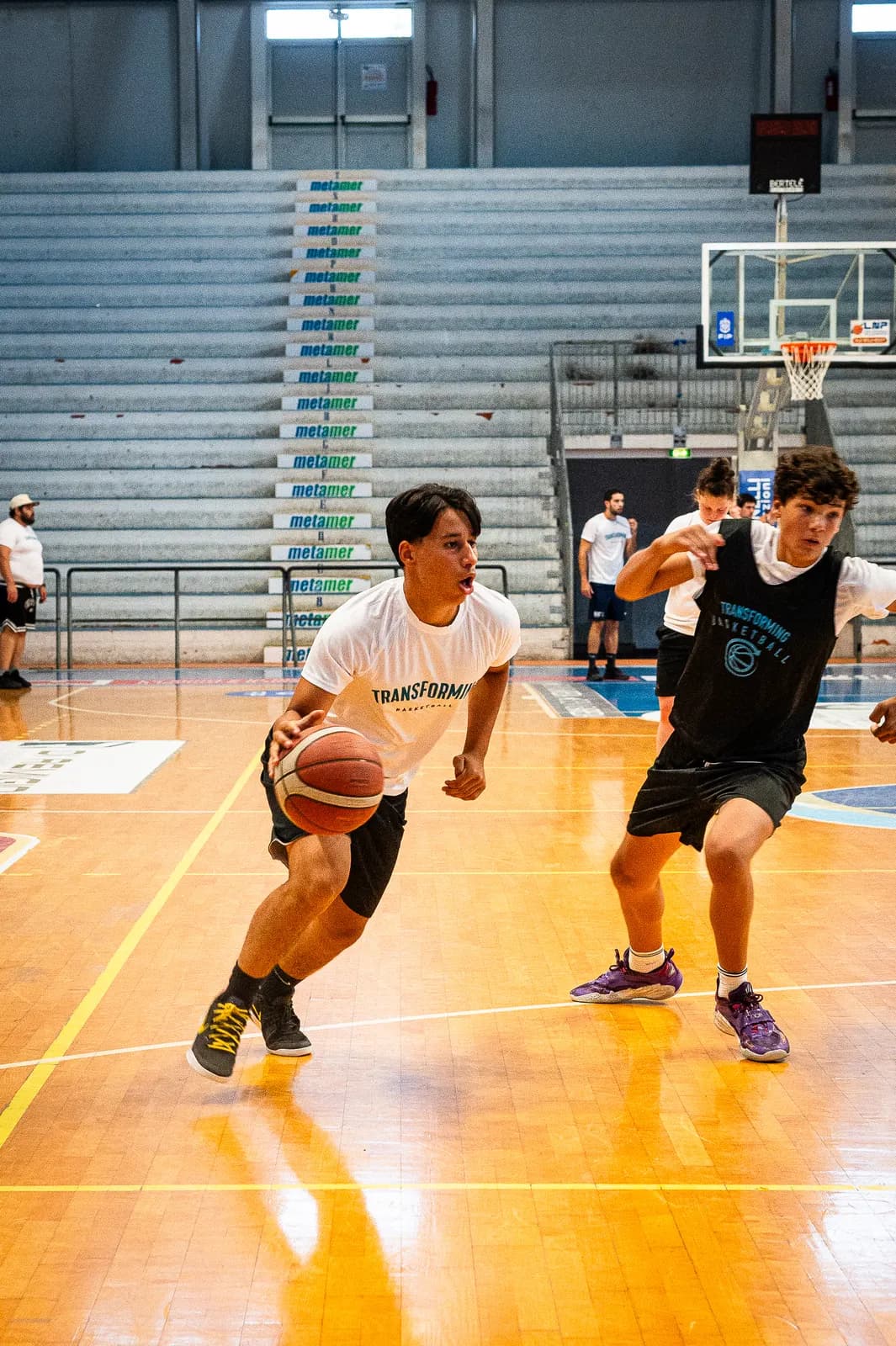
Two young players competing one-on-one at the Transforming Basketball camp in Roseto

Try It in Practice: Three-Team Shutdown

For 12 players, divide the group into three teams of four. Two teams play on the half court while the third waits outside the playing area.

The first team to earn five defensive stops wins. A stop is a turnover or a contested miss followed by a defensive rebound.

If the defense gets a stop, it stays on and the waiting team enters on offense. If the offense scores, it becomes the defense, the previous defense leaves and the waiting team enters.

This rotation allows the coach to work on several connected aspects of the game, including creating an advantage, defending it and securing the rebound.

4-on-4-on-4 Defensive ShutdownWatch the three-team rotation and what counts as a defensive stop.

Organize Larger Groups Into Teams

With a large group and one basket, use 3-on-3 or 4-on-4 with a waiting team ready to enter. The three-team Shutdown rotation described above gives each team a clear role and keeps the change between possessions organized.

You can use these formats to work on different intentions. For example, constrain the offense to a particular trigger and have the defense use a specific coverage. This allows players to explore coverage solutions while teammates work on spacing and off-ball movement.

Keep the waiting team outside the playing area and establish when they enter before starting. Watch how playing time is distributed; if one team spends too long waiting, adjust the rotation so every team gets repeated opportunities to play.

Use Passing Games Away From the Basket

If you have a separate area, players can work on passing without using the hoop.

Start with 2-on-1 keepaway. If the defender deflects the ball, or the receiver needs more than two steps to collect it, the passer becomes the defender.

To increase the challenge, add another defender or reduce the space. To make it easier, increase the space or give the offense an additional player.

The area must be separate from players driving to the basket or chasing rebounds. If there is not enough room for both activities, run them one after the other.

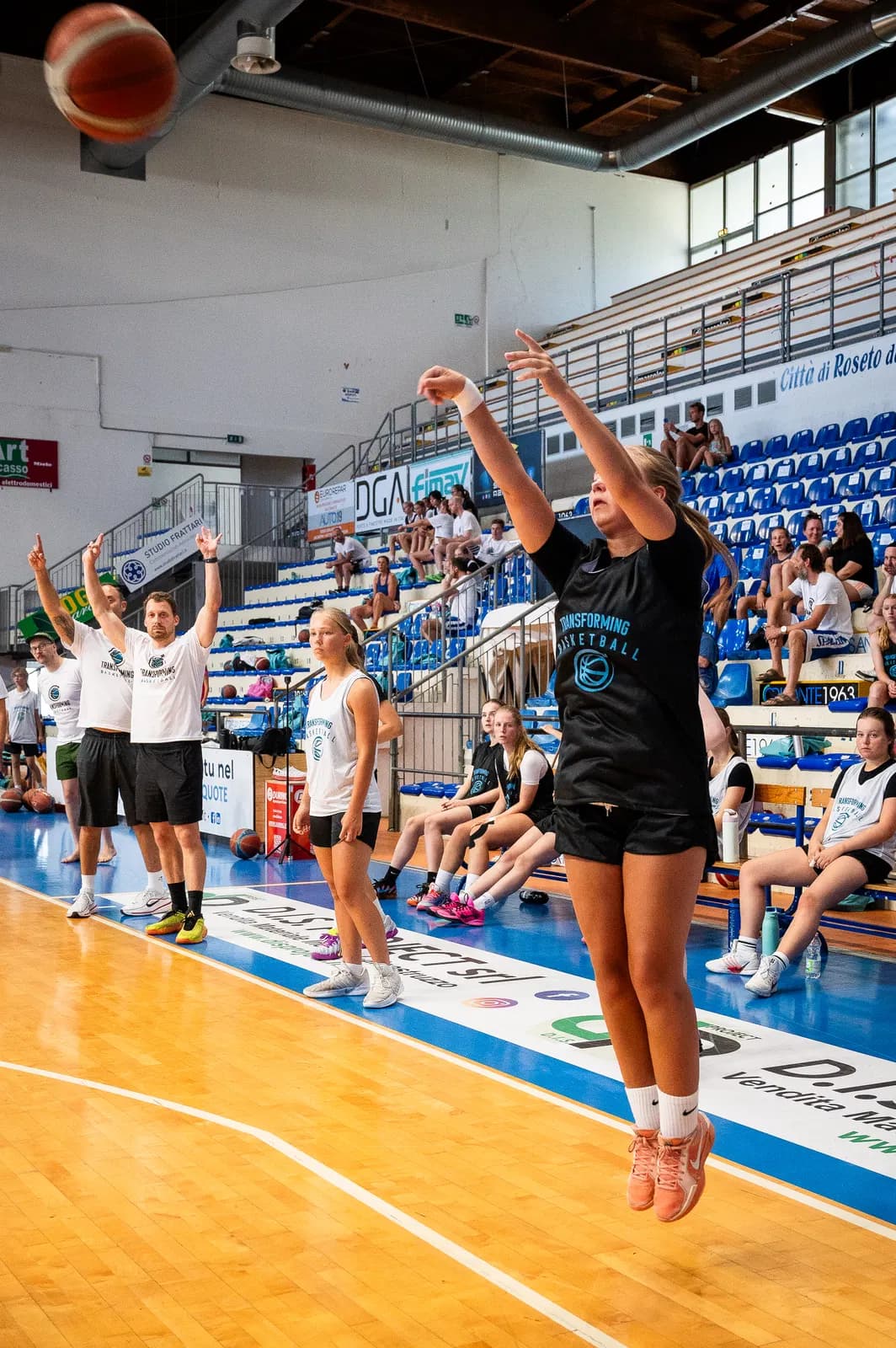
A player shooting at one basket while coaches and teammates watch

Keep Rebounds Connected to an Outlet

In the games played at the basket, allow the rebounder to find a teammate after securing possession. This keeps the rebound connected to the next decision and gives teammates a reason to become available.

Where space permits, a breakout dribble can also be included. These activities address the start of transition; full-court play is still needed to experience advancing against a recovering defense.

Use Constraints Within the Same Game

You can change the emphasis of a 3-on-3 or 4-on-4 game without reorganizing the whole group. To work on coverage solutions, specify the trigger and defensive coverage. To emphasize rebounding, use the Shutdown rule that subtracts a stop when the defense concedes an offensive rebound.

Keep the team rotation consistent while changing the constraint to match what you want players to work on.

Explore one-basket practice

Keep learning

Free

21 SSGs for Your Next Practice

21 small-sided games you can run and adapt at your next practice — representative, game-like activities built around the Transforming Basketball approach.

Ti invieremo la risorsa via email e, di tanto in tanto, spunti di coaching. Puoi disiscriverti in qualsiasi momento. Informativa sulla privacy.

Lingua della risorsa: inglese. Il download gratuito e le email successive sono attualmente solo in inglese.

Cover of the Small-Sided Games Book PDF.

The Small-Sided Games Book

$49 USD

Go beyond your first 21 games. Build your practice around 50+ small-sided games, with diagrams and constraints you can adapt to your players.