Transforming resource
Contemporary Player Development
$39 USD
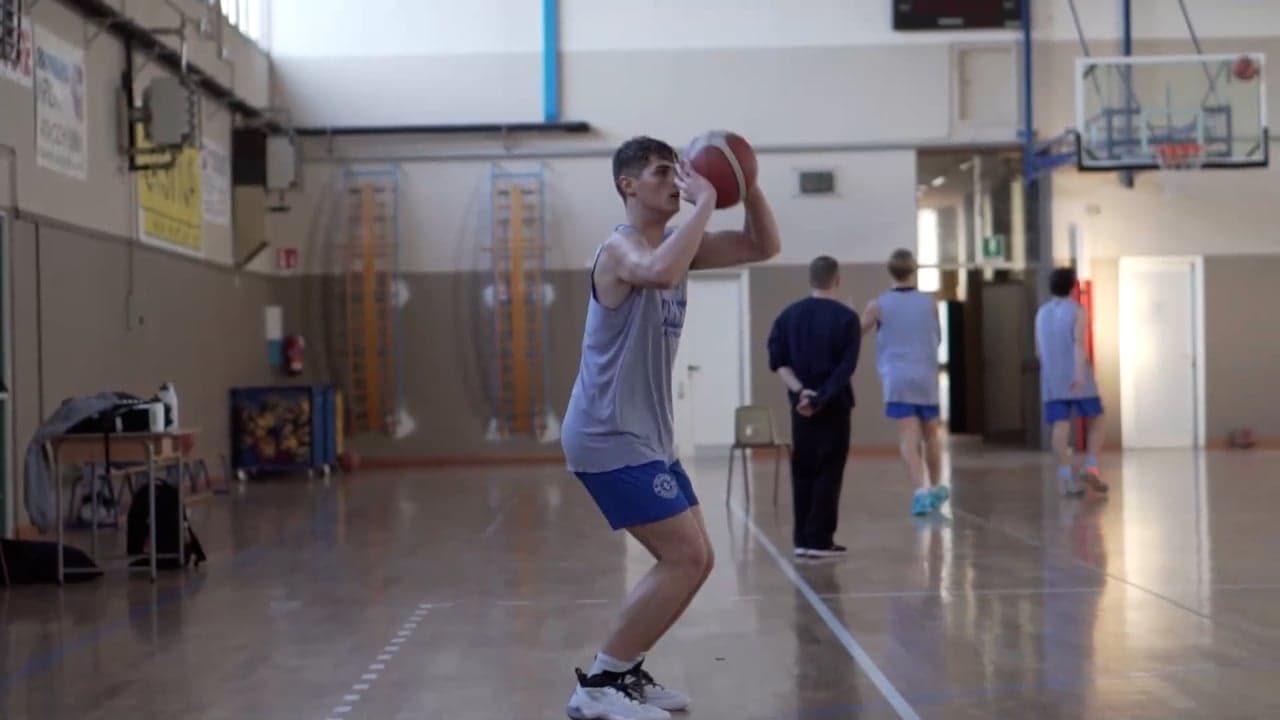
An in-depth clinic, recorded for the German Basketball Federation, on developing players and teams through small-sided games.

Idioma
Cambia el idioma del sitio. Los cursos, descargas, el pago y la entrega siguen en inglés salvo que la página indique lo contrario.
Coaching Guide
A player can reproduce a crossover in an empty gym and still struggle to beat an opponent. The movement and the situation that makes it useful have been practiced separately.
Quick answer
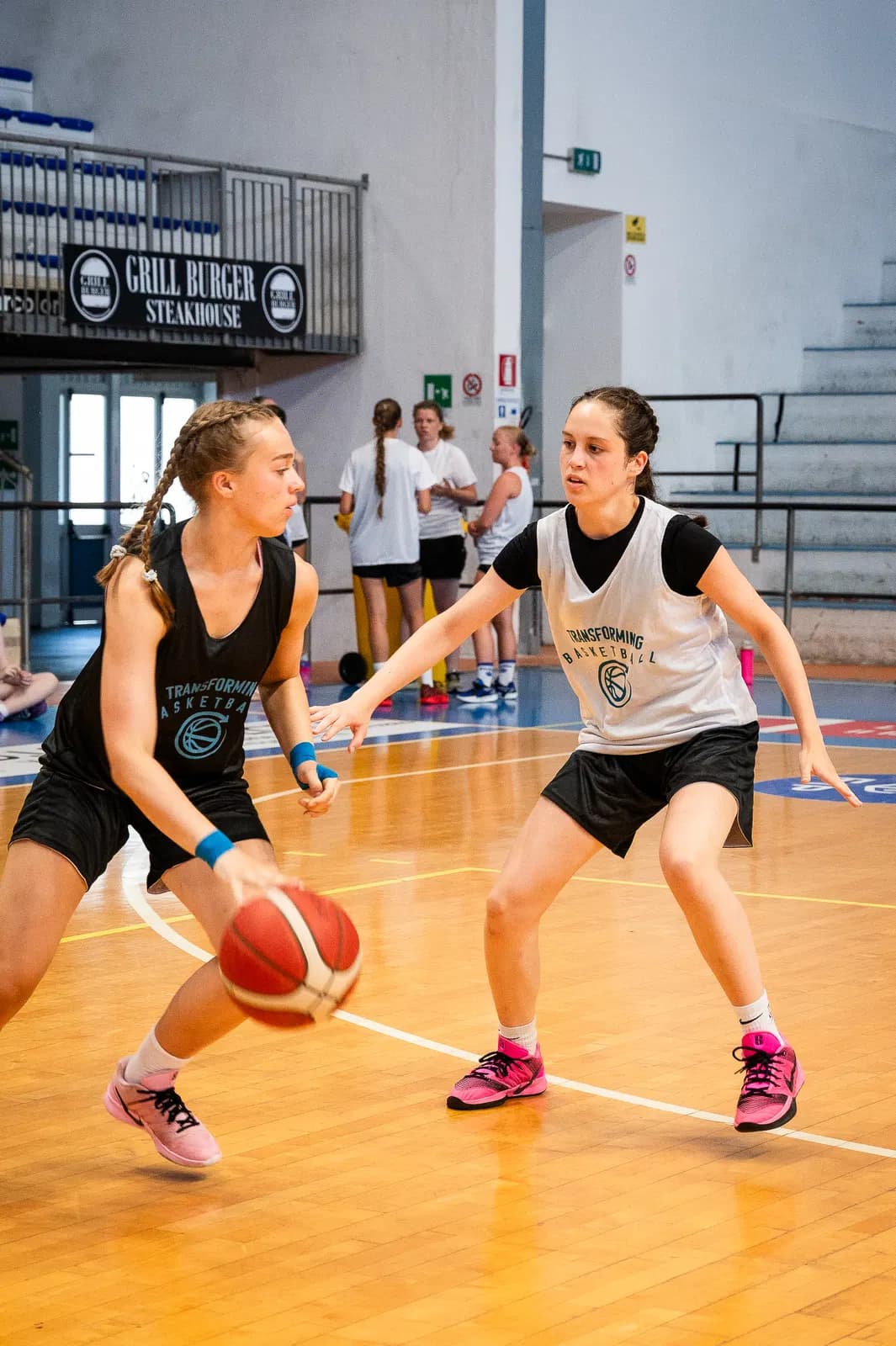
Skill acquisition examines how practice and experience develop a player’s capability to perform. In Transforming Basketball’s ecological approach, skill is expressed in the relationship between the player and the environment: finding functional movement solutions to the problems the game presents.
Transforming Basketball approaches skill as the player’s ability to adapt within the game. Practice gives players repeated opportunities to find solutions as defenders, teammates, space and time change.
Worked example
Repeat the problem while the solution changes. What should stay the same when practice repetitions vary?
Keep the goal recognizable while players find their own solutions.
Use a transition game with a ball-handler, a receiver and a recovering defender. Give the offense a scoring goal without prescribing the pass.
Vary the starting positions and the recovery gap. The passer must respond to where the receiver and defender move.
Does the passer recognize the opening and deliver a usable ball? Revisit the problem in later sessions and wider play before judging learning.
The foundations
A gap, pass or shot is available relative to what a player can do. A long pass that one player can deliver may be beyond another’s current range. Coaches need to consider the player’s capabilities as well as the space they see.
A handler’s movement changes the defender’s response, which changes the next opportunity. The player is continuously perceiving and acting. Practice should retain the information that matters to that interaction.
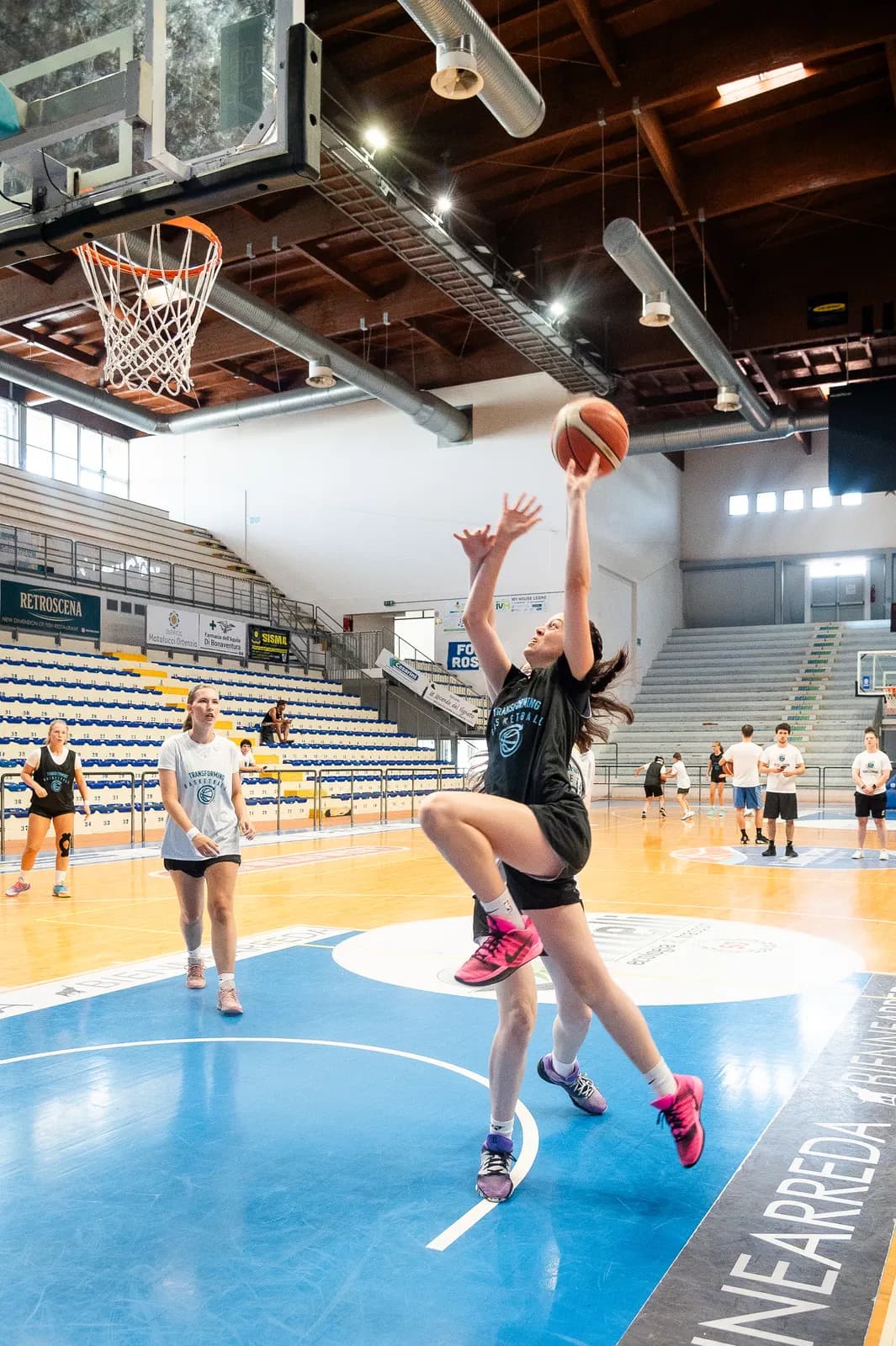
Revisit the same problem while its conditions change. A player might repeatedly try to finish near the rim, with a different approach angle and defender each time. The repeated element is solving the problem; the movement can vary.
Two players can solve the same problem in different ways. Look at whether a movement achieves the intended outcome in context. The goal is adaptable skill, rather than matching every player to a demonstration.
Why it matters
A finish emerges in response to the situation: the defender’s position, the speed of the approach and the space around the rim. Collecting more rehearsed moves does not tell a coach whether a player can recognize and use those opportunities.
This changes the coach’s job. Instead of prescribing a move and hoping the player finds a use for it, design situations that invite useful solutions. Then look for those solutions across later practices and games. Immediate practice success and lasting learning are different questions.
On the floor
Choose a situation in which the player struggles or has a strength worth developing. Identify the defenders, teammates and timing involved.
If the difficulty is adapting the release to a closeout, use a defender who can genuinely affect the shot. Vary the distance and direction of recovery.
Change the conditions to open up alternatives. Avoid turning the activity into an instruction to use a particular crossover, gather or release every time.
Return to the situation in a later session and in wider play. Look at the opportunities players notice, their timing and the effectiveness of the action, as well as the result.
Avoid these
A player’s list of rehearsed techniques says little about when they can use them against an opponent.
Instead: Observe when the player can use a solution against an opponent.
Variation should help players explore a problem. Changing equipment or rules without an intention can distract from the information they need.
Instead: Change a condition that is relevant to the basketball problem.
Fatigue, confidence, teammates and task familiarity affect what is visible.
Instead: Revisit the task after a delay and look for useful responses in wider play.
Take it to practice
Starting points to shape for your group. Pick one, then adjust the numbers and scoring.
Free coaching resource
An online workshop on contemporary skill-acquisition principles for coaches.
Watch, listen & read
A few clips, conversations and reads to go deeper — then the whole library is one link away.
Differential learning
Watch for: How could you reconnect this movement exploration with a live defender?
Transforming Basketball Podcast
Listen for: How would you distinguish intentional constraints-led practice from simply organizing a game?
From research to practice
Transforming Basketball explainer
Repetition without repetition
An outlet pass changes with the rebound, the receiver and the distance. Difficulty in one practice does not establish learning; look for changes over time and in wider play.
Why “Repetition Without Repetition” is the Key to Basketball Skill Transfer · Transforming Basketball
Questions
Performance is what a player does in a particular moment. Learning concerns change over time. Revisit the problem after a delay and in another game situation rather than judging progress only from today’s practice score.
The CLA applies an ecological understanding of skill to coaching. Coaches manipulate constraints to shape opportunities for players to explore, observe their responses and adapt the practice task.

The Transforming perspective
The question is what a player can do with the information the game provides. A neat movement performed without that information tells only part of the story.
Behind the methodology
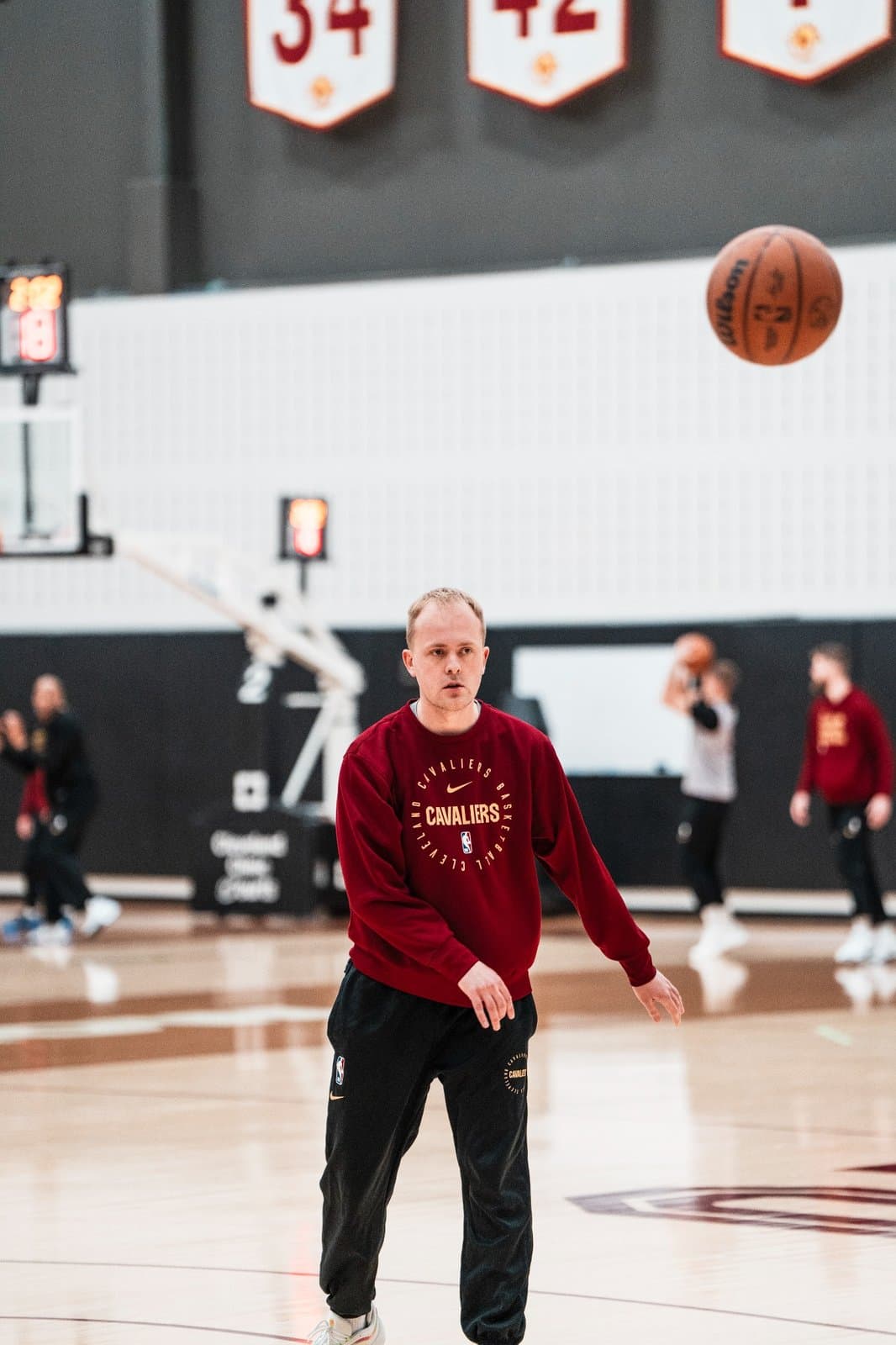
Alex Sarama is the founder of Transforming Basketball and Head Coach of the WNBA's Portland Fire. Previously, he served as Assistant Coach and Director of Player Development with the Cleveland Cavaliers.
His wider experience includes NBA Europe in Madrid, Paris Basketball in the EuroCup and the Rip City Remix, the Portland Trail Blazers' G League affiliate. Alex has delivered coaching education internationally and is the author of the Amazon bestselling book Transforming Basketball.

The book
The Amazon bestselling book on applying a constraints-led approach to basketball performance — the methodology behind this guide, in full.
View the book on AmazonContinue learning
Transforming resource
$39 USD
An in-depth clinic, recorded for the German Basketball Federation, on developing players and teams through small-sided games.
Free
An online workshop on contemporary skill-acquisition principles for coaches.