
Coaching guide · Coaching method
Basketball Coaching
Pick one problem, design a game where it keeps showing up, and say less while it runs. In games, save the longer talks for dead balls. That's roughly how we coach at Transforming Basketball.
16 min read
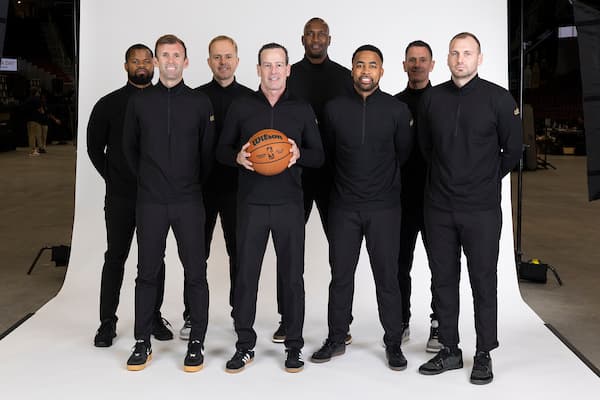
Mike MacKay, the Canada Basketball coach Alex Sarama calls his biggest influence, tells a story about rabbits. Before practice, a staff agrees that today's emphasis is stopping middle drives. Then practice starts, and the coaches give feedback on lots of different things. At the end, someone says, "We still gave up too many middle drives."
In Mike's words, coaches try to catch too many rabbits and end up catching none. The story is in Transcending Basketball, Alex's next book, which concludes that no rabbit was caught because the feedback wasn't specific.
So choose one rabbit per session, design a game where it keeps showing up, and say less than feels natural while it runs. The ideas below come from Alex's books, his clinics and keynotes, our podcast and the coaches in the Transforming community.
The Coach Is a Designer First
We coach with the constraints-led approach: instead of teaching one correct technique and asking players to reproduce it, the coach manipulates the task constraints (the start, the space, the scoring, the clock, the defense) so the solution you want becomes an attractive affordance. An affordance is simply an opportunity for action, like an open driving lane or a teammate cutting behind a ball-watcher. On EP48, Alex put the shift in one line he calls his 30-second pitch to coaches:
“It's completely different being an instructor to a learning designer.”
The episode was built around "TWIT" coaching, an acronym Alex borrowed from the Florida Baseball Armory blog: tell the player how to do it, watch them, immediately inform them of everything they did wrong, and if they still don't get it, label them uncoachable. Alex admitted he used to coach that way himself.
Being a designer doesn't mean going quiet. The book calls the idea that CLA coaches don't give feedback one of the greatest misconceptions about the approach:
“The role of a CLA-oriented coach is not merely to set up activities with minimal interaction and feedback, before sitting back and letting various skills emerge regardless of whether they are functional or not.”
The job has two halves. You design a representative activity, one with the same defenders, teammates and decisions players meet in a game, around the problem you care about. Then you watch closely and decide when a word, a question or a constraint change will help.
Alex's first book, Transforming Basketball, borrows the term learning designer from Jacobs and Michaels to describe that shift. In a classical drill, players explore a very narrow slice of what the game offers. A learning designer starts from the other end and asks which affordances the players need to be exposed to. The Routledge book Alex co-wrote with Alex Lascu, George Vaz Rocha and Neil Houghton puts the job in one sentence:
“The role of the coach as a learning environment designer is to create an activity that clearly directs the player’s attention to what is important without overwhelming the player’s working memory capacity.”

Free
Coaching Clinic with Alex Sarama
A coaching clinic session with founder Alex Sarama covering the Transforming Basketball approach.
Plan Around a Problem, Not a List of Drills
When Alex asked Mike MacKay how he plans a practice (EP19), the answer started with one question: "what problem do we want to solve today?" Mike borrows a track analogy from a friend. Some problems are a marathon (where you want the team in two years), some are middle distance (the end of the month), and some are a sprint (by the end of this practice). He expects to accomplish about three things in a session, and he spreads each one through the whole practice rather than parking it in one drill.
Alex makes the same point in his keynote to college and professional staffs: plan practices around "the problems the athletes need to solve vs 'what drills should we use today.'" It is, in the words of the same slides, difficult to manipulate constraints if you don't know what solutions you're trying to shape.
We call the thing holding a player or team back a rate limiter: the factors shrinking the affordances a player can perceive and act on in a particular context. Alex's clinic slides list four ways to find them: co-design (asking the players), performance analysis, statistics and staff conversations. A rate limiter needs to be specific: "We lose the advantage after the first kick-out" is one, and "We need to execute better" isn't. On EP101, Alex walks through how he identifies and targets them.
Once you know the rate limiter, design an activity where it keeps showing up, so players get what Bernstein called repetition without repetition: the same problem every rep, solved a little differently each time. Our practice design guide and small-sided games guide cover the design side in depth.
Explain It in 30 Seconds
Transcending Basketball names one of the most common feedback pitfalls: a coach introduces a new activity by covering every outcome that might happen, down to where players should stand off the court and how they rotate. Players are overloaded before the first possession.
Mike MacKay's guest section in the book gives a simple ceiling for introducing a small-sided game, which he calls "3, 10, and 30":
| Number | Rule | What it means in practice |
|---|---|---|
| 3 | No more than three points of emphasis | Sometimes none. Setting players up without instruction and seeing how they play shows you what they're paying attention to. |
| 10 | No more than 10 minutes before changing it | Manipulate a constraint or move to a new activity. Some coaches move on sooner. |
| 30 | No more than 30 seconds to explain | Name the activity, the principle of play, how it starts and how it's scored. Then go. |
Alex goes further in the feedback chapter. He suggests coaches try to give "the least amount of information, in the shortest possible time" before players start. There's no need to describe rotations unless you're running bursts, where players stay on offense or defense for a fixed time. If players are confused, wait for them to show you before jumping in. And players shouldn't need a whistle to start a possession.
The activities chapter of Transforming Basketball sets an even tighter target: challenge yourself to start each activity in 20 seconds or less, because every second of explanation comes out of time on task. The same chapter asks coaches to introduce activities with prompts rather than detailed instruction and demonstration.
A new game often looks messy at first, and other people in the gym may judge you for it. Letting it run is still the only way to see which solutions emerge, and those are what your feedback should respond to.
Feedback That Points at the Game
Start by remembering how much feedback players already get without you. A missed shot, a turnover, a foul, an easy basket given up: the book calls this intrinsic feedback, and argues it may be the most important kind. Coach feedback should add to it, not drown it out. Constant feedback also builds a dependency players can't take into a game, because you can't stop play every possession on a Friday night.
When you do speak, the book describes three tools. Reinforcement, verbal or not, for a good decision even when the outcome failed: a young player who tries a difficult skip pass out of the pick and roll and turns it over was still reading the right thing. Questions that are open-ended and aimed at what the player noticed, not at getting the "right" answer back. And instruction, framed as one possible solution rather than the only way.
The best feedback educates a player's attention. It points them at an information source they're missing, such as where the help defender is, without telling them exactly what to do about it. The book's example:
“When we run the pick and roll, the handler should be aware of the positioning of the weak side help defender. During the last few reps, they have been over-helping and we were not aware of it.”
The coach gives no instruction to skip the ball to the corner every time, because next time the defender might not over-help, or the corner player might cut instead. When a player keeps choosing the same solution that isn't working, the book suggests something even lighter: "Can you explore a different way to solve that problem?"
Timing matters as much as content. The Routledge book separates instant feedback, given during or straight after an action, from delayed feedback, given after a short pause. Instant cues tend to help most early in learning and on complex tasks where players need quick guidance. Delayed feedback gives players a chance to process what happened and consider their decisions, which often leads to deeper understanding and better retention. Newer players may need more of the first; as skills develop, more of the second lets players reflect and correct themselves.
External, Not Internal
Most traditional cues are about body parts: hands here, feet shoulder-width apart, elbow at 90 degrees, bend your knees. Alex's position in the book is that this internal feedback works against players, because it makes them consciously control movements that work better when they self-organize. The alternative is an external focus, on the effect of the movement.
| Internal cue | External alternative |
|---|---|
| "Bring your knee up to the level of your hips." | "Drive your knee forward as if you are shattering an imaginary plate of glass." |
| A step-by-step breakdown of how to finish | Asking a player to "imagine they are accelerating over a Super Mario Turbo Boost" at some point in the drive, so they try different ways to change speed |
| Teaching a named move in detail | Using a word like euro-step to set an intention ("You may consider finding different solutions to euro-step around the help defender within this 1-on-1") without prescribing how |
Sniper, Not Shotgun
Back to the rabbits. In his article on better coaching feedback, Alex describes shotgun feedback, scattered pellets on many things that few players remember, and argues for the opposite:
“I advocate instead for the sniper approach: focussing on one or two key things which educates the intention/ attention of the player(s).”
Two habits help. First, on a staff, give each coach one area to watch. Alex writes that in his practice plans he assigns coaches to particular things, and if something comes up outside their area, either nothing is said or it's left to the head coach. Second, notice filler. The book warns that phrases like "good, good" become white noise players ignore, and that coaches piling on with "and also" or "don't forget about" is how a practice ends up chasing ten rabbits. Write the other problems down and design for them later.
Mike MacKay's "TLC" framework, also in the book, helps decide how much to say in a given activity. In a teaching activity, you can stop at any time to make a point or add a constraint. In a learning activity, you don't stop the flow and coach on the fly. In a compete activity, you treat it like a game and only referee.
When to Change the Game Instead of Talking
If you hear yourself repeating the same phrase, the feedback is not landing. The book is direct about it:
“Players will rarely change as a result of one piece of feedback that is given to them.”
That isn't the players' fault. Basketball is complicated, and acting on new information immediately is hard. When the same problem keeps appearing across the team, manipulating a constraint so a different affordance becomes attractive usually does more than repeating the phrase louder. Shrink the space, add a defender, change what scores, or start the possession from a different spot.
The Routledge book counts that kind of change as feedback in its own right. One of its examples is taking away a familiar option, such as disallowing the floater, which pushes players to look for other ways to finish. It suggests blending constraint changes with video that highlights what players did and guided questions about other solutions.
The opposite mistake is staying in a good game too long. Transforming Basketball makes the season-long version of the point: as players become better attuned to the information that matters, activities should become more complex, and running the same activities with identical constraints all season serves little purpose. A slide in Alex's keynote on applying motor learning in professional and college sports quotes Rob Gray, author of How We Learn to Move:
“Coaches persist too long with a certain CLA activity. Coaches are becoming better at designing constraints but they let players persist with it for too long where the athletes are no longer being stretched to become better movement problem solvers, but rather simply rehearsing.”
Coaching Games: Green, Yellow and Red
Game coaching is where the old habits are strongest. The book points to how movies and social media glamorize the big speech and the sideline commentary, which leads to coaches shouting "we've got to play harder!" without saying what that means. Alex calls the continuous version "commentary coaching": a running description of every possession, always too late to help. His game-coaching clinic opens with a slide that reads "it's not the coliseum!"
The alternative in the book is a traffic-light framework for when and how much to say:
| Light | When | What to say |
|---|---|---|
| Green | The game is flowing, especially in transition | One word at most. "Corners," "push," "two-side" or "dominoes" on offense; "basket," "ball," "shooter" in transition defense. Not feedback about the last offense while a player sprints back. |
| Yellow | Still flowing, but slower, such as bringing the ball up into the first trigger | A few short words to steer the next trigger or the response to a coverage, such as "black the next pick." |
| Red | Any dead ball: inbounds, substitutions, free throws, fouls, time-outs | More direct help. Call-overs to the bench, player huddles, and time-outs, all faster with a shared terminology. |
Time-outs deserve their own scrutiny. Transcending Basketball cites research by Saavedra and colleagues that found that, outside late-clock situations, time-outs in the NBA made no significant difference to the outcome in 78 of 90 cases. The book is careful to say this merits more research. A second study looked at the specific habit of calling a time-out to stop a run.
Alex's reading is that the format and the delivery are probably both part of the problem. A typical time-out spends most of its time on general statements ("We're not playing defense") and the rest drawing a play. The book's alternative is "intention, ATO, sum-up": one or two specific intentions, often framed as "keep this, add that," then the after-time-out play if you need one, then a player summing up the plan to check everyone heard the same thing. With a shared language, the book notes, even a detailed after-time-out play can be explained in 30 to 40 seconds.
George Vaz's article on late-game strategy goes deeper into end-of-game decisions.
The Environment You Create
The book treats culture as part of coaching, an environmental constraint: the behaviors of the staff every day shape what players are willing to try. Running players as punishment is a good example. Players don't miss a layup or commit a turnover on purpose, and the book argues that punishments only make them less willing to try new things while taking time away from practicing the situation they failed in.
Alex is direct that there's no research showing transactional or abusive coaching improves performance. One of the studies he cites used NBA data.
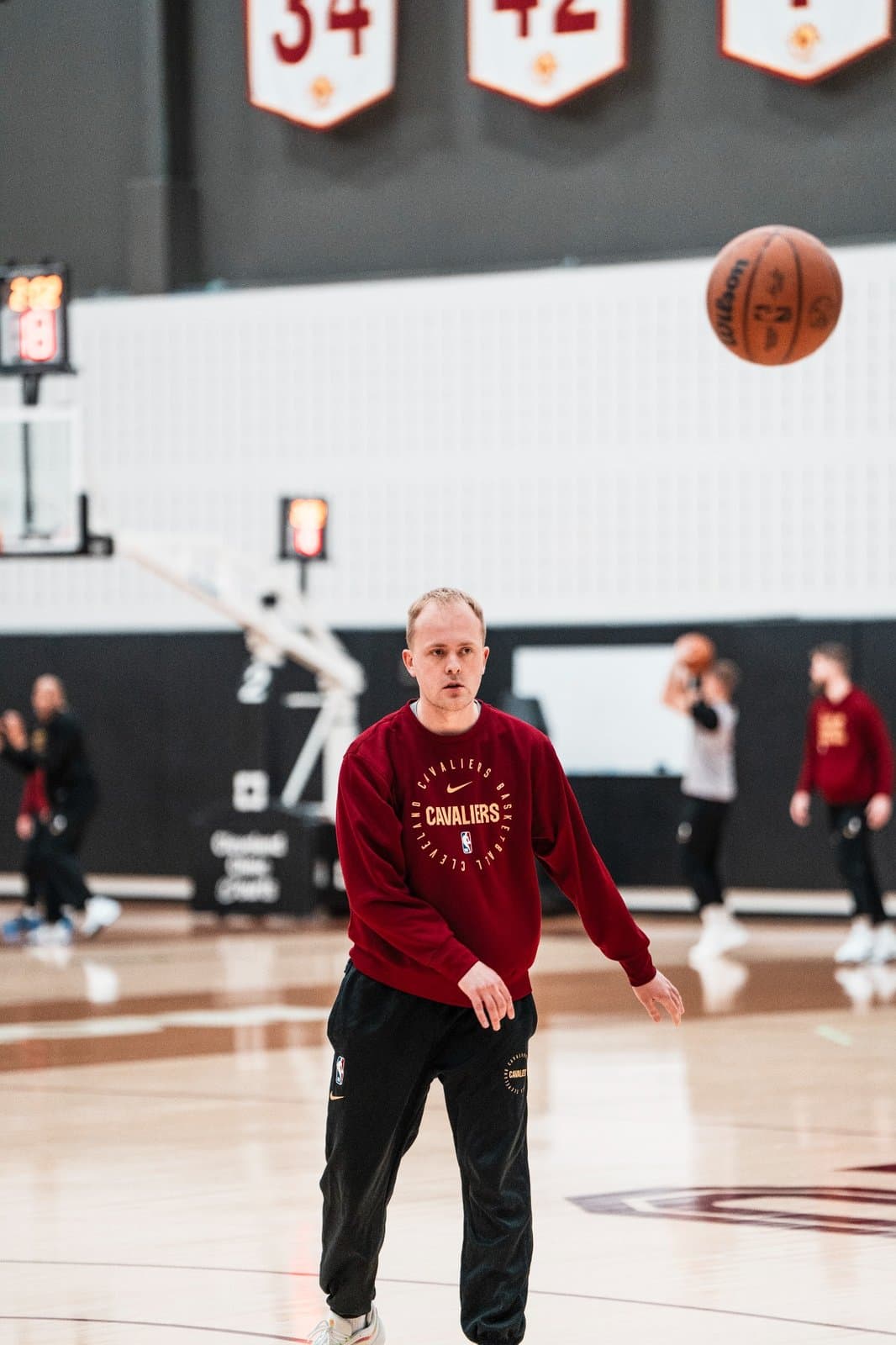
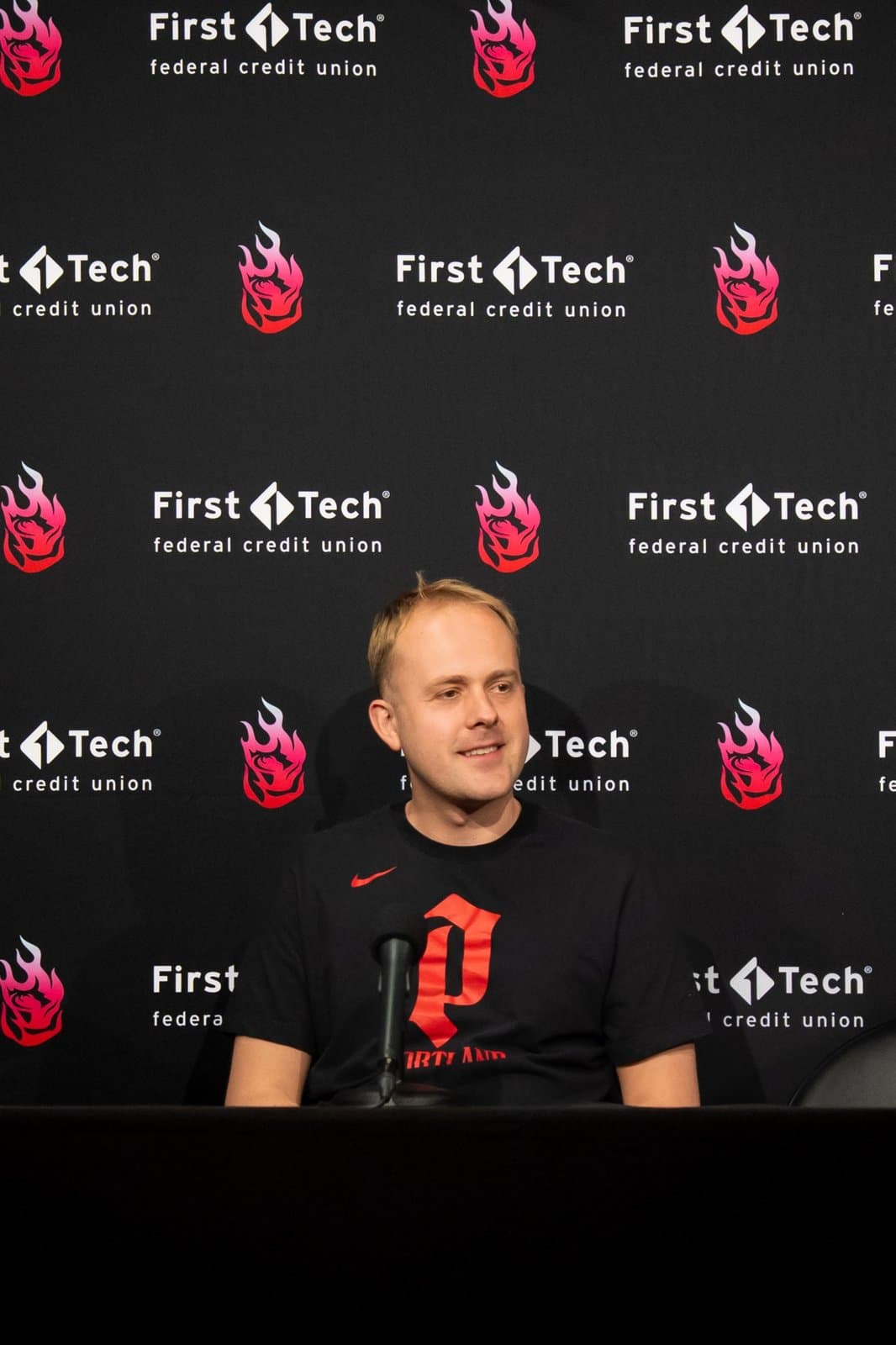
The alternative the book draws on is transformational leadership, which Mike MacKay describes through Jean Côté's four elements: inspire players (mostly by showing you believe in them), be a role model, challenge them to think and not only to run, and treat each player as an individual. For conversations, Mike's A-B-C framework (agree, build, challenge) gives players a way to disagree with a coach or a teammate respectfully: "I agree with Jon, but I would like to build on…" On EP169, Alex said the line he always comes back to is that you never want to be a child's last coach. Alex has used the same ideas with the London Lions academy, at College Prep in Italy, as an assistant coach and director of player development with the Cleveland Cavaliers, and now as head coach of the WNBA's Portland Fire.
If you're bringing these ideas to a program for the first time, Adam Omiecinski's article on getting buy-in for the CLA covers parents and other coaches, and our coach development guide covers how to keep improving your own coaching once you start.
Questions Coaches Ask
What makes a good basketball coach?
At Transforming Basketball we look for two things: the ability to design representative activities around a team's rate limiters, and the discipline to give specific, well-timed feedback. Add to that a transformational style that inspires, challenges and treats each player as an individual.
How long should I spend explaining a drill or game?
Aim for 30 seconds or less. Mike MacKay's "3, 10, 30" guideline is no more than three points of emphasis, no more than 10 minutes before changing the activity and no more than 30 seconds to explain it: the name, the principle of play, how it starts and how it's scored.
How much feedback should a coach give in practice?
Less than most coaches give, and more targeted. Focus on one or two things, give each assistant one area to watch, and stay quiet when you have nothing specific to add. If you keep repeating the same point, manipulate a constraint instead.
What is the difference between internal and external coaching cues?
Internal cues direct attention to body parts, such as "bend your knees" or "elbow at 90 degrees." External cues direct attention to the effect of the movement, such as driving a knee forward as if shattering a plate of glass. Research by Gabriele Wulf and colleagues is the main reason we prefer external cues.
Should you call a time-out to stop a run?
The research is not encouraging. A 2022 study of NBA games by Gibbs, Elmore and Fosdick found that, on average, calling a time-out during an opposing run did not help the team being run on. If you do call one, use it for one or two specific intentions rather than general statements.
What is the green, yellow, red approach to game coaching?
A way to match how much you say to the state of the game. In green, when play is flowing, use one-word prompts at most. In yellow, a few short words. In red, during any dead ball, you can give more detailed feedback through call-overs, huddles and time-outs.
Take It to Your Next Practice
Free
Coaching Clinic with Alex Sarama
A coaching clinic session with founder Alex Sarama covering the Transforming Basketball approach.
Introduction to the Constraints-Led Approach
$49 USD
Explore the framework behind representative practice with Alex Sarama's Introduction to the Constraints-Led Approach clinic.
Sources
- Transcending Basketball, Alex Sarama (Wiley, forthcoming): chapter 4 (including Mike MacKay's guest section), chapter 5 and chapter 6
- EP19: Why Basketball Coaches Should Have a Coaching Mentor with Mike MacKay
- EP48: How to Avoid Being a TWIT Coach
- EP101: Identifying and Targeting Rate Limiters
- EP169: Alex Sarama on Principles of Play and His Coaching Journey, with George Vaz
- How to Give Better Coaching Feedback & Informational Constraints, Alex Sarama
- Harnessing Motor Learning in Professional & Collegiate Sports, Alex Sarama, keynote slides
- Rate Limiters and Game Coaching, Alex Sarama, clinic slides
- Woods, Rudd, Robertson and Davids (2020), "Wayfinding", Sports Medicine - Open, doi:10.1186/s40798-020-00280-9
- Wulf, Lauterbach and Toole (1999), "The Learning Advantages of an External Focus of Attention in Golf", Research Quarterly for Exercise and Sport, doi:10.1080/02701367.1999.10608029
- Saavedra, Mukherjee and Bagrow (2012), NBA time-out study, as cited in Transcending Basketball
- Gibbs, Elmore and Fosdick (2022), "The causal effect of a timeout at stopping an opposing run in the NBA", The Annals of Applied Statistics, doi:10.1214/21-aoas1545
- Carleton et al. (2016), "Scarred for the Rest of My Career?", Journal of Sport and Exercise Psychology, doi:10.1123/jsep.2015-0333
- Transforming Basketball, Alex Sarama (2024): chapter 8, Transforming Activities
- A Constraints-Led Approach to Coaching Basketball, Sarama, Lascu, Vaz Rocha and Houghton (Routledge, forthcoming): section 4.6 on feedback and the learning environment designer
Behind the methodology
About Alex Sarama
Alex Sarama
Founder, Transforming Basketball · Head Coach, Portland Fire
Alex Sarama is the founder of Transforming Basketball and Head Coach of the WNBA's Portland Fire. Previously, he served as Assistant Coach and Director of Player Development with the Cleveland Cavaliers.
His wider experience includes NBA Europe in Madrid, Paris Basketball in the EuroCup and the Rip City Remix, the Portland Trail Blazers' G League affiliate. Alex has delivered clinics in over 40 countries and has written three books on the constraints-led approach in basketball, including the Amazon bestselling Transforming Basketball (2024) and A Constraints-Led Approach to Coaching Basketball (2026).