
Coaching guide · Coach development
Basketball Coach Development
Coaches get better the same way players do. They work on one rate limiter at a time, in their own gym, with someone around who spots the habits they can't see in themselves. You can start by recording one practice and build from there to a whole staff working from shared principles.
14 min read
On episode 83 of the podcast, Alex Sarama and Adam Omiecinski compared notes on what happened when they tried to coach differently. Both had been fired for it. Adam had gone it alone. Alex had been let go by a program in Belgium that, in his words, "everyone thought it was the best thing in the basketball world", for wanting to commit to the constraints-led approach.
Alex explained why he'd gone headfirst into this work in the first place:
“I didn't wanna feel like my players could have been getting something better and they weren't getting that just because I was too lazy to do research and explore something else.”
Adam's lesson from the same experience was about support. Change is hard for anyone, he said, and he needed to be "perturbed out of that attractor state" before his habits shifted:
“You need a support system. I mean, I did it by myself, and I ended up getting fired for it.”
Good coach development gives you that support. It helps you see the coaching behaviors you keep falling back on and perturb them, ideally with other coaches around you doing the same.
Coaches Learn the Way Players Do
Transcending Basketball describes how coach learning usually works in basketball, and why it doesn't go far enough:
“Within the basketball world, learning is traditionally characterized by coaches acquiring more techniques, drills, and Xs and Os.”
Alex made the same point in Transforming Basketball. Coaches rarely get the chance to zoom out and ask whether there's an alternative, and the clinics they attend mostly don't give them one:
“Coaching clinics mostly focus on offensive or defensive philosophies as opposed to underpinning theories such as skill acquisition, practice design, what constitutes effective learning, and how basketball organizations can understand the essence of skillful performance.”
The book adds that collecting quick hitters brings instant gratification, while learning how skill emerges is slow and nonlinear. It also means accepting some failure in your own practices, which is hard if you were raised on "perfect practice" and see players' mistakes as a reflection on you.
Transcending Basketball argues for a different list: better practice design, constraint manipulations, accurate identification of rate limiters, better feedback delivery and clear principles of play. In a guest section, coach developer Matt Wood makes the case that coaches should be developed with a constraints-led approach too. A coach's prior knowledge, intentions and habits interact with their environment, and coaching behavior emerges from that interaction. The coach developer's job is to change the task, guide the coach's attention and co-design learning with them, rather than hand over a fixed curriculum.
That distinction, borrowed from the psychologist James Gibson, is the one Alex keeps returning to. Knowledge about is what you can explain, and knowledge of is what you can do. In his article on developing a coaching staff, Alex writes that using Gibson's distinction, "the most important thing is obviously how they are coaching on the court."

Free
Coaching Clinic with Alex Sarama
A coaching clinic session with founder Alex Sarama covering the Transforming Basketball approach.
Find Your Coaching Rate Limiters
In player development, we start with a rate limiter, a factor that limits a player's ability to express a skill. Alex applies the same idea to coaches:
“Just like players, we also have our own unique rate limiters in coaching behaviours.”
The book makes a similar point with a term from motor learning. Coaches have attractors too, stable coaching behaviors they fall back on over and over, some useful and some not, and they are usually hard to see in yourself.
So how do you spot them? Three ideas from our own material:
- Mic yourself up. One of the book's reflective tasks is to record all the audio from one practice, then go through every piece of feedback you gave. Listen for filler ("OK," "alright," "do you understand?"), for internal cues you could turn into external ones, and for instructions that sounded more prescriptive than you meant. Then "re-do" the weakest phrases: rewrite them so they're more suggestive and exploratory. Alex's article adds that filming yourself delivering practices and time-outs works the same way.
- Count your instructions. When a coach in the Transforming community asked how to stop slipping back into old habits, Adam Omiecinski suggested two self-imposed constraints: allow yourself only questions when you notice you're over-instructing, and make a mark on a piece of paper every time you give very instructive feedback. George Vaz collected the replies in how to avoid reverting to traditional coaching.
- Watch for pile-ons. The book flags "and also" and "don't forget about" as signals that one coach is adding to what another just said, which is how players end up with too many voices and too many points.
Our basketball coaching guide covers the feedback ideas behind these checks in more detail: external focus, sniper versus shotgun feedback, and when to change the game instead of talking.
Review Every Practice: What, So What, Now What
The book credits Alan Keane and Simon Turner of MVMT Sports with the "plan-do-review" process, and with the observation behind it: coaches spend a lot of time planning and running practices and almost none reflecting on how they went. On EP20, Simon described the alternative most of us live in, a straight line of do, do, do. He then described what often passes for a review:
“And if your review consists of thinking about it in the car on the way home from practice, or moaning to your fellow coach about how the players couldn't do what you wanted them to do. That's not a review. That's a moan.”
Simon also pointed out that a list of drills isn't a plan. For the review, he shared a three-step framework originally developed for nurses, who move from patient to patient and need something they can do standing in a hallway:
| Step | Question | Simon's pick-and-roll example |
|---|---|---|
| What? | What were the three things that stood out in that practice? | Pick-and-roll decision-making improved; two players weren't communicating; our pick-and-roll coverages need work. |
| So what? | What are the implications? | We haven't spent enough time on pick-and-roll defense, and there may be a conflict between two players. |
| Now what? | What will we do at the next practice or game? | Simplify and teach the coverages, put players in more pick-and-roll situations in the CLA work, and have a one-to-one with each player within 24 hours. |
Two coaches can each name three different things, and comparing them builds a shared understanding of what happened. Alex said on the same episode that the review is the step coaches skip most, and that even 10 minutes talking it through with staff is something.
If someone else is reviewing with you, they should be asking questions rather than handing down a verdict. Chapter 7 of Transcending Basketball suggests questions like these:
- "What did you notice about the level of challenge during this part of practice?"
- "What constraints could be used to increase or decrease the level of challenge?"
- "How did the players respond during this activity?"
- "How representative of the game was this?"
- "How could the representativeness of this task be increased?"
- "What are some affordances player X is struggling to act upon consistently, and how could we re-create these scenarios in practice?"
“Instead of looking for correct and incorrect responses, the goal is for staff members to reflect on their own behaviors and on factors not previously considered.”
The book also quotes Emily Handyside on timing: emotional conversations can leave a coach feeling vulnerable, and ending a session on those feelings "may lead to the coach not coming back." Many short, frequent conversations work better than one heavy one.
Staff Development Plans
Alex's article describes the staff version of a player development plan (PDP): the staff development plan (SDP). He does them three times a year, through co-design: you ask each coach what they feel their biggest rate limiters are, then work out together how to address them. That also streamlines your feedback when you drop in on their practices, because you both know which behaviors they're trying to change.
The book leaves the rhythm open (monthly, bi-monthly or quarterly, depending on resources) and adds that input from the coach and from plan-do-review feeds each plan. Alex's keynote to college and professional staffs has a shorter version: "Create Coach Development Plans: avoid the singular exit interview!"
George Vaz, who coached with Alex at the London Lions, remembered his on EP169. What stayed with him was that the plan showed him what he needed to work on, and also what he was already good at that he hadn't noticed himself.
Building a Staff That Learns Together
Alex's article on developing a coaching staff starts with relationships. Most of his coach development work with the London Lions, he writes, was built on developing great relationships with the coaches first, so that the development work became easy. Without that trust, coaches feel you're trying to change them. From there, his approach looked like this:
- Resources. The book, podcasts, a few social media accounts to follow, the Transforming online courses, and a shared Google Drive folder where everyone could see each other's practices.
- An informal workshop. Roundtables and small-group tasks: describe the CLA in 60 seconds, use constraints to simplify a 1-on-1 that's too hard, or design an activity that brings out a given principle of play. The results show you where each coach is.
- Drop-ins. Someone with the time to visit every coach's sessions and give informal or formal feedback after each one.
- Coach alongside them. At the Lions, Alex ran a good number of practices himself so coaches could see how quickly activities change, then coached less as the season went on.
His keynote slides add a few more pieces. Hire for curiosity ("Hire for traits, develop attributes later," a line he credits to the LA Dodgers). Keep a library of practice activities and past plans for onboarding. Make time in staff meetings for interesting research, blogs and videos. On a large staff, pick one or two "target" coaches to influence the rest; on a small staff, make one coach the expert in practice design. And encourage disagreement, using Mike MacKay's A-B-C framework (agree, build, challenge) so challenges happen in the room rather than in side conversations.
The book is practical about how much time this needs. It lists the reasons staff development fails (material that isn't relevant, lecture-style delivery, inconsistency, sessions too long for busy people) and suggests starting with as little as 20 minutes a week, delivered consistently across a season.
Coach Development in a Youth Club
You don't need a professional staff to do any of this. A Constraints-Led Approach to Coaching Basketball argues that at the novice level, coach education is one of the biggest drivers of player development, so Coach Development Plans (CDPs) aren't only for higher levels. A CDP holds a small number of priority areas relevant to that coach, such as practice planning, in-game coaching, communicating with players and parents, or running tryouts.
The book places CDPs inside a One-Club philosophy: the same terminology and principles of play across every age group, simplified for beginners. Coaches benefit as much as players. They can ask questions, learn from each other and share ideas, and a new volunteer gets the support and resources to step up and coach a team with CLA methods. Player Development Plans and CDPs sit side by side, so coaches at every age group are building toward the same style of play.
The same thing can work at national level. In a case study in Transforming Basketball, Rikard Aspegren and Andrew Pleick describe how the Swedish Basketball Federation published its Framework for Player Development in early 2020, then recruited them as two basketball developers in 2021 to put it into practice. They ran clinics across the country, trained national team coaches, academy coaches, coach educators and the federation's board, and backed it up with newsletters, podcasts and web resources. Their biggest challenge was experienced coaches used to a linear, isolated approach. What moved them was patience, and the federation's clarity and support behind the new approach.
Circles, Not Silos
Chapter 7 of the book is titled "Department of Methodology: Creating Circles, Not Silos." Its argument is that in professional and college basketball, shooting coaches, player development coaches, head coaches and athletic trainers each work in their own silo, and that this shows up on the court. A player development coach may emphasize shots that don't fit the player's role in the team's principles of play, so player development sessions and team practices end up looking very different for the same players.
The fix the book proposes is a director of methodology: someone who links the coaching staff, athletic performance, analytics, sports science and the front office through one framework, runs regular staff education and helps coaches design practice. It draws on a paper by Rothwell, Davids, Stone, O'Sullivan and colleagues on how a department of methodology can coordinate sport science, and on FC Barcelona, which has had a director of methodology since 2011. Alex held that role at the London Lions, as he mentioned on EP83.
Most programs don't have the budget for that role, and the book acknowledges this. Its reflective task asks how a high school or youth club could build a department of methodology out of volunteers and part-time staff. The keynote answer for small staffs is the simplest version: give one coach ownership of practice design and of linking the other departments.
Whatever the size of the program, leadership matters. Talking about his two seasons in Cleveland on EP169, Alex said the work was only possible because head coach Kenny Atkinson was all in:
“You have to have buy-in and support from the head coach, and I think that was what allowed us to really implement all these things”
Look After the Coaches
Coach development also means protecting the people doing it. Transcending Basketball argues that staff welfare gets far less attention than player welfare, and that the long-hours culture of the profession works against good coaching. Its sharpest version of the argument is a question:
“what will allow a coach to perform at their best: spending some fulfilling hours with their family versus producing a lengthy scout report that hardly any coaches end up reading?”
The book is clear that this doesn't dismiss hard work; the aim is to measure quality of work rather than hours logged. A coach with more balance, it argues, is more likely to run good practices and bring new ideas than a burnt-out coach trying to keep up.
If you're choosing a format to learn in, such as a mentor, a clinic or a course, our guide to basketball training for coaches covers how to match the support to what you need. For your next practice, the easiest start is the review: three things, so what, now what.
Questions Coaches Ask
How do basketball coaches improve their coaching?
Collecting drills and Xs and Os only gets you so far. Work on specific coaching behaviors in your own practices. Record a practice, pick one rate limiter such as long explanations or stopping play too often, review each session with a colleague and track the change over a season.
What is a coach development plan in basketball?
It's the coaching-staff version of a player development plan. The coach and the person developing them agree on a few priority rate limiters, such as practice planning, in-game coaching or communicating with parents, and how to address them. Alex Sarama does them three times a year; Transcending Basketball suggests anything from monthly to quarterly.
What is plan-do-review for coaches?
A learning cycle credited to Alan Keane and Simon Turner of MVMT Sports. You plan a practice, run it, then review it so the next plan is informed by what happened. Simon's quick review asks three questions: what happened, so what, and now what.
What questions should coaches ask when reviewing a practice?
Transcending Basketball suggests questions such as: what did you notice about the level of challenge, how did the players respond, how representative of the game was this, and which affordances is a player struggling to act on. There are no right or wrong answers; the point is to get the coach reflecting.
What is a director of methodology in basketball?
A role that links the coaching staff, player development, athletic performance, analytics and the front office through one framework and leads staff education. It's common in soccer, including at FC Barcelona. Smaller programs can give one coach ownership of practice design instead.
How do you introduce the constraints-led approach to a coaching staff?
Start with relationships, then share resources and run an informal workshop with tasks like describing the CLA in 60 seconds. Visit coaches' practices, coach some sessions yourself early on, and support the work with staff development plans.
Take It to Your Next Practice
Free
Coaching Clinic with Alex Sarama
A coaching clinic session with founder Alex Sarama covering the Transforming Basketball approach.
Introduction to the Constraints-Led Approach
$49 USD
Explore the framework behind representative practice with Alex Sarama's Introduction to the Constraints-Led Approach clinic.
Sources
- Transcending Basketball, Alex Sarama (Wiley, forthcoming): chapter 5 (including Matt Wood's guest section), chapter 6 and chapter 7
- Transforming Basketball, Alex Sarama (2024): chapter 1 and chapter 5 (Swedish Basketball Federation case study by Rikard Aspegren and Andrew Pleick)
- A Constraints-Led Approach to Coaching Basketball, Sarama, Lascu, Vaz Rocha and Houghton (Routledge, forthcoming): sections 3.3.1 and 3.3.7
- EP83: Why Are Coaches Hesitant to Change?, with Adam Omiecinski
- EP20: Why Coaches Shouldn't Be the Focus of a Team with Simon Turner
- EP169: Alex Sarama on Principles of Play and His Coaching Journey, with George Vaz
- How Can You Effectively Develop Your Coaching Staff?, Alex Sarama
- How to Avoid Reverting to Traditional Coaching Habits, George Vaz
- Harnessing Motor Learning in Professional & Collegiate Sports, Alex Sarama, keynote slides
- Wood, Mellalieu, Araújo, Woods and Davids (2023), "Learning to coach: An ecological dynamics perspective", International Journal of Sports Science & Coaching, doi:10.1177/17479541221138680
- Weight, Taylor, Huml and Dixon (2021), "Working in the Sport Industry: A Classification of Human Capital Archetypes", Journal of Sport Management, doi:10.1123/jsm.2020-0070
- Rothwell, Davids, Stone, O'Sullivan, Vaughan, Newcombe and Shuttleworth (2020), "A Department of Methodology Can Coordinate Transdisciplinary Sport Science Support", Journal of Expertise, as cited in Transcending Basketball
Behind the methodology
About Alex Sarama
Alex Sarama
Founder, Transforming Basketball · Head Coach, Portland Fire
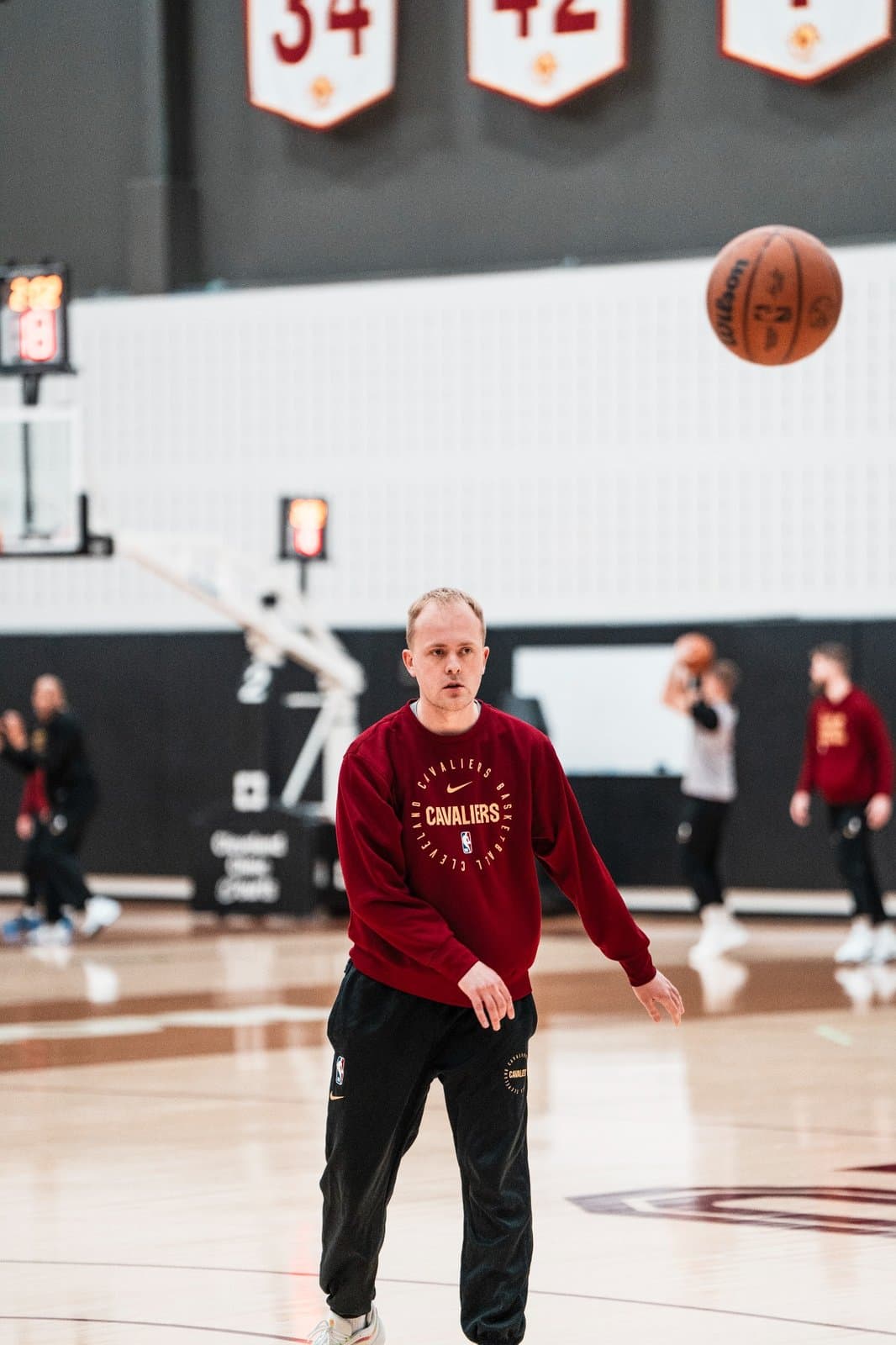
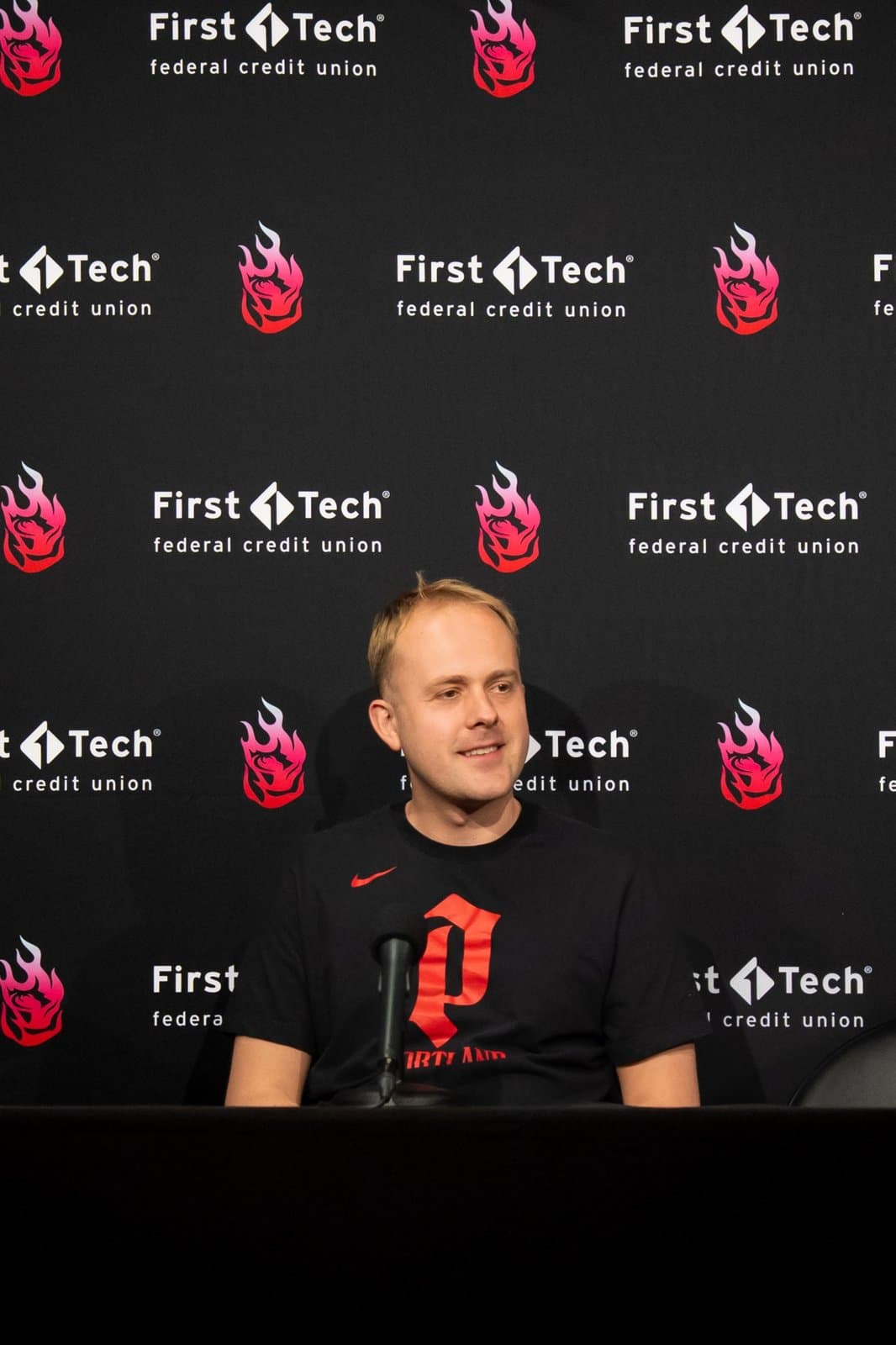
Alex Sarama is the founder of Transforming Basketball and Head Coach of the WNBA's Portland Fire. Previously, he served as Assistant Coach and Director of Player Development with the Cleveland Cavaliers.
His wider experience includes NBA Europe in Madrid, Paris Basketball in the EuroCup and the Rip City Remix, the Portland Trail Blazers' G League affiliate. Alex has delivered clinics in over 40 countries and has written three books on the constraints-led approach in basketball, including the Amazon bestselling Transforming Basketball (2024) and A Constraints-Led Approach to Coaching Basketball (2026).