
Coaching guide · Coach education
Basketball Training for Coaches
Before you book a clinic or look for a mentor, name the thing in your own practices you want to change. Then you'll know whether you need someone to watch you coach or an idea to study.
10 min read
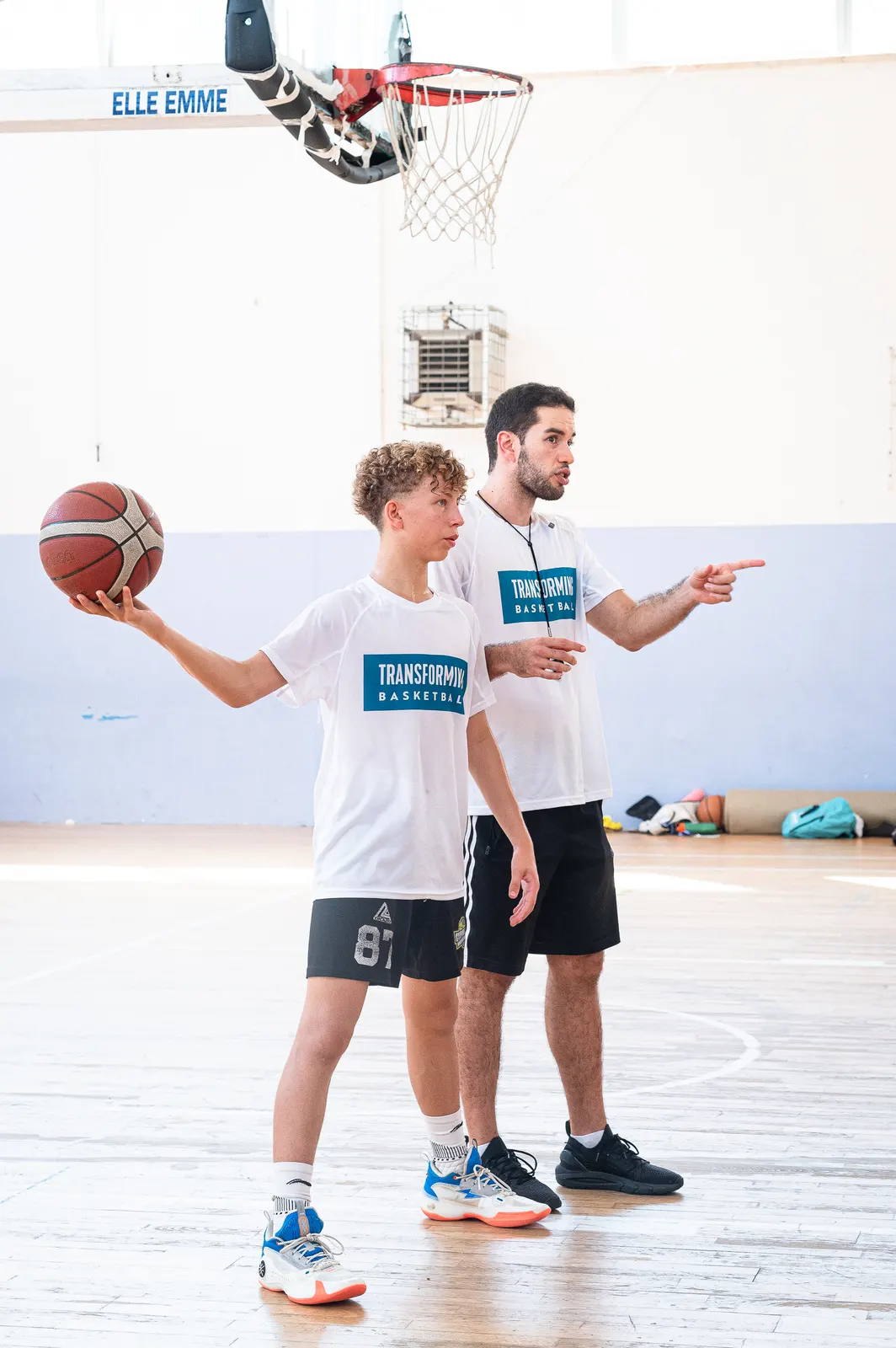
Mike MacKay of Canada Basketball, the coach Alex Sarama calls his biggest influence, describes two mentoring conversations that go wrong. In the first, an experienced coach gets an outsider who just tells them what to change. Their reaction, in Mike's words: "who does this guy think he is telling me what to do? I mean, I've been coaching for 30 years." In the second, a new coach gets a mentor who only asks questions, and thinks: "Why don't you just tell me what to do? It'd be a whole lot easier."
In both cases, the style of mentoring didn't match the coach. On EP19, Mike put the starting point simply:
“The most important thing is to know what type of mentor you need at what stage of your development.”
Five Kinds of Support
Mike describes five levels of mentor. Use them as a menu when you choose any kind of coach training:
| Type | What they do | When it helps |
|---|---|---|
| Consultant | Watches and says "here's what I saw." Take it or leave it. | Early on, when an outside eye shows you things you'd never thought about |
| Trainer | Works with you on one specific thing, such as external rather than internal language in your feedback. You plan it, practice it, and they observe and debrief. | When you know which behavior you want to change |
| Role model | Is the example, or points you to a coach worth watching, such as for how they use feedback | When you want to see how someone else handles it |
| Facilitator | Helps with time management, practice planning and season planning | When the administration and planning are the bottleneck |
| Coach | Doesn't tell you anything. Just asks questions. | When you have the experience to find your own answers |
Mike's point is that it's never only one of these, and that novices often don't know what they need yet. Before you look for training, name the situation you want to improve. "Players keep asking how the rotation works" points toward a trainer and a rehearsal. "I am unsure whether the offense needs more time or a different solution" points toward someone who watches the activity with you.

Free
Coaching Clinic with Alex Sarama
A coaching clinic session with founder Alex Sarama covering the Transforming Basketball approach.
Change One Thing First
It's tempting to try to change everything at once. The last chapter of Alex's first book, Transforming Basketball, argues for a shorter one. It borrows MAYA, short for "most advanced yet acceptable", from a presentation Pinder and Askew gave for Skill Acquisition Ireland: the most ambitious change your setting will actually accept right now.
“If widespread change is not feasible, then MAYA stimulates a consideration of what small changes could be achieved that may lead to big differences.”
The book's first example is small on purpose: players change location on every shot in a shooting activity. Its advice for working with other coaches is to start from the activities they already run, blocked drills or small-sided games with no particular constraint, and show how each could be improved by adding a defender or changing locations. New ideas are phased in gradually instead of all at once.
Apply the same filter to yourself before you book anything. If your shooting segment is spot shooting, the next step might be a defender who passes and closes out. If your team runs a pass-and-cut motion, it might be one advantage game a week. Pick the training that helps with that step, not the one that promises to change everything.
Study Is "Knowledge About". Coaching Is "Knowledge Of"
Clinics, courses, books and podcasts build what the psychologist James Gibson called "knowledge about": what you can explain. What changes your practices is "knowledge of": what you can actually do in the gym, live, with players in front of you. Coach education research makes the same case.
Transcending Basketball includes a guest section by Matt Wood on what that looks like for a coach developer. The job, as he describes it, is to change the task constraints that challenge a coach's current practice, direct the coach's attention to what matters in their gym, and design the next learning opportunity with the coach rather than for them. It starts with knowing the coach.
“A thorough task analysis of the coach and the specific environment is a must for an ecologically informed coach developer, no copy and paste.”
His example has two parts. First, a workshop with curated video that makes coaches question the idea of one ideal technical model. Then coach and developer go into a live session, and the coach looks again at players they already know, this time noticing each player's own solution, for instance on free throws or shots from range. The workshop gives knowledge about. The live session is where knowledge of begins. When you compare clinics, mentors and courses, ask which of those two parts each one actually gives you.
The volume of material can work against you, too. Transcending Basketball makes the point plainly:
“Podcasts, blogs, and books offer multiple contradictory ideas.”
Pick one idea at a time and take it to the court, without expecting a shortcut. Talking on EP169 about the growing interest in the constraints-led approach, Alex said coaches often want "a cheat list":
“You can't just give someone a copy-paste menu and run with this and then they know how to do CLA. That's not how it works. It takes time.”
Practice One Coaching Behavior
The trainer model works on your own, too. Choose one behavior you can observe in your own coaching, rehearse it, and check it against how players respond. Two exercises from Transcending Basketball:
- Say less before players start. The book calls it a challenging but highly effective activity: give "the least amount of information, in the shortest possible time" before an activity begins. Explain how it starts and how it's scored, skip the rotations unless you're running bursts (where players stay on offense or defense for a set time instead of one possession), and let players figure out the rest.
- Record and re-do. Mic yourself up for one practice and listen back. Mark filler ("OK," "alright," "do you understand?") and any instruction that came out more prescriptive than you meant, then rewrite it as a suggestion and use the new version next time.
Then repeat it at the next practice and compare. Keep what helped and pick the next thing. Our coach development guide covers the review side in detail, including Simon Turner's "what, so what, now what".
If you need a behavior to pick, chapter 5 of Transcending Basketball sets out feedback as a set of contrasts, each one a habit you can choose to work on:
- Shotgun or sniper. Scattered feedback on everything, or one specific, measured point.
- White noise or silence. Not every moment needs a coach talking. Constant feedback isn't what players get in a game either.
- Absolutist or suggestive. "Have a think about this" instead of an instruction to follow every time.
- Instructive or questioning. A short question can help players notice an option they missed.
- One solution or many. The coach doesn't always have to know the answer. Set the game up and see what players find before giving feedback.
- Internal or external. Point attention at the outcome of the movement, not at how to control the body.
A tally sheet makes the behavior visible. When a member in our community asked how to stop slipping back into traditional habits, Adam Omiecinski suggested setting yourself targets before each practice, only asking questions whenever you feel yourself over-instructing, and marking a piece of paper every time you give very instructive feedback. George Vaz collected the replies in How to Avoid Reverting to Traditional Coaching Habits, and he is honest that behaviors won't flip overnight.
Review Your Own Practice
Training only sticks if somebody looks back at the session. In Transcending Basketball, the questions below are suggested for a director of methodology to ask staff after practice. They work just as well on your own, or with an assistant after the gym empties:
- "What did you notice about the level of challenge during this part of practice?"
- "What constraints could be used to increase or decrease the level of challenge?"
- "How did the players respond during this activity?"
- "How representative of the game was this?"
- "How could the representativeness of this task be increased?"
The book is clear that there are no correct and incorrect answers here. The point is to notice your own behavior and the things you hadn't considered, through many short conversations rather than one long one.
If You're Responsible for Other Coaches
One of the questions we get most often is how to bring these ideas to the other coaches in a program, or across a whole club. In Coaching Staff Development: Bringing the CLA to Your Club, Alex starts with trust. Most of his work with the London Lions coaches was building relationships first, because coaches who feel they are being aggressively "changed" won't adopt anything. Transforming Basketball makes the same point from the other side: criticizing an approach is not criticizing the coach who uses it.
After that, he suggests an informal workshop with small breakout tasks. Coaches describe the constraints-led approach in 60 seconds, use constraints to simplify a 1-on-1 that's too hard, or take one of the team's principles of play and design an activity that shapes it. The answers show you where each coach is. Then comes the part that matters most, which is seeing them coach on the court and giving feedback after practice.
His last tool is the staff development plan, the coaching version of a player development plan. He does them three times a year, co-designed: each coach names what they feel their biggest rate limiters are (the behaviors holding their coaching back), and you plan practical ways to work on them together. When you then watch their practice, you know what to look for. As he puts it, coaches have their own rate limiters just like players, and filming yourself running practices and timeouts is a great way to find them.
Where Our Clinics Fit
If you want to study one idea in depth, start with one of these:
- [Coaching Clinic with Alex Sarama](/coaching-clinic-with-alex-sarama) (free). A coaching clinic session with founder Alex Sarama covering the Transforming Basketball approach.
- [Introduction to the Constraints-Led Approach](/clinic-introduction-to-the-constraints-led-approach) ($49 USD). For coaches who want to understand how the Constraints-Led Approach applies to basketball.
- [Implementing a Conceptual Offense](/clinic-implementing-a-conceptual-offense) ($49 USD). For coaches ready to take conceptual offense from theory into practice.
Compare all of them on our coaching clinics page, see longer programs on coaching courses, or start with the free resource library. Whichever you choose, decide before you start which situation in your own practice you'll apply it to.
Questions Coaches Ask
What kind of training do basketball coaches need?
It depends on what you're trying to improve. Mike MacKay describes five kinds of support: a consultant who observes, a trainer who works on one behavior with you, a role model, a facilitator who helps with planning, and a coach who only asks questions. Start by naming the situation you want to change.
Should every basketball coach have a mentor?
Mike MacKay argues the type of mentor matters more than having one. An experienced coach may resent a consultant who just gives instructions, while a new coach may be frustrated by a mentor who only asks questions. Match the mentor to your stage of development.
Are coaching clinics worth it?
A clinic is a good way to study a focused idea, which builds your "knowledge about" coaching. It changes your practices only when you take one idea to the court, try it with your players and review what happened.
Are there free basketball coaching clinics?
Yes. The free Coaching Clinic with Alex Sarama is a coaching clinic session with founder Alex Sarama covering the Transforming Basketball approach. Our free resource library has more.
How do I stop over-coaching during practice?
Pick one feedback habit and measure it. Mark a sheet every time you give a direct instruction, swap some of them for short questions, and record one practice to listen back for filler and commands. Changing one behavior at a time works better than trying to change everything.
How do you develop a basketball coaching staff?
Build trust first, then see where each coach is with short workshop tasks, such as designing an activity for one principle of play. Watch them coach and give feedback after practice, and set staff development plans a few times a year around each coach's own rate limiters.
Take It to Your Next Practice
Free
Coaching Clinic with Alex Sarama
A coaching clinic session with founder Alex Sarama covering the Transforming Basketball approach.
Introduction to the Constraints-Led Approach
$49 USD
Explore the framework behind representative practice with Alex Sarama's Introduction to the Constraints-Led Approach clinic.
Implementing a Conceptual Offense
$49 USD
Take the Starter Kit onto the court. Alex explains how to teach shared principles, triggers and coverage solutions through game examples and small-sided games.
Sources
- EP19: Why Basketball Coaches Should Have a Coaching Mentor with Mike MacKay
- EP169: Alex Sarama on Principles of Play and His Coaching Journey, with George Vaz
- Transcending Basketball, Alex Sarama (Wiley, forthcoming): chapters 5 and 7
- Transforming Basketball, Alex Sarama (2024): chapter 9, Vision of the Future (MAYA, considerations for individuals)
- Coaching Staff Development: Bringing the CLA to Your Club, Alex Sarama
- How to Avoid Reverting to Traditional Coaching Habits, George Vaz
- Wood, Mellalieu, Araújo, Woods and Davids (2023), "Learning to coach: An ecological dynamics perspective", International Journal of Sports Science & Coaching, doi:10.1177/17479541221138680
Behind the methodology
About Alex Sarama
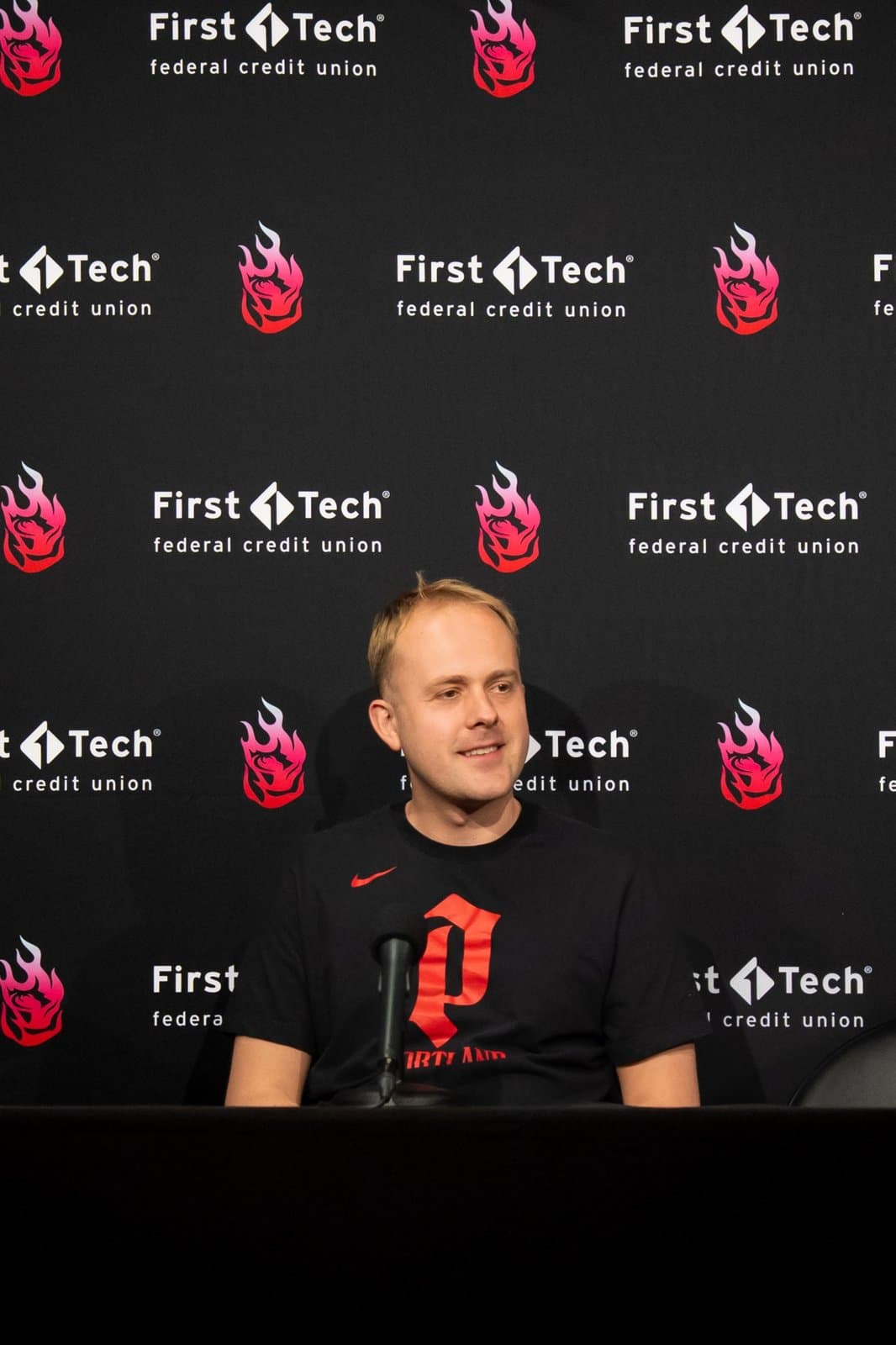
Alex Sarama
Founder, Transforming Basketball · Head Coach, Portland Fire
Alex Sarama is the founder of Transforming Basketball and Head Coach of the WNBA's Portland Fire. Previously, he served as Assistant Coach and Director of Player Development with the Cleveland Cavaliers.
His wider experience includes NBA Europe in Madrid, Paris Basketball in the EuroCup and the Rip City Remix, the Portland Trail Blazers' G League affiliate. Alex has delivered clinics in over 40 countries and has written three books on the constraints-led approach in basketball, including the Amazon bestselling Transforming Basketball (2024) and A Constraints-Led Approach to Coaching Basketball (2026).