Read
Article
Coaching the Fast Break: Key Transition Offense Principles
George Vaz on the principles behind attacking in transition.
Read article: Coaching the Fast Break: Key Transition Offense Principles

Langue
Change la langue du site. Les formations, téléchargements, le paiement et la livraison restent en anglais, sauf indication contraire sur la page.
Coaching Guide
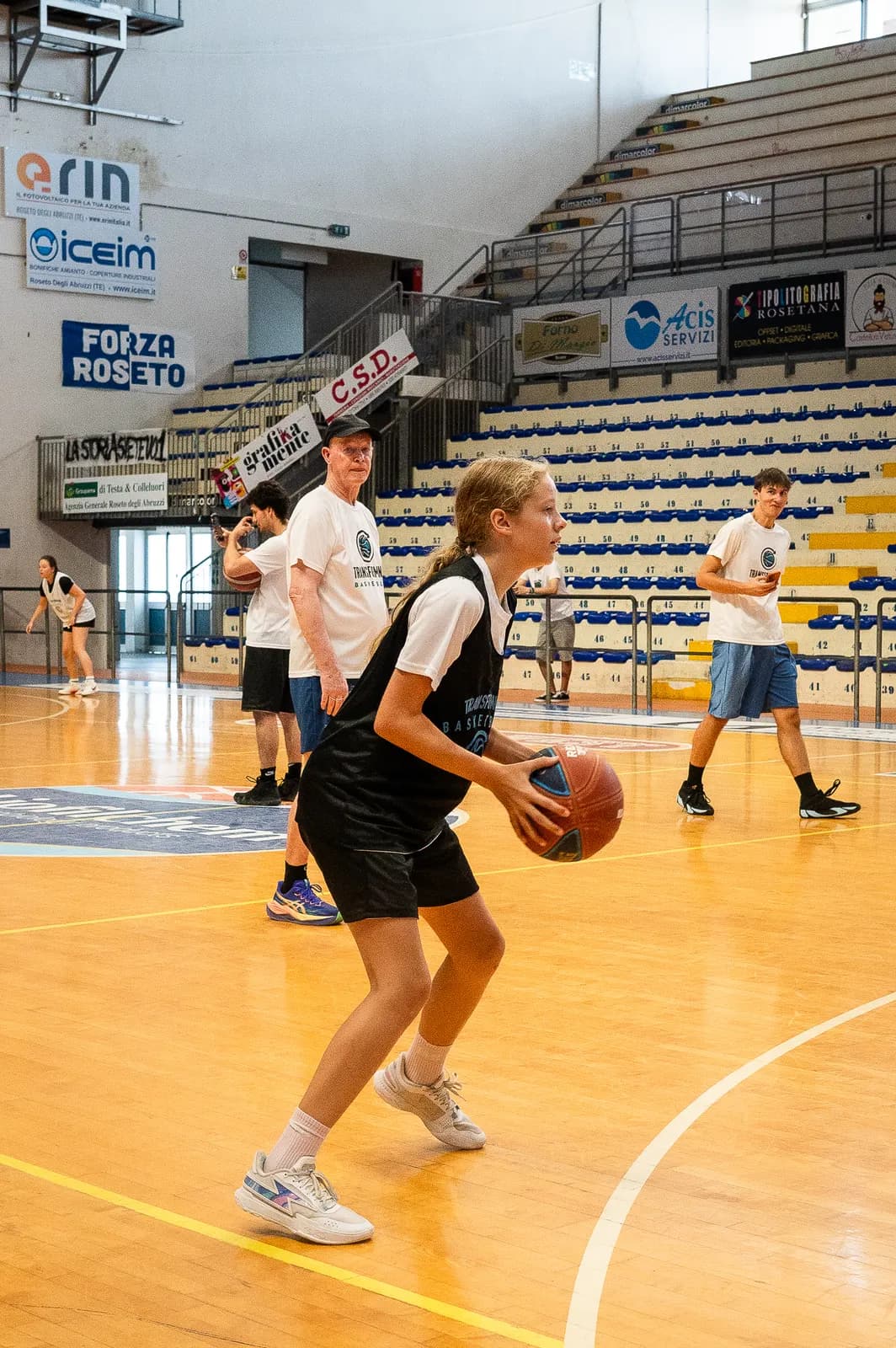
Transition offense gives your team an opportunity to create or use an advantage before the defense is set. After a rebound or turnover, the player with the ball can pass ahead or advance with a breakout dribble while teammates move to create space.
Players need to recognize whether dominoes exists. If the defense recovers back to neutral, the offense can flow into a trigger from the spacing in which players arrive.
Encourage an immediate response when possession changes. Players without the ball can move ahead while the rebounder looks for a pass or an opportunity to advance on the dribble.
Where the rebounder is comfortable handling the ball, they can start the break without waiting for a designated guard. Keep this flexible: your players' capabilities matter, and a teammate may provide the more useful way forward.
Watch the first few steps after a rebound or turnover. Is the offense moving while the defense is still recovering, or waiting for a coach's call before looking up the floor?
If a teammate can get beyond the last defender for a finish, use that opportunity. Otherwise, running to useful width and depth can open the floor for the ball handler.
Filling a corner and then the wing on the same side creates a two-side spacing. A pass to that side can expose a 2-on-1 when the defense has recovered toward the middle. It is an opportunity to read, not a guaranteed advantage on every possession.
Adapt the spacing to your players. A player who works well near the basket may use the weak-side dunker area; a trailing player may be available for the first screening action. The useful question is whether players' positions help them threaten the basket and connect with one another.
Neutral means neither team has a clear advantage. When the defense has recovered, the offense can flow into a trigger: a two- or three-player action intended to create a new opening, such as a dribble handoff or pick-and-roll.
Use the spacing in which players arrive. Requiring everyone to stop and relocate to a fixed starting pattern can give the defense more time to settle. Players still need to read the action: a trigger is an attempt to create an advantage, not a sequence that must be completed before anyone can score.
Begin with five offensive players and four defenders moving inside the paint. A fifth defender waits on the baseline. The coach passes to an offensive player at an unpredictable moment, starting the transition toward the other basket. The waiting defender can sprint back when the ball crosses half-court.
The offense tries to find a valuable scoring opportunity before the defense recovers. For a focused advantage-conversion round, end the possession if the defense gets back to neutral. Agree what neutral looks like so both teams understand the task.
Change when the recovering defender is released to adjust the time available. Release them earlier if the offense converts the advantage too easily; give the offense longer if the extra defender erases the opportunity before players can use it.
Then play continuously without the neutral-turnover rule. Now the offense has to recognize both possibilities: use an advantage while it exists, or flow into the next action when it does not.

Play a five-minute 5-on-5 game with normal scoring and three lives for each team. Choose one consequence that costs a life. To emphasize transition, a team could lose a life when it concedes a score within four seconds of losing possession. Losing all three lives ends the game, even if that team leads on the scoreboard.
This gives both teams a reason to respond quickly to the change of possession. Begin with one consequence so players can remember what matters. Observe whether the rule creates purposeful transition opportunities or encourages rushed attempts; adjust it to your group's needs.
Use your team’s shot-quality principles when evaluating transition possessions. A shot still needs to be within the player’s range, open and balanced. A shorter clock should not encourage players to force attempts they cannot reasonably make.
Watch whether an early pass creates a high-quality opportunity or simply moves the ball to a teammate under pressure. If the defense has recovered, players need to recognize that the advantage has gone and create a new one through a trigger.
Use both temporary advantage games and continuous play so players experience these different situations.
Article
George Vaz on the principles behind attacking in transition.
Read article: Coaching the Fast Break: Key Transition Offense PrinciplesFree
21 small-sided games you can run and adapt at your next practice — representative, game-like activities built around the Transforming Basketball approach.
$39 USD
For coaches building a more adaptable conceptual offense.
$49 USD
Go beyond your first 21 games. Build your practice around 50+ small-sided games, with diagrams and constraints you can adapt to your players.