Read
Article
How to Deal with Intense Ball Pressure
George Vaz on helping players handle pressure on the ball.
Read article: How to Deal with Intense Ball Pressure

Langue
Change la langue du site. Les formations, téléchargements, le paiement et la livraison restent en anglais, sauf indication contraire sur la page.
Coaching Guide
A basketball press break requires players to advance the ball while defenders deny catches, apply pressure and trap. A starting formation can organize your team, but players need solutions when the defense takes away the first option.
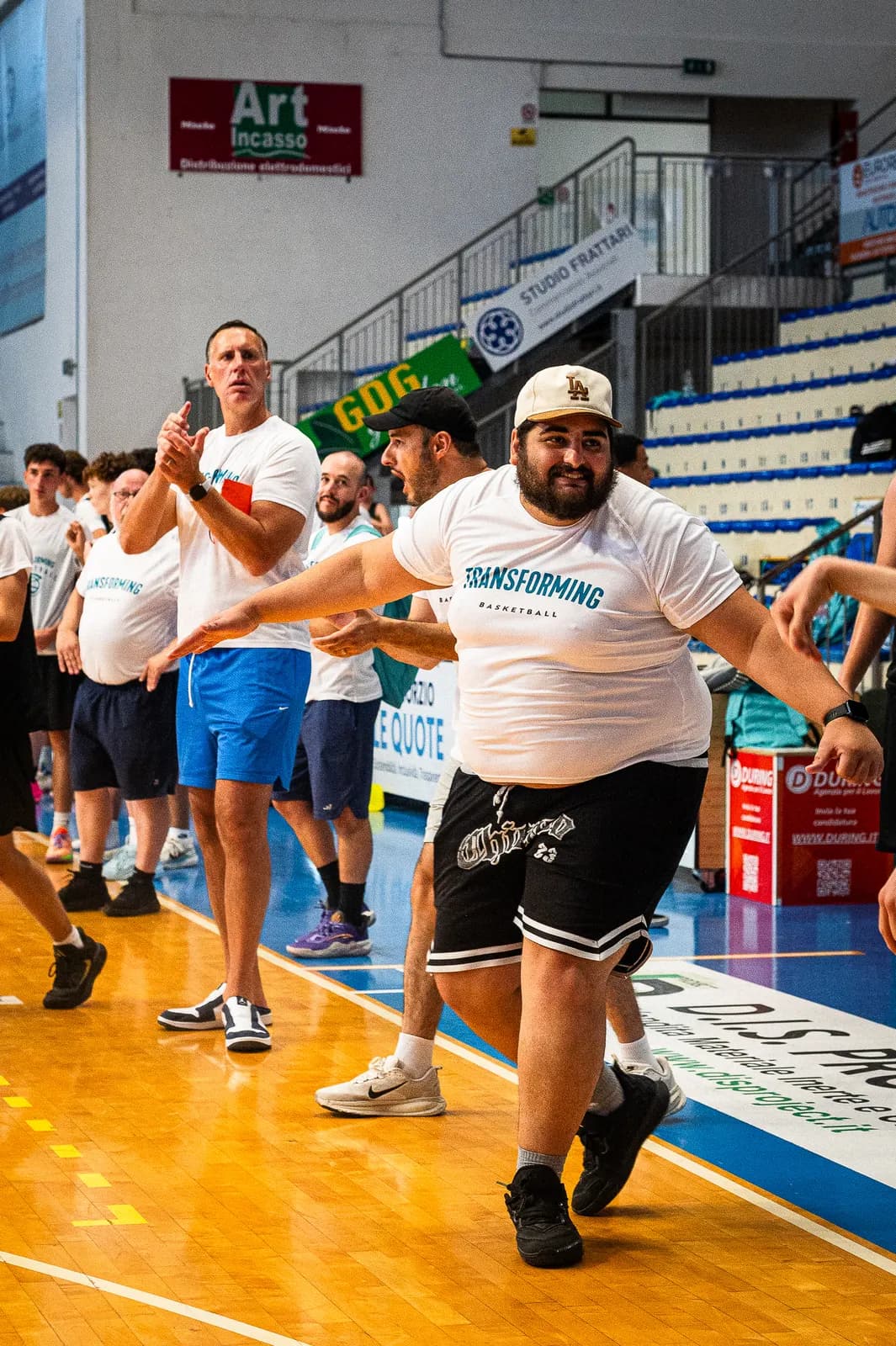
Identify where possession breaks down. Is the inbound pass denied? Does the ball-handler lose control before a teammate becomes available? Does the receiver catch the ball in a position where the next defender can trap? Use that rate limiter to select the activity.
Watch a few possessions and identify where the ball stops progressing. Recreate that moment with opponents who can steal the ball and change their position. A clean run-through can establish starting locations; it cannot tell you whether players can use them against a live press.
Give the offense a clear aim: advance with possession and use a scoring opportunity if one opens. Avoid making success depend on completing a fixed passing sequence regardless of where the defense goes.
For a team that repeatedly loses the ball before it can pass, begin with a smaller pressure game. Then return to team play so the ball handler has to connect that experience with teammates.
Mark a box with enough room for your players to compete. The offensive player dribbles inside it for five seconds while the defender tries to steal the ball. After five seconds, play live 1-on-1 toward the basket.
Use a race to five points: one point for protecting the ball for five seconds, two for a layup and two for a defensive steal or forced turnover. Make the box larger if the offense rarely survives; shrink it when the challenge becomes too easy.
Observe whether the offensive player responds to the defender's position while keeping control of the ball. Surviving in the box is the first task. The next is recognizing an opportunity to advance when play opens up.
Start one offensive player on the baseline, one defender at the free-throw line extended and another at half-court. Play begins when the offense moves. In the initial tag version, the offense tries to reach half-court without being tagged: two points for reaching the line, one point for a defensive tag, first to five.
Add dribbling when your players are ready. You can also require the defenders to dribble, or replace the tag with a steal or forced turnover. Change the starting positions to change how quickly the next defender enters the problem.
This isolates advancing past successive defenders. It does not reproduce every part of a team press break, because passing options and the inbounder are absent.
Here is a practice application to adapt: play full-court from a baseline inbound against the pressure your team needs to handle. Keep the game rules your competition uses. Let the offense pass or dribble, and allow the defense to respond rather than follow a scripted route.
Pause after a short set of possessions to identify the recurring difficulty. If the offense cannot complete the first catch, adjust the defensive starting distance. If the first catch is easy but the trap stops play, begin some possessions at that moment. Return to the full sequence after exploring the smaller problem.
Watch the players away from the ball as closely as the ball handler. Are they becoming available before the next defender arrives? Can the receiver control the pass and continue? A pass that is theoretically open may still be beyond a young player's current range.
You can include five seconds of ball pressure at the start of a 2-on-2 or 3-on-3 game before opening the possession. This gives the ball-handler repeated opportunities to protect possession while teammates prepare to become available.
Observe whether the player can use the dribble without moving into another defender. When the game opens, can a teammate receive a pass before the next trap forms?
Return to full-court play from an inbound to see how these solutions connect with the rest of the press break.
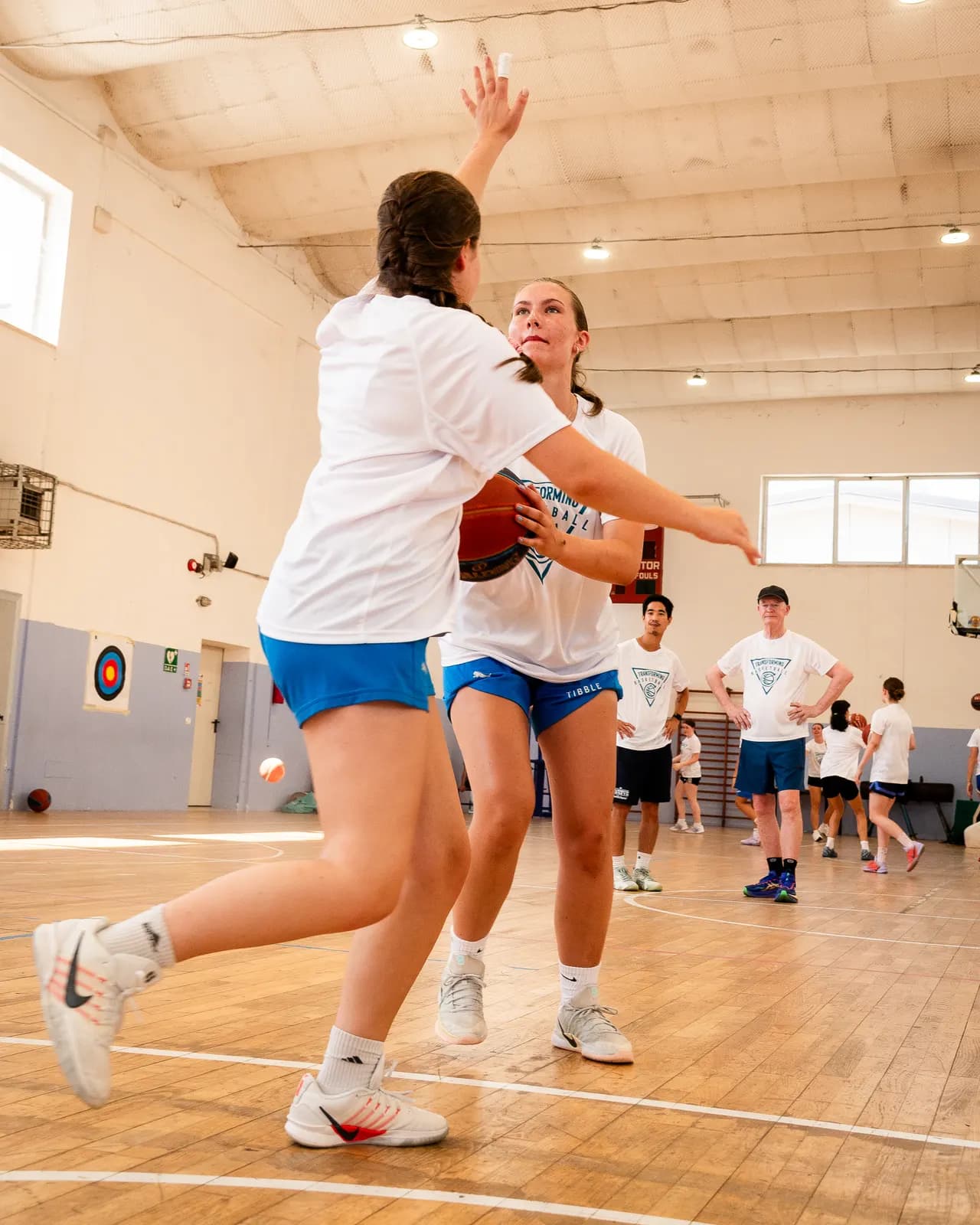
Explore ball handling under pressure, passing games and transition offense.
Article
George Vaz on helping players handle pressure on the ball.
Read article: How to Deal with Intense Ball PressureFree
21 small-sided games you can run and adapt at your next practice — representative, game-like activities built around the Transforming Basketball approach.
$49 USD
Go beyond your first 21 games. Build your practice around 50+ small-sided games, with diagrams and constraints you can adapt to your players.
$39 USD
For coaches building a more adaptable conceptual offense.