
Spunto per l’allenatore
On-ball containment means applying useful pressure without conceding an easy blow-by. Live 1-on-1 games let defenders adjust distance, angle and movement to the attacker. Use the court boundaries and scoring rules to emphasize the behavior your players need to improve.
Leggi la guida: Small-Sided Games in BasketballA lot of coaches talk about their base defense; principles such as no middle, trap the box rotations, etc. One of the golden principles of defense in youth basketball is “staying in neutral.” This simply means pressuring the ball as much as you can to avoid conceding a blow-by: irregardless of whether this is baseline or middle.
While it is always important to have strategies in place to not give up easy, high value shots (lay-ups and open threes), the basic principles at any level will always be predicated around guarding your yard and maximising individual containment and 1-on-1 defense.
With this in-mind, here are some of our favorite small-sided games that we use at Transforming Basketball to help our members improve their teams’ defense.
Sideline to Sideline 1-on-1
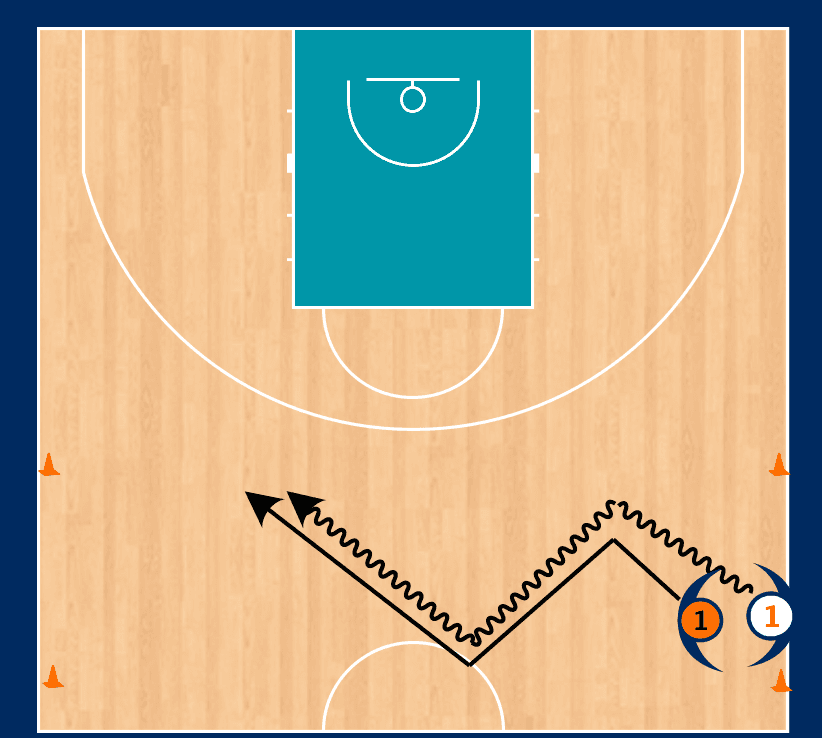
- Offense starts with the ball on one sideline and must try to get to the opposite sideline.
- The defense starts in front. Must try to get a steal or force a turnover.
- Offense must stay within the marked area, or it is a turnover.
- Offense and defense switch every rep.
Constraints:
- 5 second clock
- Defense gets points for every stop
- Bonus point = force offense to change directions 3 times
You can then easily change the scoring depending on what you want to encourage your players to work on.
Line to Line 1-on-1 Bursts
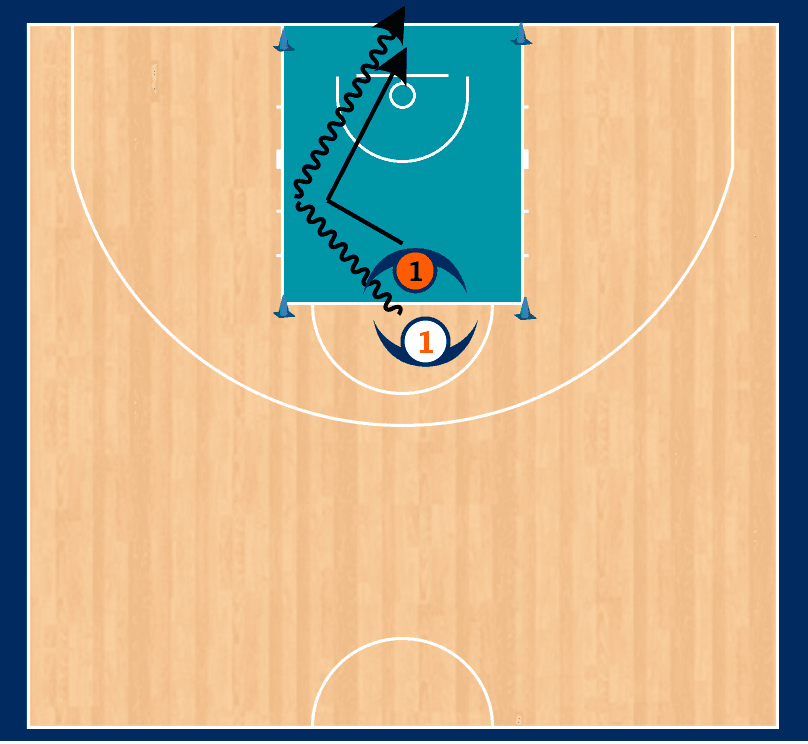
- The offense starts with the ball on the FT line and must try to get to the baseline.
- Defense starts in front. Must try to stop the offense from getting to the opposite line.
- Offense must stay within the marked area, or it is a TO.
- Offense stays for 30 seconds. 1 point every time the offense gets to the opposite line.
- Switch after 30 seconds. Run this as bursts for higher load and intensity.
Constraints:
- Defensive scoring only: 2 points for a steal, 2 points for taking a change, 1 point for any other stop.
- Most points after each player gets x3 rounds on defense.
You can change the size of the court and the rules of the game accordingly. E.g. 45 seconds per game to increase difficulty and stretch your players' conditioning.
Full-Court 1-on-1
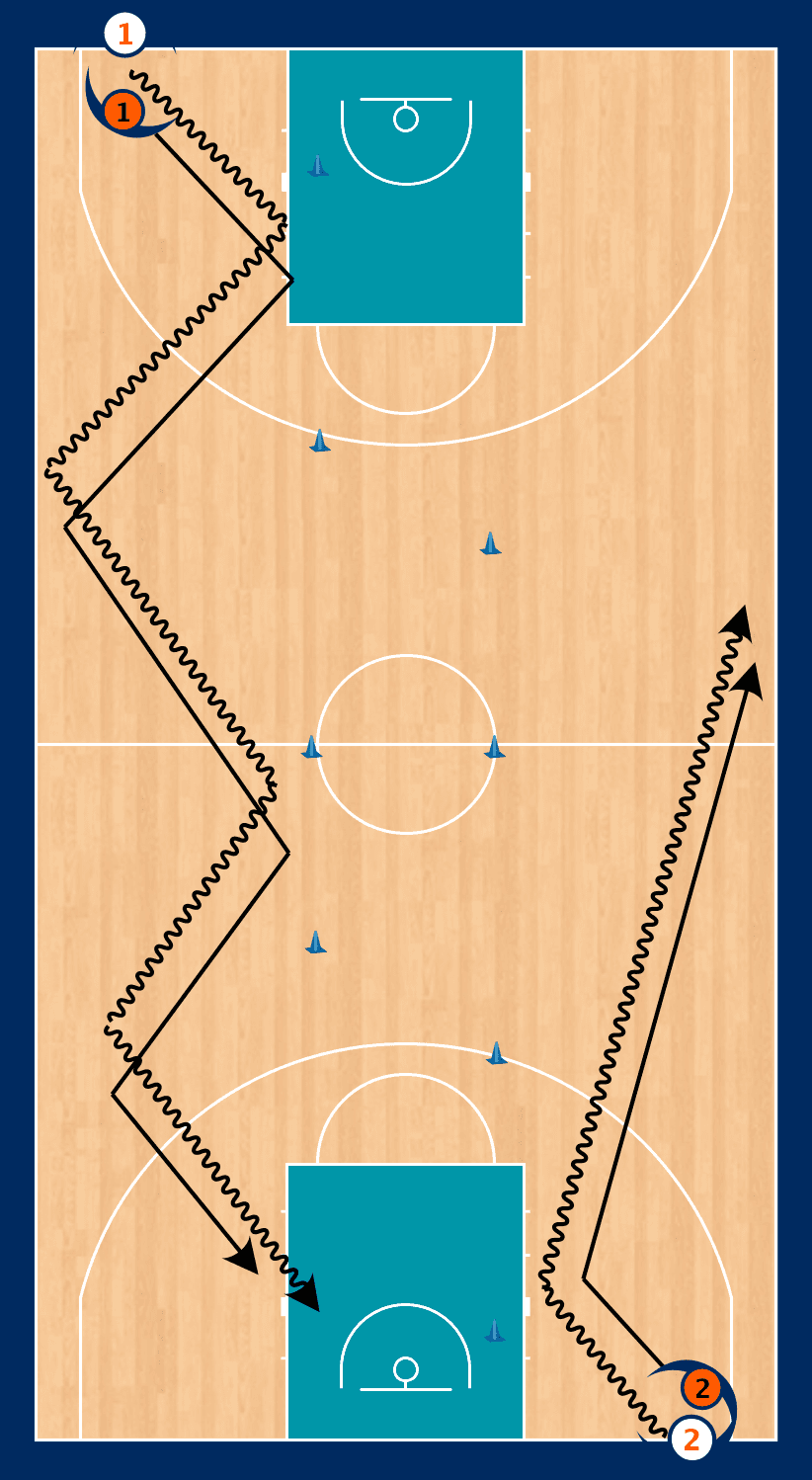
- Players can only play within the marked area. Turnover if offense goes out of bounds (coaches must officiate).
- 2 points if offense gets to the half-court in front of the defense, plus 2 points for any score.
- Offense and defense switch every repetition.
Constraints:
- Make it take it
- 8 second shot clock
- 2 points if defense get a steal or heavily contested shot and defensive rebound
Building Defensive Principles in Your Program
These games are all your team needs to drastically improve their on-ball defense. You can also take the various defensive positions from a half-court shell and have the defense start in these positions before a 1-on-1. For instance, playing a 1-on-1 from the shrink or help defense positions.
In an era when most of the coaching content we see online is offense-related, it’s even more important than ever to build sound defensive principles of play with your team! If you’re looking for a blueprint of how to achieve this, be sure to check out the Transforming Membership Community.
Continua a crescere come allenatore.
Collega queste idee al Success Pathway, alla videoteca di attività, alla comunità di allenatori e agli incontri mensili dal vivo.
Scopri l’abbonamento