

Ideia principal para treinadores
Pressure practice should let players experience the problem they are trying to solve. The examples below use live defenders and restricted space to challenge ball protection and progression. Adjust the area or defender’s advantage so the task remains difficult but playable.
Ler o guia: Basketball Player DevelopmentPress-break practice: protect, support and advance
Breaking pressure is a shared problem. The ball-handler needs a way to protect or advance the ball; teammates need to create receiving windows the handler can reach. The original games below focus on those pressure interactions, including a team example designed for a 1–2–2 zone press.
| Where the possession breaks down | Source game or next adaptation |
|---|---|
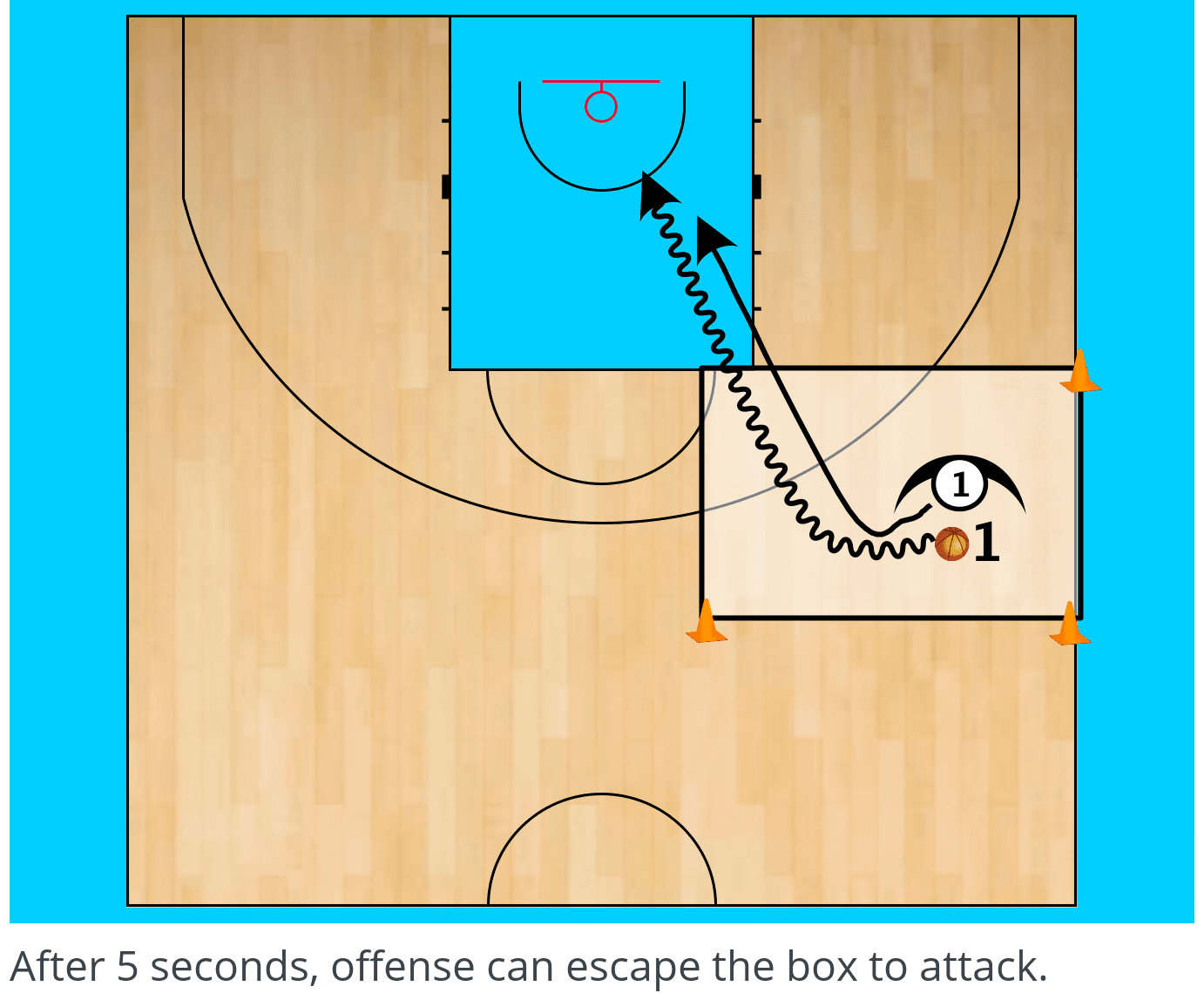
| The handler loses the ball before a passing option develops | Box 1-on-1: stay in the marked box for five seconds while the defender tries to steal, then play live toward the basket. |
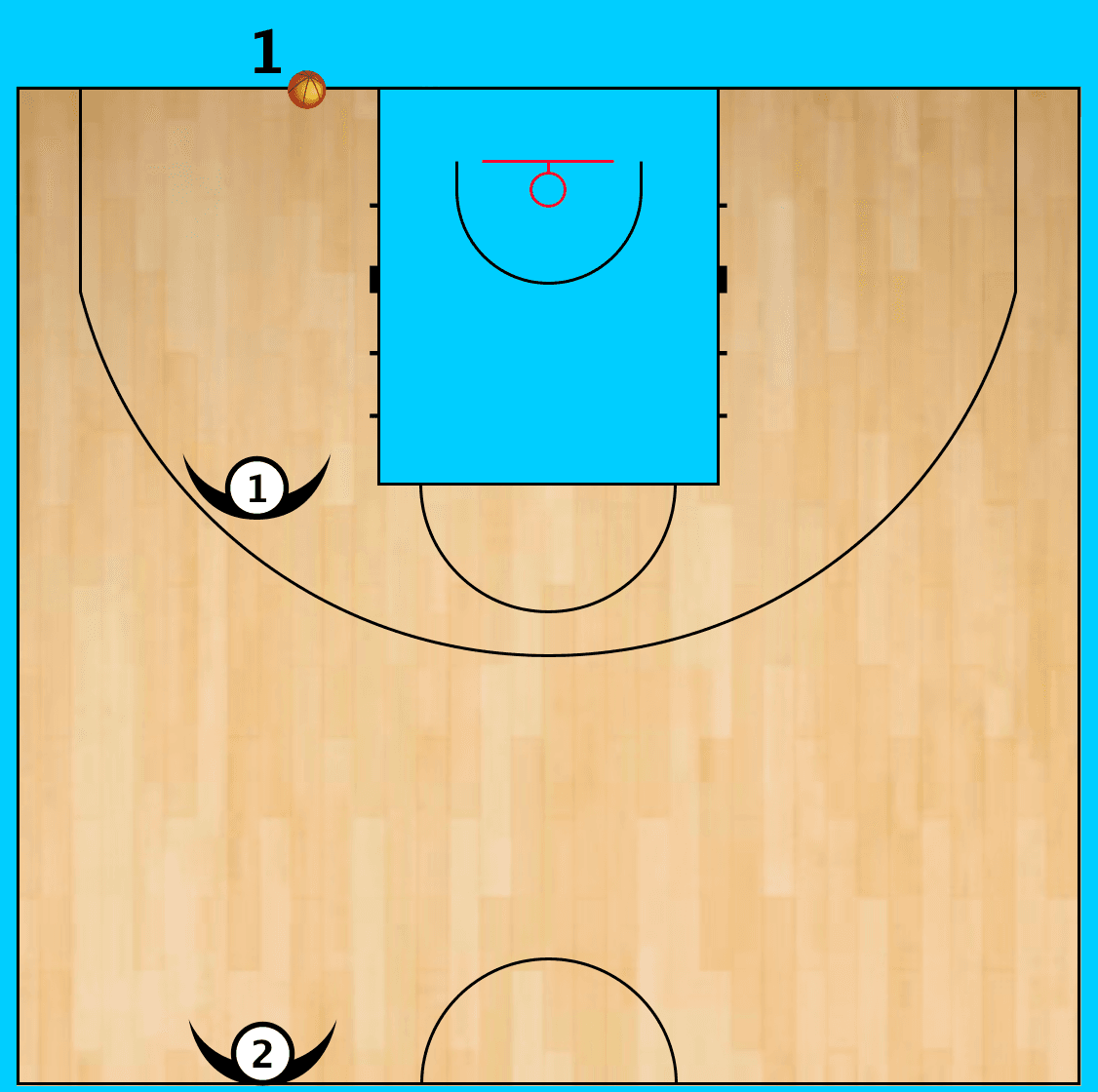
| The attacker cannot advance past successive opponents | The original 1-on-2 begins from the baseline, with defenders at the free-throw line extended and half court. Start with tagging, then add dribbling or live steals as appropriate. |
| The handler is trapped without a receiver | Add a teammate in a small passing game. The receiver moves to open a window while the defenders can intercept. |
| The smaller game works but the team still struggles against the press | Restore the inbound, the full floor, the relevant defensive alignment and the scoring continuation. |
Connect the individual games with team press-break decisions
As an editorial adaptation, play 3-on-2 toward a marked receiving area farther up the floor. Start the ball at different locations, allow the attackers to pass and dribble, and let the two defenders decide whether to pressure, deny or trap. Score when a teammate receives in the target area under control. Rotate the starting handler and both defenders.
Watch the support around the ball. A receiver who runs away beyond passing range may remove an option; a receiver who comes too close can bring another defender to the handler. Adjust the playing area or defensive start to create a manageable problem, then increase the pressure.
Follow this with wider play beginning from an inbound against the press you are preparing for. Include your competition’s applicable counts and restrictions. The smaller task concentrates on support and advancing the ball; the full task restores other defenders, time pressure and the decision after the press is broken.
What to observe against a trap
Before the trap arrives, does the handler recognize an available pass or route? As the defenders commit, do teammates move into reachable windows? After the ball escapes, can the next receiver use the advantage instead of waiting for the defense to recover? Record those interactions alongside turnovers so the next practice addresses the cause.
Four passing games with setups and rotations
Plan the session when only one basket is available
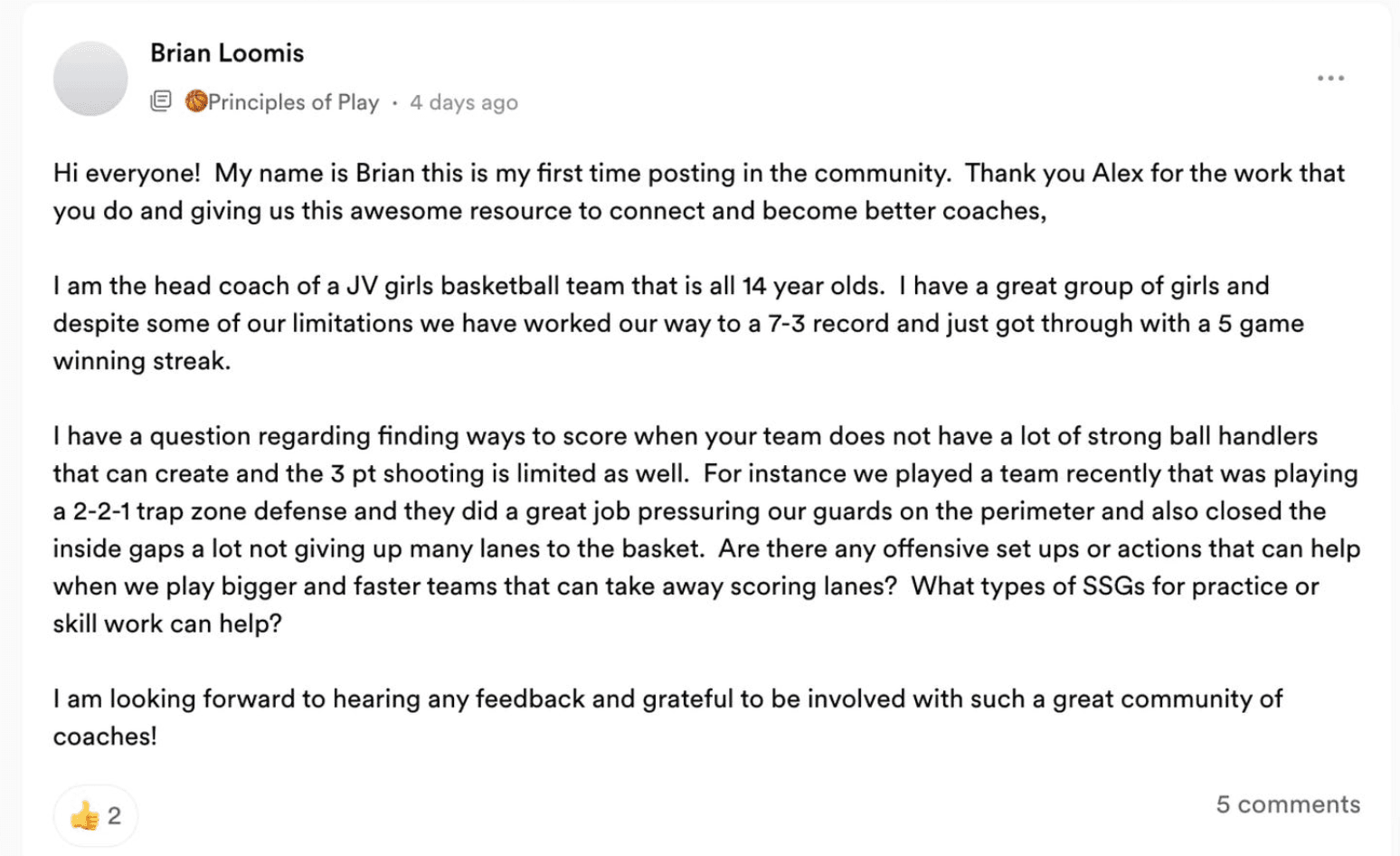
On a recent member post (thanks to Brian Loomis), it got us thinking about a problem a lot of us have come up against at different points in our career…
We spoke about this challenge the U16 girls team at the London Lions Academy had on episode 108 of the Transforming Basketball Podcast.
https://open.spotify.com/episode/7zrbZFYku2kAHsN0kWLKTS
Brian noted, “Recently, we faced a team running a 2-2-1 trap zone, and they did a great job applying perimeter pressure and closing up interior gaps. It left us stuck—not many open lanes, no space to operate, and limited creation off the dribble.”
I’m sure many of you have been in the same situation:
- Guards struggling to beat pressure
- Limited range from three
- Facing bigger, faster teams who shut down your go-to actions
So, how do we respond?
Design Small-Sided Games That Mimic the Problem
Let the players experience and solve the problems they’re seeing in games:
Box 1-on-1 - Beat the Pressure
Rules:
- Offense must stay inside the ‘box’ for 5 seconds before it is live.
- Defense must try to steal the ball before the 5 seconds are up.
- Live 1-on-1 after 5 seconds.
Scoring: First to 5 wins
- 2 points for gold medal (lay-up)
- 1 point for staying alive for 5 seconds
- 2 points for stealing/forcing a turnover (defense)
Constraints:
- Change size of box
- Cannot ‘turtle’ while dribbling. Eg., cant turn back to defender
1-on-2 - Get to the Half-Court
Rules:
- Offense starts on the baseline. They have to try to get to the HC line without being tagged by the defense.
- 1 defender starts FT line extended. 2nd defender starts at the HC.
- Live after offense moves.
Scoring: First to 5 wins
- 2 points for reaching HC
- 1 point for tagging offensive player
Constraints:
- Change starting locations
- Add dribbling to offense (and/or defense)
- Instead of tagging, defense must steal ball/force a turnover
- Add flag - must pull flag to get stop
Constraint-Based Skill Work for Specific Problems
Look at this small-sided game I created to prepare our team for an upcoming game against a team that plays a 1-2-2 zone press.
Your guards may not be elite ball handlers yet, but coaches can design skill work that improves composure and confidence under game-like pressure.
Final Thoughts
Choose the pressure problem your players face and reproduce the relevant interaction in practice. Adjust the task so they can explore solutions, then return to the full press and observe what they can use.
A press-break structure can organize the team. Its value depends on whether players can recognize and use the passing and driving opportunities as the defense changes.
Thank you Brian for sharing this original question inside our membership community.
Continue evoluindo como treinador.
Conecte estas ideias ao Success Pathway, à videoteca de atividades, à comunidade de treinadores e aos encontros mensais ao vivo.
Conheça a assinatura