
Free
Free U12 Practice Plan Template
A practice plan template designed for the U12 age group.
Learning pathway
Build a practice around your players’ needs, with activities, constraints and rotations that make those priorities clear.
Stage 01 of 04
Start with observations from games and practices. Categories such as passing, finishing and shooting are useful, but they do not describe the situation a player needs to work on.
For example, your team may create an advantage through a drive but lose it after the kick-out pass. Is the receiver holding the ball? Is the pass arriving outside their shooting pocket? Are teammates standing where one defender can guard two players?
Choose a “rate limiter” you can then solve on-court. This gives you a clearer starting point for selecting an activity, as you have a “why” behind the activities you choose.
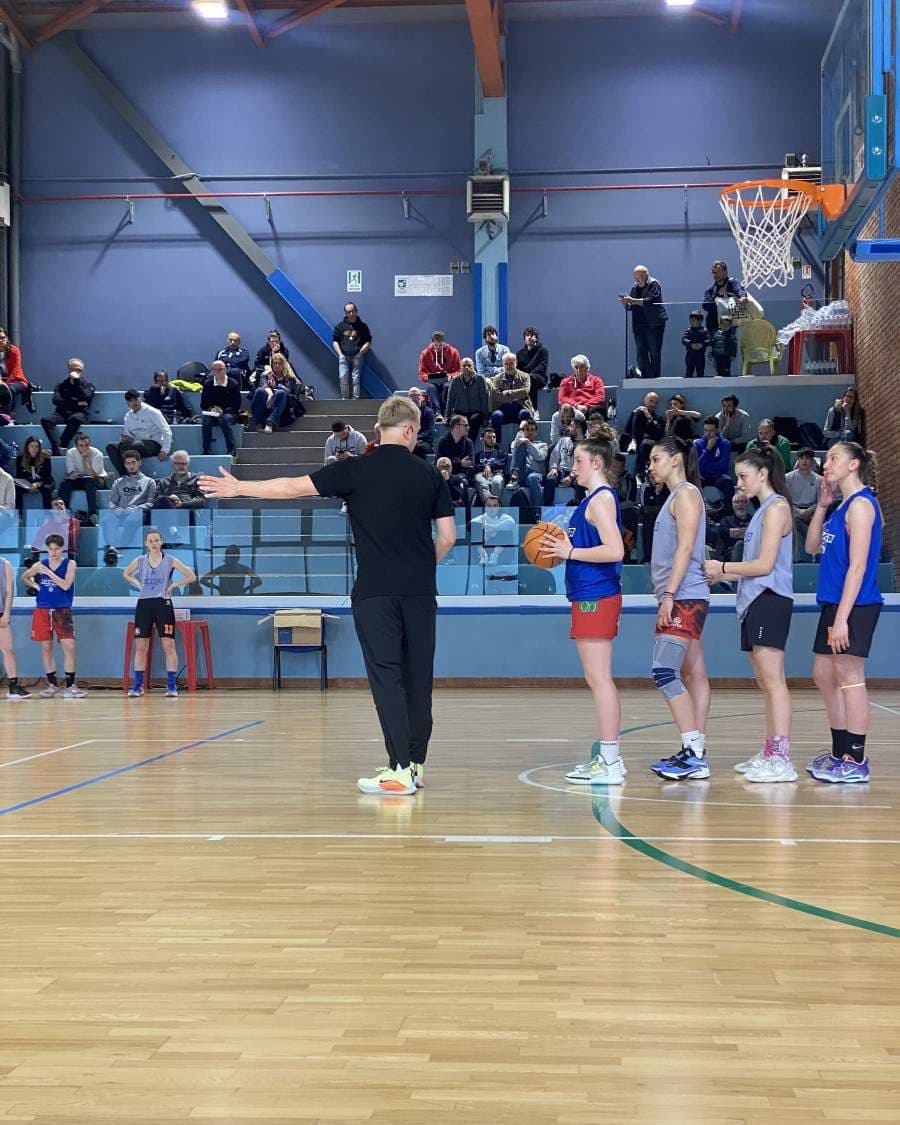
How to Plan Your Youth Basketball Practicesby George Vaz
Build your plan
Write down one recurring situation and what you want players to do differently. For example: “After a drive and kick, the receiver needs to shoot, drive or pass before the defense recovers back to neutral.”
Stage 02 of 04
Select an activity that allows the situation to appear repeatedly.
To work on maintaining an advantage, use a temporary advantage game such as 3-on-2+1. Start three offensive players against two defenders, with a third defender recovering from behind when play begins.
The offense has an opportunity to attack before the defense gets back to neutral. The recovering defender’s starting position changes how long that opportunity lasts.
Start the defender farther away if the offense needs more time. Bring the defender closer to increase the pressure on the first pass and the receiver’s next action.
Build your plan
Record the starting positions, the constraint and what you will observe. Include one adjustment that makes the activity easier and one that makes it harder.
Stage 03 of 04
Use your team’s triggers, spacing templates and coverage solutions within the activities you select.
For example, if players struggle to create an advantage when a ball screen is switched, play 3-on-3 with the defense constrained to switching. This allows the ball-handler, screener and off-ball teammate to explore the available coverage solutions together.
Once players can use those solutions, allow the defense to switch or play another coverage. The offense now has to recognize the coverage and respond, rather than knowing what will happen before the activity starts.
Build your plan
Choose a trigger and a defensive coverage your team needs to work on. Identify the solutions you want players to explore and how you will vary the defense as the activity develops.
Stage 04 of 04
Return to the rate limiter you identified when planning the practice. Are players finding solutions more consistently, and can they use them when the defensive behavior changes?
For example, players may successfully punish a switch when they know it is coming. Allowing the defense to choose between switching and another coverage helps you observe whether the offense recognizes when to use that solution.
Use these observations to decide what comes next. Players may need more opportunities against the same coverage, a demonstration of a possible solution or a different constraint that makes the opportunity easier to recognize.
Look for the same situations in games. This helps you assess whether the practice activities are addressing the original rate limiter.
Build your plan
Record what players could do, where they still struggled and the constraint you will use in the next practice to address it.
Use the practice-plan template to record your priorities, activities, constraints and rotations. Keep your review notes with the plan so the next practice builds on what you observed.
Free
A practice plan template designed for the U12 age group.
$49 USD
Explore more games and select the ones that fit your practice intention.