Transforming Basketball
Join MembershipAlready a member? Log in

Learning pathway

Build Your Conceptual Offense

Identify what your team needs, choose your starting principles and build a practice to introduce them. Use what happens in games to develop the offense over time.

Who it's for
Coaches introducing or developing a conceptual offense with their team.
Outcome
Choose starting principles for your team, build a practice to introduce them and develop the offense from what happens in games.
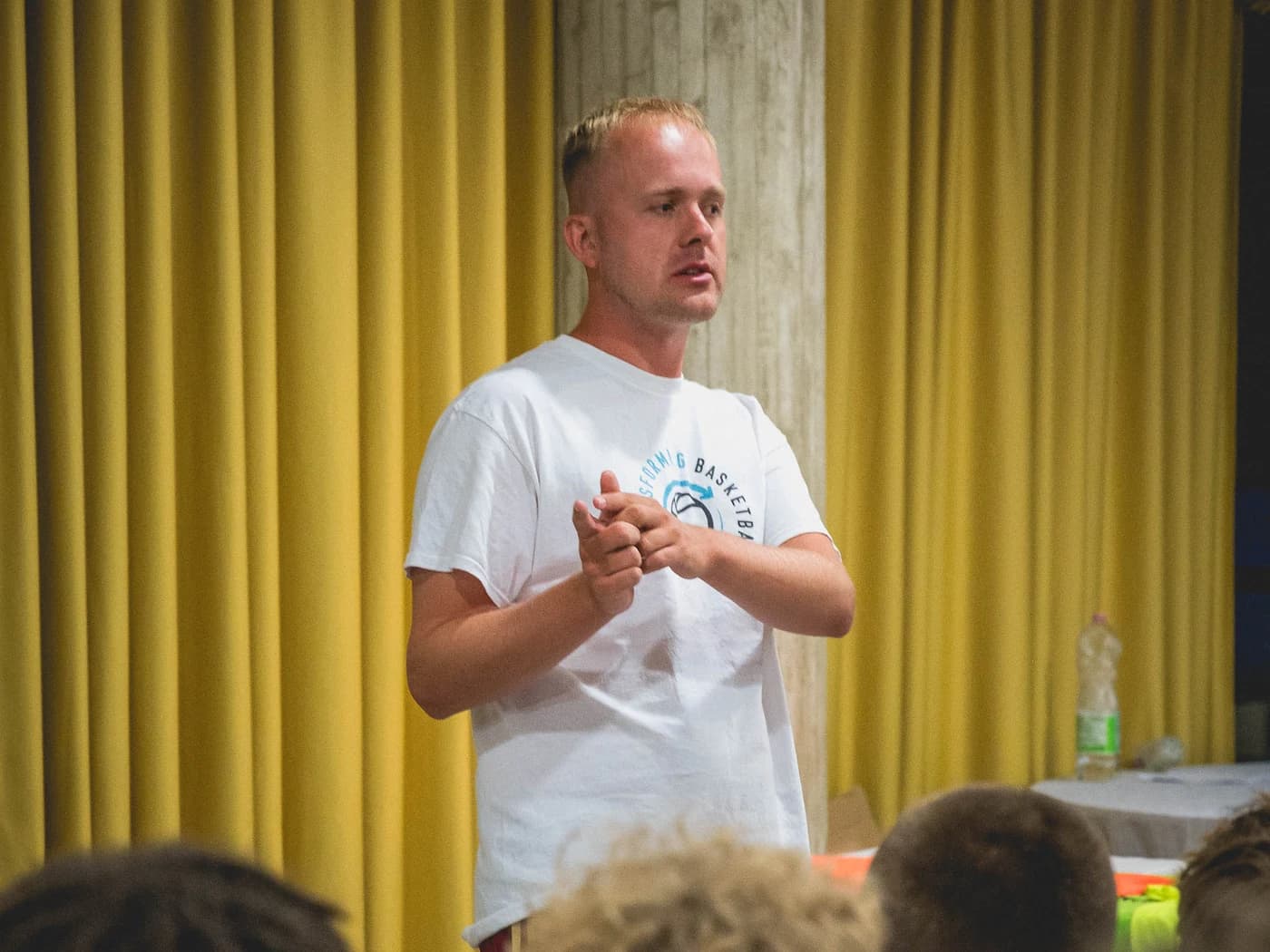
Alex Sarama speaking to players at Transforming Basketball camp
Jump to the implementation checklist and first-week plan ↓

Stage 01 of 04

Assess Your Current Offense

Review game possessions. Where does your team struggle: creating an advantage, maintaining it or converting it? Identify a rate limiter.

Look beyond whether the possession ends in a made shot. Your team might create an open shot and miss, or score after the offense has stalled. Follow the possession from the first action and identify where the opportunity changes.

For example, a drive may draw a second defender, but the receiver holds the kick out pass until the defense recovers. The starting point is then maintaining the advantage after the pass. Select several possessions showing that situation and describe what players need to recognize.

How to Teach Advantage Basketball (Dominoes Explained)

Stage 02 of 04

Choose Your Starting Principles

Select spacing templates and one or two triggers suited to your players. Define the coverage solutions you will introduce first.

Connect those choices to the rate limiter you identified. If the difficulty appears against a switched ball screen, begin with that situation. Consider how the ball handler, screener and off ball teammates can create an advantage together, and where each player needs space to act.

Give players a shared starting point, then let them explore the available solutions. A trigger begins the interaction; what happens next depends on the defense. Use the same language across your activities so players can connect the practice situation to the game.

A Better Alternative to Set Plays in Youth Basketball - Triggers

Stage 03 of 04

Build Your First Practice

Choose activities and constraints that address the rate limiter.

Worked example: If your team struggles to create an advantage against a switch, play 3-on-3 using a ball screen, with the defense constrained to switching. Allow the ball handler, screener and off ball teammate to explore the available coverage solutions. Then let the defense switch or use another coverage so the offense must recognize which solution is available.

Plan what you will observe before the activity begins. Are players noticing the switch, using the available space and responding to one another? If the opportunity is difficult to recognize, adjust the starting positions or demonstrate a possible solution, then return to live play. Keep the learning intention clear as you change the challenge.

Explore coverage solutions

Stage 04 of 04

Review and Develop the System

Observe how players respond in games. Decide which solutions need more practice and what to introduce next.

Return to the rate limiter you identified in Stage 1. Review several possessions where that situation appears, including both successful and unsuccessful outcomes. Look at what players noticed and how they responded, rather than judging the possession only by whether the shot went in.

For example, players may find a solution against a switch in practice because they know the defense will switch. In games, the next question is whether they recognize the coverage as it happens and coordinate their response. Look for the ball handler, screener and off ball players acting together.

Use those observations to choose a specific next step. You might revisit the same activity with varied coverages, adjust a starting position, or demonstrate a solution players have not noticed. Record what changed and what still needs work, then use that evidence to plan the next practice.

Listen· Episode 7 · 21 minEP7: Why You SHOULDN'T Run Pass and Cut OffenseListen to episode

Ready for your next practice

Your offense plan

A starting point to take onto the court. Observe, adjust and keep exploring.

1. Identify your rate limiter

Add your notes at this stage.

Add notes

2. Choose your starting principles

Add your notes at this stage.

Add notes

3. Build your first practice

Add your notes at this stage.

Add notes

4. Review and develop

Add your notes at this stage.

Add notes

Take it to practice

Your First Week of Conceptual Offense

Use this example alongside the four stages above. It assumes three 60-minute practices, 6–12 players and at least one basket. The sample priority is maintaining an advantage after a pass. Change the activities and time blocks when your team’s rate limiter is different.

Implementation checklist

Check each item as you prepare. These checkboxes reset when you reload the page; use the offense-plan fields above to keep your notes.

Organize the court: With six players, keep two teams of three. With 9–12, use short rounds and rotate waiting players between rounds. If two baskets are available, split into smaller groups. Keep waiting players clear of drives and rebounds.

Practice 1 · Use the advantage

Notice when the defense is outnumbered and keep the opening through the next pass.

  1. 0–8 min

    Warm up through passing

    Play short keepaway rounds. Adjust the area until players can find passing options under pressure.

  2. 8–20 min

    2-on-1 pass or finish

    Keep the defender live and let the offense decide. Observe whether the receiver is ready to act.

  3. 20–35 min

    3-on-2 advantage bursts

    Use one-minute bursts with short role changes. Focus on zero seconds and spacing so one defender cannot guard two.

  4. 35–55 min

    3-on-3 with a recovering defender

    Start one defender behind the play. Vary the head start, then try equal-number starts for the final few minutes.

  5. 55–60 min

    Review together

    Ask what helped keep the advantage. Record one successful example and one situation to revisit.

Practice 2 · Create an advantage

Introduce one trigger and connect it to the way the defense guards the action.

  1. 0–8 min

    Warm up and revisit

    Use keepaway, then ask players to recall the spacing problem from Practice 1.

  2. 8–20 min

    1-on-1 recovery starts

    Explore how a small opening can become a shot or finish. Vary the starting positions.

  3. 20–35 min

    2-on-2 with one coverage

    Use a ball-screen trigger against a switch. Let the handler and screener find available solutions. For beginners, retain a 1-on-1 trigger in 2-on-2.

  4. 35–55 min

    3-on-3 Battleship

    Add an off-ball player and defender. Begin with two trigger locations and the same coverage; add locations if the group is ready.

  5. 55–60 min

    Review together

    Ask what the defense made available. Record whether the third player helped create or maintain the advantage.

Practice 3 · Recognize and adapt

Find out whether players can use the ideas when the defense has more freedom.

  1. 0–8 min

    Warm up through live play

    Use a familiar passing game so players can start quickly.

  2. 8–20 min

    Revisit the week’s rate limiter

    Repeat the game that exposed the main difficulty. Adjust one constraint based on your notes.

  3. 20–35 min

    3-on-3 with varied coverage

    Let defenders switch or stay matched up without telling the offense. Observe recognition and coordination.

  4. 35–55 min

    Freer team play

    Play 4-on-4 or 5-on-5 if numbers allow; otherwise use 3-on-3. Remove the special scoring rules and watch what carries over.

  5. 55–60 min

    Choose the next priority

    Review a few possessions, including good decisions that ended in misses. Choose one problem for the following week.

The time blocks include explanations, water and role changes. If you have only two practices, use the first two sessions and finish the second with freer play. Carry the recognition work into the following week.

See the game setups, diagrams and adaptations →

Next Step: Learn the Full System

Explore the triggers, coverage solutions and practice activities that connect these principles to your team’s offense.

Free

Conceptual Offense Starter Kit

A starting point for building an offense around shared principles, spacing, and player decisions.

Sign up for resource access through Transforming.app and occasional coaching emails. Unsubscribe anytime. We may also use your email to show you relevant ads on Facebook and Instagram. Privacy policy.

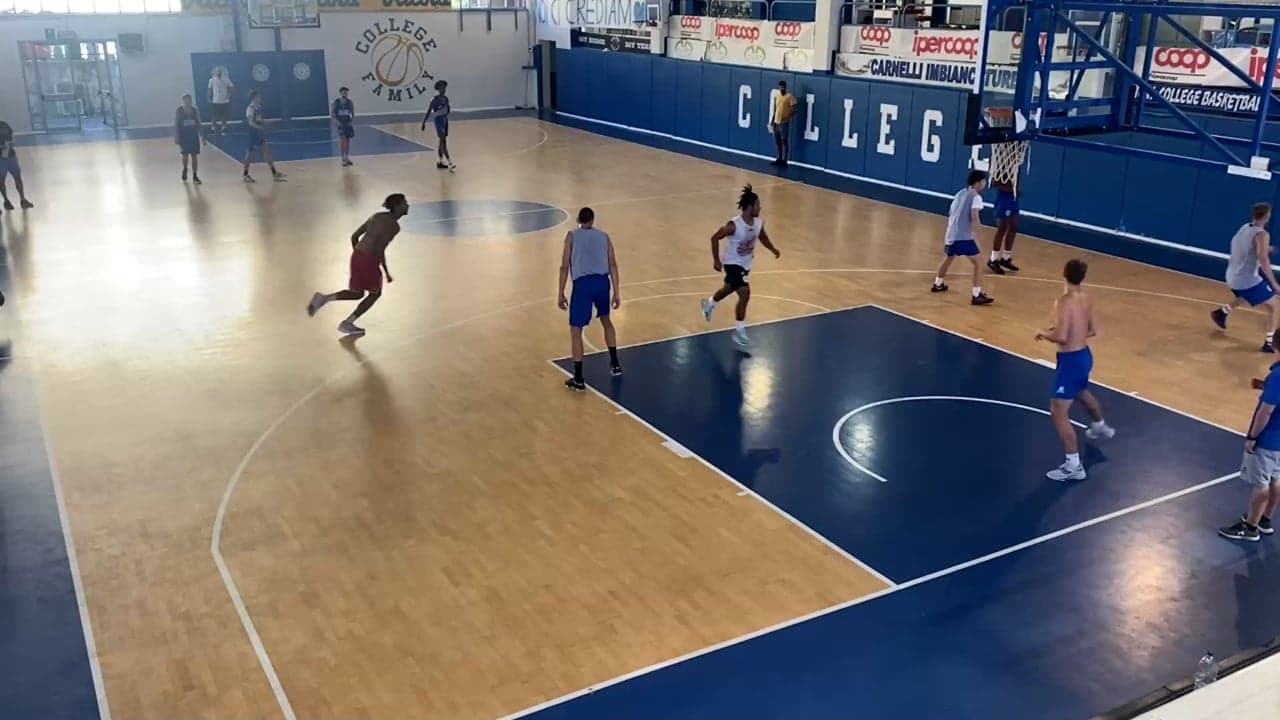
Still from the Implementing a Conceptual Offense clinic overview.

Implementing a Conceptual Offense

$49 USD

Take the Starter Kit onto the court. Alex explains how to teach shared principles, triggers and coverage solutions through game examples and small-sided games.

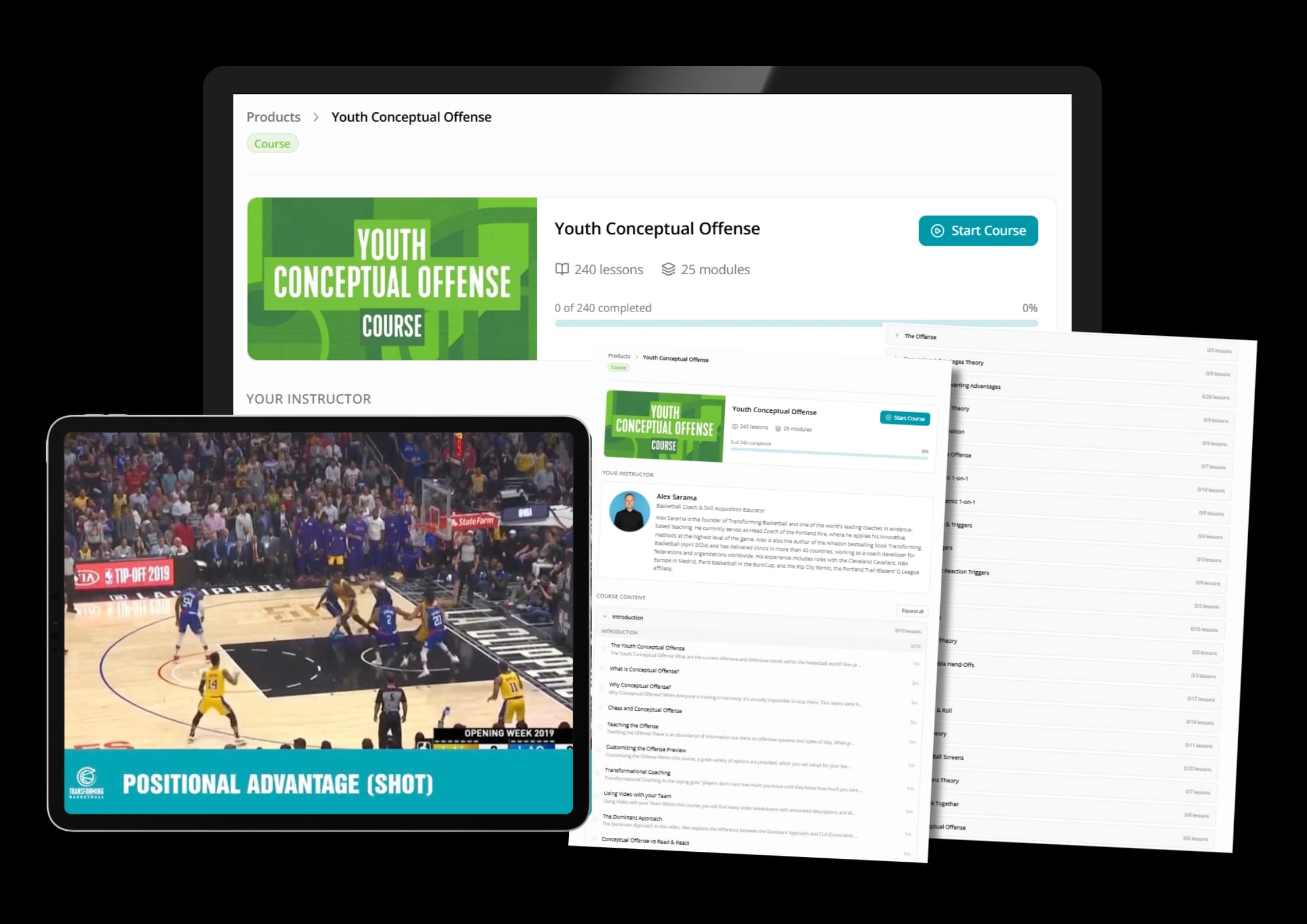
Youth Conceptual Offense course with lesson, game video and workbook previews.

Youth Conceptual Offense

$499 USD

Go deeper into teaching dominoes, creating advantages and developing your offense through small-sided games.

The Conceptual Offense Playbook

All learning pathways