Transforming resource
Introduction to the Constraints-Led Approach
$49 USD
For coaches who want to understand how the Constraints-Led Approach applies to basketball.

Langue
Change la langue du site. Les formations, téléchargements, le paiement et la livraison restent en anglais, sauf indication contraire sur la page.
Coaching Guide
CLA stands for a constraints-led approach. Coaches adapt the task, the environment and the conditions around players, so players can find their own creative solutions to basketball problems.

Quick answer
The approach is informed by ecological dynamics: skill emerges from the interaction of the individual, the task and the environment. Individual constraints are a player’s size, experience and confidence; task constraints include the rules, scoring, space and time; environmental constraints include the court and the wider setting. Coaches change constraints to invite players to explore functional solutions, observe what emerges and adjust.
Worked example
Make a defender easier to play against. How can beginners learn with opponents from the start?
Keep the defender, but limit what they can do. A limited defender is more representative than no defender: the offensive player still has someone to read, and a novice does not have to master a movement in isolation first.
Play 1-on-1 with the defender two steps behind the offensive player. Let the offensive player choose how to get past.
Alternative start: the defender stands beside the offensive player and may only move once the dribble starts.
Defender removes every opportunity? Limit them further. Offensive player scores every time? Shorten the gap or give back a restricted freedom.
Constraints to try: no jumping, one hand only, or holding a bib or dribbling a ball while defending. A freedom to give back is using both hands. A lighter ball and a lower basket also help young players.
Is the offensive player responding to the defender’s position and movement?
Also check that both players can explain the immediate aim without remembering a long list of rules.
The foundations
A player’s reach, strength, experience and confidence interact with the rules, scoring and time available, as well as the physical and social environment. A gap that affords a drive for one player may not offer the same opportunity to another.
A constraint changes the opportunities for action. Giving the defense a later start can invite a direct drive; narrowing the playing area can make shielding and changes of pace more useful. Decide what the adjustment is meant to help players explore.
Begin with how the team wants to play or a player’s rate limiter: something restricting their ability to solve a game problem. This gives the activity a purpose beyond being a fun or unusual game.
If the offensive player cannot get a shot away, give the defender fewer steps, change their starting position or reduce their reach with a one-hand rule. The offensive player still perceives an opponent while working with a more manageable challenge.
Why it matters
An activity can have opponents and a scoreboard while repeatedly producing the same unhelpful behavior. Take ball-on-the-back 1-on-1: the defender faces the rim, the offensive player stands behind them with the ball against their back, and play starts when the offensive player pulls it away. Left unchanged, players often take too long, lose the advantage and settle for inefficient shots once the defender recovers. Simply repeating the game leaves that problem intact.
A rim-only scoring area, a suitable clock or a change of opponent changes what the player is invited to do. The coach watches whether the adjustment helps the player keep the advantage. This ongoing connection between intention, observation and adaptation is central to the CLA.
On the floor
Use a specific observation: the handler pauses after beating the defender, or two teammates stand where one defender can cover both. “Improve decision-making” is too broad to guide the next adjustment.
Change the clock if players delay using an advantage. Change spacing if the driving lane is crowded. Give the defense fewer steps if the offensive player cannot explore a solution. The adjustment follows the problem.
A rule affects the defense as well as the offense. If every receiver has to shoot, defenders can crowd the shot without respecting a drive. Keep the choices needed for the intended interaction.
Keep a productive activity going. If the rule produces forced shots or players spend their time remembering instructions, change it. Revisit the same principle in a broader game to see what players now recognize.
Avoid these
A rule borrowed from a clip may solve a different problem for different players.
Instead: Identify what the constraint is meant to invite before you add it.
If the clock, scoring, area and teams all change together, it becomes difficult to understand why the activity changed.
Instead: Start with one change you can observe.
A defender who knows the offensive player must shoot faces a different problem from a defender who must respect a drive or pass.
Instead: Keep the options players need to read the defense. If the aim is choosing whether to shoot, drive or pass, leave all three available. Remove an option only when the learning aim does not depend on it.
Take it to practice
Starting points to shape for your group. Pick one, then adjust the numbers and scoring.
From coaches using it
“…a complete change to an environmental architect, who creates problem-solving activities and changes constraints purposefully.”

Elias MaahsYouth & men’s basketball · Germany
“Understanding that players will solve the same problem with different solutions depending on their own individual constraints and action capabilities has been fundamental to my growth as a coach.”
George GillamMK Breakers · England
Free coaching resource
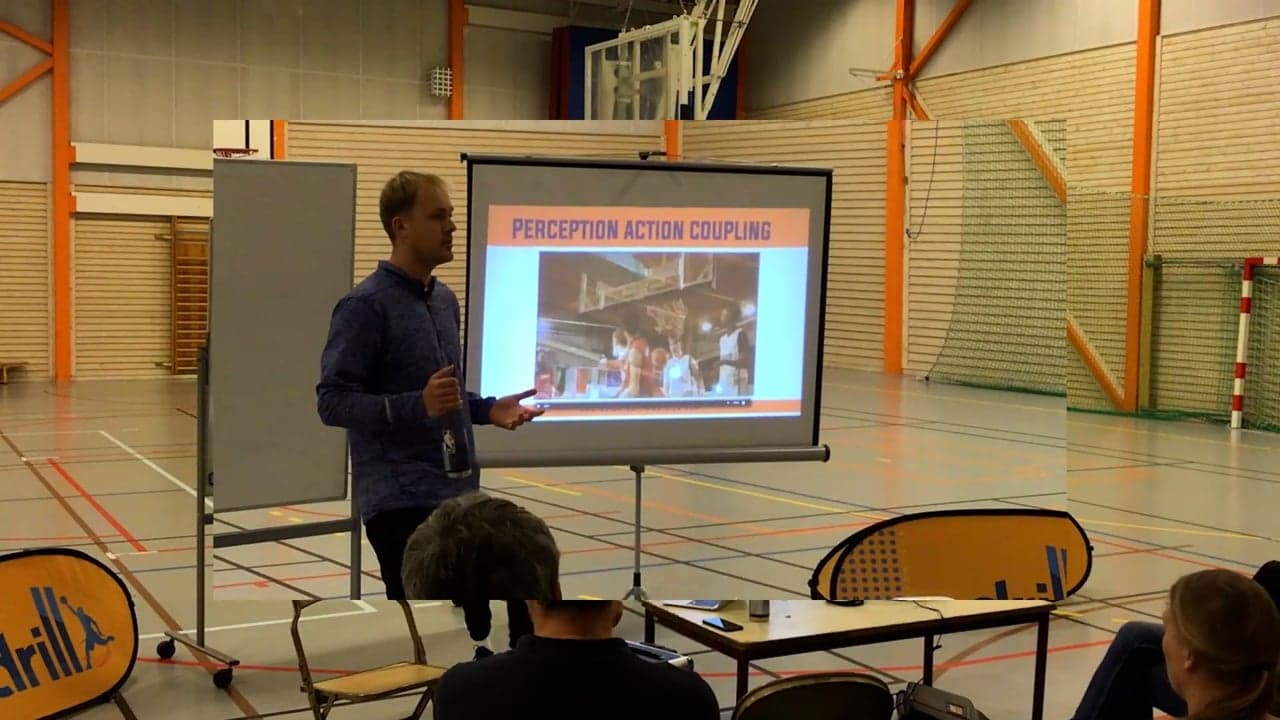
A coaching clinic session with founder Alex Sarama covering the Transforming Basketball approach.
Watch, listen & read
A few clips, conversations and reads to go deeper — then the whole library is one link away.
On-court demonstration
Watch for: Once a group can no longer use the same rim, notice where players start looking for the advantage.
Transforming Basketball Podcast
Listen for: How would you distinguish intentional constraints-led practice from simply organising a game?
From research to practice
Transforming Basketball explainer
Ecological dynamics: the core principles
Keep game-like information in practice so perception–action coupling stays intact.
Ecological Dynamics: The Core Principles Behind the CLA · Transforming Basketball
Research paper
Representative learning design
Preserve the information–movement relationships players use in games. A practice-design framework, not a test of training gains.
Representative Learning Design and the Functionality of Research and Practice in Sport · Pinder, Davids, Renshaw & Araújo · Journal of Sport & Exercise Psychology, 2011
Questions
Individual constraints include the player’s capabilities, experience and current state. Task constraints include rules, goals, scoring, numbers and deliberately chosen boundaries. Environmental constraints include the court conditions and wider social setting. They continuously interact.
Small-sided games are a useful format. The CLA supplies the rationale for designing and adapting them: identify a player-environment problem, manipulate relevant constraints and observe the response. Repeating a game unchanged is different from that ongoing process.
Yes. Scale the ball, basket, space and defensive pressure so beginners can explore solutions. Start the defender beside or behind the offensive player, or limit them: no jumping, one hand only, or holding a bib or dribbling a ball while defending. Simplify the task while keeping an opponent to read.
Yes. An explanation, question or cue can shape the player’s intention and attention. Use feedback that helps the player engage with the problem, such as noticing the help defender, rather than prescribing every body position.

The Transforming perspective
Constraints are present in every practice, including a line drill. The coaching question is which behaviors the environment invites, and whether those behaviors help these players in the game.
Behind the methodology
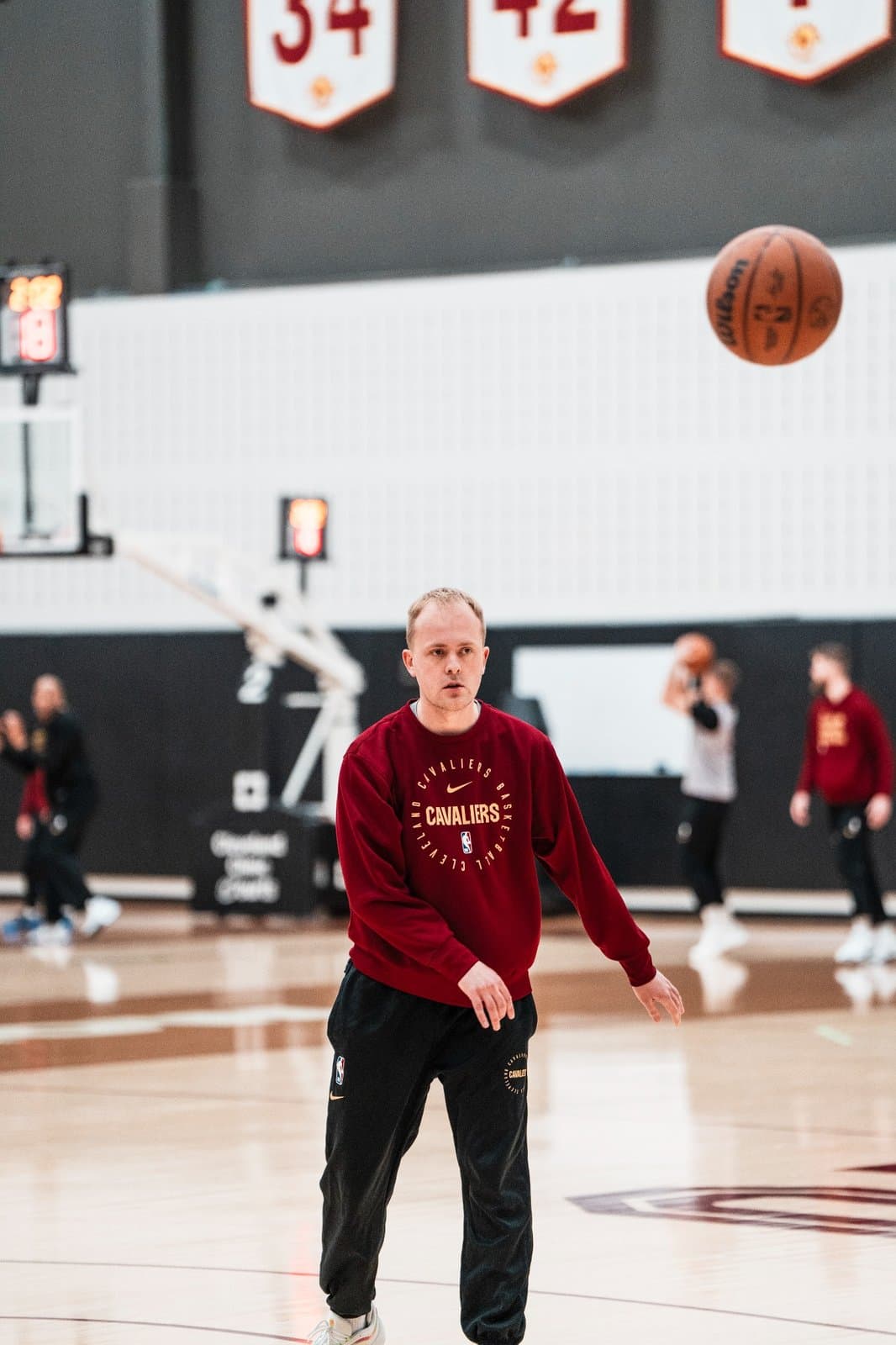
Alex Sarama is the founder of Transforming Basketball and Head Coach of the WNBA's Portland Fire. Previously, he served as Assistant Coach and Director of Player Development with the Cleveland Cavaliers.
His wider experience includes NBA Europe in Madrid, Paris Basketball in the EuroCup and the Rip City Remix, the Portland Trail Blazers' G League affiliate. Alex has delivered coaching education internationally and is the author of the Amazon bestselling book Transforming Basketball.

The book
The Amazon bestselling book on applying a constraints-led approach to basketball performance — the methodology behind this guide, in full.
View the book on AmazonContinue learning
Transforming resource
$49 USD
For coaches who want to understand how the Constraints-Led Approach applies to basketball.
Free
A coaching clinic session with founder Alex Sarama covering the Transforming Basketball approach.