

Ecological Dynamics: The Core Principles Behind The CLA





In the world of sports coaching and skill acquisition, Ecological Dynamics has emerged as a powerful framework for understanding how athletes learn, adapt their movements, and perform on the court. It shifts the focus away from traditional, rigid training methods and instead emphasizes the dynamic interactions between the player and their environment.
What is Ecological Dynamics?
It’s a theory to make sense of human movement and how humans move. Professor Keith Davids is widely regarded as one of the founding figures of this approach. Keith’s research in the early 2000’s started challenging everything we knew about how the human body works and how athletes learn. Keith and colleagues draw upon research from two different fields to create an ecological dynamics framework:
Dynamical Systems Theory + Ecological Psychology
 This is a great diagram from Alex Sarama’s book, explaining the key terms within both fields.
Self-organization is a key part of dynamical systems theory. Instead of players following pre-programmed movements, self-organization is the idea that basketball players organize their bodies naturally to solve movement problems. In other words, they are not recalling stored techniques in the brain in order to move. The irony is that many coaches coach their players out of effective self-organizational techniques by trying to impart “the correct technique.”
Perception-action coupling comes from ecological psychology. It’s the idea that perception informs action, and action is always shaping perception. This continuous loop is crucial for a player’s interactions within the game environment.
So where does the The Constraints-Led Approach (CLA) come in?
A CLA is a way of coaching that is based upon an ecological dynamics framework. Therefore, you have to understand an ecological approach if you want to be an effective CLA coach.
A CLA challenges traditional coaching methods that rely heavily on isolated drills and repetition without context. Instead, using CLA principles means creating “representative” learning environments where players experience live opponents to develop their skills effectively.
The Role of the Coach in Practice
An ecological approach has implications for the role of the coach in practice. The coach’s job is to design activities which contain specific affordances. An affordance is, simply put, an opportunity for action. The coach manipulates the constraints (see Newell’s constraints model below) to create varied affordances for the players to act on. The idea of constraints is that they may make some affordances enticing, and some less so!

By manipulating constraints, it creates varied environments for the players to perceive and act on the new affordances that present themselves.

An effective CLA coach manipulates constraints well enough so that players are seeing the attractive affordance available to them, while finding ways to act upon them with functional solutions. A common misconception of a CLA is that the coach just creates live games and let’s anything happen. This couldn’t be further from the truth!
Implementing Ecological Dynamics in Training
These five principles can be effective in helping you use a CLA in your next practice…

- Representative Learning Design (Representativeness): Make practice more game-like to improve transfer performance. Do players encounter the varied affordances they will encounter in competition?
- Manipulation of Constraints: Adjust constraints to shape player behavior without prescribing highly specific movement solutions. Manipulate constraints for a reason.
- Encouraging Exploratory Behavior (Functional Variability): Promote creativity by letting players discover movement solutions on their own.
- External vs Internal feedback (Attentional Focus): Focus players’ attention on outcomes, not internal mechanics. For example, shoot the ball higher instead of bend your knees.
- Task simplification: Adapt your activities to meet each player’s unique needs. If too challenging, simplify the task with constraints instead of removing the opponent.
What Ecological Dynamics Is NOT
- Not About Using Breakdowns and Rigid Techniques – Unlike traditional models that promote the coach as the master instructor and a one-size-fits-all approach to techniques, ecological dynamics recognizes that different movement solutions can be equally effective depending on the individual and situation.
- Not a Free-For-All Approach – While this approach values exploration and adaptability, an ecological framework does not suggest that athletes should just figure things out randomly. Coaches guide the process by manipulating constraints to encourage learning.
Conclusion
Ecological dynamics offers a more holistic way of understanding skill acquisition in basketball and other sports. Coaches who embrace this approach can help athletes develop the ability to perceive and act in dynamic environments—just like the game itself demands.
If you would like to learn more about Ecological Dynamics and the CLA in basketball check out the Amazon best-selling book.




In the world of sports coaching and skill acquisition, Ecological Dynamics has emerged as a powerful framework for understanding how athletes learn, adapt their movements, and perform on the court. It shifts the focus away from traditional, rigid training methods and instead emphasizes the dynamic interactions between the player and their environment.
What is Ecological Dynamics?
It’s a theory to make sense of human movement and how humans move. Professor Keith Davids is widely regarded as one of the founding figures of this approach. Keith’s research in the early 2000’s started challenging everything we knew about how the human body works and how athletes learn. Keith and colleagues draw upon research from two different fields to create an ecological dynamics framework:
Dynamical Systems Theory + Ecological Psychology
This is a great diagram from Alex Sarama’s book, explaining the key terms within both fields.
Self-organization is a key part of dynamical systems theory. Instead of players following pre-programmed movements, self-organization is the idea that basketball players organize their bodies naturally to solve movement problems. In other words, they are not recalling stored techniques in the brain in order to move. The irony is that many coaches coach their players out of effective self-organizational techniques by trying to impart “the correct technique.”
Perception-action coupling comes from ecological psychology. It’s the idea that perception informs action, and action is always shaping perception. This continuous loop is crucial for a player’s interactions within the game environment.
So where does the The Constraints-Led Approach (CLA) come in?
A CLA is a way of coaching that is based upon an ecological dynamics framework. Therefore, you have to understand an ecological approach if you want to be an effective CLA coach.
A CLA challenges traditional coaching methods that rely heavily on isolated drills and repetition without context. Instead, using CLA principles means creating “representative” learning environments where players experience live opponents to develop their skills effectively.
The Role of the Coach in Practice
An ecological approach has implications for the role of the coach in practice. The coach’s job is to design activities which contain specific affordances. An affordance is, simply put, an opportunity for action. The coach manipulates the constraints (see Newell’s constraints model below) to create varied affordances for the players to act on. The idea of constraints is that they may make some affordances enticing, and some less so!
By manipulating constraints, it creates varied environments for the players to perceive and act on the new affordances that present themselves.
An effective CLA coach manipulates constraints well enough so that players are seeing the attractive affordance available to them, while finding ways to act upon them with functional solutions. A common misconception of a CLA is that the coach just creates live games and let’s anything happen. This couldn’t be further from the truth!
Implementing Ecological Dynamics in Training
These five principles can be effective in helping you use a CLA in your next practice…
- Representative Learning Design (Representativeness): Make practice more game-like to improve transfer performance. Do players encounter the varied affordances they will encounter in competition?
- Manipulation of Constraints: Adjust constraints to shape player behavior without prescribing highly specific movement solutions. Manipulate constraints for a reason.
- Encouraging Exploratory Behavior (Functional Variability): Promote creativity by letting players discover movement solutions on their own.
- External vs Internal feedback (Attentional Focus): Focus players’ attention on outcomes, not internal mechanics. For example, shoot the ball higher instead of bend your knees.
- Task simplification: Adapt your activities to meet each player’s unique needs. If too challenging, simplify the task with constraints instead of removing the opponent.
What Ecological Dynamics Is NOT
- Not About Using Breakdowns and Rigid Techniques – Unlike traditional models that promote the coach as the master instructor and a one-size-fits-all approach to techniques, ecological dynamics recognizes that different movement solutions can be equally effective depending on the individual and situation.
- Not a Free-For-All Approach – While this approach values exploration and adaptability, an ecological framework does not suggest that athletes should just figure things out randomly. Coaches guide the process by manipulating constraints to encourage learning.
Conclusion
Ecological dynamics offers a more holistic way of understanding skill acquisition in basketball and other sports. Coaches who embrace this approach can help athletes develop the ability to perceive and act in dynamic environments—just like the game itself demands.
If you would like to learn more about Ecological Dynamics and the CLA in basketball check out the Amazon best-selling book.




check what's trending
What is ecological dynamics and how is it connected to a constraints-led approach?
Dec 8, 2025
George Vaz

Are you searching for the best small sided games (SSGs) to improve your basketball practices? Want to replace boring, low-transfer drills with competitive games that actually develop player decision-making and in-game skills?
In this post, I’m sharing my top 5 favorite small-sided basketball games—designed to teach core concepts like closeouts, pick-and-roll, advantage creation, and transition offense and defense. These basketball SSGs are intense, purposeful, and built around real-game actions.
Whether you're coaching youth basketball, high school, or pros, these top small sided games will make your sessions more effective, more engaging, and more fun—for both players and coaches.
Let’s break down each game and how it can transform your practices.
Aug 4, 2025
George Vaz

Whether you’re coaching in the NBA, EuroLeague, or youth basketball, one thing remains universally true: the worst transition offense is still more efficient than the best half-court offense. Yet, many teams still struggle to fully capitalize on transition opportunities, often opting to slow down the game instead of pushing the pace. The question is, why? By running more intentionally, teams can create easier scoring opportunities. So why do some teams hesitate?
Apr 7, 2025
George Vaz
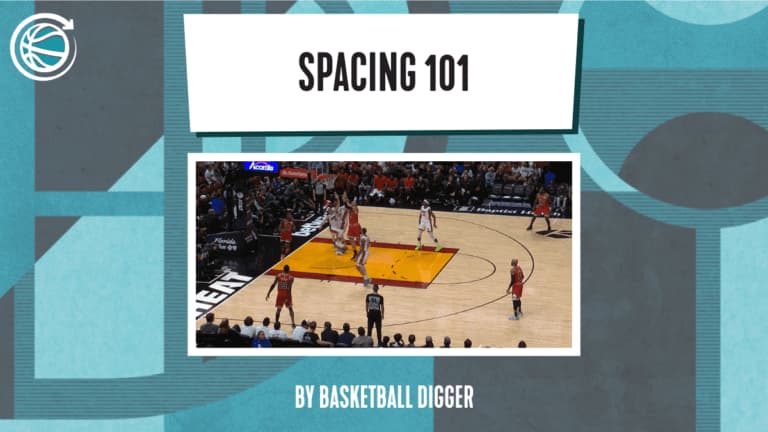
Spacing has changed the game. NBA offenses today look nothing like they did in the ’90s—more threes, better efficiency, and smarter shot selection. But why? The key lies in how teams use space to create and capitalize on advantages.
Mar 31, 2025
Simon Caret
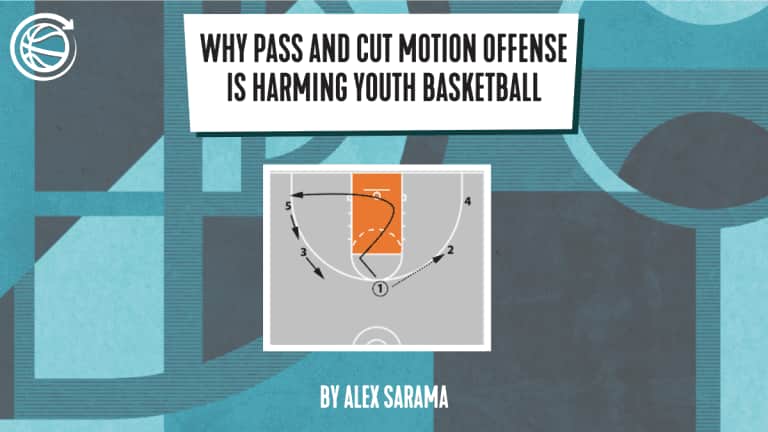
This article breaks down why pass and cut motion offense limits youth player development, and explores better ways to teach spacing, decision-making, and offensive creativity.
May 1, 2024
Alex Sarama
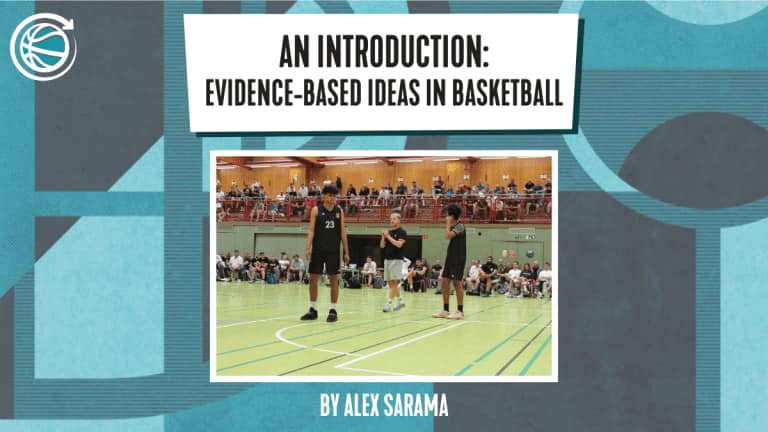
Approaches within the basketball industry are predominantly based upon experiential knowledge and traditions.


