
Coaching guide · Rebounding
Basketball Rebounding Drills
Many rebounding drills begin with a coach telling players to find someone and box out. But the right action depends on where the shot comes from, the flight of the ball and where everyone is standing.
7 min read
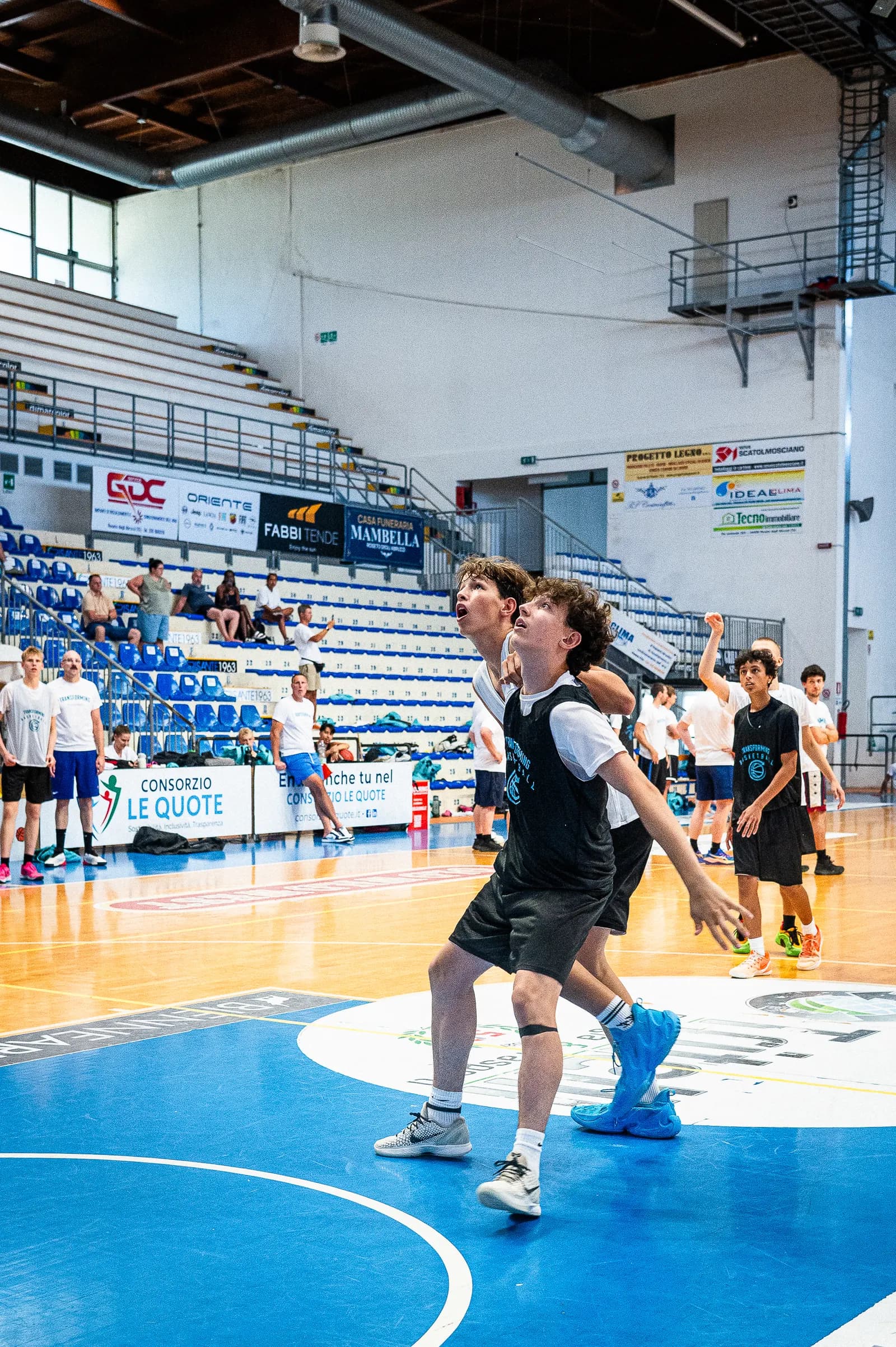
Sometimes a player needs to make contact with an opponent. Other times they need to track the ball and move straight into its path off the rim. We use constraints to help players explore these different rebounding situations.
Keep the Shot and the Rebound Together
The simplest change you can make to your practice is to stop ending activities on a shot attempt. The possession is live until a team secures the ball or the offense scores. When players stop playing after a 1-on-1 finish or a shot in a small-sided game, negative transfer is occurring: they are learning the opposite of what the game requires.
Add one rule to the 1-on-1s and small-sided games you already use: keep playing until a score or a defensive rebound. Nobody stops playing when the ball is shot, and every miss becomes a rebounding opportunity.

Free
21 SSGs for Your Next Practice
21 small-sided games you can run and adapt at your next practice, each one keeping the defenders, decisions and scoring of the real game.
Box Out, or Go Get It?
The box out still matters, but it's one solution, not the only one. Rebounding contact has three parts: a take on, a brace and a seal, and each looks a little different depending on the player and the situation. Boxing out a crashing Dennis Rodman is nothing like boxing out Shaquille O'Neal planted on the low block. Sometimes you have to scrum someone under the basket. Sometimes the best answer is for a player to read the flight of the ball and go and get it, instead of waiting for the ball to come to them. These are examples of how constraints affect the rebounding solution a player uses.
This is why tossing the ball off the backboard from the same spot, or leaving the ball on the floor and having players box out a teammate for 3 seconds before collecting it, doesn't build rebounding skills. With no real shot and no crashers, there is nothing to read. Players can only learn the subtleties of rebounding in constrained small-sided games, where they play against different opponents and the ball is shot from different places.
NBA teams practice it the same way. Here, the Celtics coaching staff are intentionally crashing and changing their offensive rebounding strategies. The goal of the defense is to avoid getting wedged into the restricted area, where no rebounds fall. So against intense crashing, we advocate for clear-outs: defenders use physicality to create as much space as possible between their opponent and the rim. This doesn't have to be a traditional box out technique. In fact, doing it side-on often gives more leverage. When there is no crasher, players can either "sandwich rebound" to help a teammate, or leak out to create an advantage for transition offense.
Finish the Possession: Defensive Shutdown
Defensive Shutdown is a great way to use constraints to make the rebound part of every defensive possession. It works well for 12 players at one basket, so it also solves the problem of working with a large group without many baskets.
4-on-4-on-4 Defensive Shutdown
12 players, one basketContesting the shot is only part of the possession; the defense still needs to secure the ball.
How it works
- Play 4-on-4 with three teams sharing one basket. Two teams play while the third waits to enter. The first team to earn five defensive stops wins.
- A stop counts when the defense forces a turnover or secures a rebound after a contested miss. An open miss does not count as a stop.
- After a stop, the defense stays on and the waiting team enters on offense. After a basket, the scoring team becomes the defense, the previous defense leaves and the waiting team enters.
Adapt it
- To emphasize rebounding: subtract one stop whenever the defense concedes an offensive rebound.
- Fewer players: play 3-on-3-on-3 with the same stop rules.
Watch for
- Does the defense finish the possession after the contest, or relax once the shot goes up?
Use a Rebounding Constraint in Any Game: Three Lives
You can also make rebounding more of an emphasis inside any normal scrimmage or small-sided game by using Three Lives. A life is lost for every offensive rebound conceded, and a team automatically loses if it loses all its lives, even if it has more points than the opponent at that moment.
5-on-5 Three Lives
10 players, full or half courtMake every offensive rebound conceded cost something, while players still manage closeouts and help.
How it works
- Keep the usual basketball score, but give each team three lives.
- Every offensive rebound conceded costs the defending team a life.
- When a team loses all three lives, it loses the game, even if it is ahead on points.
Adapt it
- Fewer players: play 3-on-3 or 4-on-4 with the same three lives.
Watch for
- Does the threat of losing a life change how players finish possessions?
Connect the Rebound to the Next Action
Once a player secures the rebound, they need to recognize whether to pass or advance the ball with a breakout dribble. Teammates also need to respond, by running lag free or by a handler becoming available if the rebounder is jammed. Allow your activities to continue after the rebound to create these opportunities. A simple way to do this is to play to half court after a small-sided game, with the defense allowed to score again if they turn the other team over before it crosses half court.
Another principle of play to emphasize is rebounders landing like a quarterback: facing the other basket and ready to kick ahead after securing the rebound. It's a great alternative to the traditional rebound and pivot, which slows down the pace of transition offense.
Tagging Up on the Offensive Glass
On the other side of the ball, tagging up is emerging as a popular principle of play for teams that want to be aggressive on the offensive glass. Each offensive player gets level with the "high side" of whoever guarded them on the shot attempt, being as physical as possible with their hip and arm to win the 50-50 ball. Coach Tuomas Iisalo brought the system from Bonn to Paris Basketball, the first team to popularize it in Europe. George Vaz's article on how Paris uses tagging up explains why it works.
3-on-3 Close-out Start: Tagging Up
6 players, half courtMake tagging up part of every shot.
How it works
- The offense starts behind the three point line. The defense starts in the paint with a ball.
- The defense passes the ball out and closes out.
- The offense must shoot and tag up.
Adapt it
- Once players know it: play live from the close-out, so the offense decides whether to shoot or drive.
Watch for
- Are players tagging whoever guarded them on the shot, rather than looking for their usual matchup?
Which Game for Which Problem
| If your team… | Try |
|---|---|
| Stops playing when the shot goes up | Add "play until the rebound" to every 1-on-1 and small-sided game |
| Contests well but gives up second chances | Defensive Shutdown, subtracting a stop for every offensive rebound conceded |
| Concedes offensive rebounds in scrimmages | Three Lives |
| Secures the rebound but has no immediate reaction for transition | Play to half court after the rebound, with the defense able to score again on a turnover |
Questions Coaches Ask
What are the best basketball rebounding drills?
Live games where the possession isn't over until a team secures the ball. 4-on-4-on-4 Defensive Shutdown, where a stop only counts after a contested miss and a defensive rebound, and 5-on-5 Three Lives, where each offensive rebound conceded costs a life, are two we use often.
Should I teach players to box out?
Yes, but not only the traditional high school box out, where a defender turns, makes contact and holds their opponent. Against hard crashers we prefer clear-outs: defenders use physicality, often side-on for more leverage, to create space between their opponent and the rim so they don't get wedged under the basket where no rebounds fall. With no crasher, a player can sandwich rebound to help a teammate or leak out for transition. Practice these in live games so players learn which one the moment calls for.
What is tagging up in basketball?
When the shot goes up, each offensive player gets level with the high side of the player who guarded them on the shot, using their hip and arm to win the 50-50 ball. It's a principle of play for teams that want to be aggressive on the offensive glass, popularized in Europe by Paris Basketball.
How do I make players care about rebounding in practice?
Put it in the scoring. Only count a defensive stop once the defense has the ball, take a stop away when it concedes an offensive rebound, and never end an activity on the shot.
Take It to Your Next Practice
Free
21 SSGs for Your Next Practice
21 small-sided games you can run and adapt at your next practice, each one keeping the defenders, decisions and scoring of the real game.
The Small-Sided Games Book
$49 USD
Build on your free games. Build your practice around 50+ small-sided games, with diagrams and constraints you can adapt to your players.
Sources
- A Constraints-Led Approach to Coaching Basketball, Sarama, Lascu, Vaz Rocha and Houghton (Routledge)
- Transforming Basketball podcast, episodes 19 and 137
- How Paris Basketball Dominates Offensive Rebounding with Tagging Up
- Basketball Transition Defense: Priorities and Practice Ideas
Behind the methodology
About Alex Sarama
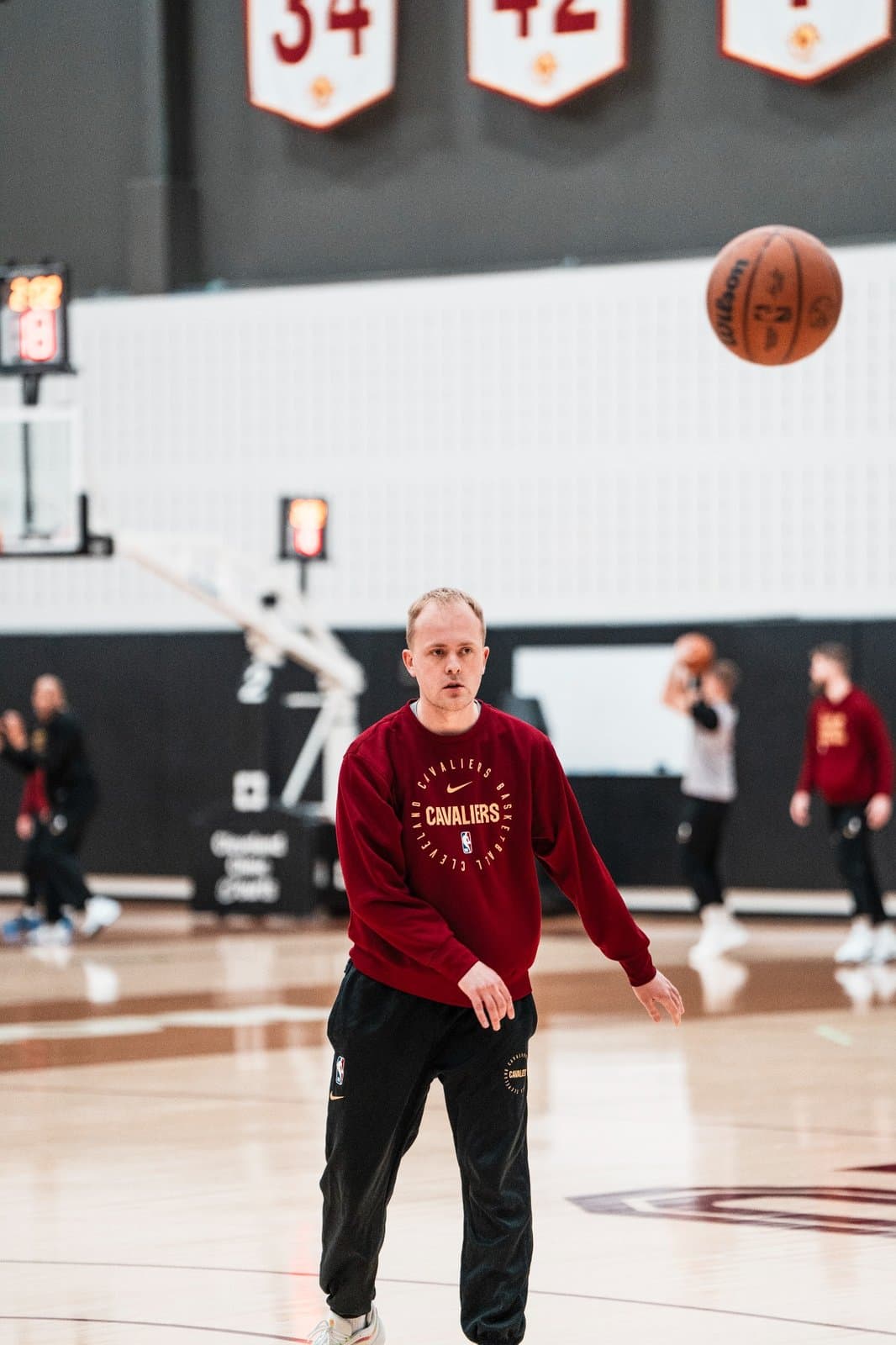
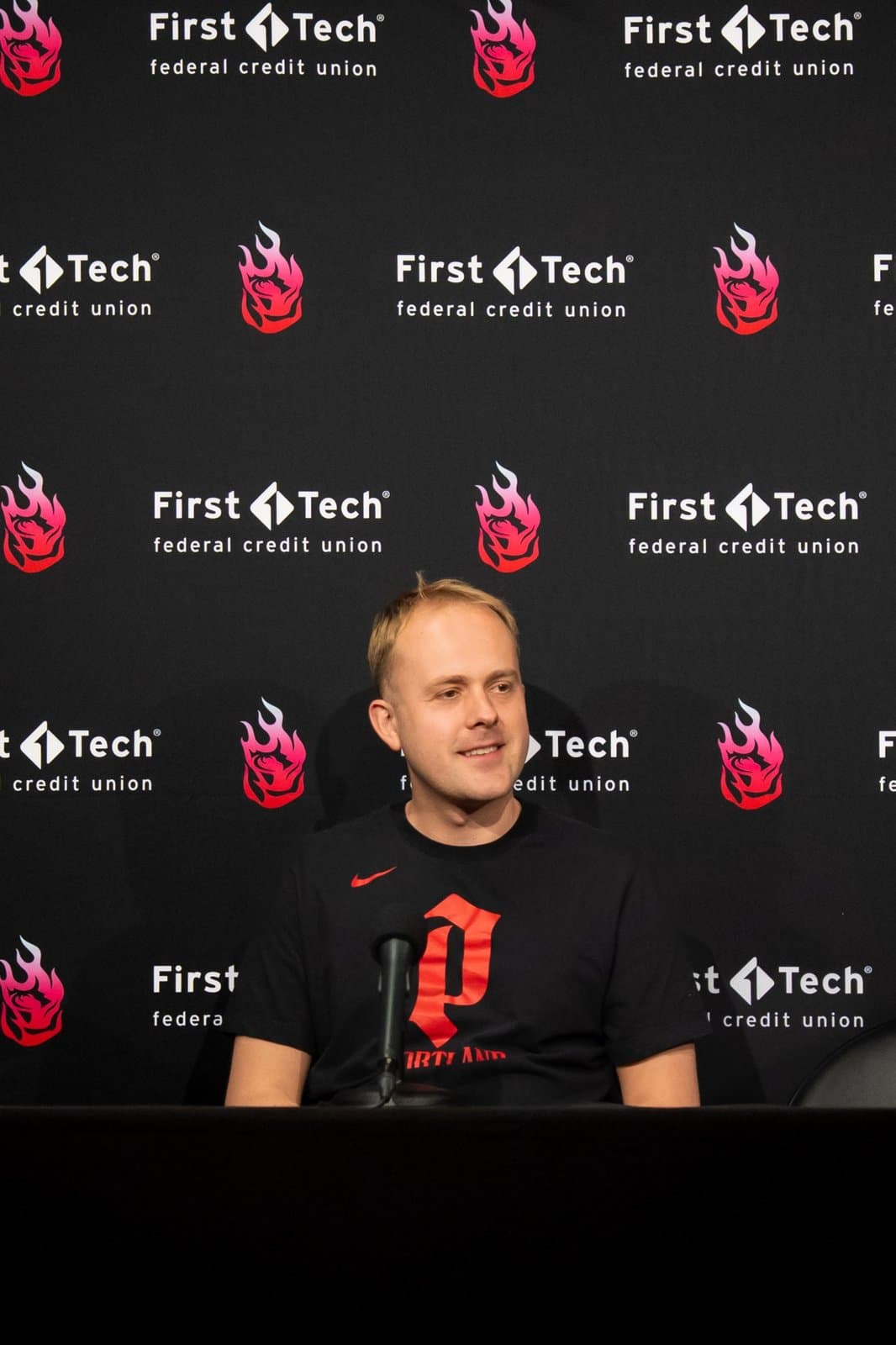
Alex Sarama
Founder, Transforming Basketball · Head Coach, Portland Fire
Alex Sarama is the founder of Transforming Basketball and Head Coach of the WNBA's Portland Fire. Previously, he served as Assistant Coach and Director of Player Development with the Cleveland Cavaliers.
His wider experience includes NBA Europe in Madrid, Paris Basketball in the EuroCup and the Rip City Remix, the Portland Trail Blazers' G League affiliate. Alex has delivered clinics in over 40 countries and has written three books on the constraints-led approach in basketball, including the Amazon bestselling Transforming Basketball (2024) and A Constraints-Led Approach to Coaching Basketball (2026).