

Transforming Basketball
All coaching case studies

Youth & men’s basketball · Germany

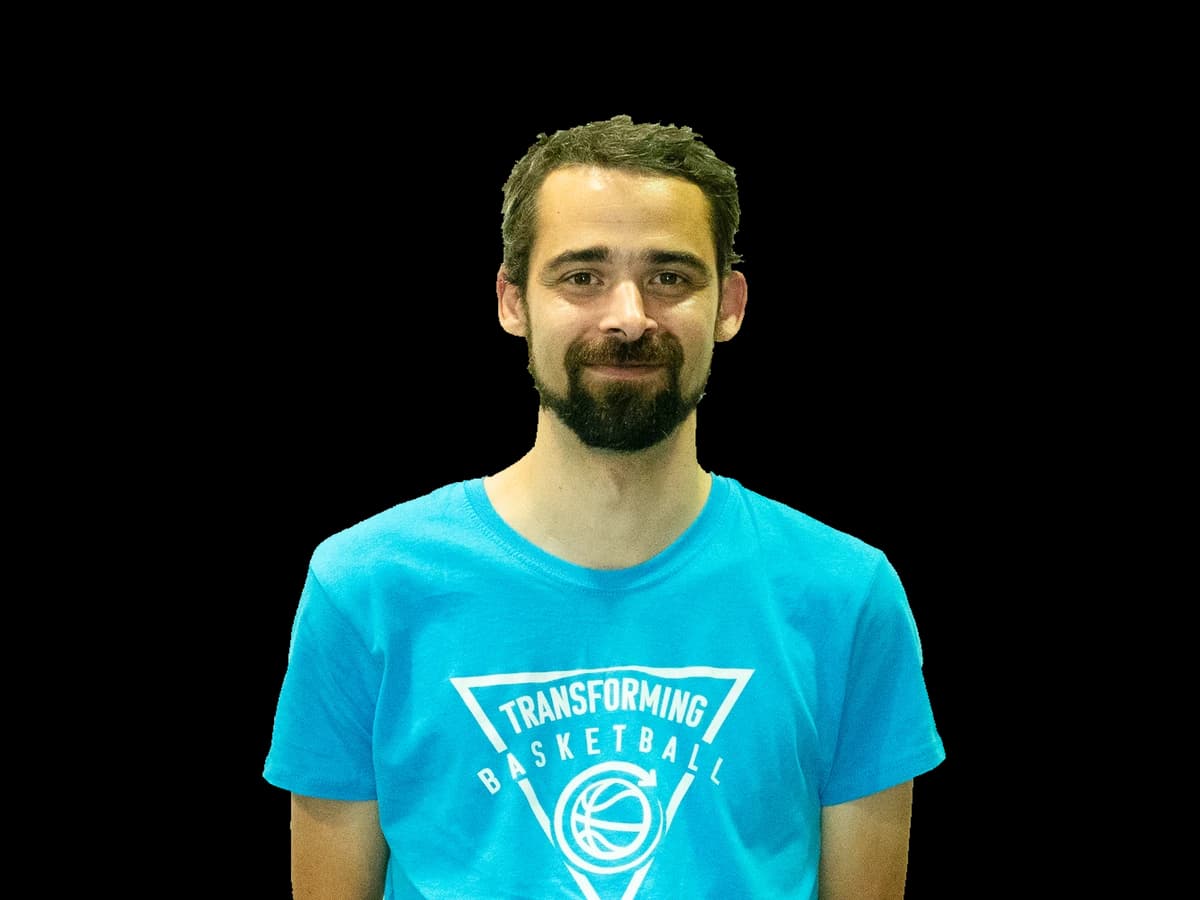
Elias Maahs

From copying drills to designing challenges.

Elias describes becoming a coach who creates problems for players to explore and solve.

Elias Maahs

Coaching case study

The starting point

Elias coaches youth basketball and a men's team at USV Halle in Germany. He was looking for an explanation of learning and movement that could help him move beyond copying drills and teaching a single prescribed technique.

What changed in practice

  • Began creating problem-solving activities and changing constraints with a clear purpose.
  • Allowed players to explore, make mistakes and discover different solutions.
  • Connected the book's theoretical framework with practical examples from camps, podcasts and video.

What Elias noticed

Elias describes players enjoying competitive small-sided games and the freedom to try things. He reports seeing more creativity and adaptability, while emphasizing patience and long-term development rather than treating immediate results as the sole measure of success.

The full conversation with Elias

01

Where are you from and where do you coach?

I’m from Germany and coach at USV Halle - a grassroots sports club. I coach both youth basketball and our first men’s team.

02

How did you discover Transforming?

I was looking for evidence-based ideas regarding how learning and movement occurs in sports environments. Traditional coaching methods never convinced me at all - something was just missing! So I found Rob Gray, Mike MacKay and of course Alex Sarama - this was the start of a new journey for me.

03

What Transforming events or products have helped you the most?

The Transforming Summer Camps in Italy gave me more examples of the practical application of the CLA, which really complemented Alex’s book for the theoretical framework and deeper understanding of the subject area. Also the podcasts, videos social media content (particularly the YouTube Shorts Videos) have widened my lens in regard to how to see the game and apply the theory by creating rich learning environments for people who play basketball.

04

What changes have you seen in your coaching and with your team since using these ideas?

From copy pasting drills from famous coaches, teaching techniques traditionally and knowing all the answers...a complete change to an environmental architect, who creates problem-solving activities and changes constraints purposefully. My players now have the opportunity to explore and find solutions on their own, and critically, are allowed to make mistakes! This quote pretty much sums it up for me: “What you teach a child, he can no longer discover for himself. But only what he discovers for himself improves his ability to understand and solve problems.” - Jean Piaget

Furthermore, the players love it with the freedom to explore and try new things, while being challenged and competing in small-sided games. It is waaaaaay more fun than boring and repetitive drills! And of course you will see more struggle and "chaos" by design, but it’s worth it completely because players become way more creative, adaptable and versatile and have a deeper understanding of the game. For us the icing on the cake is that you will be more successful as well - which for me, is not a strong indicator of success as long term development is prioritized over immediate results. But it takes time and you need to have patience with the non-linearity of learning. It is a marathon, not a sprint.

What could change in your coaching?

Explore the ideas, find your next step and learn with coaches putting them into practice.

Explore the membership