Transforming resource
Developing Shot Selection
$39 USD
Develop the shot-selection part of your practice with a clinic and worksheet.
Coaching Guide
A shooting session can produce hundreds of makes without asking the player whether the shot is available.
Quick answer
Basketball shooting development involves recognizing an appropriate shot and adapting the movement to take it. Transforming uses representative shooting games alongside differential-learning exploration, with attention to the player’s range, the defensive contest and the balance available for the shot.
In a game, the pass, the closeout and the option to drive or move the ball all shape the attempt.
The Transforming approach connects shot selection with adaptable movement. Players encounter different passes, locations and contests, and explore how to get a useful shot away.
Worked example
Find a ROB shot in 2-on-1. How do shooting decisions stay in shooting practice?
ROB means within the player’s range, open and balanced.
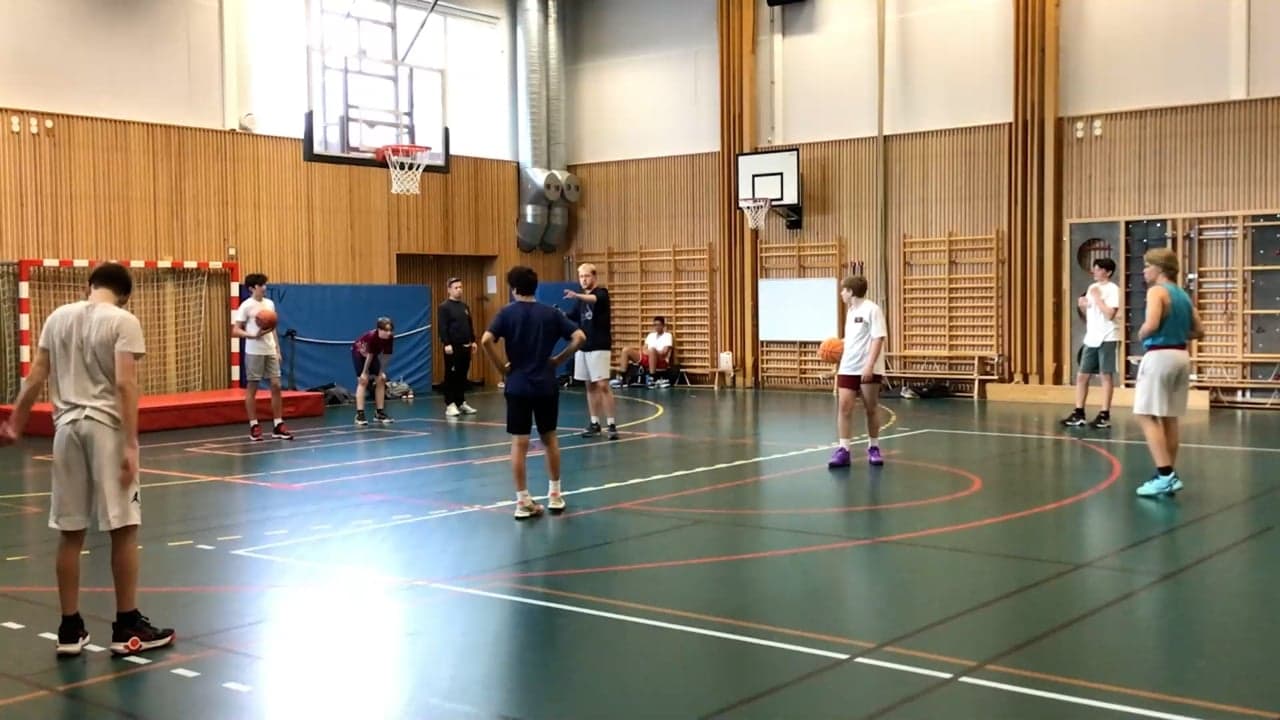
Play 2-on-1 within the offensive players’ shooting range. The defender passes in to start; the offense may pass or shoot, using no more than two passes.
Change where the players begin and rotate roles. Add a cut or drive when that choice fits what the group needs to explore.
Does the receiver prepare as the ball travels, recognize an available shot and pass when the defender takes it away?
The foundations
ROB gives players a shared way to discuss shot selection: is it within their range, is enough space available and can they organize an effective attempt? What counts as open changes with the shooter and the defender.
Use different closing distances and angles. A defender must be able to affect the attempt, but every shot need not involve a heavy contest. Mix the opportunities players are learning to recognize.
A shooting emphasis does not require shooting at all costs. In 2-on-1 or Jungle Shooting, a pass can find a better attempt when the defender takes the first one away.
Differential learning introduces varied stances, release speeds and other movement conditions. Transforming uses it as a complement to the CLA and as its alternative to form shooting: players shoot in a different way every time to explore movement possibilities, then return to shooting against meaningful opposition.
Why it matters
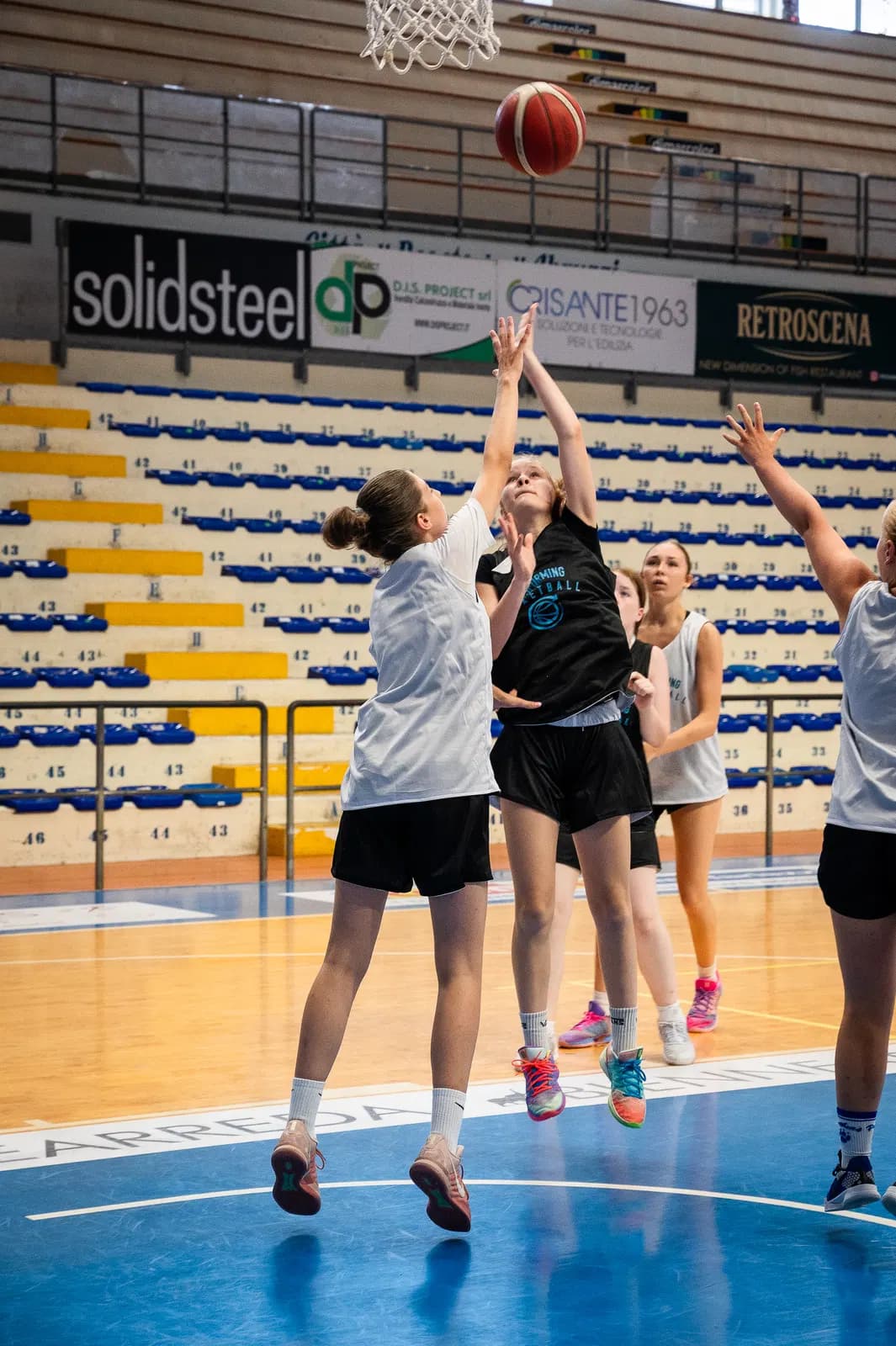
An opponent can change when a player releases the ball, the space they use and whether they should shoot at all. A distraction that cannot block the ball creates a different task from a defender who can close down the attempt.
Choose the format for the problem. Mosquito Shooting offers varied attempts with a distracting opponent. A live 1-on-1 plus a passer adds the choice to drive or move the ball. A 2-on-1 makes the pass-or-shoot decision central; Jungle Shooting creates more simultaneous interactions with two balls. These are options to adapt, not a fixed progression.
On the floor
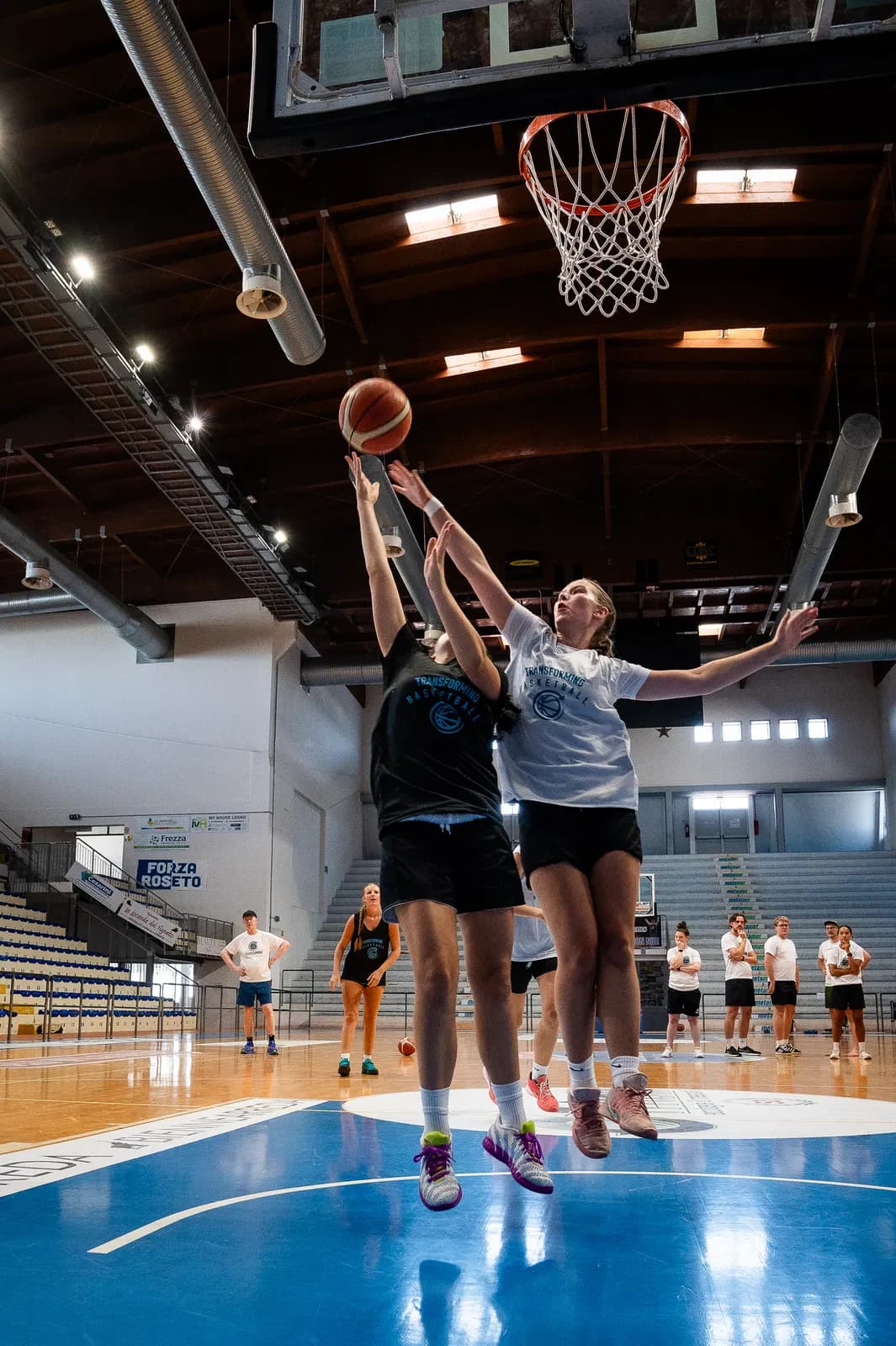
Start with the shot situations the player encounters: a long closeout, a catch after relocating or a pull-up as the defender retreats.
Use 1-on-1 for adapting to a defender and 2-on-1 when a pass-or-shoot choice matters. Add the screen or relocation when it is part of the shot’s origin.
BRAD, back rim and down, is one Transforming cue with an external focus. Choose a cue that helps this player explore a useful outcome, rather than using it to impose one ideal elbow or foot position.
Track the location, contest and choice behind the attempt as well as whether it went in. Ask whether the practice is producing the shots the player needs in games.
Take it to practice
Starting points to shape for your group. Pick one, then adjust the numbers and scoring.
Free coaching resource
A video breaking down shooting mechanics and development.
Watch, listen & read
A few clips, conversations and reads to go deeper — then the whole library is one link away.
Shooting game
Watch for: How does adding a contest change which shots players decide to take?
Transforming Basketball Podcast
From research to practice
Research paper
How a defender changes the shot
The defender is part of the shooting task: opposition can change how a shot is executed. Compares defended and undefended shooting behavior; a performance comparison, not evidence of lasting improvement.
Representative design: Does the addition of a defender change the execution of a basketball shot? · Gorman, A. D., & Maloney, M. A. · Psychology of Sport and Exercise, 2016
Research paper
Shooting under game-like opposition
Consider the contest and surrounding information when designing a shooting task. Examines how opposition changes shooting behavior and accuracy; describes performance under conditions rather than a guaranteed training gain.
Sampling perception-action couplings from competition create representative basketball shooting tasks: A replication and extension of Gorman and Maloney (2016) · Court Gold et al. · Psychology of Sport and Exercise, 2025
Questions
Include the pass, movement and defensive information that shape the shot. Vary those conditions and retain relevant alternatives, especially passing when a shot is taken away. Revisit the opportunities in wider play.
No. Players differ in their action capabilities, and a shot must adapt to range, balance and pressure. Judge movement by how it helps the player solve the task, rather than its similarity to a single demonstration.

The Transforming perspective
The objective is to find effective shots and adapt to them. Repetition matters, and so does what each repetition asks the shooter to perceive.
Behind the methodology
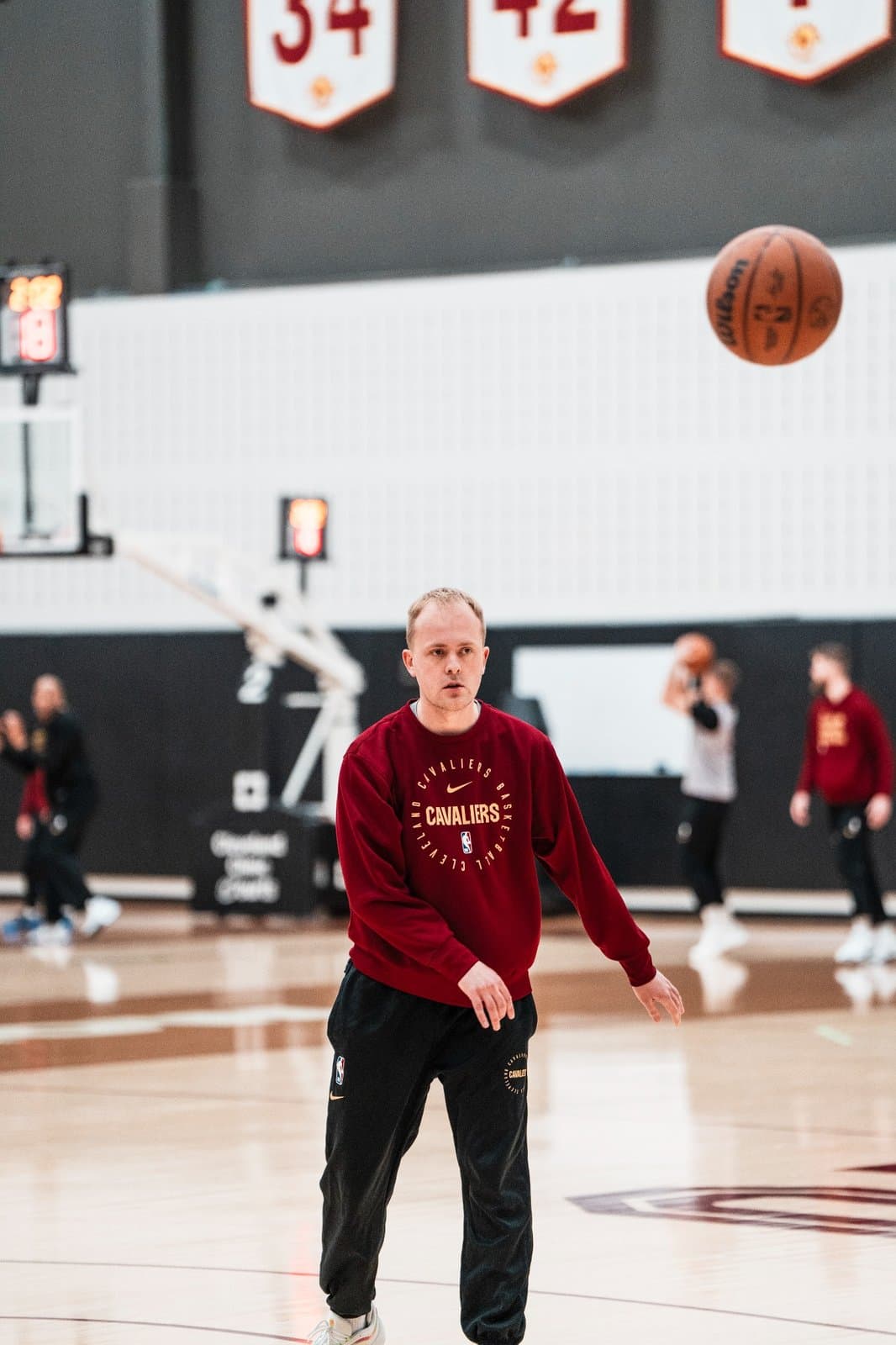
Alex Sarama is the founder of Transforming Basketball and Head Coach of the WNBA's Portland Fire. Previously, he served as Assistant Coach and Director of Player Development with the Cleveland Cavaliers.
His wider experience includes NBA Europe in Madrid, Paris Basketball in the EuroCup and the Rip City Remix, the Portland Trail Blazers' G League affiliate. Alex has delivered coaching education internationally and is the author of the Amazon bestselling book Transforming Basketball.

The book
The Amazon bestselling book on applying a constraints-led approach to basketball performance — the methodology behind this guide, in full.
View the book on AmazonContinue learning
Transforming resource
$39 USD
Develop the shot-selection part of your practice with a clinic and worksheet.
Free
A video breaking down shooting mechanics and development.