Transforming resource
Contemporary Player Development
$39 USD
An in-depth clinic, recorded for the German Basketball Federation, on developing players and teams through small-sided games.
Coaching Guide
Finishing is a problem shaped by the defender, the approach and the space around the rim.
Quick answer
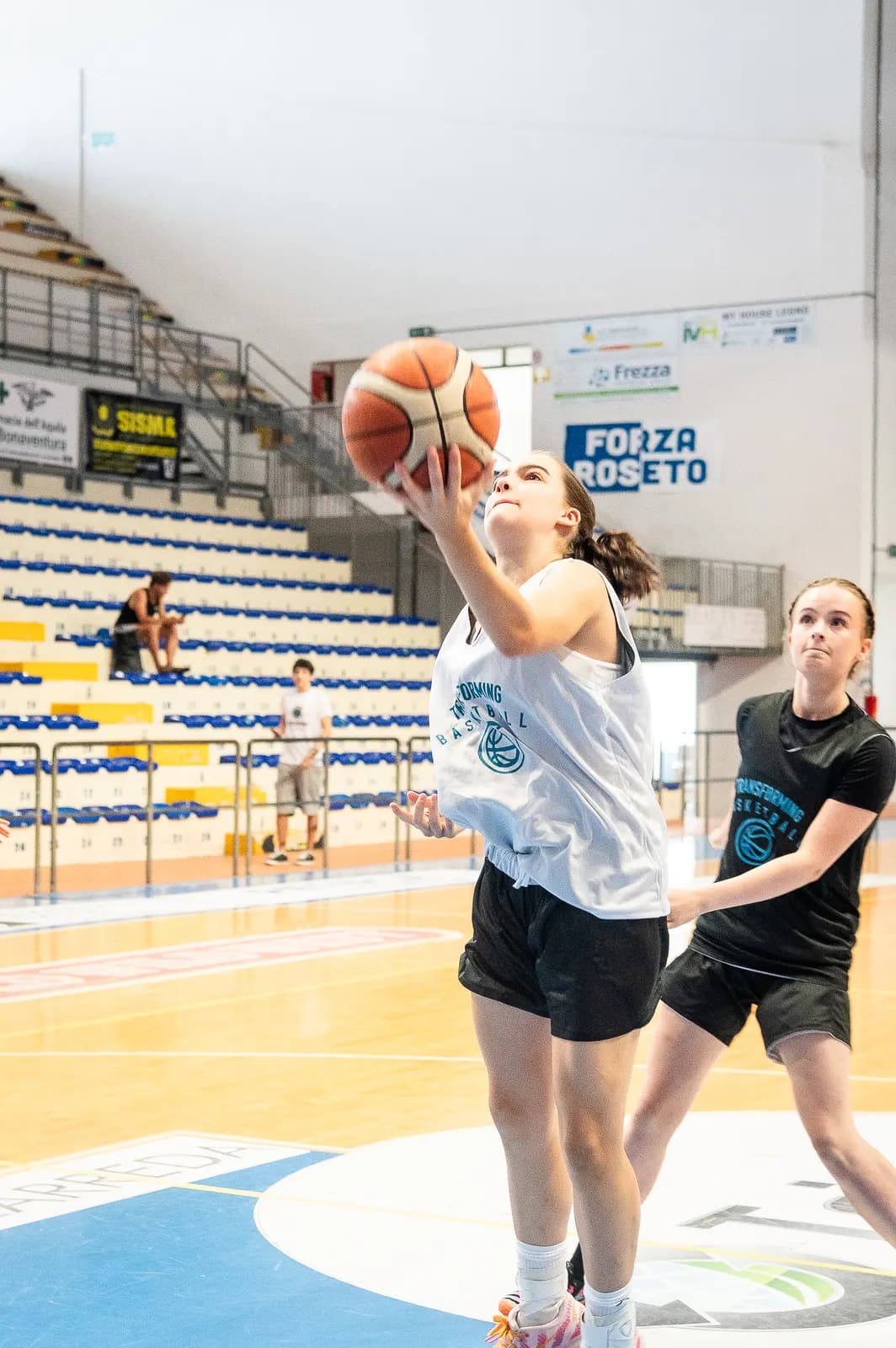
Basketball finishing is the ability to create and use scoring opportunities around the rim. A constraints-led approach develops adaptable finishes through changing approaches, defenders, space and passing options, with the challenge adjusted to the player.
A player may need to release earlier, use the other side of the basket or pass when help arrives.
The practice task should give those solutions a reason to emerge. Change the starting advantage and the defender’s freedom while the offensive player explores ways to score.
A practical example
What changes when finishing includes a defender?
The Smile Finishing Game places a defender near the restricted area. The offensive player has to find a way to score around that player instead of rehearse a finish selected in advance. Limiting the defender’s movement can make this possible for developing players.
For beginners, adjust the defender’s available steps, hand use or starting position. The U12 sample begins with a defender who stays in the smile and cannot jump, then lists further defensive freedoms as additions. The offensive player can explore approach angle, timing and release while the coach adjusts the level of pressure.
Explore the source material
The foundations
A defender arriving from behind creates a different problem from one waiting at the rim. Use those differences to invite changes in timing, takeoff and release.
Keep the defender in the smile, limit their steps or allow only one hand. These adjustments retain an opponent while giving a beginner more room to explore.
Change the starting angle, the pass and the opponent. Look for different ways of accomplishing the same outcome rather than a collection of named finishes performed in order.
When help defense is the focus, include a teammate who can receive. The best solution to a crowded rim may be a pass, so the activity needs that option.
Why it matters
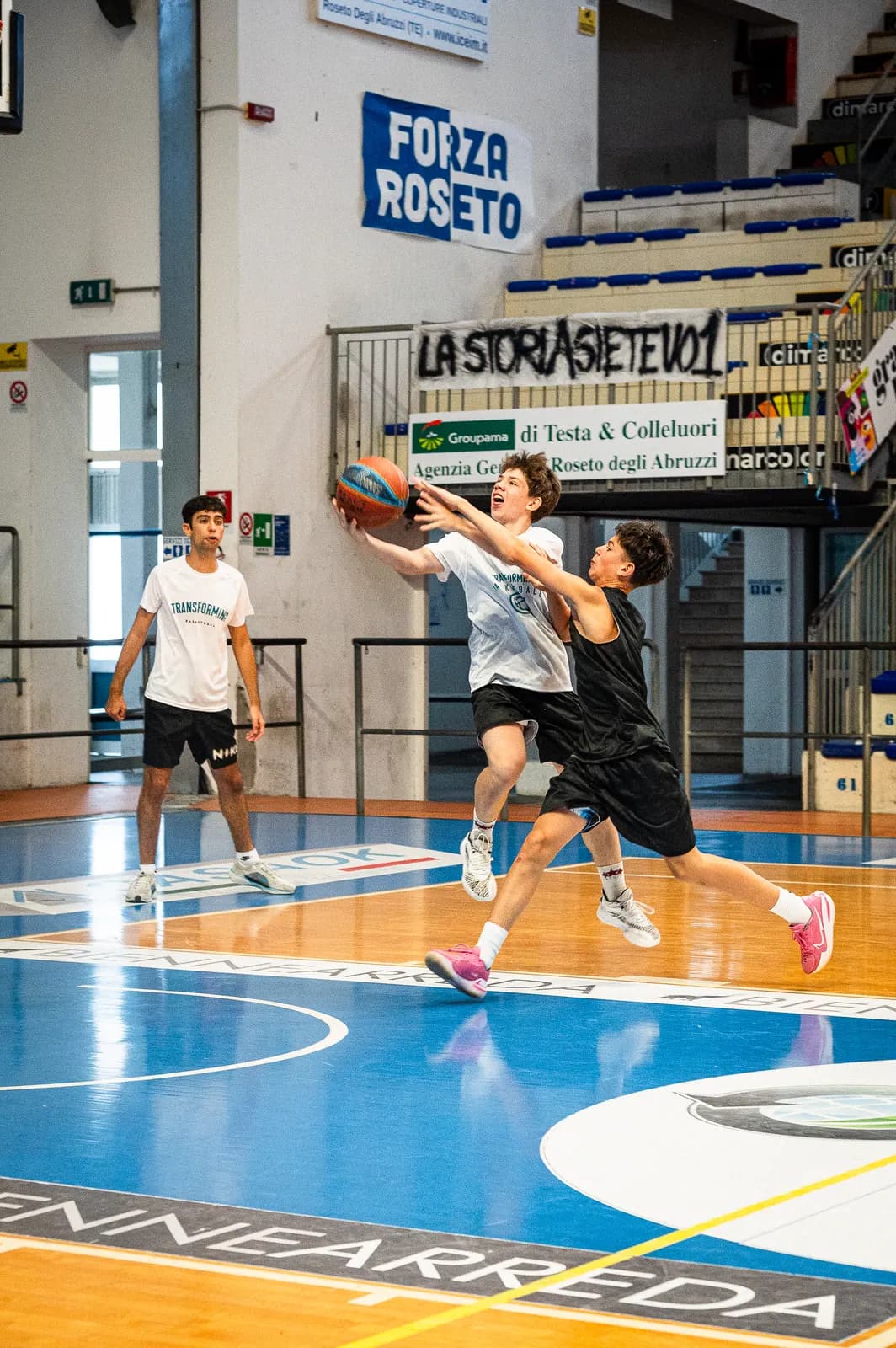
A defender changes the available space, timing and release. You can reduce the difficulty while keeping that opponent involved. For example, begin a defender in the restricted area under the basket. The defender passes to an approaching offensive player, then has two steps to come out and contest.
The offensive player still chooses how to finish, and the defender still tries to stop the score. Change the starting advantage or the defender’s freedom to suit the pair. When a help defender is part of the problem, include a teammate so the player can also pass or keep the ball alive.
On the floor
Start with a chase, a closeout or help waiting near the rim. Match the situation to what the players encounter in games.
For beginners, use a positional disadvantage or limited defensive steps. As useful finishes appear, change the starting angle or give the defender more freedom.
Check whether the offensive player can reach a useful space, see the defender and adapt the release. A miss alone does not tell you which part needs attention.
Bring in a receiver and help defender when the player needs to decide between finishing and passing. Let the possession continue after the first action.
Avoid these
Layup lines and the Mikan drill repeat a finish without the opponent who changes the space, timing and release.
Instead: Keep a defender near the rim and limit their steps or hand use, so the offensive player still has to adapt to someone.
Naming the finish before the rep begins removes the reason to read where the defender is.
Instead: Give the intention to score and let the approach, the defender and the space shape which finish the player chooses.
A fully free defender can overwhelm a beginner, while a passive one gives an experienced finisher nothing to solve.
Instead: Change the starting position, the number of defensive steps or the defender’s freedom until the offensive player succeeds some of the time.
When help arrives and there is nobody to pass to, the only option left is a forced finish into the crowd.
Instead: Add a receiver and a help defender when the problem includes choosing between finishing and passing.
Take it to practice
Starting points to shape for your group. Pick one, then adjust the numbers and scoring.
Free coaching resource
Using 1-on-1 situations within your offense to generate and take better shots.
Watch, listen & read
A few clips, conversations and reads to go deeper — then the whole library is one link away.
Transforming Basketball
Watch for: Watch how the defender’s position changes the moment the offensive player chooses to drive.
Questions
Use an advantage start with a recovering defender, a suitable ball and a reachable basket. Give the offensive player enough space to approach the rim, then adjust the defensive start as they become more comfortable.
Keep a defender in the restricted area and limit their movement. The offensive player still gets repeated attempts around the rim, while adapting to an opponent’s position and reach.
The defender has a specific constraint, such as staying in one area or taking only two steps, while still responding to the offensive player. This changes the pressure without removing the information supplied by an opponent.
Use live, rule-compliant opposition suited to the players. Let the offensive player explore position, timing and release around the defender, including avoiding contact or passing. Do not make a collision the required outcome.

The Transforming perspective
A player does not need the name of every finish before trying to score. Give them a clear intention, an opponent and a challenge they can explore.
Behind the methodology
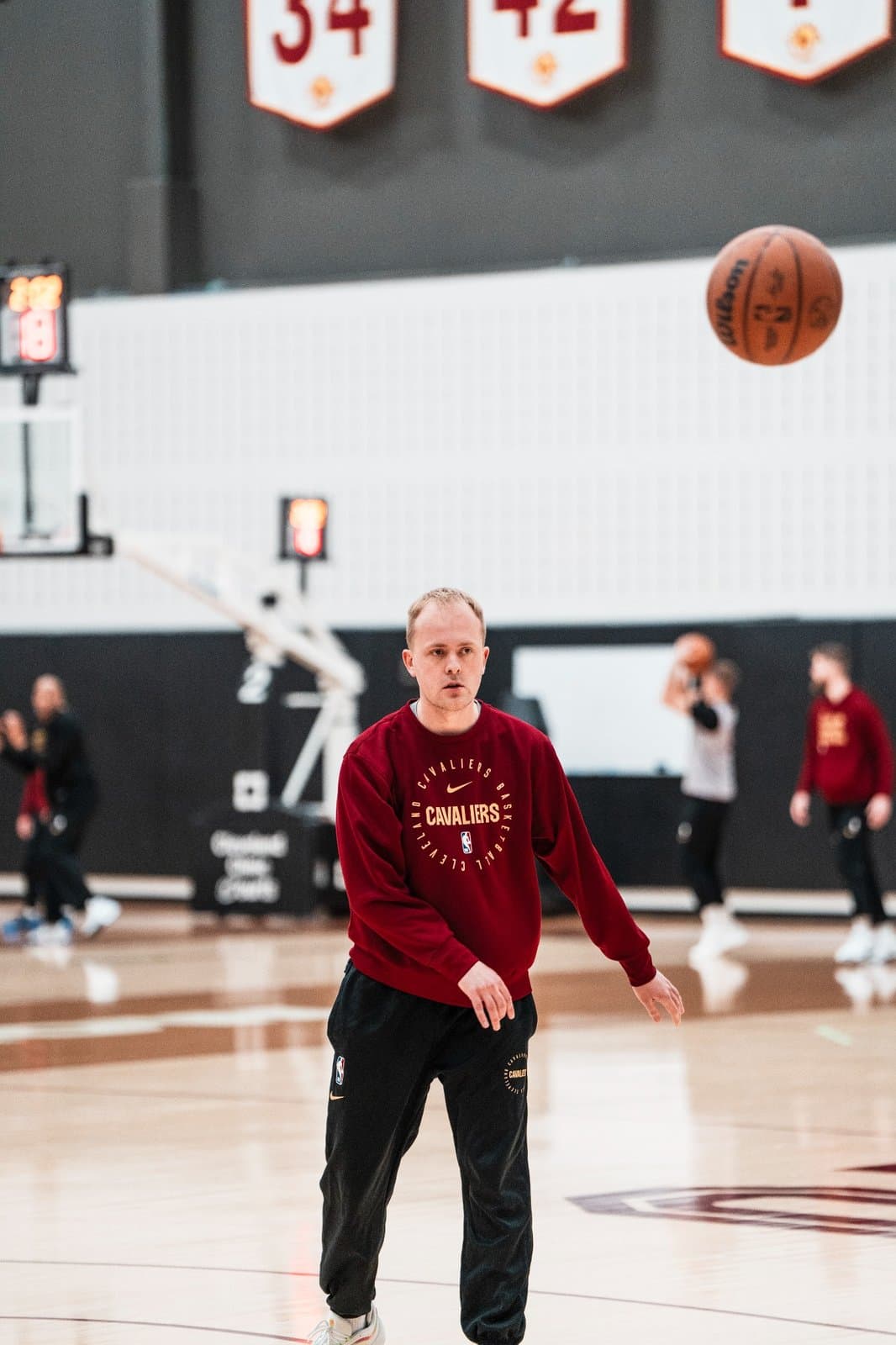
Alex Sarama is the founder of Transforming Basketball and Head Coach of the WNBA's Portland Fire. Previously, he served as Assistant Coach and Director of Player Development with the Cleveland Cavaliers.
His wider experience includes NBA Europe in Madrid, Paris Basketball in the EuroCup and the Rip City Remix, the Portland Trail Blazers' G League affiliate. Alex has delivered coaching education internationally and is the author of the Amazon bestselling book Transforming Basketball.

The book
The Amazon bestselling book on applying a constraints-led approach to basketball performance — the methodology behind this guide, in full.
View the book on AmazonContinue learning
Transforming resource
$39 USD
An in-depth clinic, recorded for the German Basketball Federation, on developing players and teams through small-sided games.
Free
Using 1-on-1 situations within your offense to generate and take better shots.