


Are you struggling to see complete transfer from your small-sided games in practice to the real thing?
One of the reasons your small-sided games (SSGs) are not achieving their maximum result could be because of the unrepresentative behaviours the players are getting away with. And the most common culprit in this instance is failing to constrain space.
This is very important, because in SSG settings, such as 1-on-1, 2-on-1, 2-on-2, 3-on-3, etc., players operate in more time and space than they would encounter in 5-on-5. This is why it’s critical to consider how you shrink the space to avoid offensive and defensive players getting used to operating in spaces that would not exist in 5-on-5.
Of course, playing with smaller numbers in a SSG is an example of task simplification. But it is important to consider other ways to make the games that are not 5-on-5 more representative.
How to Constrain Space
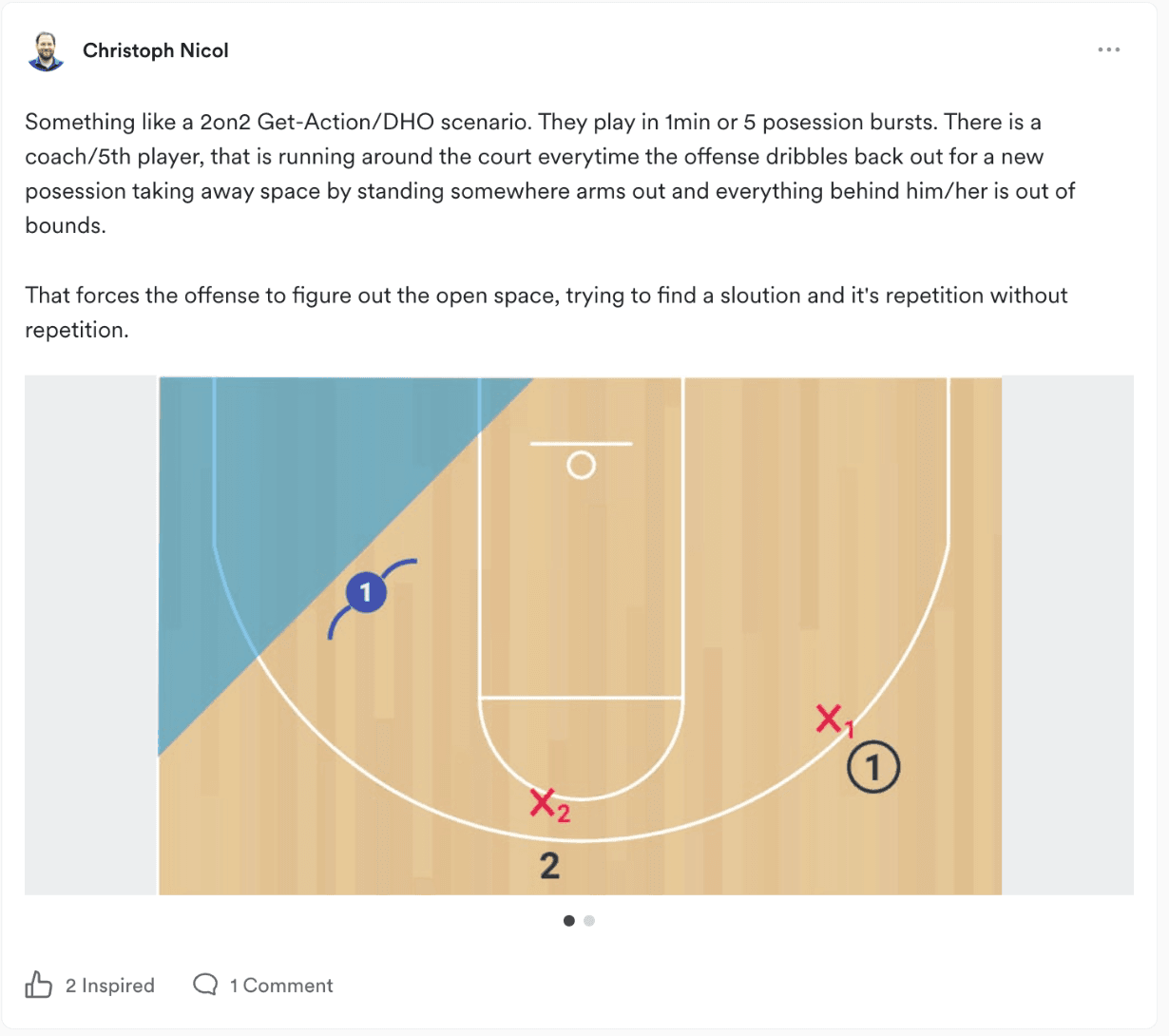
The easiest way you can do this is sectioning an ‘out of bounds’ area in your SSGs. A coach could stand here (e.g. wall pick and roll) or you could use cones to mark out the section. Essentially, coaches are moving the out of bounds line when they constrain the space.
We asked the expert coaches in our membership community how they constrain space. They shared some really creative answers, starting with Christoph Nicol. This idea is the “moving wall’ concept to change the space available across every possession.
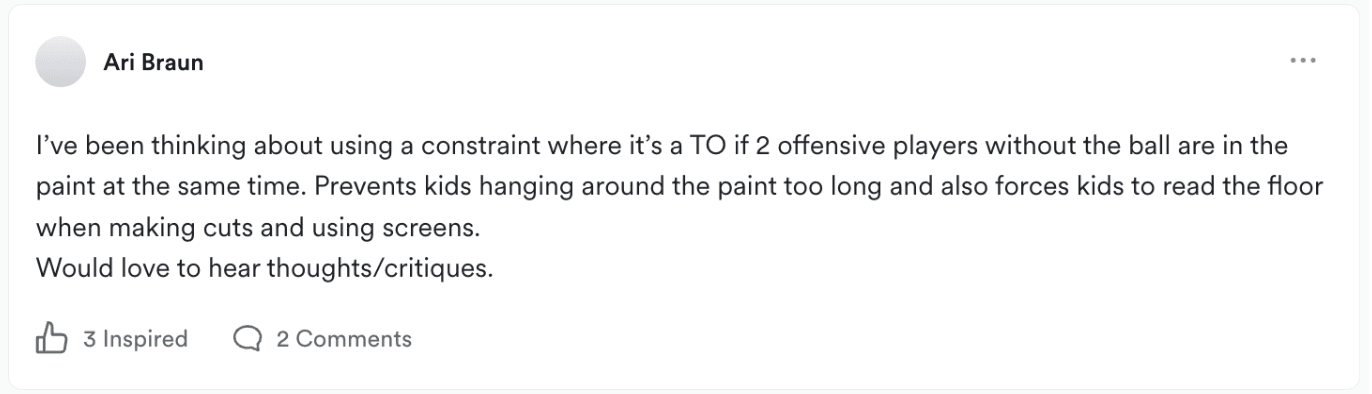
This next one is a good idea from Ari Braun. If you want to encourage cutting, then be sure to change it from 2 to 3 players so that you can still score from off-ball cuts.
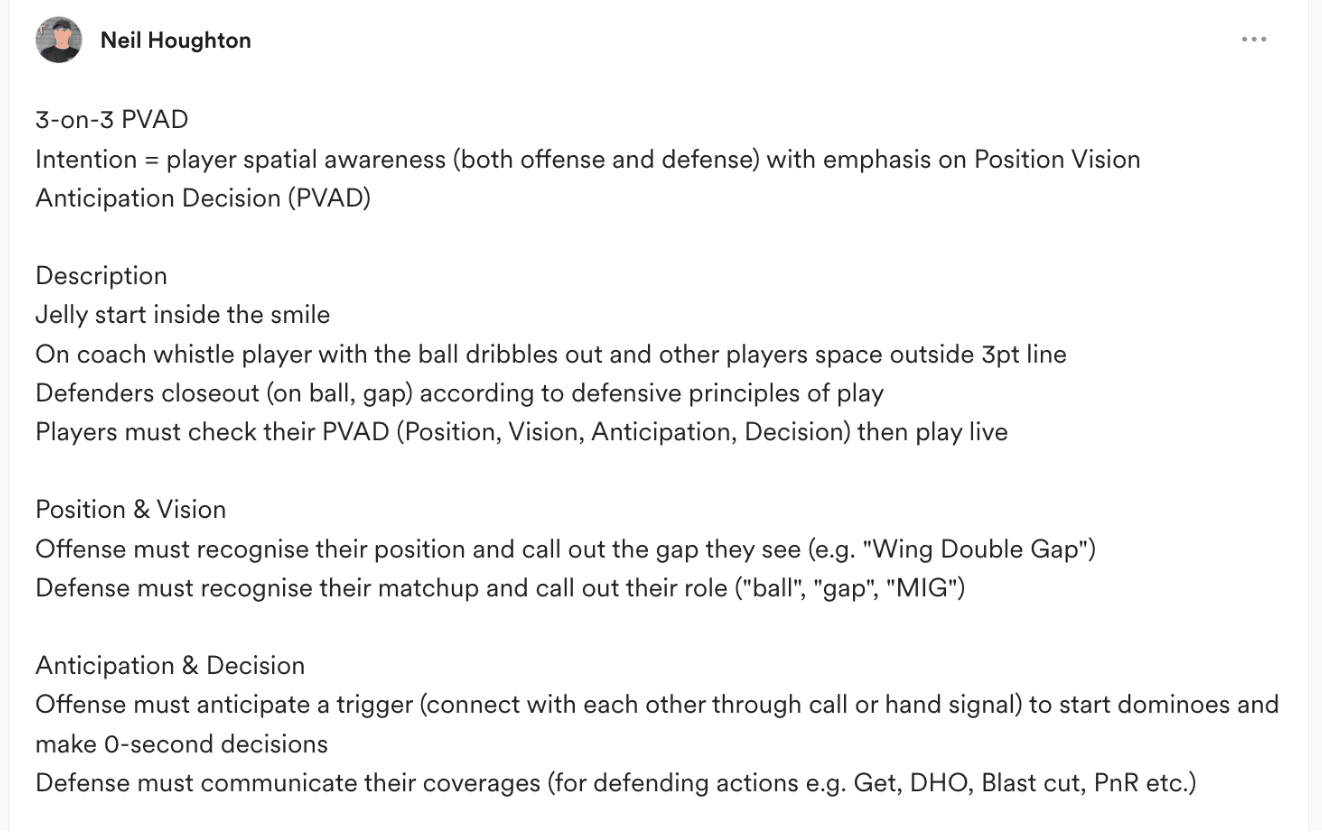
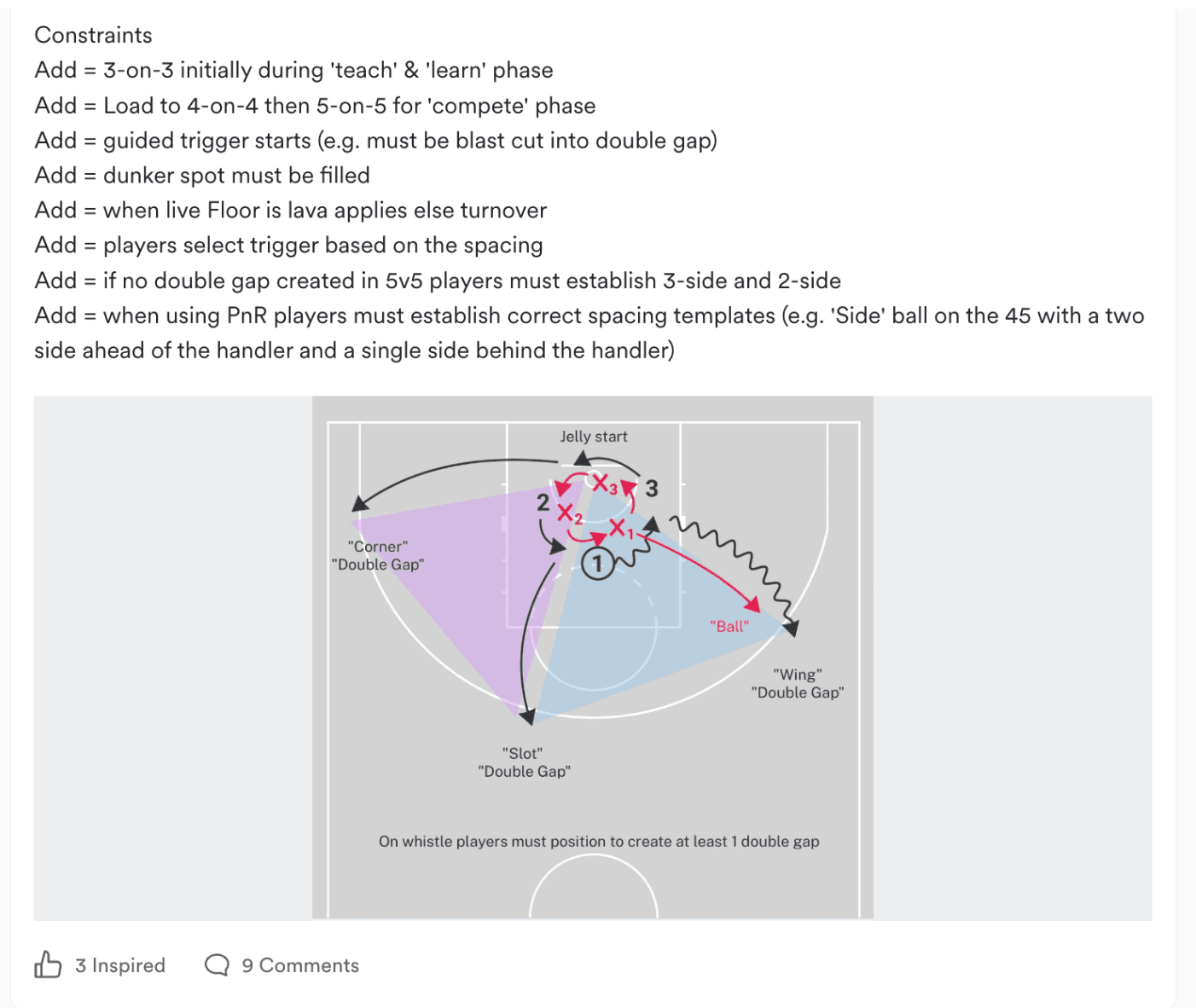
In this example, Neil Houghton shares ideas for improving conventional 3-on-3 with a ton of different intentions and constraint builds.
Finally, if coaches want to constrain space just imagine how the game would be in a 5-on-5 environment. There might be shrink (gap) defenders on the 'Solo' drive. If coaches want to replicate this part of the game in a 1-on-1 advantage start game, they might put a shrink defender that is allowed to stunt at the ball, but not get in front of the drive.
Coaches can learn how to effectively manipulate spacial constraints to effectively target players rate limiters in this course: The Player Development Blueprint
Sigue desarrollándote como entrenador.
Conecta estas ideas con el Success Pathway, la videoteca de actividades, la comunidad de entrenadores y las sesiones mensuales en directo.
Descubre la membresíaCompártelo con otro entrenador
¿Conoces a alguien a quien le resultaría útil? Comparte este artículo.