

Teaching the Relay Pass through Small-Sided Games




This blog builds on the previous blog “what is the relay pass?”, focusing on ways to develop the relay pass through CLA practice environments.
Relay Pass & 2-on-2 into 1-on-1’s
The goal of purposeful practice is to create rich learning environments where coaches recreate small slices of the game in their small-sided games. There are multiple options for recreating the relay pass – and more specifically the decisions that players need to make out of the relay effectively – in order to make use of this coverage solution.
When creating a small-sided game (SSG), coaches should start by thinking about what specifying information is most important to the SSG. In other words, what information needs to be present within the small-sided game that will effectively transfer habits over to 5-on-5. Within a relay pass, this would be concepts such as reading the “last” or “tag” defender.
Let’s view the clip below, and then consider how to use the Transforming methodology to design constraints around this principle of play.
To recreate the principle seen above, we could begin by creating a 2-on-2 activitiy that flows into a 1-on-1. This is an example of an activity that Alex Sarama first started using with his College Prep Italy team. You can watch the activity below:
<iframe width=”560″ height=”315″ src=”https://www.youtube.com/embed/EnmBXo0_plU?si=K-D4CiP8sR-O8jZ2&start=18″ title=”YouTube video player” frameborder=”0″ allow=”accelerometer; autoplay; clipboard-write; encrypted-media; gyroscope; picture-in-picture; web-share” referrerpolicy=”strict-origin-when-cross-origin” allowfullscreen></iframe>
More Small-Sided Games for Coaching the Relay

In another potential small-sided game for this scenario, the 4 live players are circled in purple and orange. A coach/ player could make this game live with the first pass. In this possession, Lorenzo Brown (the nail defender) is positioned in a flat shrink. The 2-on-2+1 could begin by stipulating the nail defender must be in position before leaving on the pass. Then after the pass ahead, a live 2-on-2 begins. By playing without the roller and weakside offense and defense, we are aggressively attuning players to closeout offense opportunities that emerge as the relay pass happens. Specifically, this includes a catch and shoot for the player in the 45, a catch and drive, a swing to the corner, or a go-catch for both players. We are “constraining to afford” so that these specific situations emerge vs randomly playing a more open small-sided game where anything could happen.
In the clip, #8 (highlighted in the orange circle and spaced at the 45) scores within 3 seconds. We could constrain this game so that after the pass is made, players have 3 seconds to shoot. This forces players into quicker decisions vs being stuck in neutral. We may also want to work on finding high quality shots, which we can constrain by stipulating that players can only score gold or silver medals (rim attempts or catch and shoot threes).
Using the Constraints-Led Approach (CLA), you can change the rules of the small-sided game to encourage the skills you want your players to work on.
Want to see how to teach all pick and roll coverage solutions in the most effective way possible? Be sure to check out our course on the “pick and roll offense.” This is the world’s most comprehensive course for developing these coverage solutions with your team: https://transformingbball.com/course-the-pick-and-roll-offense.


This blog builds on the previous blog “what is the relay pass?”, focusing on ways to develop the relay pass through CLA practice environments.
Relay Pass & 2-on-2 into 1-on-1’s
The goal of purposeful practice is to create rich learning environments where coaches recreate small slices of the game in their small-sided games. There are multiple options for recreating the relay pass – and more specifically the decisions that players need to make out of the relay effectively – in order to make use of this coverage solution.
When creating a small-sided game (SSG), coaches should start by thinking about what specifying information is most important to the SSG. In other words, what information needs to be present within the small-sided game that will effectively transfer habits over to 5-on-5. Within a relay pass, this would be concepts such as reading the “last” or “tag” defender.
Let’s view the clip below, and then consider how to use the Transforming methodology to design constraints around this principle of play.
To recreate the principle seen above, we could begin by creating a 2-on-2 activitiy that flows into a 1-on-1. This is an example of an activity that Alex Sarama first started using with his College Prep Italy team. You can watch the activity below:
<iframe width=”560″ height=”315″ src=”https://www.youtube.com/embed/EnmBXo0_plU?si=K-D4CiP8sR-O8jZ2&start=18″ title=”YouTube video player” frameborder=”0″ allow=”accelerometer; autoplay; clipboard-write; encrypted-media; gyroscope; picture-in-picture; web-share” referrerpolicy=”strict-origin-when-cross-origin” allowfullscreen></iframe>
More Small-Sided Games for Coaching the Relay
In another potential small-sided game for this scenario, the 4 live players are circled in purple and orange. A coach/ player could make this game live with the first pass. In this possession, Lorenzo Brown (the nail defender) is positioned in a flat shrink. The 2-on-2+1 could begin by stipulating the nail defender must be in position before leaving on the pass. Then after the pass ahead, a live 2-on-2 begins. By playing without the roller and weakside offense and defense, we are aggressively attuning players to closeout offense opportunities that emerge as the relay pass happens. Specifically, this includes a catch and shoot for the player in the 45, a catch and drive, a swing to the corner, or a go-catch for both players. We are “constraining to afford” so that these specific situations emerge vs randomly playing a more open small-sided game where anything could happen.
In the clip, #8 (highlighted in the orange circle and spaced at the 45) scores within 3 seconds. We could constrain this game so that after the pass is made, players have 3 seconds to shoot. This forces players into quicker decisions vs being stuck in neutral. We may also want to work on finding high quality shots, which we can constrain by stipulating that players can only score gold or silver medals (rim attempts or catch and shoot threes).
Using the Constraints-Led Approach (CLA), you can change the rules of the small-sided game to encourage the skills you want your players to work on.
Want to see how to teach all pick and roll coverage solutions in the most effective way possible? Be sure to check out our course on the “pick and roll offense.” This is the world’s most comprehensive course for developing these coverage solutions with your team: https://transformingbball.com/course-the-pick-and-roll-offense.




check what's trending

What is ecological dynamics and how is it connected to a constraints-led approach?
Dec 8, 2025
George Vaz

Are you searching for the best small sided games (SSGs) to improve your basketball practices? Want to replace boring, low-transfer drills with competitive games that actually develop player decision-making and in-game skills?
In this post, I’m sharing my top 5 favorite small-sided basketball games—designed to teach core concepts like closeouts, pick-and-roll, advantage creation, and transition offense and defense. These basketball SSGs are intense, purposeful, and built around real-game actions.
Whether you're coaching youth basketball, high school, or pros, these top small sided games will make your sessions more effective, more engaging, and more fun—for both players and coaches.
Let’s break down each game and how it can transform your practices.
Aug 4, 2025
George Vaz

Whether you’re coaching in the NBA, EuroLeague, or youth basketball, one thing remains universally true: the worst transition offense is still more efficient than the best half-court offense. Yet, many teams still struggle to fully capitalize on transition opportunities, often opting to slow down the game instead of pushing the pace. The question is, why? By running more intentionally, teams can create easier scoring opportunities. So why do some teams hesitate?
Apr 7, 2025
George Vaz
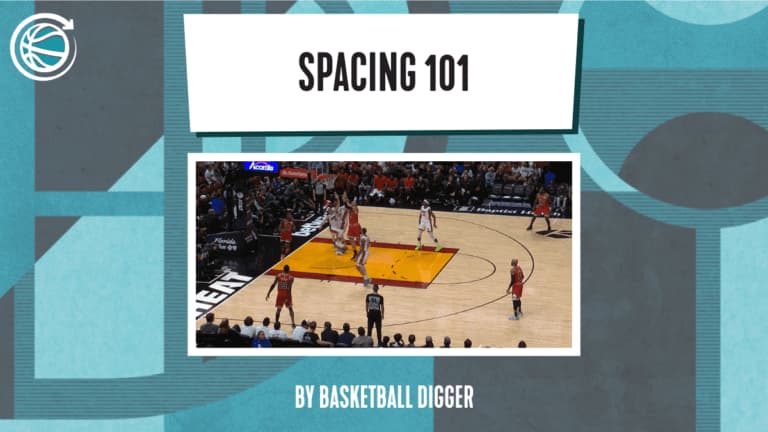
Spacing has changed the game. NBA offenses today look nothing like they did in the ’90s—more threes, better efficiency, and smarter shot selection. But why? The key lies in how teams use space to create and capitalize on advantages.
Mar 31, 2025
Simon Caret
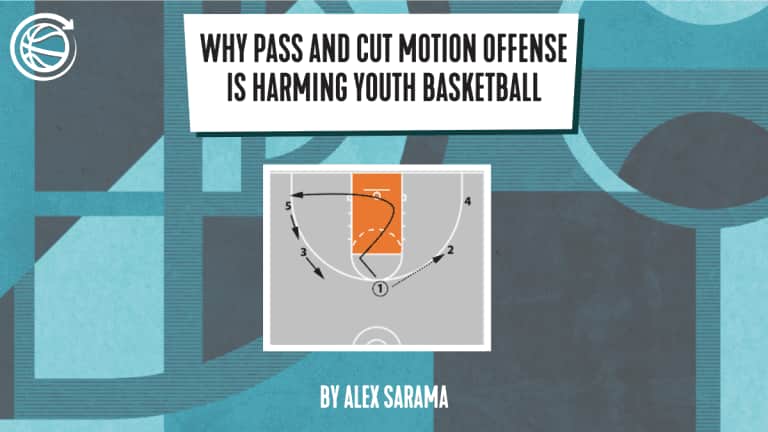
This article breaks down why pass and cut motion offense limits youth player development, and explores better ways to teach spacing, decision-making, and offensive creativity.
May 1, 2024
Alex Sarama
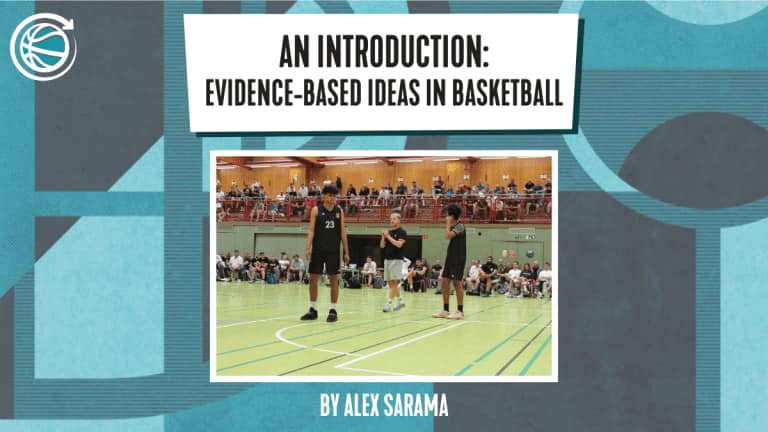
Approaches within the basketball industry are predominantly based upon experiential knowledge and traditions.


