

What is a Relay Pass in the Pick and Roll?




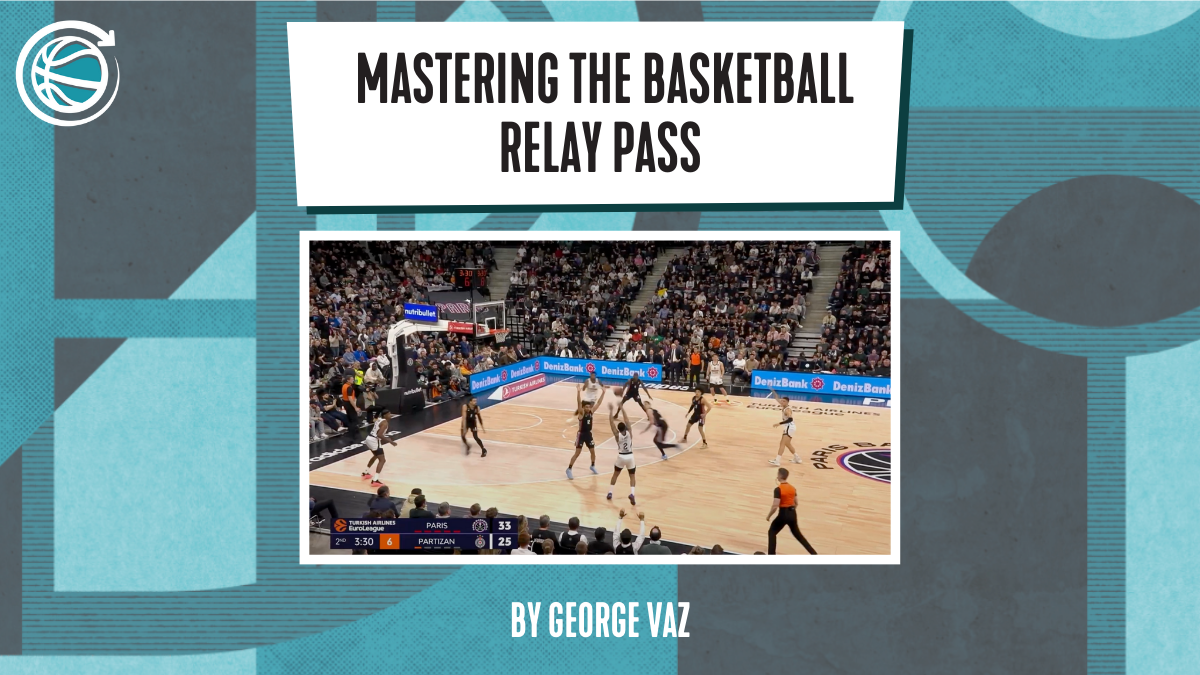
The relay pass is becoming an increasingly important weapon in modern pick and roll offenses. This blog explains what a relay pass is, when to use it, and why it’s particularly effective against aggressive defensive coverages.
What is a Relay pass?
When can your team use the relay and what defensive coverages may trigger the relay pass as a possible solution?
A relay pass is an offensive solution used against aggressive defensive coverages. For example, a switch, show or blitz. In a side pick and roll situation (e.g. a drag with a two side ahead, single side behind), the ball handler makes a quick pass ahead to a teammate positioned in the opposite 45-degree angle or slot area. As the pick and roll happens, an important detail is for this player to be shortening the pass by taking a few steps towards the handler. As the picker slips and makes their “long roll” towards the basket, the pass could be “relayed” into them. This is a great solution to pair with the pocket pass.
Why Use the Relay Pass?
- It can be a much easier pass to make versus trying to make a pocket pass over defenders in tight space.
- It can remove the MIG (most important guy or girl), also known as the “last” tag defender. In this case, note how the pass ahead removes Malcolm out of the paint. He sprints to guard Ntilikina once the first pass is made out of the pick and roll.
You can use the relay anytime the defense is in an aggressive coverage: switch, show or blitz. The relay would not work on a conservative coverage because the defense is unlikely to be heavily pulled in.
You can also use the relay pass in other pick and roll spacings: such as this example out of “clear” with an empty corner:
The dunker lifts to make himself a target, with a 2-on-1 advantage until the screener’s defender recovers. Zero second decisions are critical to exploit the advantage and find a high value shot.
Note that out of rub spacing (pick and roll in the middle with the two side behind), the relay pass would happen behind the handler. At Transforming, we emphasize avoiding the handler making the relay pass to the single side. Even though some coaches emphasize this and the single side player making themselves available by providing an outlet, the pass angle to the roller is much harder if the ball goes to the single side. Furthermore, a skip from the single side to two side is much more vulnerable to being picked off than a skip pass from the two side to the single side. This is because the single defender has to make a difficult decision to tag the roll or stay out, whereas 2 defenders can more effectively guard 3 if the single side is activated with the first pass out of the pick and roll.
Keep Learning About Pick and Roll Offense
Want to see how to teach all these coverage solutions in the most effective way possible? Be sure to check out our course on the “pick and roll offense.” This is the world’s most comprehensive course for developing these coverage solutions with your team: https://transformingbball.com/course-the-pick-and-roll-offense.


The relay pass is becoming an increasingly important weapon in modern pick and roll offenses. This blog explains what a relay pass is, when to use it, and why it’s particularly effective against aggressive defensive coverages.
What is a Relay pass?
When can your team use the relay and what defensive coverages may trigger the relay pass as a possible solution?
A relay pass is an offensive solution used against aggressive defensive coverages. For example, a switch, show or blitz. In a side pick and roll situation (e.g. a drag with a two side ahead, single side behind), the ball handler makes a quick pass ahead to a teammate positioned in the opposite 45-degree angle or slot area. As the pick and roll happens, an important detail is for this player to be shortening the pass by taking a few steps towards the handler. As the picker slips and makes their “long roll” towards the basket, the pass could be “relayed” into them. This is a great solution to pair with the pocket pass.
Why Use the Relay Pass?
- It can be a much easier pass to make versus trying to make a pocket pass over defenders in tight space.
- It can remove the MIG (most important guy or girl), also known as the “last” tag defender. In this case, note how the pass ahead removes Malcolm out of the paint. He sprints to guard Ntilikina once the first pass is made out of the pick and roll.
You can use the relay anytime the defense is in an aggressive coverage: switch, show or blitz. The relay would not work on a conservative coverage because the defense is unlikely to be heavily pulled in.
You can also use the relay pass in other pick and roll spacings: such as this example out of “clear” with an empty corner:
The dunker lifts to make himself a target, with a 2-on-1 advantage until the screener’s defender recovers. Zero second decisions are critical to exploit the advantage and find a high value shot.
Note that out of rub spacing (pick and roll in the middle with the two side behind), the relay pass would happen behind the handler. At Transforming, we emphasize avoiding the handler making the relay pass to the single side. Even though some coaches emphasize this and the single side player making themselves available by providing an outlet, the pass angle to the roller is much harder if the ball goes to the single side. Furthermore, a skip from the single side to two side is much more vulnerable to being picked off than a skip pass from the two side to the single side. This is because the single defender has to make a difficult decision to tag the roll or stay out, whereas 2 defenders can more effectively guard 3 if the single side is activated with the first pass out of the pick and roll.
Keep Learning About Pick and Roll Offense
Want to see how to teach all these coverage solutions in the most effective way possible? Be sure to check out our course on the “pick and roll offense.” This is the world’s most comprehensive course for developing these coverage solutions with your team: https://transformingbball.com/course-the-pick-and-roll-offense.




check what's trending

What is ecological dynamics and how is it connected to a constraints-led approach?
Dec 8, 2025
George Vaz

Are you searching for the best small sided games (SSGs) to improve your basketball practices? Want to replace boring, low-transfer drills with competitive games that actually develop player decision-making and in-game skills?
In this post, I’m sharing my top 5 favorite small-sided basketball games—designed to teach core concepts like closeouts, pick-and-roll, advantage creation, and transition offense and defense. These basketball SSGs are intense, purposeful, and built around real-game actions.
Whether you're coaching youth basketball, high school, or pros, these top small sided games will make your sessions more effective, more engaging, and more fun—for both players and coaches.
Let’s break down each game and how it can transform your practices.
Aug 4, 2025
George Vaz

Whether you’re coaching in the NBA, EuroLeague, or youth basketball, one thing remains universally true: the worst transition offense is still more efficient than the best half-court offense. Yet, many teams still struggle to fully capitalize on transition opportunities, often opting to slow down the game instead of pushing the pace. The question is, why? By running more intentionally, teams can create easier scoring opportunities. So why do some teams hesitate?
Apr 7, 2025
George Vaz
Spacing has changed the game. NBA offenses today look nothing like they did in the ’90s—more threes, better efficiency, and smarter shot selection. But why? The key lies in how teams use space to create and capitalize on advantages.
Mar 31, 2025
Simon Caret
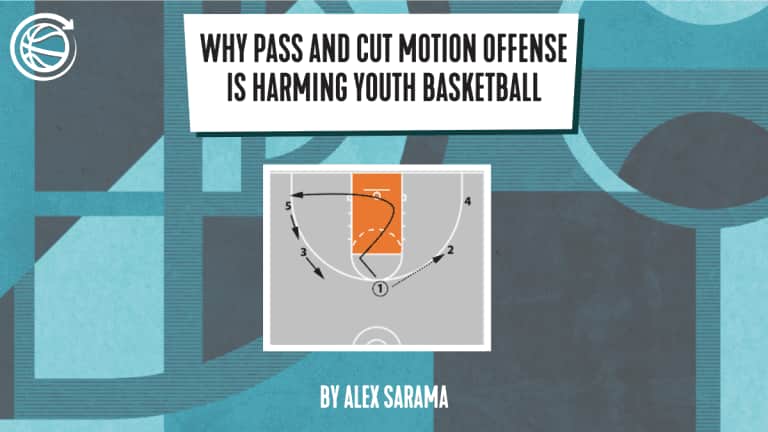
This article breaks down why pass and cut motion offense limits youth player development, and explores better ways to teach spacing, decision-making, and offensive creativity.
May 1, 2024
Alex Sarama
Approaches within the basketball industry are predominantly based upon experiential knowledge and traditions.


