

Coaching the Fast Break: Key Transition Offense Principles





Whether you’re coaching in the NBA, EuroLeague, or youth basketball, one thing remains universally true: the worst transition offense is still more efficient than the best half-court offense. Yet, many teams still struggle to fully capitalize on transition opportunities, often opting to slow down the game instead of pushing the pace. The question is, why? By running more intentionally, teams can create easier scoring opportunities. So why do some teams hesitate?
While the exact answer may vary, it often boils down to the fear of a “wasted” possession—where a team is forced into a quick layup or a rushed shot instead of getting a more open, high-quality look. Another reason is the desire of the head coach to control the game by always calling the next offensive play. This simply reduces the more efficient scoring opportunities which naturally appear in transition. Ultimately, finding a wide open shot is far easier when the defense is in a state of transition versus being already established in the half-court.
In this post, we’ll explore the Transforming Basketball transition principles of play, while understanding how to coach your team to make better decisions when running the break. Furthermore, we’ll share a few constraints that can be used in practice to improve decision-making in transition situations. Let’s dive into how you can maximize your team’s scoring opportunities.
The Importance of Transition Offense
Transition offense is a crucial part of your team’s offense because of it’s potential to generate high-percentage scoring opportunities. The more inefficient your half-court offense, the even more you need to run! This is because transition often leads to uncontested layups, open jump shots, or mismatches before the defense can get set. By pushing the pace, teams can capitalize on the numerical advantages which naturally appear.
Teaching Transition Offense Principles of Play
1. Push the Pace but Recognize Neutral: Encourage players to push the pace but know when to initiate the first trigger if they recognize neutral (no advantage). When in neutral, flow into a trigger within three seconds. This is the entire foundation of a conceptual offense.
2. Recognize a Numerical Advantage: In transition, teams may encounter numerical advantages such as 2-on-1’s, 3-on-2’s, 4-on-3s etc. Players should recognize these and capitalize on them through drive and kick sequences and kick ahead passes. This is another reason the two-side break is such an effective principle of play: it is a guaranteed 2-on-1 if the ball is skipped to the weakside because of how defenses load back to the middle of the paint.
3. Have Elite Running Habits: if your players do not react “lag free” or “win their first 3 steps”, the numerical advantages mentioned above will never appear. This is why you need an effective language to consistently encourage these transition principles.

Using Constraints to Improve Decision-Making
To improve decision-making in these scenarios, use a constraints-led approach. The small-sided games (SSGs) listed below have specific constraints to help your players make better decisions while maintaining a fast pace:
1. 5-on-4+1 Paint Start: The offense starts with a numerical advantage, with offense and defense moving around randomly inside the paint. The coach throws the ball to offense at any moment, cueing transition. A +1 defender waits on the baseline and can only sprint back once the ball crosses the half. Offense must find a high value shot before the defense recover to neutral (neutral is a turnover).
2. Non-ROB Shot Penalty: Minus three points if the offense takes a shot that’s not a ROB shot: Rhythm, Open, or Balanced (ROB). This forces better shot selection.
3. Constrain Shot Selection: only gold or silver medals. These include rim finishes or catch and shoot threes
4. Time Delay for Sprinting Defender: Adjust the time it takes for the +1 defender to return to force quicker decisions and pressure the offense into converting the advantage.
By emphasizing transition offense principles and improving decision-making, you can create more scoring opportunities and force the defense into difficult situations. With the right coaching mindset and drills, your team can thrive in transition, leading to better quality shots, more wins, and higher-scoring games throughout the season.
Alex Sarama breaks down the essentials of building a conceptual offense in this clinic, emphasizing the importance of playing fast in transition and converting advantages efficiently.


Whether you’re coaching in the NBA, EuroLeague, or youth basketball, one thing remains universally true: the worst transition offense is still more efficient than the best half-court offense. Yet, many teams still struggle to fully capitalize on transition opportunities, often opting to slow down the game instead of pushing the pace. The question is, why? By running more intentionally, teams can create easier scoring opportunities. So why do some teams hesitate?
While the exact answer may vary, it often boils down to the fear of a “wasted” possession—where a team is forced into a quick layup or a rushed shot instead of getting a more open, high-quality look. Another reason is the desire of the head coach to control the game by always calling the next offensive play. This simply reduces the more efficient scoring opportunities which naturally appear in transition. Ultimately, finding a wide open shot is far easier when the defense is in a state of transition versus being already established in the half-court.
In this post, we’ll explore the Transforming Basketball transition principles of play, while understanding how to coach your team to make better decisions when running the break. Furthermore, we’ll share a few constraints that can be used in practice to improve decision-making in transition situations. Let’s dive into how you can maximize your team’s scoring opportunities.
The Importance of Transition Offense
Transition offense is a crucial part of your team’s offense because of it’s potential to generate high-percentage scoring opportunities. The more inefficient your half-court offense, the even more you need to run! This is because transition often leads to uncontested layups, open jump shots, or mismatches before the defense can get set. By pushing the pace, teams can capitalize on the numerical advantages which naturally appear.
Teaching Transition Offense Principles of Play
1. Push the Pace but Recognize Neutral: Encourage players to push the pace but know when to initiate the first trigger if they recognize neutral (no advantage). When in neutral, flow into a trigger within three seconds. This is the entire foundation of a conceptual offense.
2. Recognize a Numerical Advantage: In transition, teams may encounter numerical advantages such as 2-on-1’s, 3-on-2’s, 4-on-3s etc. Players should recognize these and capitalize on them through drive and kick sequences and kick ahead passes. This is another reason the two-side break is such an effective principle of play: it is a guaranteed 2-on-1 if the ball is skipped to the weakside because of how defenses load back to the middle of the paint.
3. Have Elite Running Habits: if your players do not react “lag free” or “win their first 3 steps”, the numerical advantages mentioned above will never appear. This is why you need an effective language to consistently encourage these transition principles.
Using Constraints to Improve Decision-Making
To improve decision-making in these scenarios, use a constraints-led approach. The small-sided games (SSGs) listed below have specific constraints to help your players make better decisions while maintaining a fast pace:
1. 5-on-4+1 Paint Start: The offense starts with a numerical advantage, with offense and defense moving around randomly inside the paint. The coach throws the ball to offense at any moment, cueing transition. A +1 defender waits on the baseline and can only sprint back once the ball crosses the half. Offense must find a high value shot before the defense recover to neutral (neutral is a turnover).
2. Non-ROB Shot Penalty: Minus three points if the offense takes a shot that’s not a ROB shot: Rhythm, Open, or Balanced (ROB). This forces better shot selection.
3. Constrain Shot Selection: only gold or silver medals. These include rim finishes or catch and shoot threes
4. Time Delay for Sprinting Defender: Adjust the time it takes for the +1 defender to return to force quicker decisions and pressure the offense into converting the advantage.
By emphasizing transition offense principles and improving decision-making, you can create more scoring opportunities and force the defense into difficult situations. With the right coaching mindset and drills, your team can thrive in transition, leading to better quality shots, more wins, and higher-scoring games throughout the season.
Alex Sarama breaks down the essentials of building a conceptual offense in this clinic, emphasizing the importance of playing fast in transition and converting advantages efficiently.




check what's trending
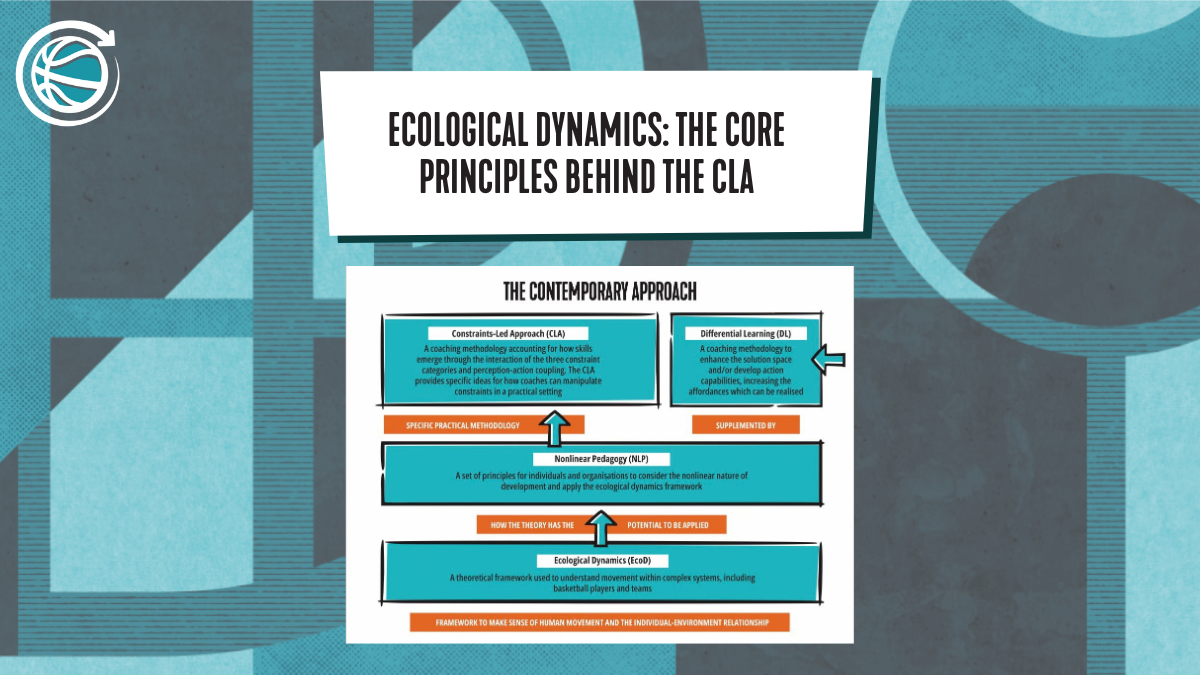
What is ecological dynamics and how is it connected to a constraints-led approach?
Dec 8, 2025
George Vaz

Are you searching for the best small sided games (SSGs) to improve your basketball practices? Want to replace boring, low-transfer drills with competitive games that actually develop player decision-making and in-game skills?
In this post, I’m sharing my top 5 favorite small-sided basketball games—designed to teach core concepts like closeouts, pick-and-roll, advantage creation, and transition offense and defense. These basketball SSGs are intense, purposeful, and built around real-game actions.
Whether you're coaching youth basketball, high school, or pros, these top small sided games will make your sessions more effective, more engaging, and more fun—for both players and coaches.
Let’s break down each game and how it can transform your practices.
Aug 4, 2025
George Vaz
Whether you’re coaching in the NBA, EuroLeague, or youth basketball, one thing remains universally true: the worst transition offense is still more efficient than the best half-court offense. Yet, many teams still struggle to fully capitalize on transition opportunities, often opting to slow down the game instead of pushing the pace. The question is, why? By running more intentionally, teams can create easier scoring opportunities. So why do some teams hesitate?
Apr 7, 2025
George Vaz
Spacing has changed the game. NBA offenses today look nothing like they did in the ’90s—more threes, better efficiency, and smarter shot selection. But why? The key lies in how teams use space to create and capitalize on advantages.
Mar 31, 2025
Simon Caret
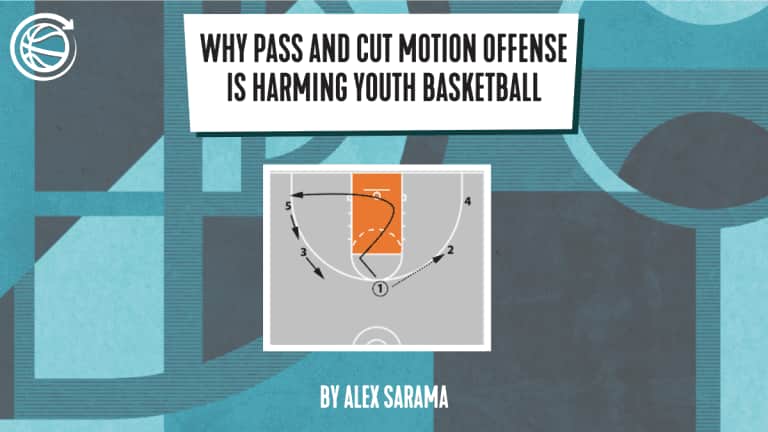
This article breaks down why pass and cut motion offense limits youth player development, and explores better ways to teach spacing, decision-making, and offensive creativity.
May 1, 2024
Alex Sarama
Approaches within the basketball industry are predominantly based upon experiential knowledge and traditions.


