

Prevent vs Punish: Essential Strategic Choices in Pick and Roll Offense




In the modern era of “pace and space,” the pick and roll is the most heavily utilized trigger to generate offensive advantages. However, as offenses have evolved, so have defensive schemes. To consistently create high-value scoring opportunities, an offense needs a structured framework for reading and attacking diverse coverages. As Michael Jordan famously noted, “the defense is always wrong.” In a conceptual offense, the offensive team’s goal is to find a coverage solution that exploits the specific tactical choices the defense makes.
To simplify this complex landscape, elite coaches categorize their pick and roll solutions into two distinct strategic choices: Prevent and Punish.
The “Prevent vs. Punish” Framework
- Prevent: This requires anticipating the defensive coverage and choosing an action that stops the defense from executing it. When you prevent a coverage, you are essentially not allowing the defense to guard your triggers how they want. For example, in the clip below, you will see Nesmith set a screen on Haliburton’s defender, giving him more space to attack downhill and create a 2v1.
- Punish: If the defense successfully establishes their desired coverage (like a drop, a switch, or a hard show), the offense punishes the cover by using a coverage solution. Different players will execute certain coverage solutions better against certain coverages.
Let’s break down how the “Prevent vs. Punish” dynamic applies to two of the most common and disruptive pick and roll coverages: the Show (Hedge) and the Switch.
Punish the Coverage
There will be any number of ways to attack any coverage. There is a tax on any type of defense. Here are some of the coverage solutions that could be used against an aggressive coverage:
- Reject – Ball handler goes away from the pick and the coverage. Can be used VS any coverage.
- Slip – Picker cuts or slips to the basket before setting the pick
- Crack and slip – Often referred to as a touch screen. Once the picker recognizes that the ball handler already has an advantage, they can quickly touch and slip to the basket. Crack refers to the angle of the pick that coaches want to emphasize.
- Crack and roll – Used VS conservative coverages as the picker must hit and hold the on-ball defender to help create the advantage and then they can roll to the basket.
- Relay – A quick pass out of the pick and roll. Used VS aggressive coverages. In a middle pick and roll the relay pass is behind.
In a side pick and roll the relay pass is ahead. This is to stretch the defense.
- Curl – Attack downhill to the basket.
- Split – Ball-handler splits the pickers defender and his own.
- Shoot – Ball handler recognizes a conservative coverage or a late switch and shoots the pull up.
- Bingo – On-ball defender anticipates the pick early and opens his hips to force the ball to the pick. The ball-handler attacks this gap.
- Short roll – The picker stops short on the roll instead of rolling all the way to the basket. After they catch the ball there it is a 4-on-3.
- Mismatch – Solo or 1-on-1 after a switch. Can be in the post or on the perimeter.
Prevent the Coverage
If a team is struggling to find a coverage solution for a particular coverage, this is called becoming ‘Prisoners of the Coverage’. Instead, teams can manipulate the coverage by preventing it from happening or distorting the coverage (eg., turning an aggressive switch where the defender jumps out at the ball into a late switch).
Here are ways to prevent an aggressive coverage or distort it into a conservative coverage:
- Run a get
- Flip the pick
- Arrive alone (Eg., quick burst of speed, fake other trigger)
- Roll and twist to prevent second hedge
- Set flare screen, wide or back screen before pick
- Come off a screen away and Set a Pick (Pick is set on the player who comes off the screen in the clip)
- Come off pin down screen and Set a Pick = “Ram”
- Re-trigger with the same defender in the action
And ways prevent or distort a conservative coverage:
- Roll into the on-ball defender going under
- Twist after the initial pick to force an over
It is a lot more common for teams to distort aggressive coverages into conservative coverages than the other way around. This means that coaches should design small-sided games with this in mind.
Coaching the Concepts via the CLA
You cannot effectively teach your players to dynamically prevent or punish coverages by running 5-on-0 “on-air” drills. Players must learn to perceive these fleeting affordances against live human bodies reacting in real-time.
To build these skills, coaches should use the Constraints-Led Approach (CLA) to design highly specific Small-Sided Games (SSGs). An excellent activity to train these decisions is the 2-on-2 Wall Pick and Roll. By setting up invisible boundaries (like the lane line extended) that players cannot cross, you naturally simulate the spatial constraints of a real game and mimic the presence of a tag defender.
From there, you can manipulate task constraints to pull out the exact behaviors you want:
- To encourage preventing a coverage: Instruct the defense to aggressively switch, and implement a constraint if the defense is able to aggressively switch it results in a turnover for the offense. Equip player with “Ram” screens and “wides” to ensure they have the tools to do this.
- To encourage punishing a coverage: Implement a “one opportunity constraint.” Tell the offense they have exactly one opportunity to create dominoes out of their trigger; if they fail to punish the coverage, you blow the whistle for an automatic turnover. This eliminates passivity and forces rapid, decisive coverage solutions.
Further Learning
If you want to dive deeper into how to structure an entire offensive playbook around this framework, I highly recommend listening to Episode 51 of The Transforming Basketball Podcast. In this episode, expert coach Zico Coronel unpacks his exact methodology for charting spacings, defensive coverages, and the specific ways to “prevent and punish” each scenario. It is an incredible, practical resource that details how to organize these complex decisions into a clear, digestible matrix for your coaching staff and players.
Coach’s Note: For more on ecological dynamics and practice design, head over to our 21 Small-Sided Games Book PDF to find more SSG templates for your next practice.

In the modern era of “pace and space,” the pick and roll is the most heavily utilized trigger to generate offensive advantages. However, as offenses have evolved, so have defensive schemes. To consistently create high-value scoring opportunities, an offense needs a structured framework for reading and attacking diverse coverages. As Michael Jordan famously noted, “the defense is always wrong.” In a conceptual offense, the offensive team’s goal is to find a coverage solution that exploits the specific tactical choices the defense makes.
To simplify this complex landscape, elite coaches categorize their pick and roll solutions into two distinct strategic choices: Prevent and Punish.
The “Prevent vs. Punish” Framework
- Prevent: This requires anticipating the defensive coverage and choosing an action that stops the defense from executing it. When you prevent a coverage, you are essentially not allowing the defense to guard your triggers how they want. For example, in the clip below, you will see Nesmith set a screen on Haliburton’s defender, giving him more space to attack downhill and create a 2v1.
- Punish: If the defense successfully establishes their desired coverage (like a drop, a switch, or a hard show), the offense punishes the cover by using a coverage solution. Different players will execute certain coverage solutions better against certain coverages.
Let’s break down how the “Prevent vs. Punish” dynamic applies to two of the most common and disruptive pick and roll coverages: the Show (Hedge) and the Switch.
Punish the Coverage
There will be any number of ways to attack any coverage. There is a tax on any type of defense. Here are some of the coverage solutions that could be used against an aggressive coverage:
- Reject – Ball handler goes away from the pick and the coverage. Can be used VS any coverage.
- Slip – Picker cuts or slips to the basket before setting the pick
- Crack and slip – Often referred to as a touch screen. Once the picker recognizes that the ball handler already has an advantage, they can quickly touch and slip to the basket. Crack refers to the angle of the pick that coaches want to emphasize.
- Crack and roll – Used VS conservative coverages as the picker must hit and hold the on-ball defender to help create the advantage and then they can roll to the basket.
- Relay – A quick pass out of the pick and roll. Used VS aggressive coverages. In a middle pick and roll the relay pass is behind.
In a side pick and roll the relay pass is ahead. This is to stretch the defense.
- Curl – Attack downhill to the basket.
- Split – Ball-handler splits the pickers defender and his own.
- Shoot – Ball handler recognizes a conservative coverage or a late switch and shoots the pull up.
- Bingo – On-ball defender anticipates the pick early and opens his hips to force the ball to the pick. The ball-handler attacks this gap.
- Short roll – The picker stops short on the roll instead of rolling all the way to the basket. After they catch the ball there it is a 4-on-3.
- Mismatch – Solo or 1-on-1 after a switch. Can be in the post or on the perimeter.
Prevent the Coverage
If a team is struggling to find a coverage solution for a particular coverage, this is called becoming ‘Prisoners of the Coverage’. Instead, teams can manipulate the coverage by preventing it from happening or distorting the coverage (eg., turning an aggressive switch where the defender jumps out at the ball into a late switch).
Here are ways to prevent an aggressive coverage or distort it into a conservative coverage:
- Run a get
- Flip the pick
- Arrive alone (Eg., quick burst of speed, fake other trigger)
- Roll and twist to prevent second hedge
- Set flare screen, wide or back screen before pick
- Come off a screen away and Set a Pick (Pick is set on the player who comes off the screen in the clip)
- Come off pin down screen and Set a Pick = “Ram”
- Re-trigger with the same defender in the action
And ways prevent or distort a conservative coverage:
- Roll into the on-ball defender going under
- Twist after the initial pick to force an over
It is a lot more common for teams to distort aggressive coverages into conservative coverages than the other way around. This means that coaches should design small-sided games with this in mind.
Coaching the Concepts via the CLA
You cannot effectively teach your players to dynamically prevent or punish coverages by running 5-on-0 “on-air” drills. Players must learn to perceive these fleeting affordances against live human bodies reacting in real-time.
To build these skills, coaches should use the Constraints-Led Approach (CLA) to design highly specific Small-Sided Games (SSGs). An excellent activity to train these decisions is the 2-on-2 Wall Pick and Roll. By setting up invisible boundaries (like the lane line extended) that players cannot cross, you naturally simulate the spatial constraints of a real game and mimic the presence of a tag defender.
From there, you can manipulate task constraints to pull out the exact behaviors you want:
- To encourage preventing a coverage: Instruct the defense to aggressively switch, and implement a constraint if the defense is able to aggressively switch it results in a turnover for the offense. Equip player with “Ram” screens and “wides” to ensure they have the tools to do this.
- To encourage punishing a coverage: Implement a “one opportunity constraint.” Tell the offense they have exactly one opportunity to create dominoes out of their trigger; if they fail to punish the coverage, you blow the whistle for an automatic turnover. This eliminates passivity and forces rapid, decisive coverage solutions.
Further Learning
If you want to dive deeper into how to structure an entire offensive playbook around this framework, I highly recommend listening to Episode 51 of The Transforming Basketball Podcast. In this episode, expert coach Zico Coronel unpacks his exact methodology for charting spacings, defensive coverages, and the specific ways to “prevent and punish” each scenario. It is an incredible, practical resource that details how to organize these complex decisions into a clear, digestible matrix for your coaching staff and players.
Coach’s Note: For more on ecological dynamics and practice design, head over to our 21 Small-Sided Games Book PDF to find more SSG templates for your next practice.




check what's trending

What is ecological dynamics and how is it connected to a constraints-led approach?
Dec 8, 2025
George Vaz

Are you searching for the best small sided games (SSGs) to improve your basketball practices? Want to replace boring, low-transfer drills with competitive games that actually develop player decision-making and in-game skills?
In this post, I’m sharing my top 5 favorite small-sided basketball games—designed to teach core concepts like closeouts, pick-and-roll, advantage creation, and transition offense and defense. These basketball SSGs are intense, purposeful, and built around real-game actions.
Whether you're coaching youth basketball, high school, or pros, these top small sided games will make your sessions more effective, more engaging, and more fun—for both players and coaches.
Let’s break down each game and how it can transform your practices.
Aug 4, 2025
George Vaz

Whether you’re coaching in the NBA, EuroLeague, or youth basketball, one thing remains universally true: the worst transition offense is still more efficient than the best half-court offense. Yet, many teams still struggle to fully capitalize on transition opportunities, often opting to slow down the game instead of pushing the pace. The question is, why? By running more intentionally, teams can create easier scoring opportunities. So why do some teams hesitate?
Apr 7, 2025
George Vaz
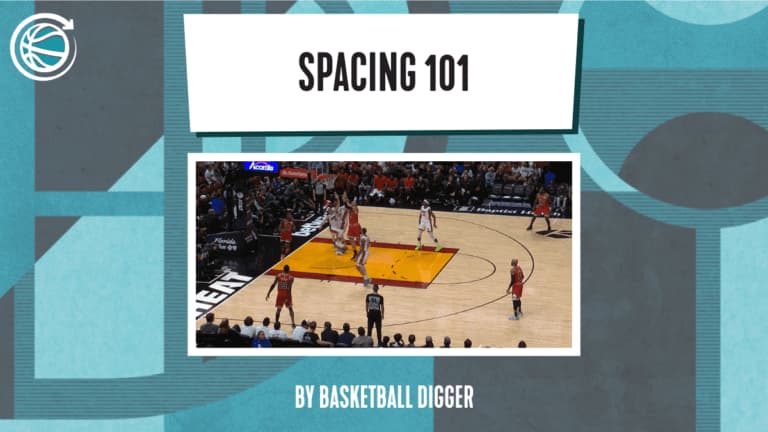
Spacing has changed the game. NBA offenses today look nothing like they did in the ’90s—more threes, better efficiency, and smarter shot selection. But why? The key lies in how teams use space to create and capitalize on advantages.
Mar 31, 2025
Simon Caret
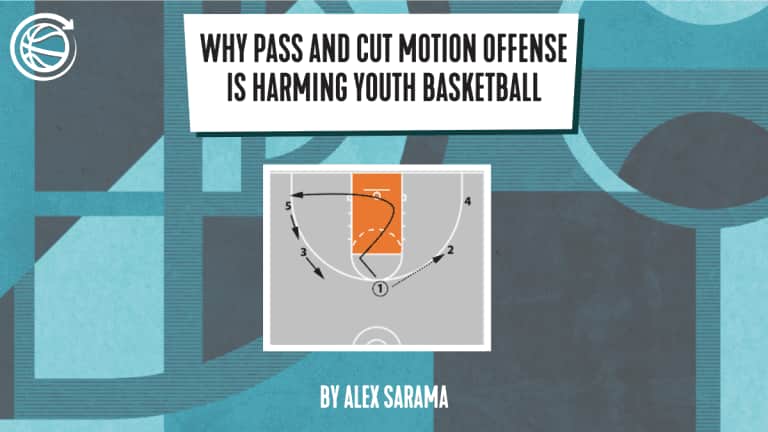
This article breaks down why pass and cut motion offense limits youth player development, and explores better ways to teach spacing, decision-making, and offensive creativity.
May 1, 2024
Alex Sarama
Approaches within the basketball industry are predominantly based upon experiential knowledge and traditions.


