

Powerful Rate Limiters: Basketball Warm-Ups for Better Skill Acquisition





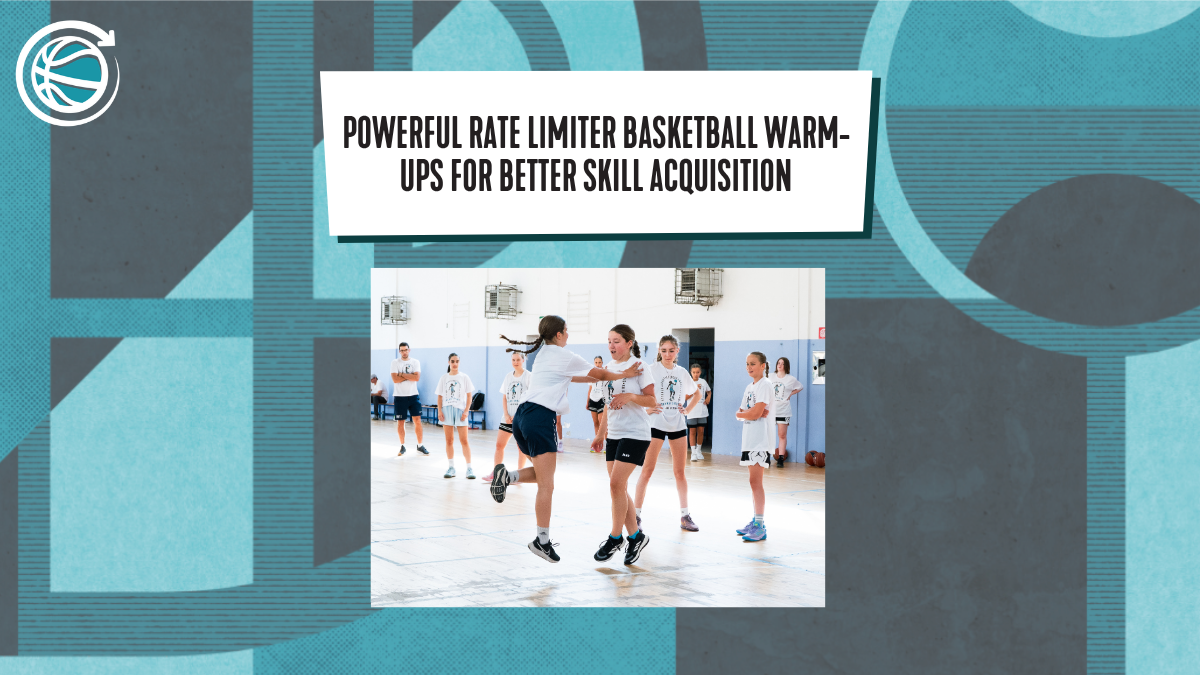
Are your warm-ups truly preparing your players for the chaotic, unpredictable nature of a live basketball game, or are they just programming them to be really good at stretching and running in straight lines?
Suppose I told you that the most overlooked part of basketball practice might actually be the most important. If you walk into almost any basketball gymnasium, you will see players engaging in the exact same pre-practice rituals: jogging laps, performing static or dynamic stretching lines, and mindlessly rehearsing 1-on-0 layup lines. While these routines might briefly raise the body’s core temperature, they offer very little benefit for actual skill acquisition. They waste 10 to 15 minutes of prime practice real estate doing “dead” movement problems that bear absolutely zero resemblance to the sport.
To build highly adaptable, elite performers, we must rethink the warm-up. Instead of viewing it as a physical chore to endure before the “real” practice begins, we should view the warm-up as a critical learning window. By identifying our players’ specific rate limiters and designing Small-Sided Games (SSGs) to target them, we can accelerate development from the exact moment the players step onto the hardwood.
What is a Rate Limiter?
A rate limiter is a specific physical, cognitive, or emotional bottleneck that acts as a temporary “handbrake” on a player’s learning and skill expression.
Rate limiters are the underlying reasons why a player cannot execute a specific functional solution in a game. For example, a young player might consistently throw poor passes in transition. A traditional coach might assume the player has “bad passing technique.” However, a coach utilizing the Constraints-Led Approach (CLA) will dig deeper.
- Is the rate limiter a physical lack of arm strength?
- Is it a perceptual inability to read the shifting defense while moving at full speed?
- Or is it an emotional fear of making a mistake under pressure?
Once you identify the specific rate limiter holding a player or your team back, your Player Development Plan (PDP) gains incredible clarity. You no longer have to rely on generic, one-size-fits-all drills; instead, you can actively design practice constraints that force the players to confront and overcome their unique bottlenecks.
The Warm-Up as a Laboratory for Skill Adaptation
The warm-up is the perfect, low-stakes environment to target these rate limiters. By using gamified SSGs in the first 10-15 minutes of practice, we invite players to safely unfreeze their “degrees of freedom”. When athletes play tag games, keep-away, or modified sports like soccer or handball, they are forced to lunge, squat, change direction, and contort their bodies in ways they never would in a rehearsed dynamic stretching line. This promotes repetition without repetition—repeating the process of solving a dynamic problem without ever moving the exact same way twice.
Here is how you can directly connect specific rate limiters to custom-designed warm-up SSGs for your team.
1. Rate Limiter: Poor Ball Control Under Physical Pressure
Many players look like magicians when handling the ball on-air, but the moment a defender gets into their personal space, their eyes drop, their posture stiffens, and they turn the ball over. Their rate limiter is an inability to couple their perception (seeing the floor) with their action (dribbling) under physical duress.
The Warm-Up Solution: Shield Tag (1-on-1+1)
Instead of doing two-ball stationary dribbling, play Shield Tag. Group players into threes in a highly confined space (like the center circle). One player is the offensive ball-handler, one is the defender (tagger), and the third is a “shield”. The offense must continuously dribble to stay alive while the shield actively moves to physically block the defender from tagging the ball-handler.
Why it works: This game organically forces the ball-handler to keep their eyes up to read the defender’s pursuit angle and use their body leverage to protect the ball. It is inherently chaotic, forcing players to discover functional ball-protection solutions without the coach ever having to scream, “Keep your head up!”.
Demonstration of the Shield Tag drill focusing on ball protection and spatial awareness.
2. Rate Limiter: Sluggish “Zero-Second” Pass Decisions
A major rate limiter for many teams is that players hold the ball too long upon catching it, allowing the defense to recover to neutral. They lack the ability to make “zero-second” (first-touch) decisions to pass on time and on target.
The Warm-Up Solution: Basketball Rondo
Adapt the classic soccer “Rondo” for the basketball court. Play 4-on-2 or 5-on-3 keep-away in a designated grid. The offensive team must string together a set number of consecutive passes to win a point, while the defense tries to deflect the ball or tag the player in possession.
Why it works: To survive against an overloaded defense in a tight space, the offense cannot hold the ball. You can manipulate constraints to target specific perceptual bottlenecks: require players to call out the name of the teammate they are passing to, mandate that every pass must be a bounce pass, or constrain players to move to a new spot immediately after releasing the ball. This primes the brain for rapid, lag-free decision-making before you even begin your half-court offensive segments.
High-speed basketball rondo drill with players practicing quick passing and zero-second decision making under defensive pressure.
3. Rate Limiter: Slow Transition Reactions
If your team continually fails to generate numerical advantages (like 3-on-2s or 2-on-1s) in transition, their rate limiter could be a lack of “lag-free reactions”. They are not winning their first three steps when possession changes.
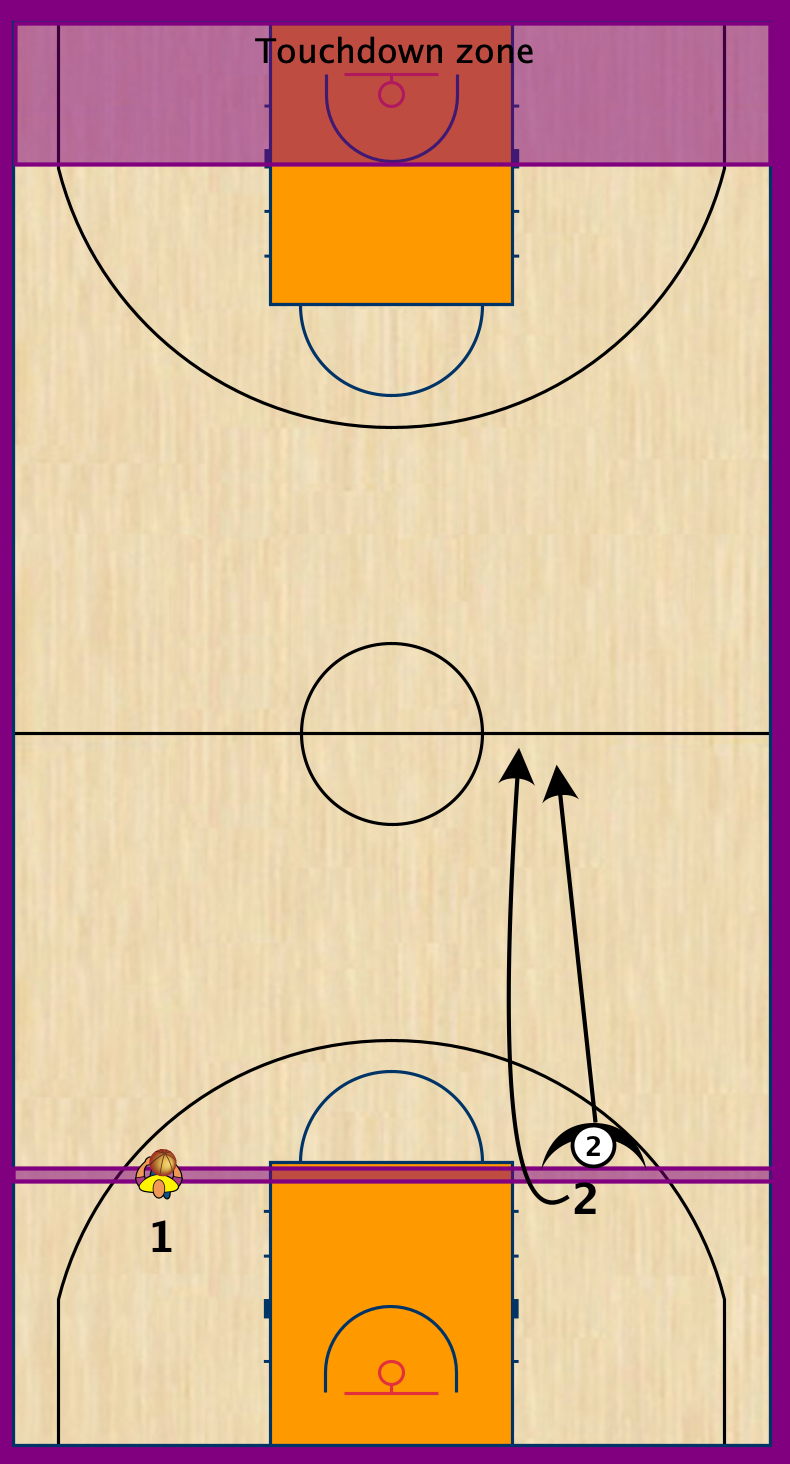
The Warm-Up Solution: Touchdown Tag
Set up pairs on the free throw line extended. The offensive player starts without the ball, and the defender stands exactly one arm’s length away. The game is live the exact moment the offensive player moves. The offense’s goal is to sprint and receive a pass from a coach to score a “touchdown” (or a layup) before the defender can catch up and two-hand tag them.
Why it works: It completely gamifies the physical trait of sudden acceleration. The offensive player is entirely focused on the external goal of escaping the defender, naturally organizing their body to sprint with maximum force and efficiency. You are actively training explosive transition habits while the players are just having fun playing tag.
Stop Wasting the First 15 Minutes
The traditional, robotic warm-up is a relic of the past. If you want to maximize your team’s potential, you must stop treating the warm-up as mere physical preparation and start treating it as cognitive and perceptual preparation.
Evaluate your team. What are the specific rate limiters preventing your players from executing your principles of play? Identify those bottlenecks, tear down your static warmup lines, and design competitive, constraint-led games that force your athletes to actively solve those exact problems. When you design your warm-ups via rate limiters, you don’t just elevate their heart rates—you elevate their basketball intelligence.




Are your warm-ups truly preparing your players for the chaotic, unpredictable nature of a live basketball game, or are they just programming them to be really good at stretching and running in straight lines?
Suppose I told you that the most overlooked part of basketball practice might actually be the most important. If you walk into almost any basketball gymnasium, you will see players engaging in the exact same pre-practice rituals: jogging laps, performing static or dynamic stretching lines, and mindlessly rehearsing 1-on-0 layup lines. While these routines might briefly raise the body’s core temperature, they offer very little benefit for actual skill acquisition. They waste 10 to 15 minutes of prime practice real estate doing “dead” movement problems that bear absolutely zero resemblance to the sport.
To build highly adaptable, elite performers, we must rethink the warm-up. Instead of viewing it as a physical chore to endure before the “real” practice begins, we should view the warm-up as a critical learning window. By identifying our players’ specific rate limiters and designing Small-Sided Games (SSGs) to target them, we can accelerate development from the exact moment the players step onto the hardwood.
What is a Rate Limiter?
A rate limiter is a specific physical, cognitive, or emotional bottleneck that acts as a temporary “handbrake” on a player’s learning and skill expression.
Rate limiters are the underlying reasons why a player cannot execute a specific functional solution in a game. For example, a young player might consistently throw poor passes in transition. A traditional coach might assume the player has “bad passing technique.” However, a coach utilizing the Constraints-Led Approach (CLA) will dig deeper.
- Is the rate limiter a physical lack of arm strength?
- Is it a perceptual inability to read the shifting defense while moving at full speed?
- Or is it an emotional fear of making a mistake under pressure?
Once you identify the specific rate limiter holding a player or your team back, your Player Development Plan (PDP) gains incredible clarity. You no longer have to rely on generic, one-size-fits-all drills; instead, you can actively design practice constraints that force the players to confront and overcome their unique bottlenecks.
The Warm-Up as a Laboratory for Skill Adaptation
The warm-up is the perfect, low-stakes environment to target these rate limiters. By using gamified SSGs in the first 10-15 minutes of practice, we invite players to safely unfreeze their “degrees of freedom”. When athletes play tag games, keep-away, or modified sports like soccer or handball, they are forced to lunge, squat, change direction, and contort their bodies in ways they never would in a rehearsed dynamic stretching line. This promotes repetition without repetition—repeating the process of solving a dynamic problem without ever moving the exact same way twice.
Here is how you can directly connect specific rate limiters to custom-designed warm-up SSGs for your team.
1. Rate Limiter: Poor Ball Control Under Physical Pressure
Many players look like magicians when handling the ball on-air, but the moment a defender gets into their personal space, their eyes drop, their posture stiffens, and they turn the ball over. Their rate limiter is an inability to couple their perception (seeing the floor) with their action (dribbling) under physical duress.
The Warm-Up Solution: Shield Tag (1-on-1+1)
Instead of doing two-ball stationary dribbling, play Shield Tag. Group players into threes in a highly confined space (like the center circle). One player is the offensive ball-handler, one is the defender (tagger), and the third is a “shield”. The offense must continuously dribble to stay alive while the shield actively moves to physically block the defender from tagging the ball-handler.
Why it works: This game organically forces the ball-handler to keep their eyes up to read the defender’s pursuit angle and use their body leverage to protect the ball. It is inherently chaotic, forcing players to discover functional ball-protection solutions without the coach ever having to scream, “Keep your head up!”.
Demonstration of the Shield Tag drill focusing on ball protection and spatial awareness.
2. Rate Limiter: Sluggish “Zero-Second” Pass Decisions
A major rate limiter for many teams is that players hold the ball too long upon catching it, allowing the defense to recover to neutral. They lack the ability to make “zero-second” (first-touch) decisions to pass on time and on target.
The Warm-Up Solution: Basketball Rondo
Adapt the classic soccer “Rondo” for the basketball court. Play 4-on-2 or 5-on-3 keep-away in a designated grid. The offensive team must string together a set number of consecutive passes to win a point, while the defense tries to deflect the ball or tag the player in possession.
Why it works: To survive against an overloaded defense in a tight space, the offense cannot hold the ball. You can manipulate constraints to target specific perceptual bottlenecks: require players to call out the name of the teammate they are passing to, mandate that every pass must be a bounce pass, or constrain players to move to a new spot immediately after releasing the ball. This primes the brain for rapid, lag-free decision-making before you even begin your half-court offensive segments.
High-speed basketball rondo drill with players practicing quick passing and zero-second decision making under defensive pressure.
3. Rate Limiter: Slow Transition Reactions
If your team continually fails to generate numerical advantages (like 3-on-2s or 2-on-1s) in transition, their rate limiter could be a lack of “lag-free reactions”. They are not winning their first three steps when possession changes.
The Warm-Up Solution: Touchdown Tag
Set up pairs on the free throw line extended. The offensive player starts without the ball, and the defender stands exactly one arm’s length away. The game is live the exact moment the offensive player moves. The offense’s goal is to sprint and receive a pass from a coach to score a “touchdown” (or a layup) before the defender can catch up and two-hand tag them.
Why it works: It completely gamifies the physical trait of sudden acceleration. The offensive player is entirely focused on the external goal of escaping the defender, naturally organizing their body to sprint with maximum force and efficiency. You are actively training explosive transition habits while the players are just having fun playing tag.
Stop Wasting the First 15 Minutes
The traditional, robotic warm-up is a relic of the past. If you want to maximize your team’s potential, you must stop treating the warm-up as mere physical preparation and start treating it as cognitive and perceptual preparation.
Evaluate your team. What are the specific rate limiters preventing your players from executing your principles of play? Identify those bottlenecks, tear down your static warmup lines, and design competitive, constraint-led games that force your athletes to actively solve those exact problems. When you design your warm-ups via rate limiters, you don’t just elevate their heart rates—you elevate their basketball intelligence.




check what's trending

What is ecological dynamics and how is it connected to a constraints-led approach?
Dec 8, 2025
George Vaz

Are you searching for the best small sided games (SSGs) to improve your basketball practices? Want to replace boring, low-transfer drills with competitive games that actually develop player decision-making and in-game skills?
In this post, I’m sharing my top 5 favorite small-sided basketball games—designed to teach core concepts like closeouts, pick-and-roll, advantage creation, and transition offense and defense. These basketball SSGs are intense, purposeful, and built around real-game actions.
Whether you're coaching youth basketball, high school, or pros, these top small sided games will make your sessions more effective, more engaging, and more fun—for both players and coaches.
Let’s break down each game and how it can transform your practices.
Aug 4, 2025
George Vaz

Whether you’re coaching in the NBA, EuroLeague, or youth basketball, one thing remains universally true: the worst transition offense is still more efficient than the best half-court offense. Yet, many teams still struggle to fully capitalize on transition opportunities, often opting to slow down the game instead of pushing the pace. The question is, why? By running more intentionally, teams can create easier scoring opportunities. So why do some teams hesitate?
Apr 7, 2025
George Vaz
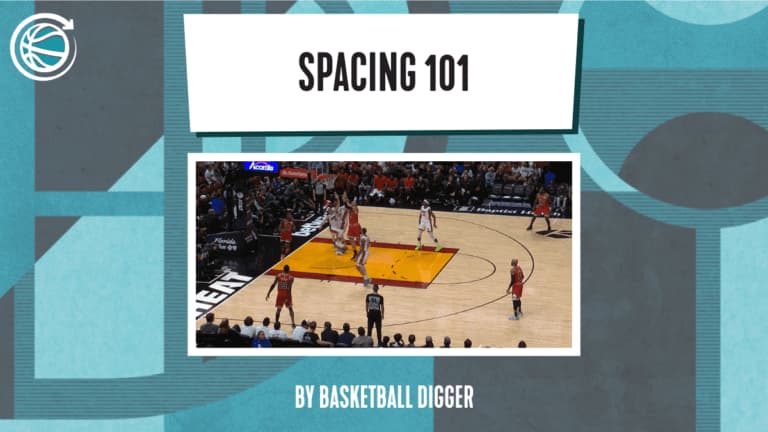
Spacing has changed the game. NBA offenses today look nothing like they did in the ’90s—more threes, better efficiency, and smarter shot selection. But why? The key lies in how teams use space to create and capitalize on advantages.
Mar 31, 2025
Simon Caret
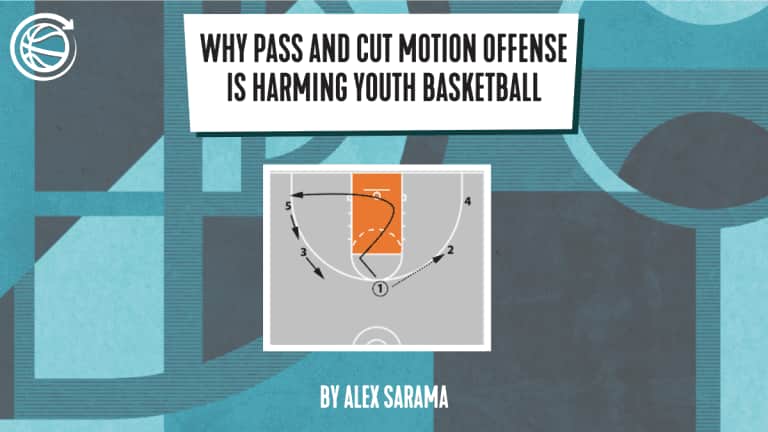
This article breaks down why pass and cut motion offense limits youth player development, and explores better ways to teach spacing, decision-making, and offensive creativity.
May 1, 2024
Alex Sarama
Approaches within the basketball industry are predominantly based upon experiential knowledge and traditions.


