

Low Post Playmaking Hub: Essential Modern Basketball Offense Concepts





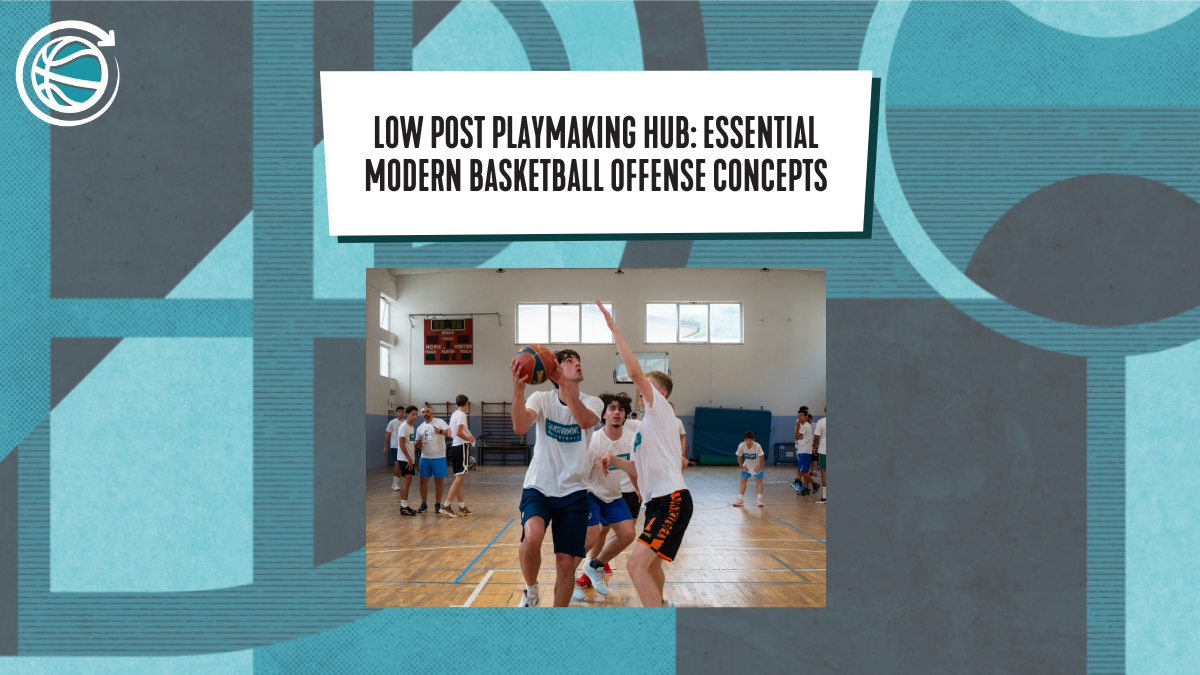
For decades, the low post was the undisputed focal point of a traditional basketball offense. Strategy dictated dumping the ball into a stationary big man while the other four players stood completely still, watching a prolonged and bruising 1-on-1 isolation sequence unfold. This tactic has all but vanished in the modern game and some reasons why are:
-
The Math of the Three-Pointer: Modern analytics proved that shooting 33% from beyond the arc yields the same offensive efficiency as shooting 50% on contested two-point post-ups. Teams now prioritize the spacing and high-value returns of three-pointers and spacing over grueling low-post battles.
-
Defensive Rule Changes and Spacing: The legalization of zone defenses and sophisticated help-side rotations makes it incredibly easy for defenses to swarm a post player and choke the paint. Consequently, offenses favor open spacing and pick-and-roll schemes that force defenders to cover more ground.
-
The Rise of Versatile “Positionless” Players: Modern big men are now expected to stretch the floor, handle the ball, and shoot from the perimeter rather than just camp near the rim. This skill evolution has transformed traditional centers into dynamic playmakers who create higher-efficiency looks for the entire team.
For the above reasons and the fact that the post entry pass is one of the highest turnover % plays in the game has led to more teams getting away from using the post to run their offense.
However, as the modern game has evolved to prioritize “pace and space,” the traditional, static post-up has rightfully been scrutinized for its overall inefficiency. But this shift does not mean that the low post is dead. Within a modern conceptual offense, the low post remains an incredibly dangerous weapon, not as a black hole for isolation scoring, but as a dynamic “hub” for conceptual triggers and elite playmaking.
1. Implement the “My Turn, Your Turn” Decision Framework
To simplify decision-making when the ball is entered into the post, we utilize a concept called “My Turn, Your Turn.” This provides a clear, conceptual framework that empowers the post player to read their affordance landscape rapidly and act with zero-second decision-making.
The “My Turn” Phase
“My Turn” occurs when the post player catches the ball and immediately perceives a clear, actionable advantage.
- Size Mismatch: A significant physical advantage over a smaller defender.
- Defensive Error: The defender is out of position or “caught sleeping” on the catch.
- Action: The player must make a quick, decisive move to get all the way inside the smile. They must attack before the defense can send help.
The “Your Turn” Phase
If there is no immediate 1-on-1 advantage, the post player transitions to “Your Turn.” Instead of forcing a bad, heavily contested shot, the post player holds their ground and transforms into a playmaking hub for their perimeter teammates.
2. Utilize the Post as a Hub for Modern Conceptual Triggers
During the “Your Turn” phase, the players on the perimeter do not stand and watch; they immediately initiate movement by running triggers. A trigger is a specific offensive action designed to cause the first “domino” to fall.
When the ball is anchored in the post hub, the perimeter players can run triggers such as:
- Splits: A screen-away action involving two perimeter players.
- Flare Screens: Forcing the defense to navigate off-ball screens while the ball is close to the basket.
- Grenade: Utilizing the post player as a moving screener and passer.
- Double Stagger Away: A double screen away to get shooters open.
Because the post player has the ball secured in a highly threatening area, the defense’s attention is naturally pulled inward. If two defenders miscommunicate on an action, the post player hits the slipping screener diving to the rim. If the defense sags, the post player kicks it out for a “silver medal” catch-and-shoot three-pointer.
3. Developing Global Players Using the CLA
Shifting to this conceptual use of the post is incredibly beneficial for long-term player development. We must strive to develop global, positionless players who are comfortable solving problems in all areas of the floor.
Using the post as a trigger, especially in youth basketball, allows players to work on their pivoting and footwork.
SSG: 3-on-3 Post, Solo or Blast Cut Start
- How it Works: Players have to trigger with any of the triggers here: Post, Solo or Blast Cut. Live after a trigger.
- Constraints & Scoring: Double points for a score from the post up trigger (directly or if dominoes is created from it.
Revolutionary Resources for Further Learning
If you are looking to visually understand how to implement these exact concepts, I highly recommend checking out the Transforming Basketball YouTube video titled “How to Turn the Post Into High-Value Offense.”
This video provides a complete breakdown showing exactly how to use the low post as a playmaking hub. It demonstrates how splits, handoffs, and triggers can be utilized to create high-value shots across your entire team. It is an essential, practical resource for any coach looking to modernize their interior attack and fit post play into a positionless system.
Conclusion
By abandoning the rigid, isolation-heavy post-ups of the past, coaches can unlock a new level of offensive efficiency. When players stop forcing bad shots against set defenses and start relying on dynamic triggers, you maximize the creation of high-value shots while developing highly adaptable, intelligent basketball players.



For decades, the low post was the undisputed focal point of a traditional basketball offense. Strategy dictated dumping the ball into a stationary big man while the other four players stood completely still, watching a prolonged and bruising 1-on-1 isolation sequence unfold. This tactic has all but vanished in the modern game and some reasons why are:
-
The Math of the Three-Pointer: Modern analytics proved that shooting 33% from beyond the arc yields the same offensive efficiency as shooting 50% on contested two-point post-ups. Teams now prioritize the spacing and high-value returns of three-pointers and spacing over grueling low-post battles.
-
Defensive Rule Changes and Spacing: The legalization of zone defenses and sophisticated help-side rotations makes it incredibly easy for defenses to swarm a post player and choke the paint. Consequently, offenses favor open spacing and pick-and-roll schemes that force defenders to cover more ground.
-
The Rise of Versatile “Positionless” Players: Modern big men are now expected to stretch the floor, handle the ball, and shoot from the perimeter rather than just camp near the rim. This skill evolution has transformed traditional centers into dynamic playmakers who create higher-efficiency looks for the entire team.
For the above reasons and the fact that the post entry pass is one of the highest turnover % plays in the game has led to more teams getting away from using the post to run their offense.
However, as the modern game has evolved to prioritize “pace and space,” the traditional, static post-up has rightfully been scrutinized for its overall inefficiency. But this shift does not mean that the low post is dead. Within a modern conceptual offense, the low post remains an incredibly dangerous weapon, not as a black hole for isolation scoring, but as a dynamic “hub” for conceptual triggers and elite playmaking.
1. Implement the “My Turn, Your Turn” Decision Framework
To simplify decision-making when the ball is entered into the post, we utilize a concept called “My Turn, Your Turn.” This provides a clear, conceptual framework that empowers the post player to read their affordance landscape rapidly and act with zero-second decision-making.
The “My Turn” Phase
“My Turn” occurs when the post player catches the ball and immediately perceives a clear, actionable advantage.
- Size Mismatch: A significant physical advantage over a smaller defender.
- Defensive Error: The defender is out of position or “caught sleeping” on the catch.
- Action: The player must make a quick, decisive move to get all the way inside the smile. They must attack before the defense can send help.
The “Your Turn” Phase
If there is no immediate 1-on-1 advantage, the post player transitions to “Your Turn.” Instead of forcing a bad, heavily contested shot, the post player holds their ground and transforms into a playmaking hub for their perimeter teammates.
2. Utilize the Post as a Hub for Modern Conceptual Triggers
During the “Your Turn” phase, the players on the perimeter do not stand and watch; they immediately initiate movement by running triggers. A trigger is a specific offensive action designed to cause the first “domino” to fall.
When the ball is anchored in the post hub, the perimeter players can run triggers such as:
- Splits: A screen-away action involving two perimeter players.
- Flare Screens: Forcing the defense to navigate off-ball screens while the ball is close to the basket.
- Grenade: Utilizing the post player as a moving screener and passer.
- Double Stagger Away: A double screen away to get shooters open.
Because the post player has the ball secured in a highly threatening area, the defense’s attention is naturally pulled inward. If two defenders miscommunicate on an action, the post player hits the slipping screener diving to the rim. If the defense sags, the post player kicks it out for a “silver medal” catch-and-shoot three-pointer.
3. Developing Global Players Using the CLA
Shifting to this conceptual use of the post is incredibly beneficial for long-term player development. We must strive to develop global, positionless players who are comfortable solving problems in all areas of the floor.
Using the post as a trigger, especially in youth basketball, allows players to work on their pivoting and footwork.
SSG: 3-on-3 Post, Solo or Blast Cut Start
- How it Works: Players have to trigger with any of the triggers here: Post, Solo or Blast Cut. Live after a trigger.
- Constraints & Scoring: Double points for a score from the post up trigger (directly or if dominoes is created from it.
Revolutionary Resources for Further Learning
If you are looking to visually understand how to implement these exact concepts, I highly recommend checking out the Transforming Basketball YouTube video titled “How to Turn the Post Into High-Value Offense.”
This video provides a complete breakdown showing exactly how to use the low post as a playmaking hub. It demonstrates how splits, handoffs, and triggers can be utilized to create high-value shots across your entire team. It is an essential, practical resource for any coach looking to modernize their interior attack and fit post play into a positionless system.
Conclusion
By abandoning the rigid, isolation-heavy post-ups of the past, coaches can unlock a new level of offensive efficiency. When players stop forcing bad shots against set defenses and start relying on dynamic triggers, you maximize the creation of high-value shots while developing highly adaptable, intelligent basketball players.




check what's trending

What is ecological dynamics and how is it connected to a constraints-led approach?
Dec 8, 2025
George Vaz

Are you searching for the best small sided games (SSGs) to improve your basketball practices? Want to replace boring, low-transfer drills with competitive games that actually develop player decision-making and in-game skills?
In this post, I’m sharing my top 5 favorite small-sided basketball games—designed to teach core concepts like closeouts, pick-and-roll, advantage creation, and transition offense and defense. These basketball SSGs are intense, purposeful, and built around real-game actions.
Whether you're coaching youth basketball, high school, or pros, these top small sided games will make your sessions more effective, more engaging, and more fun—for both players and coaches.
Let’s break down each game and how it can transform your practices.
Aug 4, 2025
George Vaz

Whether you’re coaching in the NBA, EuroLeague, or youth basketball, one thing remains universally true: the worst transition offense is still more efficient than the best half-court offense. Yet, many teams still struggle to fully capitalize on transition opportunities, often opting to slow down the game instead of pushing the pace. The question is, why? By running more intentionally, teams can create easier scoring opportunities. So why do some teams hesitate?
Apr 7, 2025
George Vaz
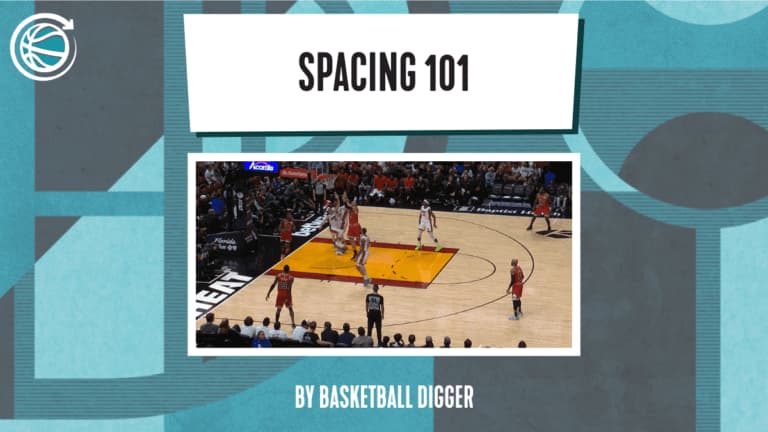
Spacing has changed the game. NBA offenses today look nothing like they did in the ’90s—more threes, better efficiency, and smarter shot selection. But why? The key lies in how teams use space to create and capitalize on advantages.
Mar 31, 2025
Simon Caret
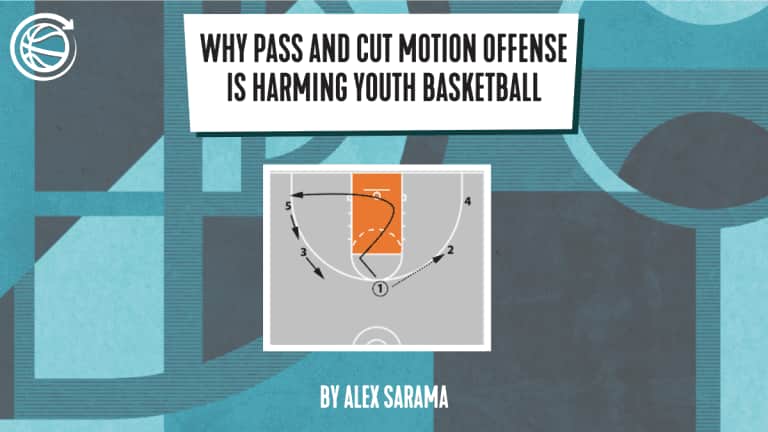
This article breaks down why pass and cut motion offense limits youth player development, and explores better ways to teach spacing, decision-making, and offensive creativity.
May 1, 2024
Alex Sarama
Approaches within the basketball industry are predominantly based upon experiential knowledge and traditions.


