

4 Revolutionary Basketball Warm-Up Games to Stop Wasting Practice Time
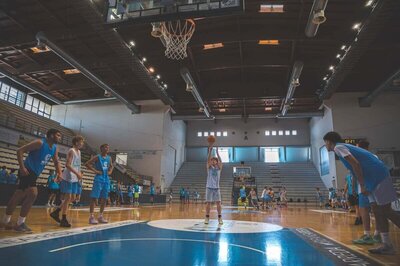




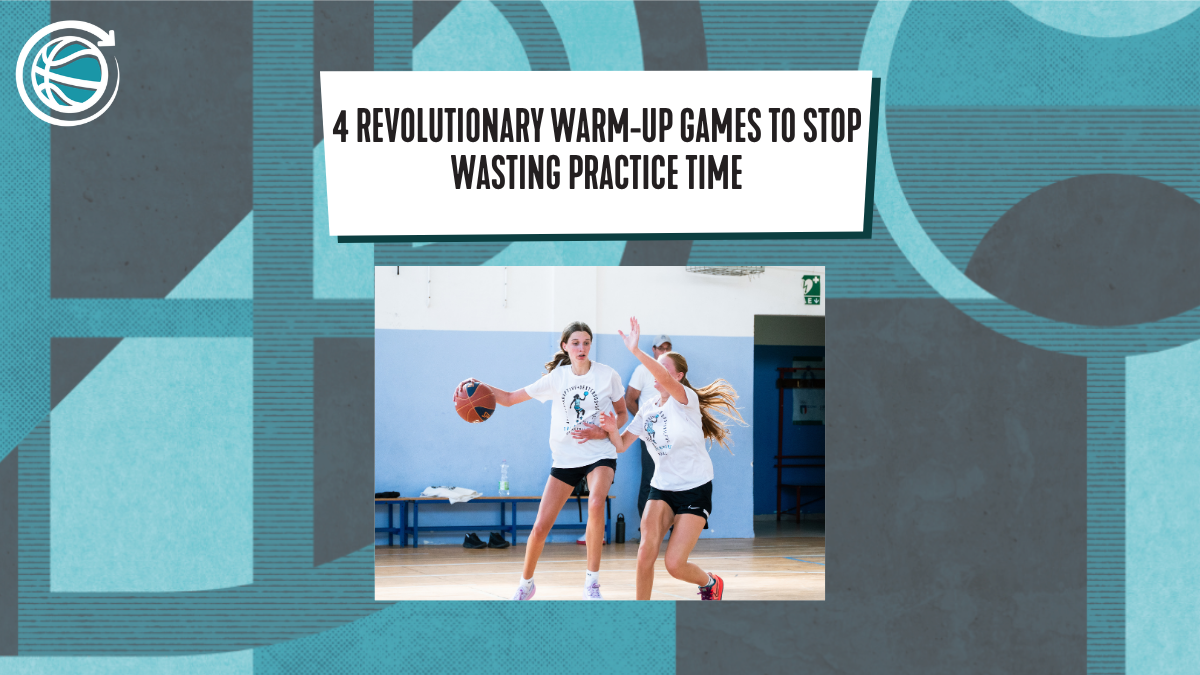
Stop wasting the first 15 minutes of your practice on dead layup lines and stretching. If you want to build adaptable, elite decision-makers, you need to bake perception, action, and decision-making into every minute of your session, starting the exact moment players step onto the court. Here are four high-engagement, constraint-led warm-up games to transform your practice and maximize your time on task (TOT).
For decades, the traditional basketball warm-up has looked identical across gyms worldwide: players jogging laps, participating in static stretching circles, or mindlessly repeating 1-on-0 drills against air. These routines might temporarily raise the body’s core temperature, but they waste prime practice real estate doing “dead” movement problems that offer virtually zero benefit for skill acquisition.
If we want to build highly adaptable performers, we must rethink the warm-up and view it as a critical learning window. A proper warm-up should wake up the brain and the feet simultaneously. By trading in your cones and agility ladders for gamified Small-Sided Games (SSGs), you create environments rich in repetition without repetition, repeating the process of solving a dynamic problem without ever moving the exact same way twice.
Here are four fresh, high-energy SSGs you can use to unfreeze your players’ degrees of freedom and kick off your practice with purpose.
Warm-up Games That Make Basketball Practice More Game-Like
1. Obstacle Tag
Coaches often assume that beginners or young players cannot participate in constraints-led activities, but every player inherently understands how to play a tag game. Obstacle Tag is an incredible way to develop spatial awareness and evasion skills while warming up the entire body.
- The Setup: Play in the half-court. Lay out various obstacles (like crash mats, boxes, or large pads) across the floor. Designate a few players as the taggers and have them hold cones to make it easy for everyone to see who they are.
- How it Works: The taggers chase the other players. When an escaping player is tagged, the tagger passes the cone to them, and the roles switch.
- The “Why”: The obstacles scattered around the court provide unique affordances (opportunities) for escaping players to hide or evade the taggers. Players naturally lunge, cut, accelerate, and decelerate without you ever having to prescribe a stiff, robotic dynamic stretching line.
Technical demonstration of Obstacle Tag with youth players.
2. Knee Tap Dribble Tag
If you want to eliminate monotonous stationary two-ball dribbling drills, Knee Tap Dribble Tag provides the ultimate perception-action coupling environment for ball handling.
- The Setup: Have players pair up, each with a basketball.
- How it Works: Players dribble simultaneously while trying to tag their opponent’s knee.
- The Constraints & Scoring: Award one point for every successful knee touch. To keep the game fresh and push players into different postures, you can continuously manipulate the target constraint: require players to touch their partner’s back, touch their feet, or restrict them to only touching the outside of the knees.
- The “Why”: This game organically forces players to stay in a low, athletic stance and protect their basketball while keeping their eyes up to hunt for an offensive strike. You are teaching elite ball protection and peripheral vision without ever having to yell, “Keep your head up!”
Basketball players practicing Knee Tap Dribble Tag to improve ball handling and peripheral vision.
3. Bumps and Lumps
This is a fantastic, chaotic environment for larger groups that blends evasive agility, spatial mapping, and ball control into one seamless activity.
- The Setup: Half the players begin with a basketball (the taggers) and the other half begin without a ball.
- How it Works: Designate specific, marked areas on the court as “lumps” or safety areas, such as the elbows, the dunker spots, or the 45-degree wings. The taggers dribble around the court and attempt to tag anyone who is not standing on a safety lump.
- The Twist: Players without a ball must sprint to evade the dribbling taggers. If they reach a lump, they are safe, but because there are limited lumps, they can run over to an occupied bump and tag or “bump” the player standing there to steal their safety spot. This forces the original player back out into the danger zone, creating continuous, chaotic movement.
4. Chain Tag
Chain Tag is an incredibly fun way to get your players emotionally engaged, loud, and smiling, which makes the transition into the deeper cognitive work of your practice much smoother.
- The Setup: Constrain the playing space to the half-court. Designate 1-3 players to be “on” as the initial tagger.
- How it Works: Players must lock arms and stay chained together. The chain attempts to tag the fleeing players. Every time they tag someone, that player must link arms with them to build a human “chain”. As the chain grows, the taggers must communicate and coordinate their movements to trap the remaining players.
- The Constraints: For the second round, add basketballs. Every player who is evading the chain must now dribble a basketball. If they get tagged, they pass their ball to a coach on the sideline and link arms with the chain. This adds a layer of ball manipulation under extreme physical and spatial pressure.
High-engagement Chain Tag game in basketball practice to build communication and coordination skills.
Further Learning: Build Your SSG Library
Warm-ups shouldn’t just raise your players’ heart rates; they should elevate their basketball intelligence and prime their nervous systems for the specific affordances they will encounter in a live game. If you want to stop running drills and start designing environments that naturally pull out these high-level behaviors, we highly recommend downloading the free Transforming Basketball Small-Sided Games Book (PDF).
Packed with competitive, constraints-based games for every phase of practice, it provides the ultimate blueprint to help you transition fully to a Constraints-Led Approach and ensure that every minute of your practice directly transfers to the game.



Stop wasting the first 15 minutes of your practice on dead layup lines and stretching. If you want to build adaptable, elite decision-makers, you need to bake perception, action, and decision-making into every minute of your session, starting the exact moment players step onto the court. Here are four high-engagement, constraint-led warm-up games to transform your practice and maximize your time on task (TOT).
For decades, the traditional basketball warm-up has looked identical across gyms worldwide: players jogging laps, participating in static stretching circles, or mindlessly repeating 1-on-0 drills against air. These routines might temporarily raise the body’s core temperature, but they waste prime practice real estate doing “dead” movement problems that offer virtually zero benefit for skill acquisition.
If we want to build highly adaptable performers, we must rethink the warm-up and view it as a critical learning window. A proper warm-up should wake up the brain and the feet simultaneously. By trading in your cones and agility ladders for gamified Small-Sided Games (SSGs), you create environments rich in repetition without repetition, repeating the process of solving a dynamic problem without ever moving the exact same way twice.
Here are four fresh, high-energy SSGs you can use to unfreeze your players’ degrees of freedom and kick off your practice with purpose.
Warm-up Games That Make Basketball Practice More Game-Like
1. Obstacle Tag
Coaches often assume that beginners or young players cannot participate in constraints-led activities, but every player inherently understands how to play a tag game. Obstacle Tag is an incredible way to develop spatial awareness and evasion skills while warming up the entire body.
- The Setup: Play in the half-court. Lay out various obstacles (like crash mats, boxes, or large pads) across the floor. Designate a few players as the taggers and have them hold cones to make it easy for everyone to see who they are.
- How it Works: The taggers chase the other players. When an escaping player is tagged, the tagger passes the cone to them, and the roles switch.
- The “Why”: The obstacles scattered around the court provide unique affordances (opportunities) for escaping players to hide or evade the taggers. Players naturally lunge, cut, accelerate, and decelerate without you ever having to prescribe a stiff, robotic dynamic stretching line.
Technical demonstration of Obstacle Tag with youth players.
2. Knee Tap Dribble Tag
If you want to eliminate monotonous stationary two-ball dribbling drills, Knee Tap Dribble Tag provides the ultimate perception-action coupling environment for ball handling.
- The Setup: Have players pair up, each with a basketball.
- How it Works: Players dribble simultaneously while trying to tag their opponent’s knee.
- The Constraints & Scoring: Award one point for every successful knee touch. To keep the game fresh and push players into different postures, you can continuously manipulate the target constraint: require players to touch their partner’s back, touch their feet, or restrict them to only touching the outside of the knees.
- The “Why”: This game organically forces players to stay in a low, athletic stance and protect their basketball while keeping their eyes up to hunt for an offensive strike. You are teaching elite ball protection and peripheral vision without ever having to yell, “Keep your head up!”
Basketball players practicing Knee Tap Dribble Tag to improve ball handling and peripheral vision.
3. Bumps and Lumps
This is a fantastic, chaotic environment for larger groups that blends evasive agility, spatial mapping, and ball control into one seamless activity.
- The Setup: Half the players begin with a basketball (the taggers) and the other half begin without a ball.
- How it Works: Designate specific, marked areas on the court as “lumps” or safety areas, such as the elbows, the dunker spots, or the 45-degree wings. The taggers dribble around the court and attempt to tag anyone who is not standing on a safety lump.
- The Twist: Players without a ball must sprint to evade the dribbling taggers. If they reach a lump, they are safe, but because there are limited lumps, they can run over to an occupied bump and tag or “bump” the player standing there to steal their safety spot. This forces the original player back out into the danger zone, creating continuous, chaotic movement.
4. Chain Tag
Chain Tag is an incredibly fun way to get your players emotionally engaged, loud, and smiling, which makes the transition into the deeper cognitive work of your practice much smoother.
- The Setup: Constrain the playing space to the half-court. Designate 1-3 players to be “on” as the initial tagger.
- How it Works: Players must lock arms and stay chained together. The chain attempts to tag the fleeing players. Every time they tag someone, that player must link arms with them to build a human “chain”. As the chain grows, the taggers must communicate and coordinate their movements to trap the remaining players.
- The Constraints: For the second round, add basketballs. Every player who is evading the chain must now dribble a basketball. If they get tagged, they pass their ball to a coach on the sideline and link arms with the chain. This adds a layer of ball manipulation under extreme physical and spatial pressure.
High-engagement Chain Tag game in basketball practice to build communication and coordination skills.
Further Learning: Build Your SSG Library
Warm-ups shouldn’t just raise your players’ heart rates; they should elevate their basketball intelligence and prime their nervous systems for the specific affordances they will encounter in a live game. If you want to stop running drills and start designing environments that naturally pull out these high-level behaviors, we highly recommend downloading the free Transforming Basketball Small-Sided Games Book (PDF).
Packed with competitive, constraints-based games for every phase of practice, it provides the ultimate blueprint to help you transition fully to a Constraints-Led Approach and ensure that every minute of your practice directly transfers to the game.




check what's trending

What is ecological dynamics and how is it connected to a constraints-led approach?
Dec 8, 2025
George Vaz

Are you searching for the best small sided games (SSGs) to improve your basketball practices? Want to replace boring, low-transfer drills with competitive games that actually develop player decision-making and in-game skills?
In this post, I’m sharing my top 5 favorite small-sided basketball games—designed to teach core concepts like closeouts, pick-and-roll, advantage creation, and transition offense and defense. These basketball SSGs are intense, purposeful, and built around real-game actions.
Whether you're coaching youth basketball, high school, or pros, these top small sided games will make your sessions more effective, more engaging, and more fun—for both players and coaches.
Let’s break down each game and how it can transform your practices.
Aug 4, 2025
George Vaz

Whether you’re coaching in the NBA, EuroLeague, or youth basketball, one thing remains universally true: the worst transition offense is still more efficient than the best half-court offense. Yet, many teams still struggle to fully capitalize on transition opportunities, often opting to slow down the game instead of pushing the pace. The question is, why? By running more intentionally, teams can create easier scoring opportunities. So why do some teams hesitate?
Apr 7, 2025
George Vaz
Spacing has changed the game. NBA offenses today look nothing like they did in the ’90s—more threes, better efficiency, and smarter shot selection. But why? The key lies in how teams use space to create and capitalize on advantages.
Mar 31, 2025
Simon Caret
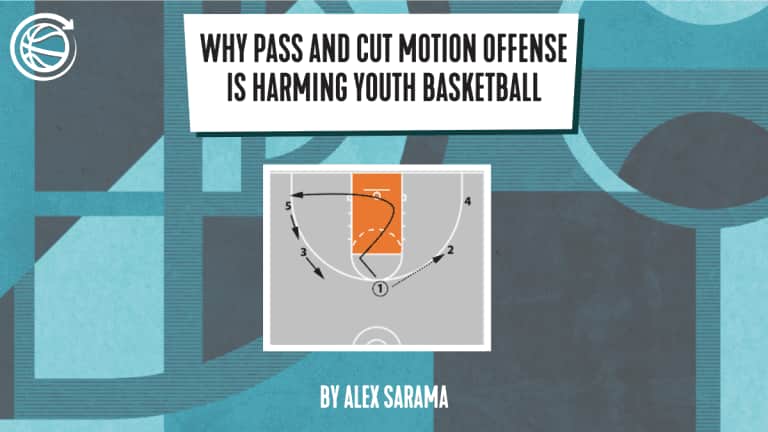
This article breaks down why pass and cut motion offense limits youth player development, and explores better ways to teach spacing, decision-making, and offensive creativity.
May 1, 2024
Alex Sarama
Approaches within the basketball industry are predominantly based upon experiential knowledge and traditions.


