
Coaching Takeaway
The five coaching principles covered here are representative learning design, constraint manipulation, attentional focus, task simplification and functional variability. Use them together: preserve a meaningful game problem, adjust the challenge, and watch how players find solutions.
Read the guide: The Constraints-Led Approach in BasketballA Basketball Example of the Five Principles
| Principle | In a 2-on-1 shooting game |
|---|---|
| Representative learning design | The defender can contest or intercept, and the attacker can shoot or pass. |
| Manipulation of constraints | Use a two-pass maximum to keep the offense looking for a scoring opportunity. |
| Attentional focus | Ask players to find a ROB shot: within range, open and balanced. |
| Task simplification | Adjust the defender’s start or permitted movement so both attackers have opportunities. |
| Functional variability | Change locations and partners so players adapt their preparation, timing and pass. |
This example draws on Episode 10 and the U14 sample plan. Use the principles to explain the design, then adjust the game to the players in front of you.
EP10: Developing Great Shooters
See the U14 practice-plan bundle
The five principles used here are representative learning design, manipulation of constraints, attentional focus, task simplification and functional variability. They help a coach decide what information to keep in practice, what to change and what to observe.
- Representative Learning Design (RLD)
- Manipulation of constraints
- Attentional focus
- Task Simplification
- Functional Variability
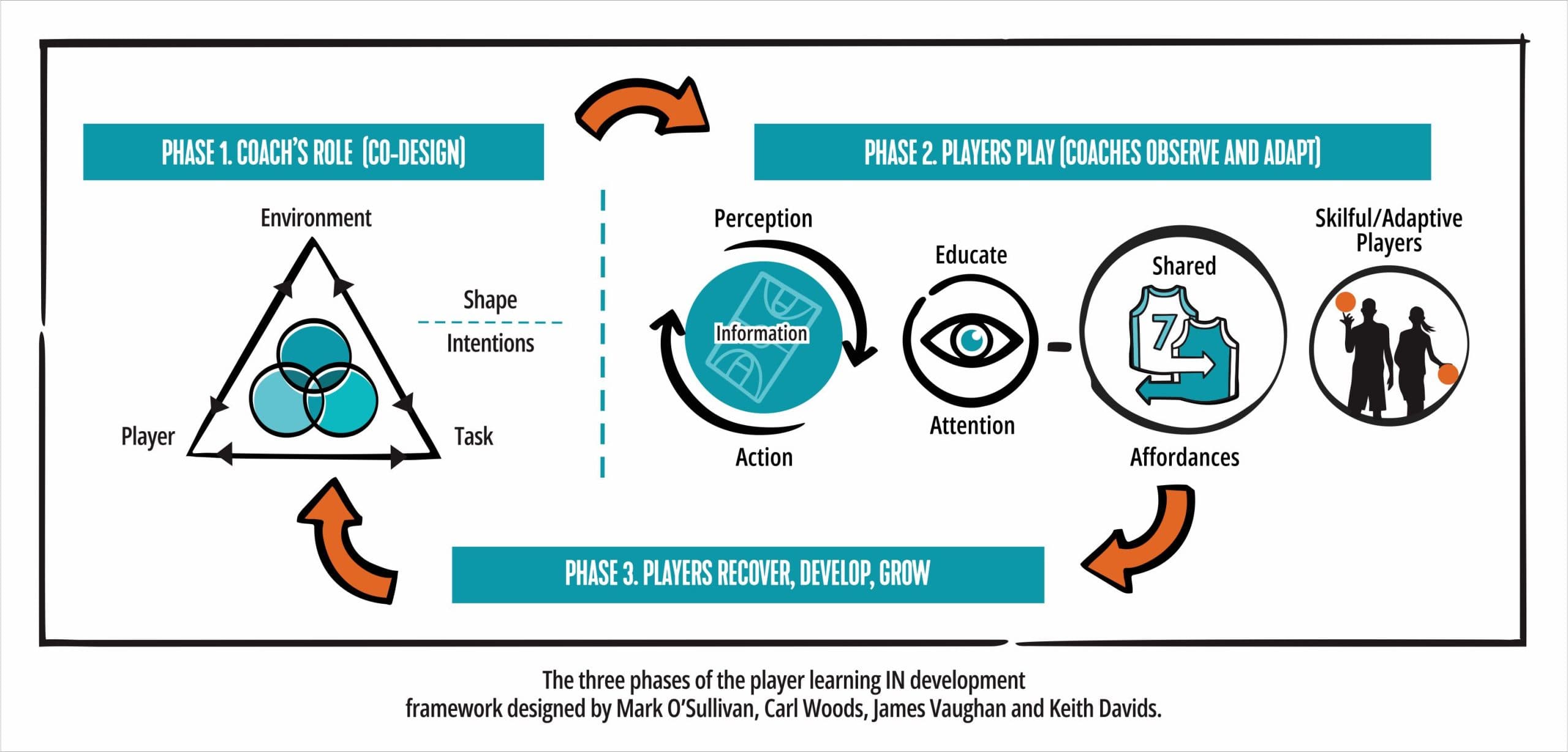
Use the principles together. A 2-on-1 shooting game, for example, can retain a live defender, simplify the number of players and direct attention toward finding an open shot.
1. Representative Learning Design (Rld)
Keep the information that makes the action useful
Representative learning design asks whether a task preserves the information players need for the intended action. For shooting decisions, a defender’s distance and movement matter. So does the option to pass when the shot closes. Differential-learning shooting explores movement variation for a different purpose; it does not replace practicing those decisions.
- Select the relevant interaction rather than copying the appearance of a full game. A 2-on-1 can retain an important shot-or-pass decision with fewer players.
- Games should include authentic perception-action coupling. Avoid repetitive drills where a real decision doesn’t have to be made.
- This naturally means using small-sided games of different formats. E.g. 2-on-2, 3-on-2, 1-on-2, etc.
- Instead of isolated shooting drills, design scenarios where shooting occurs under pressure from defenders.
To elaborate on the example above, In the research paper “Sampling perception-action couplings from competition create representative basketball shooting tasks: A replication and extension of Gorman and Maloney (2016) the authors write:
“Shooting accuracy in the defended condition showed a high correlation to the shooting accuracy exhibited in competition statistics.” This is important to remember for coaches so that we can create the game environments players will experience in the game.
- Traditional Trap: Isolated shooting lines where players catch and shoot with no one closing out.
- The NLP Shift: Small-sided games (2v1, 3v2) where every shot is preceded by a decision.
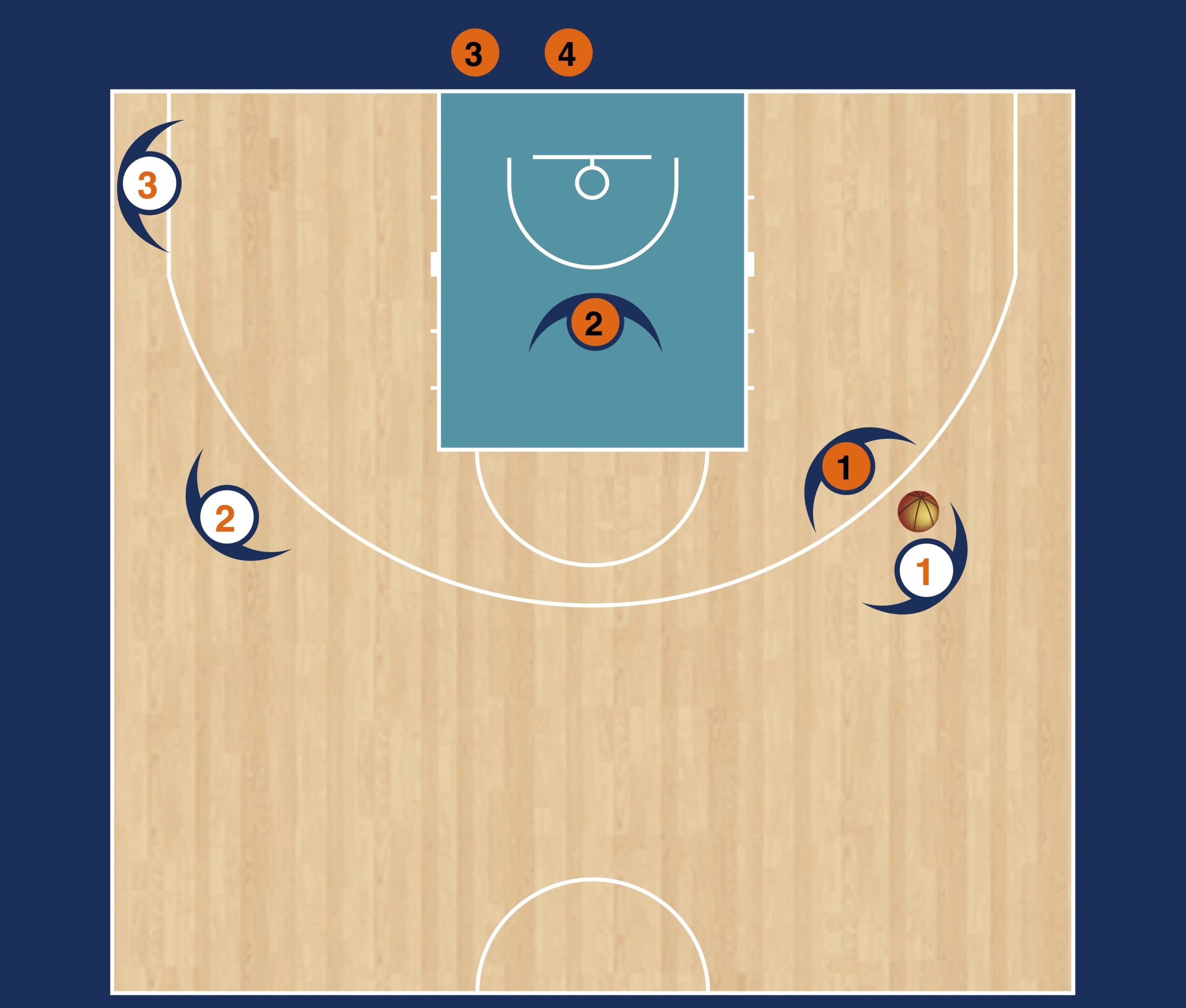
Practical example: 2-on-1 Shooting.
2. Manipulation of Constraints
A useful constraint changes the opportunities players encounter in relation to the coach’s intention.
If players hold the ball until the advantage disappears, first watch what they can see and do. A short clock may encourage an earlier action; more space or a guided defender may make the opportunity easier to recognize. Constraints include the task, the environment and the individual player, and can enable actions as well as restrict them.
We categorize these into three buckets:
- Task Constraints: The rules of the game (e.g., Changing rules, modifying scoring systems, altering playing areas, adjusting shot clocks, etc.)
- Environmental Constraints: The physical space (e.g., Gym noise, lighting, floor type, or even playing outdoors.)
- Individual Constraints: The player’s unique traits (e.g., Players’ skill level, physical traits, motivation, fatigue, etc.)
- Practical example: Play an advantage game ( , See below). To encourage 0 second decisions, coaches can call turnovers if players do not shoot, pass or drive in less than one second.
3. External Focus of Attention
Give Them a Goal, Not a Manual.
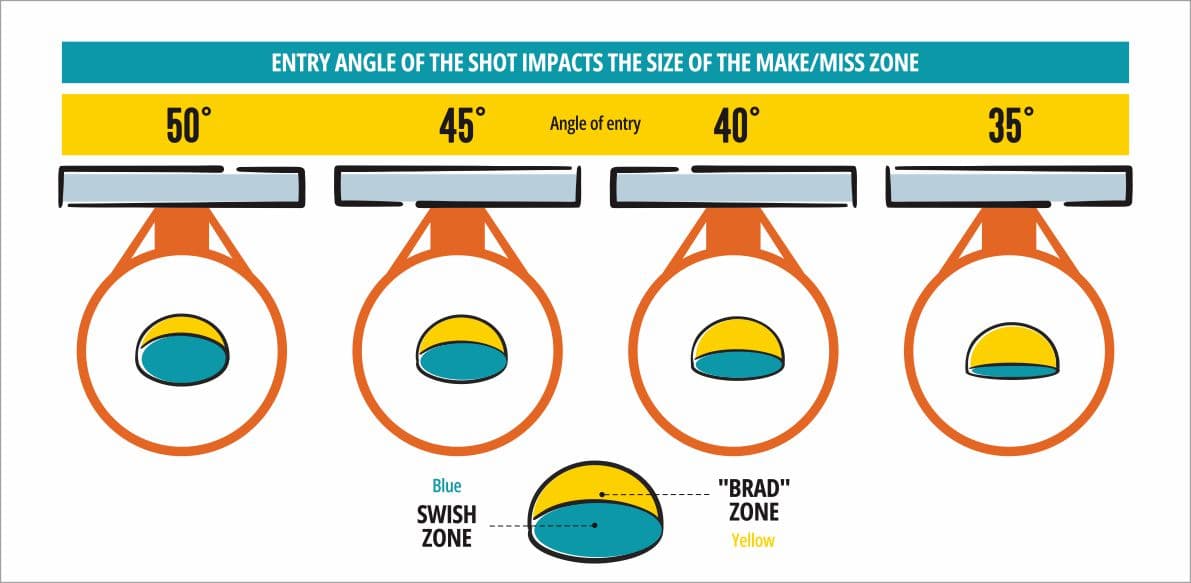
An external focus directs attention toward the intended effect of an action. In shooting, “Back Rim and Down” gives the player a ball-flight target. Choose a cue that helps with the current problem and observe the response; avoid turning feedback into a running commentary on every body part.
- Coaches should use relevant external cues rather than internal instructions about body mechanics.
- Try using terminology that does exactly this. BRADs are a great example of this.
- Avoid general feedback as much as possible and instead opt for the specific actionable feedback. For example, instead of saying “defend harder” talk to the players about having an “active MIG” (Most important guy or girl acting as the help defender). Providing tangible action steps is always better than generic feedback!
Terminology like BRADs are perfect because they give the player a tangible target to focus on, rather than their own elbow position.
- Instead of: "Keep your elbow in."
- Try: "Aim for a BRAD (Back Rim and Down)."
- Practical example: When practicing shooting, tell your players to aim for a BRAD instead of saying “bend your knees” (internal feedback).
4. Task Simplification
Simplify, Don't Decompose.
Task simplification reduces difficulty while keeping the relevant information available. A defender can have fewer steps or use one hand, so the attacker still responds to an opponent.
- Skills develop best when perception (seeing) and action (doing) are practiced together. We perceive to act and act to perceive.
- Coaches should facilitate learning by designing tasks that guide players toward effective solutions.
Instead of taking the defense away entirely, just reduce the pressure so the player can still practice "reading" the environment.
- Equipment scaling: Use a ball, basket height and distance that allow the players to explore workable solutions.
- Reducing Numbers: Moving from a 5v5 to a 3v1 or 2v1. The player still has to "read" a defender, but the solution is more obvious.
- Practical example: In a 2-on-2 ball-screen game, guide one defender’s movement or give the offense a clearer starting advantage. This keeps both defenders in the interaction. A 2-on-1 is another useful option, but it creates a different problem because one of those defensive relationships is removed.
5. Functional Variability
Repetition Without Repetition.
Functional variability means players can find different movements that solve the task. A changing approach angle or defender can invite a different finish without the coach prescribing it.
Look at the relationship between movement and outcome. Did the action solve the problem under those conditions, and can the player adapt when the conditions change?
- Movement solutions (skills) need to adequately solve the problem at-hand. If players are not doing this, then the coach must reconsider the constraints.
- The Goal: Encourage players to explore different movement patterns to find what works best for them in different situations.
- Practical example: During a finishing drill, tell players they aren't allowed to use the same finish twice in a row OR they aren't allowed to finish overhand, underhand, use the backboard, etc.
Use the Principles to Review One Activity
Choose one activity in your next practice. Identify the intention, the information players need and one constraint you might change. Watch several possessions before deciding what the group needs next.
Revisit the same problem in later sessions and wider play. A successful practice repetition is useful information, but lasting learning needs to show up beyond that repetition.
To connect these principles with practice design, explore the constraints-led approach basketball guide. Start with a game problem and adjust the task to your players' responses.
Keep Developing Your Coaching.
Connect these ideas with the Success Pathway, activity video library, coaching community and monthly live sessions.
Explore the membership