

Constraints-Led Approach: 5 Principles Every Coach Should Know




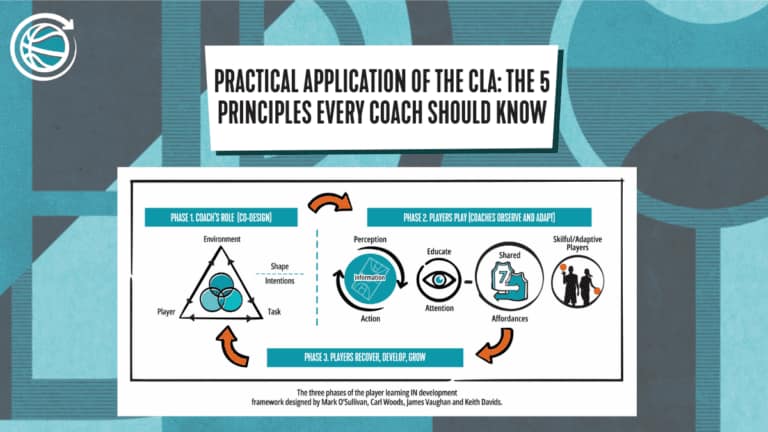
To use the CLA effectively, there are five key principles coaches may follow:
To use the Constraints-Led Approach (CLA) effectively, there are five key principles coaches should follow: Representative Learning Design, Manipulation of Constraints, Attentional Focus, Task Simplification, and Functional Variability.
- Representative Learning Design (RLD)
- Manipulation of constraints
- Attentional focusff
- Task Simplification
- Functional Variability
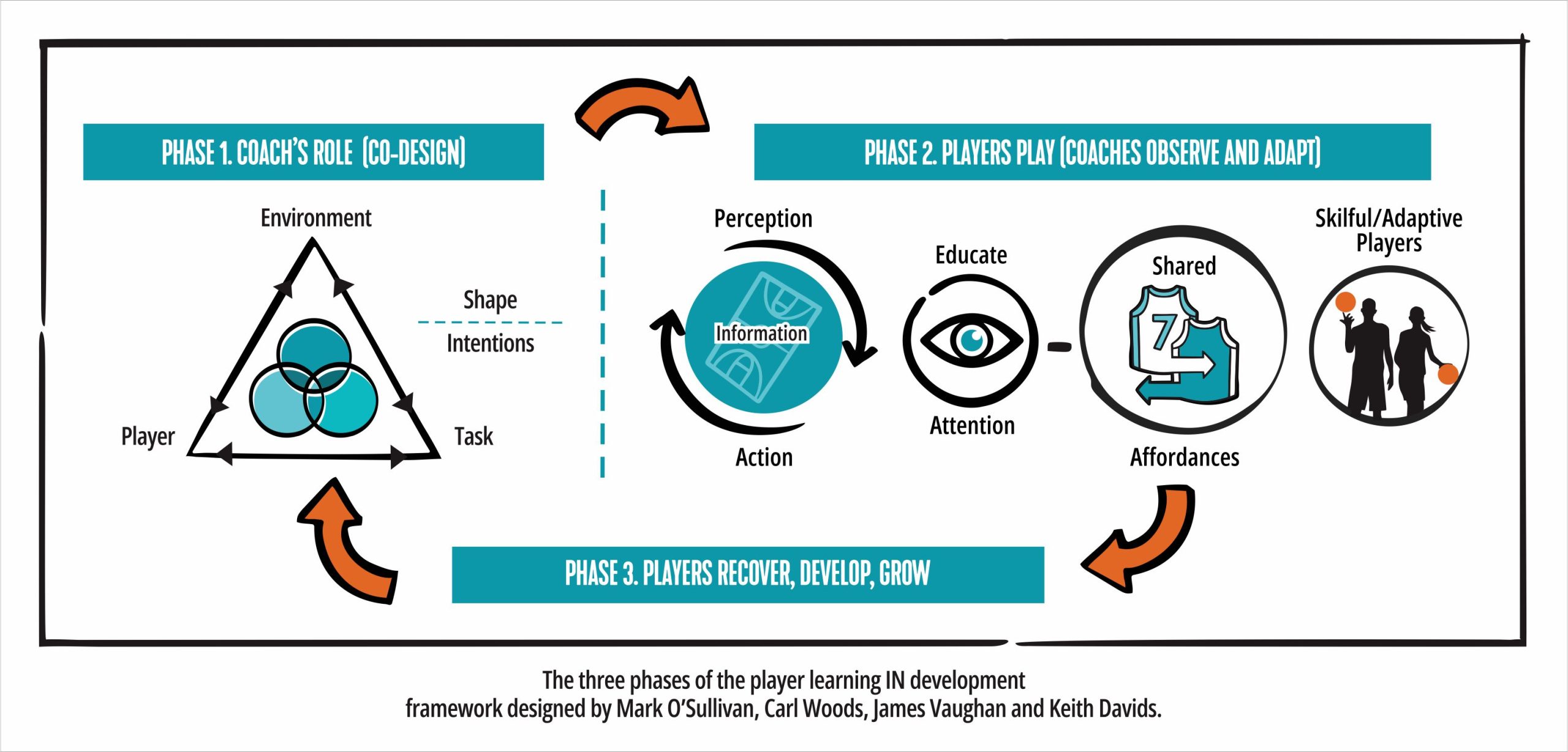
Essentially, if you are incorporating these, you are effectively using the Constraints-Led Approach. If you want to unlock meaningful skill development, your practices need to be built on these five core design principles.
If you want to unlock meaningful skill development, your practices need to be built on these five core design principles.
1. Representative Learning Design (RLD)
The Golden Rule: Does it look—and feel—like the game?
Your practice environment should be a “representative” sample of the game. If the drill removes the very things a player has to deal with on game night (like defenders, teammates, and shot clocks), the skill won’t transfer. We need perception-action coupling. (The one exception to this is DL shooting. you can learn more about the practical application of DL shooting here.)
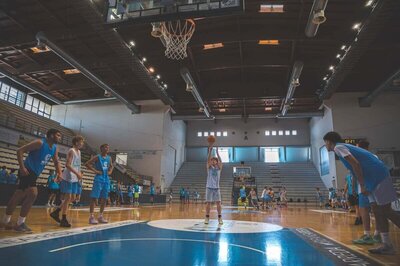
- Your practices should mirror the actual game environment to ensure transfer of skills.
- Games should include authentic perception-action coupling. Avoid repetitive drills where a real decision doesn’t have to be made.
- This naturally means using small-sided games of different formats. E.g. 2-on-2, 3-on-2, 1-on-2, etc.
- Instead of isolated shooting drills, design scenarios where shooting occurs under pressure from defenders.
To elaborate on the example above, In the research paper “Sampling perception-action couplings from competition create representative basketball shooting tasks: A replication and extension of Gorman and Maloney (2016) the authors write:
“Shooting accuracy in the defended condition showed a high correlation to the shooting accuracy exhibited in competition statistics.” This is important to remember for coaches so that we can create the game environments players will experience in the game.
- Traditional Trap: Isolated shooting lines where players catch and shoot with no one closing out.
- The NLP Shift: Small-sided games (2v1, 3v2) where every shot is preceded by a decision.
Practical example: 2-on-1 Shooting.
2. Manipulation of Constraints
Effective constraint manipulation is the key to skill development.
If you find yourself constantly screaming, “Move the ball!” you have a design problem. Your players need instant feedback to understand whether their behaviours are good or bad. If the constraint (or lack of one) leads to no consequences for not playing with 0 Second Decisions, then it is the coach’s role to effectively manioulate constraints to guide players to desired behaviors. Constraints are the “boundaries” we set to nudge players toward a solution without us having to tell them exactly what to do.
We categorize these into three buckets:
- Task Constraints: The rules of the game (e.g., Changing rules, modifying scoring systems, altering playing areas, adjusting shot clocks, etc.)
- Environmental Constraints: The physical space (e.g., Gym noise, lighting, floor type, or even playing outdoors.)
- Individual Constraints: The player’s unique traits (e.g., Players’ skill level, physical traits, motivation, fatigue, etc.)
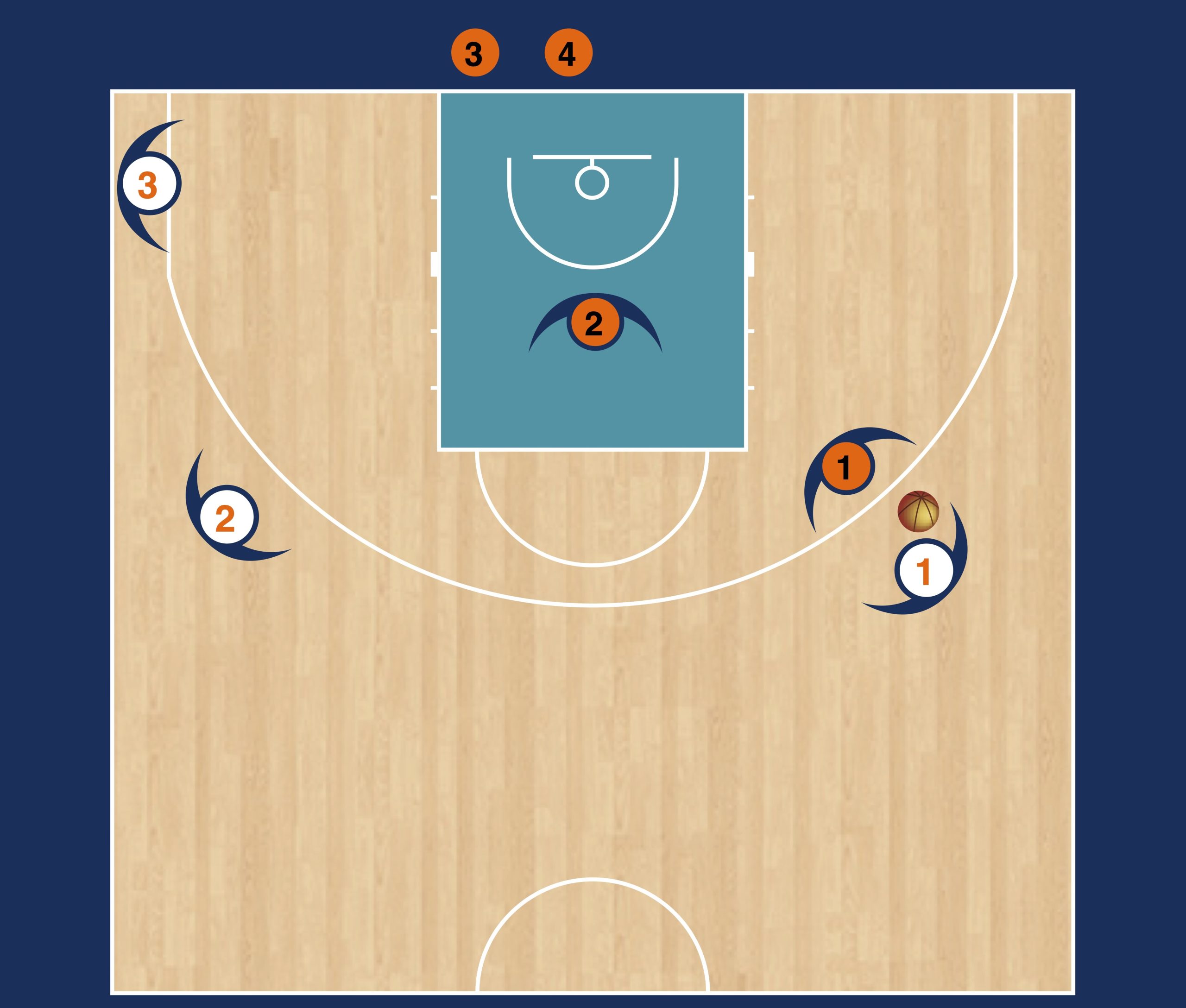
- Practical example: Play an advantage game ( , See below). To encourage 0 second decisions, coaches can call turnovers if players do not shoot, pass or drive in less than one second.
3. External Focus of Attention
Give Them a Goal, Not a Manual.
Research is clear: telling a player to “snap their wrist” or “bend their knees” (internal focus) actually disrupts fluid movement. Instead, we want an External Focus. Use cues that relate to the intended effect on the environment: The outcome.
- Coaches should use relevant external cues rather than internal instructions about body mechanics.
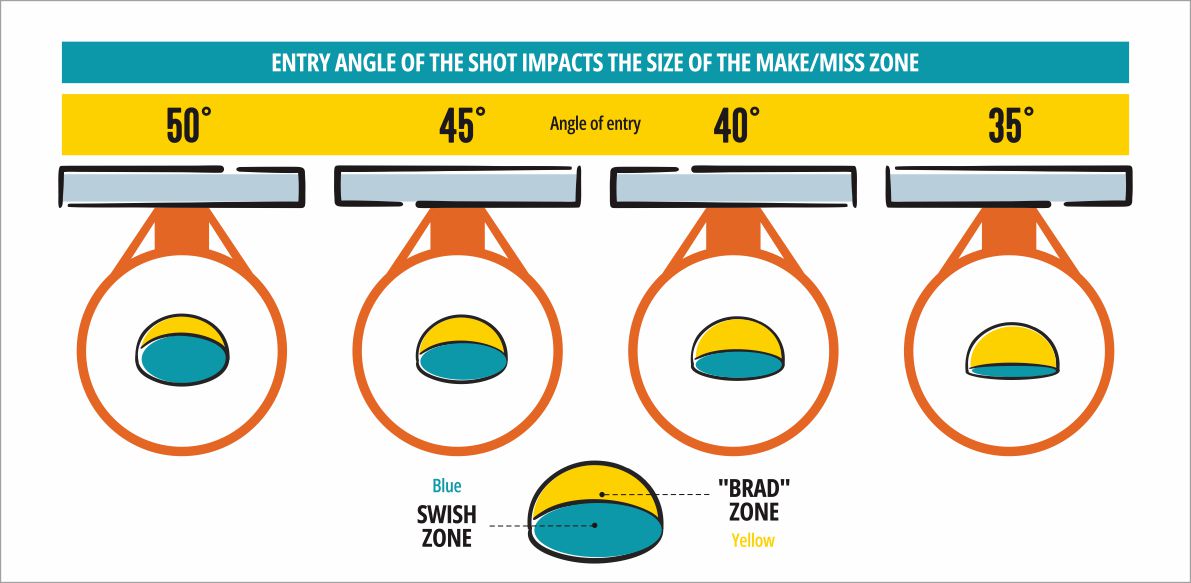
- Try using terminology that does exactly this. BRADs are a great example of this.
- Avoid general feedback as much as possible and instead opt for the specific actionable feedback. For example, instead of saying “defend harder” talk to the players about having an “active MIG” (Most important guy or girl acting as the help defender). Providing tangible action steps is always better than generic feedback!
Terminology like BRADs are perfect because they give the player a tangible target to focus on, rather than their own elbow position.
- Instead of: “Keep your elbow in.”
- Try: “Aim for a BRAD (Back Rim and Down).”
- Practical example: When practicing shooting, tell your players to aim for a BRAD instead of saying “bend your knees” (internal feedback).
4. Task Simplification
Simplify, Don’t Decompose.
The truth is, if we want players who can actually play, we have to stop decontextualising the game and coaching the way the game is actually experienced. NLP suggests Task Simplification instead. We keep the “perception” and “action” together but make the problem easier to solve.
- Skills develop best when perception (seeing) and action (doing) are practiced together. We perceive to act and act to perceive.
- Coaches should facilitate learning by designing tasks that guide players toward effective solutions.
Instead of taking the defense away entirely, just reduce the pressure so the player can still practice “reading” the environment.
- Equipment Scaling: Using a smaller ball or a shorter hoop for younger players so they don’t have to compromise form for power.
- Reducing Numbers: Moving from a 5v5 to a 3v1 or 2v1. The player still has to “read” a defender, but the solution is more obvious.
- Practical example: If players are struggling with ball screens, don’t go “on-air.” Keep it 2v2 but simplify it: by removing a defender, but not the defense entirely. For instance, going from a 2-on-2 to 2-on-1. Alternatively, increase the space the offense has and further constrain the defense, e.g. only playing with one hand.
5. Functional Variability
Repetition Without Repetition.
Learning is messy. We need to move away from the idea of the “one perfect technique.” In a game, a player will never shoot the exact same way twice—the distance, the defender’s hand, and the fatigue level will always be different.
We want players to find movement solutions that work for them. This is “functional variability.” We want them to be adaptable, not robotic. If a player makes the shot or gets the stop, we should care less about whether it looked “textbook” and more about whether it solved the problem.
- Movement solutions (skills) need to adequately solve the problem at-hand. If players are not doing this, then the coach must reconsider the constraints.
- The Goal: Encourage players to explore different movement patterns to find what works best for them in different situations.
- Practical example: During a finishing drill, tell players they aren’t allowed to use the same finish twice in a row OR they aren’t allowed to finish overhand, underhand, use the backboard, etc.
The Bottom Line
Using a Constraints-Led Approach means trusting the process.
The CLA ensures that perception and action remain tightly coupled, leading to better transfer of skills to real competition. Players learn not just what to do but how to read the game, developing movement solutions that suit their unique abilities.
To use the CLA effectively, there are five key principles coaches may follow:
To use the Constraints-Led Approach (CLA) effectively, there are five key principles coaches should follow: Representative Learning Design, Manipulation of Constraints, Attentional Focus, Task Simplification, and Functional Variability.
- Representative Learning Design (RLD)
- Manipulation of constraints
- Attentional focusff
- Task Simplification
- Functional Variability
Essentially, if you are incorporating these, you are effectively using the Constraints-Led Approach. If you want to unlock meaningful skill development, your practices need to be built on these five core design principles.
If you want to unlock meaningful skill development, your practices need to be built on these five core design principles.
1. Representative Learning Design (RLD)
The Golden Rule: Does it look—and feel—like the game?
Your practice environment should be a “representative” sample of the game. If the drill removes the very things a player has to deal with on game night (like defenders, teammates, and shot clocks), the skill won’t transfer. We need perception-action coupling. (The one exception to this is DL shooting. you can learn more about the practical application of DL shooting here.)
- Your practices should mirror the actual game environment to ensure transfer of skills.
- Games should include authentic perception-action coupling. Avoid repetitive drills where a real decision doesn’t have to be made.
- This naturally means using small-sided games of different formats. E.g. 2-on-2, 3-on-2, 1-on-2, etc.
- Instead of isolated shooting drills, design scenarios where shooting occurs under pressure from defenders.
To elaborate on the example above, In the research paper “Sampling perception-action couplings from competition create representative basketball shooting tasks: A replication and extension of Gorman and Maloney (2016) the authors write:
“Shooting accuracy in the defended condition showed a high correlation to the shooting accuracy exhibited in competition statistics.” This is important to remember for coaches so that we can create the game environments players will experience in the game.
- Traditional Trap: Isolated shooting lines where players catch and shoot with no one closing out.
- The NLP Shift: Small-sided games (2v1, 3v2) where every shot is preceded by a decision.
Practical example: 2-on-1 Shooting.
2. Manipulation of Constraints
Effective constraint manipulation is the key to skill development.
If you find yourself constantly screaming, “Move the ball!” you have a design problem. Your players need instant feedback to understand whether their behaviours are good or bad. If the constraint (or lack of one) leads to no consequences for not playing with 0 Second Decisions, then it is the coach’s role to effectively manioulate constraints to guide players to desired behaviors. Constraints are the “boundaries” we set to nudge players toward a solution without us having to tell them exactly what to do.
We categorize these into three buckets:
- Task Constraints: The rules of the game (e.g., Changing rules, modifying scoring systems, altering playing areas, adjusting shot clocks, etc.)
- Environmental Constraints: The physical space (e.g., Gym noise, lighting, floor type, or even playing outdoors.)
- Individual Constraints: The player’s unique traits (e.g., Players’ skill level, physical traits, motivation, fatigue, etc.)
- Practical example: Play an advantage game ( , See below). To encourage 0 second decisions, coaches can call turnovers if players do not shoot, pass or drive in less than one second.
3. External Focus of Attention
Give Them a Goal, Not a Manual.
Research is clear: telling a player to “snap their wrist” or “bend their knees” (internal focus) actually disrupts fluid movement. Instead, we want an External Focus. Use cues that relate to the intended effect on the environment: The outcome.
- Coaches should use relevant external cues rather than internal instructions about body mechanics.
- Try using terminology that does exactly this. BRADs are a great example of this.
- Avoid general feedback as much as possible and instead opt for the specific actionable feedback. For example, instead of saying “defend harder” talk to the players about having an “active MIG” (Most important guy or girl acting as the help defender). Providing tangible action steps is always better than generic feedback!
Terminology like BRADs are perfect because they give the player a tangible target to focus on, rather than their own elbow position.
- Instead of: “Keep your elbow in.”
- Try: “Aim for a BRAD (Back Rim and Down).”
- Practical example: When practicing shooting, tell your players to aim for a BRAD instead of saying “bend your knees” (internal feedback).
4. Task Simplification
Simplify, Don’t Decompose.
The truth is, if we want players who can actually play, we have to stop decontextualising the game and coaching the way the game is actually experienced. NLP suggests Task Simplification instead. We keep the “perception” and “action” together but make the problem easier to solve.
- Skills develop best when perception (seeing) and action (doing) are practiced together. We perceive to act and act to perceive.
- Coaches should facilitate learning by designing tasks that guide players toward effective solutions.
Instead of taking the defense away entirely, just reduce the pressure so the player can still practice “reading” the environment.
- Equipment Scaling: Using a smaller ball or a shorter hoop for younger players so they don’t have to compromise form for power.
- Reducing Numbers: Moving from a 5v5 to a 3v1 or 2v1. The player still has to “read” a defender, but the solution is more obvious.
- Practical example: If players are struggling with ball screens, don’t go “on-air.” Keep it 2v2 but simplify it: by removing a defender, but not the defense entirely. For instance, going from a 2-on-2 to 2-on-1. Alternatively, increase the space the offense has and further constrain the defense, e.g. only playing with one hand.
5. Functional Variability
Repetition Without Repetition.
Learning is messy. We need to move away from the idea of the “one perfect technique.” In a game, a player will never shoot the exact same way twice—the distance, the defender’s hand, and the fatigue level will always be different.
We want players to find movement solutions that work for them. This is “functional variability.” We want them to be adaptable, not robotic. If a player makes the shot or gets the stop, we should care less about whether it looked “textbook” and more about whether it solved the problem.
- Movement solutions (skills) need to adequately solve the problem at-hand. If players are not doing this, then the coach must reconsider the constraints.
- The Goal: Encourage players to explore different movement patterns to find what works best for them in different situations.
- Practical example: During a finishing drill, tell players they aren’t allowed to use the same finish twice in a row OR they aren’t allowed to finish overhand, underhand, use the backboard, etc.
The Bottom Line
Using a Constraints-Led Approach means trusting the process.
The CLA ensures that perception and action remain tightly coupled, leading to better transfer of skills to real competition. Players learn not just what to do but how to read the game, developing movement solutions that suit their unique abilities.




check what's trending

What is ecological dynamics and how is it connected to a constraints-led approach?
Dec 8, 2025
George Vaz

Are you searching for the best small sided games (SSGs) to improve your basketball practices? Want to replace boring, low-transfer drills with competitive games that actually develop player decision-making and in-game skills?
In this post, I’m sharing my top 5 favorite small-sided basketball games—designed to teach core concepts like closeouts, pick-and-roll, advantage creation, and transition offense and defense. These basketball SSGs are intense, purposeful, and built around real-game actions.
Whether you're coaching youth basketball, high school, or pros, these top small sided games will make your sessions more effective, more engaging, and more fun—for both players and coaches.
Let’s break down each game and how it can transform your practices.
Aug 4, 2025
George Vaz

Whether you’re coaching in the NBA, EuroLeague, or youth basketball, one thing remains universally true: the worst transition offense is still more efficient than the best half-court offense. Yet, many teams still struggle to fully capitalize on transition opportunities, often opting to slow down the game instead of pushing the pace. The question is, why? By running more intentionally, teams can create easier scoring opportunities. So why do some teams hesitate?
Apr 7, 2025
George Vaz
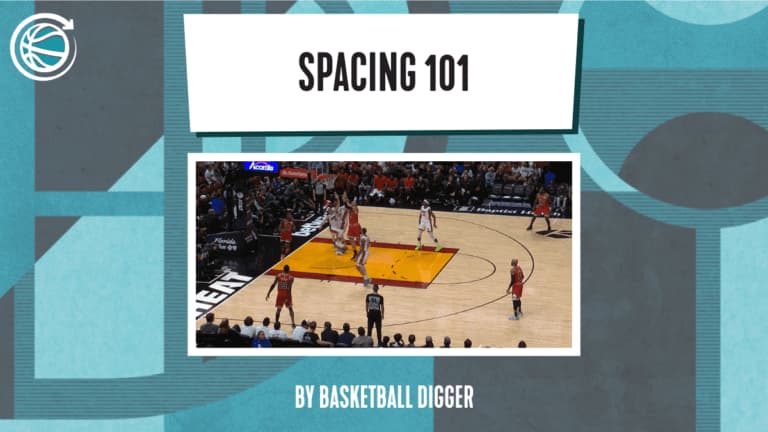
Spacing has changed the game. NBA offenses today look nothing like they did in the ’90s—more threes, better efficiency, and smarter shot selection. But why? The key lies in how teams use space to create and capitalize on advantages.
Mar 31, 2025
Simon Caret
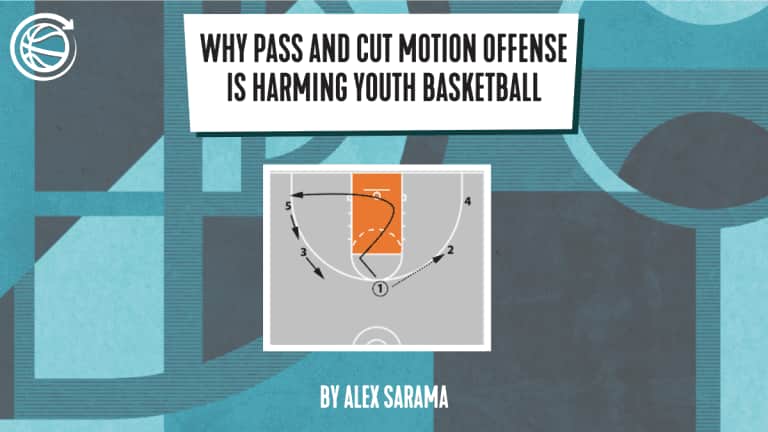
This article breaks down why pass and cut motion offense limits youth player development, and explores better ways to teach spacing, decision-making, and offensive creativity.
May 1, 2024
Alex Sarama
Approaches within the basketball industry are predominantly based upon experiential knowledge and traditions.


