

The Best Basketball Transition Offense Drills (SSGs)
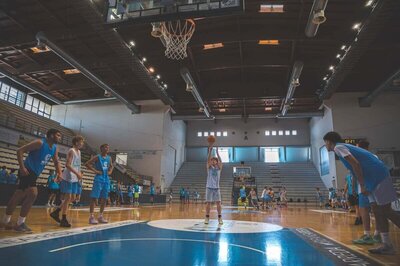




How can your team create more scoring opportunities BEFORE the defense sets up? At any level, the worst transition offense will be better than the best half court offense. It is important not only to take advantage of transition opportunities but also create rich learning environments for your players to learn these principles effectively.
While many coaches try to find the best “Transition Drills”, the easiest approach is to modify any pre-existing half court drill or game, adding in trips to work on your team’s fast break and transition defense simultaneously.
In transition offense, the main principles we encourage coaches to teach include:
- Lag free reactions
- Seeking the sideline
- Two-side break
- Bust out dribbles
Your team has to be in great shape to find numerical advantages consistently in transition. This is why practicing in more representative settings is the best way to get in basketball shape vs running sprints!
Here are some of our favourite practice drills for bringing these ideas to live…
Basketball Drills for Transition Offense:
- 4-on-3 HC Start, Surprise Defense
- 2-on-2+1 Two Side Break
- 5-on-4 Kick Aheads
- 2-on-1+1 Touchdown Tag
- 4-on-3 FC, X3 trips
1. 4-on-3 HC Start, Surprise Defense
This game will work on the 2-side break. In transition, the defense is usually taught to defend the basket first and then pick up the ball. This means there is often a guaranteed advantage if the skip pass can go to the weakside while the defense is loaded in the middle of the paint.

- Passer will pass the ball to any player on offense. Offense is facing the passer.
- Defense will position themselves in a different location every time.
- Live after offense catches the pass.
Other Constraints:
Add = +1 defender that comes in after first pass
2. 2-on-2+1 Shooting
This small-sided game is a classic. As far as teaching principles, it is a game where you can manipulate constraints in an infinite number of ways to effectively teach dominoes principles. For our purpose, let us imagine this is for a 2-side break.

- Both offensive players start on 45 and corner.
- One defender starts inside the paint and another starts in a different location every time.
- It is live after the coach/player passes the ball to the 45 or corner.
Constraints:
Add = Remove +1 defender if too challenging
Add = Allow offensive to drive and cut, rather than only passing or shooting.
Add = Use a dynamic start. The offense and passer start behind the HC line and run to space. Passer takes 1 dribble up the floor before passing.
3. 5-on-4 FC Kick Ahead
Here is a game where you can emphasize the kick ahead pass.
If there is a player open ahead of the ball, we want our players to pass the ball quickly up the court.

- Two players on offense start below the FT line, the ball starts with either player. The other 3 offensive players start around the 3 point line.
- 1 defender guarding the ball, the rest are in their back court.
- Live after offense crosses the FT line.
- Offense must make a kick ahead pass if a team mate is open or it is a TO.
Constraints:
Add = change the start positions
Add = +1 defender
4. 1-on-1+1 Touchdown Tag
Here is a fun warm-up game which can be connected to transition and the importance of lag free reactions where the offense wins their first 3 steps.


- Defense is 1 arms distance away from the receiver.
- Live when offense moves. Offense must sprint, trying to score a touchdown.
- Defense gets a point for a steal or if they are able to 2-hand tag the receiver after he catches the ball
Constraints:
Add = Offense and defense start side by side, play until a lay-up attempt.
Add = Start from a shot, live after “QB” gets the rebound
5. 4-on-3 FC, Three Trips
We like this game because coaches can work on any of their transition principles within it: the bust out dribble, lag free reactions, kick ahead passes, two-side break, etc. You will have to manipulate constraints accordingly. One of the best constraints is an immediate consequence by calling “turnover” if players don’t do one of the intentions you set, such as creating two-side spacing or not utilizing lag free reactions after gaining possession. When doing this, be careful to avoid having too many constraints which can confuse the players.

- Two teams. One team will have an advantage, the other will have a disadvantage.
- The team with 3 players starts with the ball in the HC. Defense will pass it in to them for a shot. Live after the shot.
- Play 3 more trips after this and reset.
Add = nickels and dimes: Play until 10 points or 5 stops: whatever comes first.
Add = shot clock
Add = turnover if the rebounder doesn’t land like a quarterback


How can your team create more scoring opportunities BEFORE the defense sets up? At any level, the worst transition offense will be better than the best half court offense. It is important not only to take advantage of transition opportunities but also create rich learning environments for your players to learn these principles effectively.
While many coaches try to find the best “Transition Drills”, the easiest approach is to modify any pre-existing half court drill or game, adding in trips to work on your team’s fast break and transition defense simultaneously.
In transition offense, the main principles we encourage coaches to teach include:
- Lag free reactions
- Seeking the sideline
- Two-side break
- Bust out dribbles
Your team has to be in great shape to find numerical advantages consistently in transition. This is why practicing in more representative settings is the best way to get in basketball shape vs running sprints!
Here are some of our favourite practice drills for bringing these ideas to live…
Basketball Drills for Transition Offense:
- 4-on-3 HC Start, Surprise Defense
- 2-on-2+1 Two Side Break
- 5-on-4 Kick Aheads
- 2-on-1+1 Touchdown Tag
- 4-on-3 FC, X3 trips
1. 4-on-3 HC Start, Surprise Defense
This game will work on the 2-side break. In transition, the defense is usually taught to defend the basket first and then pick up the ball. This means there is often a guaranteed advantage if the skip pass can go to the weakside while the defense is loaded in the middle of the paint.
- Passer will pass the ball to any player on offense. Offense is facing the passer.
- Defense will position themselves in a different location every time.
- Live after offense catches the pass.
Other Constraints:
Add = +1 defender that comes in after first pass
2. 2-on-2+1 Shooting
This small-sided game is a classic. As far as teaching principles, it is a game where you can manipulate constraints in an infinite number of ways to effectively teach dominoes principles. For our purpose, let us imagine this is for a 2-side break.
- Both offensive players start on 45 and corner.
- One defender starts inside the paint and another starts in a different location every time.
- It is live after the coach/player passes the ball to the 45 or corner.
Constraints:
Add = Remove +1 defender if too challenging
Add = Allow offensive to drive and cut, rather than only passing or shooting.
Add = Use a dynamic start. The offense and passer start behind the HC line and run to space. Passer takes 1 dribble up the floor before passing.
3. 5-on-4 FC Kick Ahead
Here is a game where you can emphasize the kick ahead pass.
If there is a player open ahead of the ball, we want our players to pass the ball quickly up the court.
- Two players on offense start below the FT line, the ball starts with either player. The other 3 offensive players start around the 3 point line.
- 1 defender guarding the ball, the rest are in their back court.
- Live after offense crosses the FT line.
- Offense must make a kick ahead pass if a team mate is open or it is a TO.
Constraints:
Add = change the start positions
Add = +1 defender
4. 1-on-1+1 Touchdown Tag
Here is a fun warm-up game which can be connected to transition and the importance of lag free reactions where the offense wins their first 3 steps.
- Defense is 1 arms distance away from the receiver.
- Live when offense moves. Offense must sprint, trying to score a touchdown.
- Defense gets a point for a steal or if they are able to 2-hand tag the receiver after he catches the ball
Constraints:
Add = Offense and defense start side by side, play until a lay-up attempt.
Add = Start from a shot, live after “QB” gets the rebound
5. 4-on-3 FC, Three Trips
We like this game because coaches can work on any of their transition principles within it: the bust out dribble, lag free reactions, kick ahead passes, two-side break, etc. You will have to manipulate constraints accordingly. One of the best constraints is an immediate consequence by calling “turnover” if players don’t do one of the intentions you set, such as creating two-side spacing or not utilizing lag free reactions after gaining possession. When doing this, be careful to avoid having too many constraints which can confuse the players.
- Two teams. One team will have an advantage, the other will have a disadvantage.
- The team with 3 players starts with the ball in the HC. Defense will pass it in to them for a shot. Live after the shot.
- Play 3 more trips after this and reset.
Add = nickels and dimes: Play until 10 points or 5 stops: whatever comes first.
Add = shot clock
Add = turnover if the rebounder doesn’t land like a quarterback




check what's trending

What is ecological dynamics and how is it connected to a constraints-led approach?
Dec 8, 2025
George Vaz

Are you searching for the best small sided games (SSGs) to improve your basketball practices? Want to replace boring, low-transfer drills with competitive games that actually develop player decision-making and in-game skills?
In this post, I’m sharing my top 5 favorite small-sided basketball games—designed to teach core concepts like closeouts, pick-and-roll, advantage creation, and transition offense and defense. These basketball SSGs are intense, purposeful, and built around real-game actions.
Whether you're coaching youth basketball, high school, or pros, these top small sided games will make your sessions more effective, more engaging, and more fun—for both players and coaches.
Let’s break down each game and how it can transform your practices.
Aug 4, 2025
George Vaz

Whether you’re coaching in the NBA, EuroLeague, or youth basketball, one thing remains universally true: the worst transition offense is still more efficient than the best half-court offense. Yet, many teams still struggle to fully capitalize on transition opportunities, often opting to slow down the game instead of pushing the pace. The question is, why? By running more intentionally, teams can create easier scoring opportunities. So why do some teams hesitate?
Apr 7, 2025
George Vaz
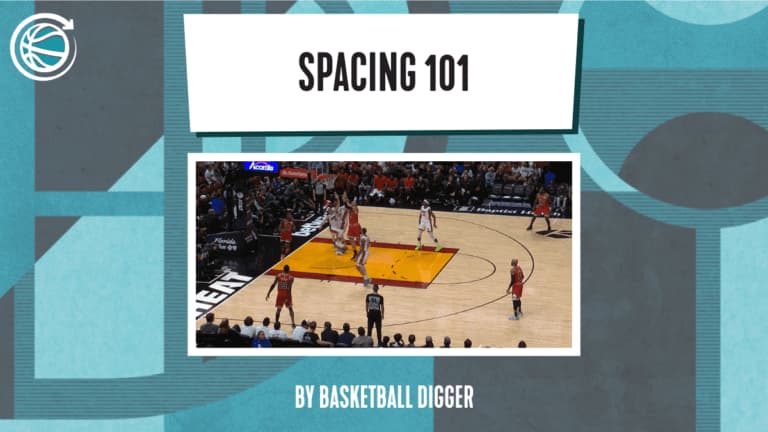
Spacing has changed the game. NBA offenses today look nothing like they did in the ’90s—more threes, better efficiency, and smarter shot selection. But why? The key lies in how teams use space to create and capitalize on advantages.
Mar 31, 2025
Simon Caret
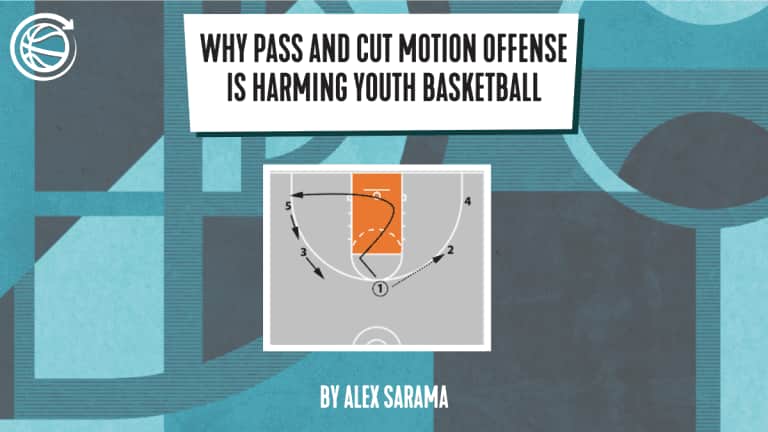
This article breaks down why pass and cut motion offense limits youth player development, and explores better ways to teach spacing, decision-making, and offensive creativity.
May 1, 2024
Alex Sarama
Approaches within the basketball industry are predominantly based upon experiential knowledge and traditions.


