

Why Modern Basketball Coaching is Stuck in the 1970s (And How to Fix It)





Imagine walking into a doctor’s office today and receiving a medical treatment that hasn’t been updated since the 1970s. You would immediately seek a second opinion. In fields like medicine, technology, and engineering, rigorous evidence-based research drives continuous, rapid evolution.
Yet, if you walk into a basketball gym in 2026, the coaching methods, attitudes, and practice designs look strikingly similar to how the game was taught several decades ago. While other high-performance fields have leaped into the 21st century, basketball coaching has largely remained immune to these advancements. To truly maximize player potential, we must ask an uncomfortable question: Is our coaching methodology 50 years behind the science of human performance?
The Trap of Path Dependency and Tradition
In many elite professions, experiential knowledge is continuously tested and paired with empirical science to propel the industry forward. In contrast, the basketball world is overwhelmingly governed by tradition, relying on the philosophy of “how it has always been done.”
This creates a phenomenon known as path dependency: even when superior, evidence-based methods are readily accessible, practitioners continue to rely on outdated approaches.
- The Problem: We run the same 3-man weaves, shell drills, and 1-on-0 block-practice exercises because that is how we were coached.
- The Myth: These methods are rooted in an outdated “Information Processing” theory, which wrongly treats the human brain like a computer that stores and retrieves rigid “muscle memory.”
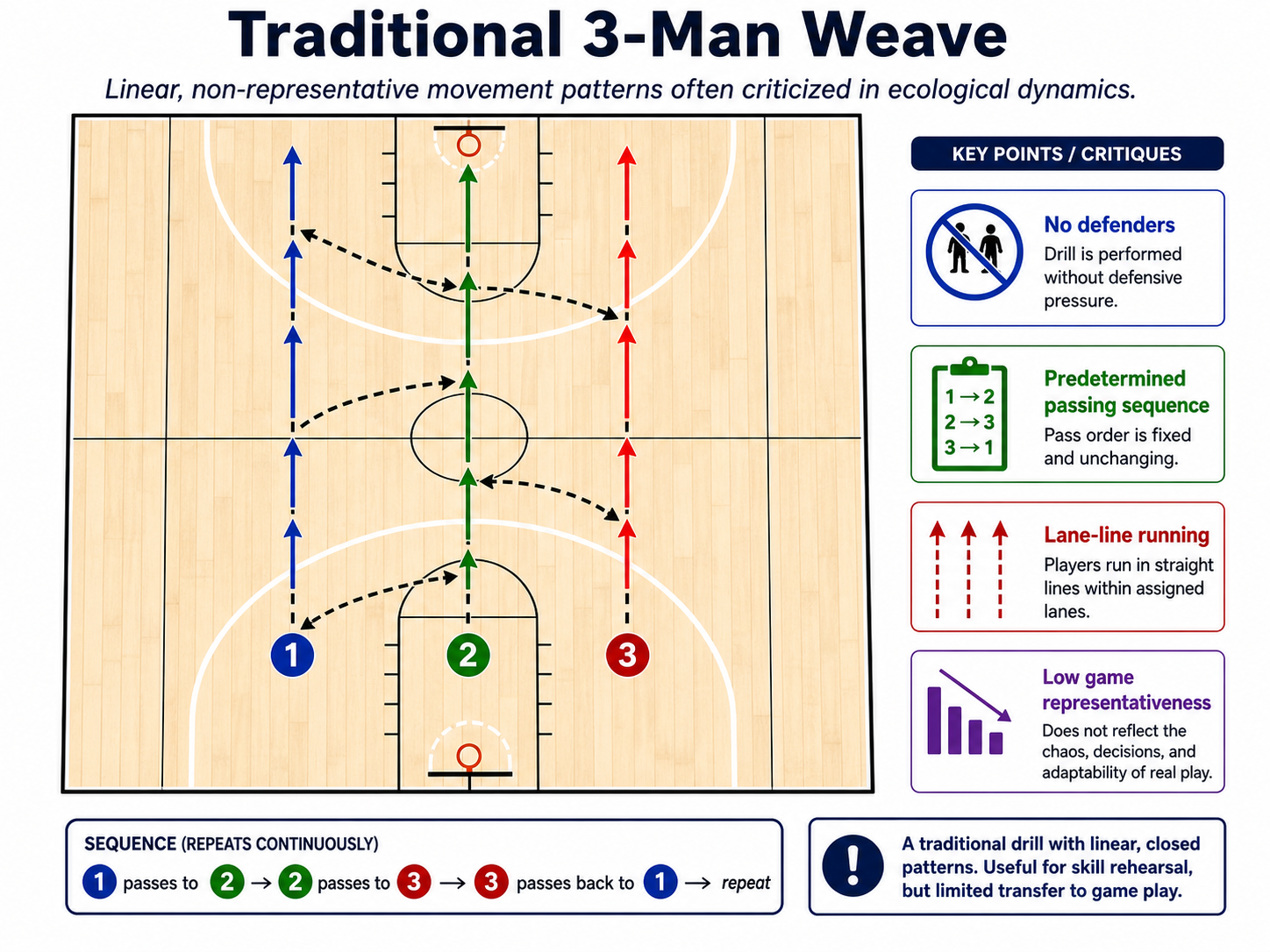
Traditional basketball 3-man weave drill diagram illustrating linear, non-representative movement patterns often criticized in ecological dynamics.
Technical Demonstration: Designing Rich Learning Environments
2-on-1 Float Dribble – Advantage start
The offensive player will pick a side to go around the cone. Live 2-on-1 from here. If the pass cannot be made to the cutter. They can sprint out to the 3-point line.
Warm-up – Pass Tag with Obstacles
Players have to pass the ball around and tag the escaping player with the basketball. Passers cannot dribble or run with the ball.
These SSGs above are an example of using the science of motor learning research. Both games keep perception and action coupled.
Coach’s Note: Want to dive deeper into why “muscle memory” is a myth? Check out our internal guide on The Science of Skill Acquisition.
The Ghost of the Industrial Revolution
To fully understand why basketball practices look the way they do, we have to look back to the industrial revolution. The traditional coaching model is heavily influenced by “Taylorism”—an industrial workplace philosophy focused on strict work regimes, rigid role specification, and the micromanagement of workers through anatomical decomposition.
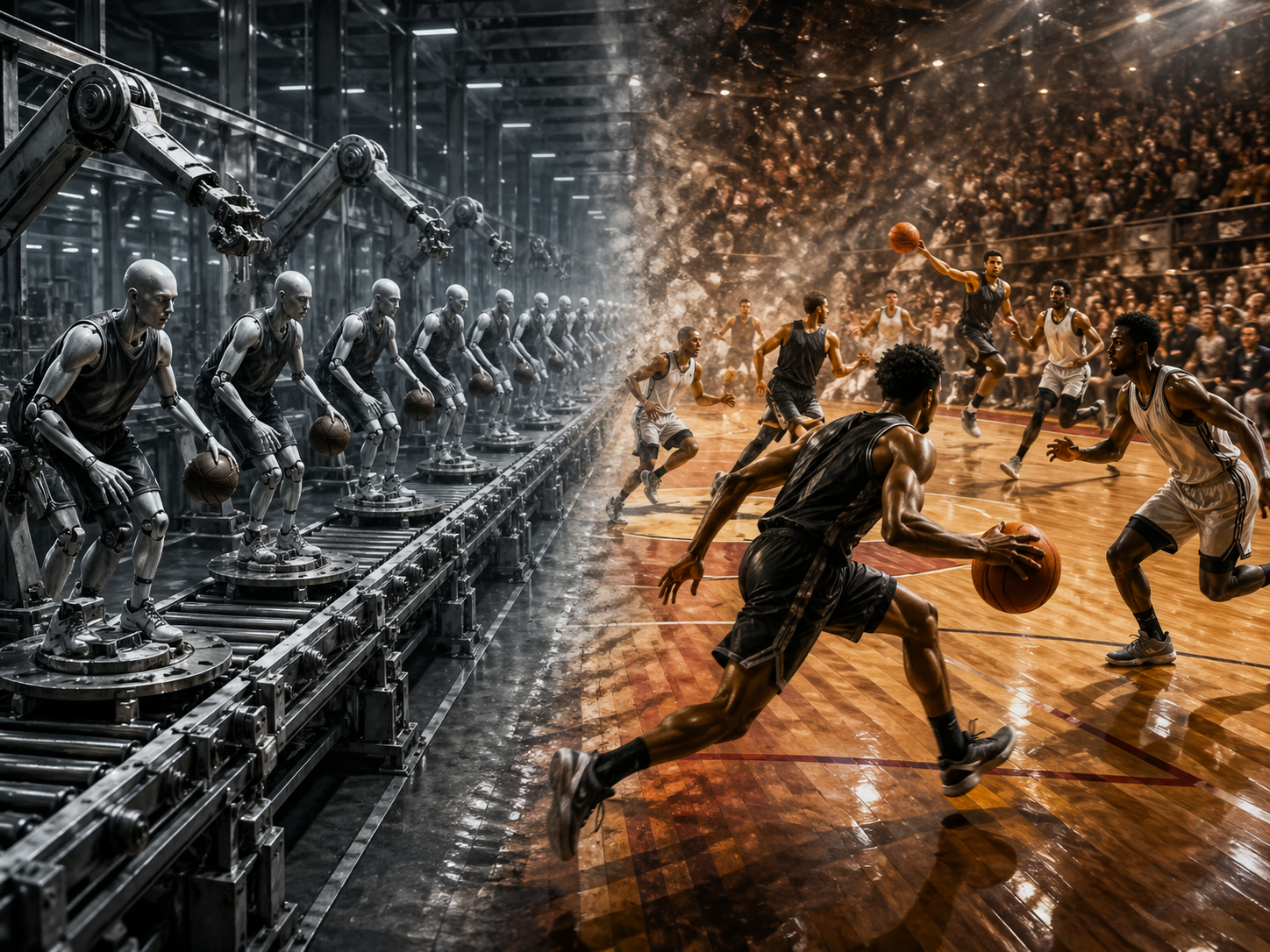
This industrial approach induced a “body as a machine” philosophy. Coaches break the game down into isolated, dead technical components, demanding that players replicate “fundamental” movements exactly as instructed.
While treating humans like machines might be effective for an assembly line, it is disastrous for developing creative, adaptable athletes who must navigate the unpredictable, chaotic environment of a live basketball game. Players need to be problem solvers, not robots.
The Illusion of Progress: Organizational Silos
You might argue that professional sports have modernized, pointing to the massive influx of analytics, force plates, and biomechanics. However, adding technology to an outdated pedagogical model is an illusion of progress.
Without a unifying theoretical framework to connect these departments, organizations fall victim to highly siloed operations:
- Front Offices: Focused on data without context.
- Strength Coaches: Training linear, robotic movements in the weight room.
- Skill Trainers: Working in de-contextualized environments (1-on-0).
As researchers point out, the eagerness to quantify progress in isolated components actually hinders true athlete preparation. If the weight room doesn’t speak to the court, the athlete remains fragmented.
Visualizing the Performance Landscape
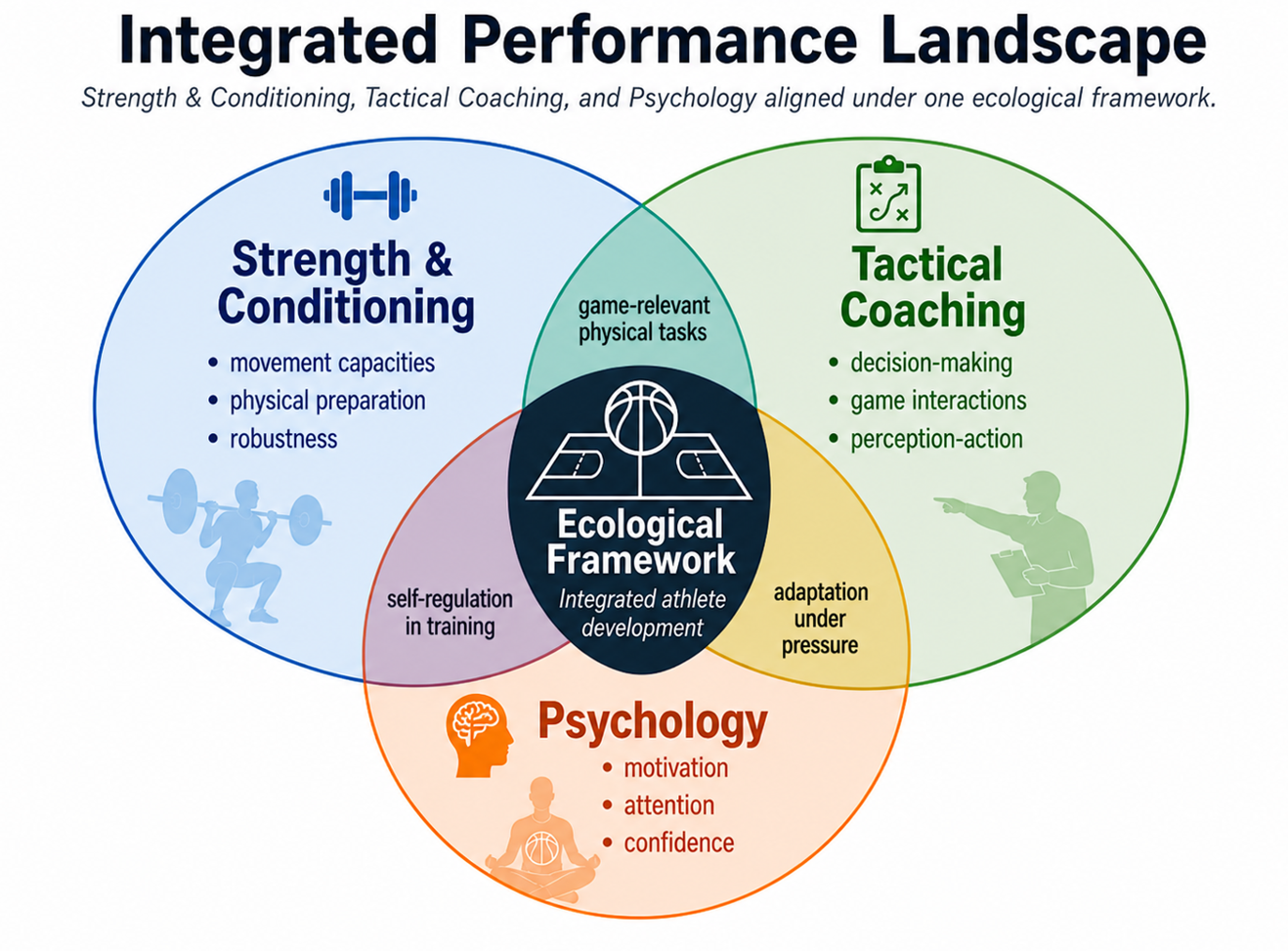
A Venn diagram showing the intersection of Strength & Conditioning, Tactical Coaching, and Psychology under a single ecological framework.
The Fallacy of Survivorship Bias
When traditionalists are challenged, they frequently point to the greatest players in the game as proof that rote repetition works. They ask, “If form shooting and block practice are so bad, how do you explain elite NBA shooters?”
This is a classic example of survivorship bias. We direct our attention toward the individuals who survived a flawed system, while remaining blind to the failures and dropouts caused by those exact same methods.
NBA players are incredible survivors; they made it to the highest level despite the rigid environments they were placed in, not necessarily because of them. We will never know how many potential global superstars were lost because their natural self-organization and problem-solving abilities were stifled by “drills.”
The Solution: Embracing Ecological Dynamics
To catch up to modern science, basketball must adopt Ecological Dynamics. This framework views athletes as complex, adaptive biological systems rather than machines. Under this model, skill is an adaptive, functional relationship that emerges between the player and their shifting environment.
3 Ways to Implement the Constraints-Led Approach (CLA):
- Manipulate Task Constraints: Change rules or point systems to force new solutions.
- Environmental Constraints: Adjust court space or sound to challenge perception.
- Individual Constraints: Account for a player’s unique limb length, fatigue, or mindset.
Pro-Tip: Ready to stop “drilling” and start “designing”? Explore our Small-Sided Games Library for production-ready practice plans.
Conclusion
The basketball coaching profession is at a critical inflection point. As long as we continue to rely on the ghosts of industrial-era Taylorism and isolated 1-on-0 drills, we will remain 50 years behind the curve.
It is time to tear down the silos and embrace the true science of human movement. When we reframe our environments through an ecological lens, we develop highly adaptable, intelligent, and robust human beings. We owe it to our athletes to finally step into the 21st century.
Join the Transformation
- Join the Community: Access hundreds of SSG diagrams and clinics at TransformingBball.com
- The Deep Dive: Check out the Transforming Basketball book for the full evidence-based framework on player development.




Imagine walking into a doctor’s office today and receiving a medical treatment that hasn’t been updated since the 1970s. You would immediately seek a second opinion. In fields like medicine, technology, and engineering, rigorous evidence-based research drives continuous, rapid evolution.
Yet, if you walk into a basketball gym in 2026, the coaching methods, attitudes, and practice designs look strikingly similar to how the game was taught several decades ago. While other high-performance fields have leaped into the 21st century, basketball coaching has largely remained immune to these advancements. To truly maximize player potential, we must ask an uncomfortable question: Is our coaching methodology 50 years behind the science of human performance?
The Trap of Path Dependency and Tradition
In many elite professions, experiential knowledge is continuously tested and paired with empirical science to propel the industry forward. In contrast, the basketball world is overwhelmingly governed by tradition, relying on the philosophy of “how it has always been done.”
This creates a phenomenon known as path dependency: even when superior, evidence-based methods are readily accessible, practitioners continue to rely on outdated approaches.
- The Problem: We run the same 3-man weaves, shell drills, and 1-on-0 block-practice exercises because that is how we were coached.
- The Myth: These methods are rooted in an outdated “Information Processing” theory, which wrongly treats the human brain like a computer that stores and retrieves rigid “muscle memory.”
Traditional basketball 3-man weave drill diagram illustrating linear, non-representative movement patterns often criticized in ecological dynamics.
Technical Demonstration: Designing Rich Learning Environments
2-on-1 Float Dribble – Advantage start
The offensive player will pick a side to go around the cone. Live 2-on-1 from here. If the pass cannot be made to the cutter. They can sprint out to the 3-point line.
Warm-up – Pass Tag with Obstacles
Players have to pass the ball around and tag the escaping player with the basketball. Passers cannot dribble or run with the ball.
These SSGs above are an example of using the science of motor learning research. Both games keep perception and action coupled.
Coach’s Note: Want to dive deeper into why “muscle memory” is a myth? Check out our internal guide on The Science of Skill Acquisition.
The Ghost of the Industrial Revolution
To fully understand why basketball practices look the way they do, we have to look back to the industrial revolution. The traditional coaching model is heavily influenced by “Taylorism”—an industrial workplace philosophy focused on strict work regimes, rigid role specification, and the micromanagement of workers through anatomical decomposition.
This industrial approach induced a “body as a machine” philosophy. Coaches break the game down into isolated, dead technical components, demanding that players replicate “fundamental” movements exactly as instructed.
While treating humans like machines might be effective for an assembly line, it is disastrous for developing creative, adaptable athletes who must navigate the unpredictable, chaotic environment of a live basketball game. Players need to be problem solvers, not robots.
The Illusion of Progress: Organizational Silos
You might argue that professional sports have modernized, pointing to the massive influx of analytics, force plates, and biomechanics. However, adding technology to an outdated pedagogical model is an illusion of progress.
Without a unifying theoretical framework to connect these departments, organizations fall victim to highly siloed operations:
- Front Offices: Focused on data without context.
- Strength Coaches: Training linear, robotic movements in the weight room.
- Skill Trainers: Working in de-contextualized environments (1-on-0).
As researchers point out, the eagerness to quantify progress in isolated components actually hinders true athlete preparation. If the weight room doesn’t speak to the court, the athlete remains fragmented.
Visualizing the Performance Landscape
A Venn diagram showing the intersection of Strength & Conditioning, Tactical Coaching, and Psychology under a single ecological framework.
The Fallacy of Survivorship Bias
When traditionalists are challenged, they frequently point to the greatest players in the game as proof that rote repetition works. They ask, “If form shooting and block practice are so bad, how do you explain elite NBA shooters?”
This is a classic example of survivorship bias. We direct our attention toward the individuals who survived a flawed system, while remaining blind to the failures and dropouts caused by those exact same methods.
NBA players are incredible survivors; they made it to the highest level despite the rigid environments they were placed in, not necessarily because of them. We will never know how many potential global superstars were lost because their natural self-organization and problem-solving abilities were stifled by “drills.”
The Solution: Embracing Ecological Dynamics
To catch up to modern science, basketball must adopt Ecological Dynamics. This framework views athletes as complex, adaptive biological systems rather than machines. Under this model, skill is an adaptive, functional relationship that emerges between the player and their shifting environment.
3 Ways to Implement the Constraints-Led Approach (CLA):
- Manipulate Task Constraints: Change rules or point systems to force new solutions.
- Environmental Constraints: Adjust court space or sound to challenge perception.
- Individual Constraints: Account for a player’s unique limb length, fatigue, or mindset.
Pro-Tip: Ready to stop “drilling” and start “designing”? Explore our Small-Sided Games Library for production-ready practice plans.
Conclusion
The basketball coaching profession is at a critical inflection point. As long as we continue to rely on the ghosts of industrial-era Taylorism and isolated 1-on-0 drills, we will remain 50 years behind the curve.
It is time to tear down the silos and embrace the true science of human movement. When we reframe our environments through an ecological lens, we develop highly adaptable, intelligent, and robust human beings. We owe it to our athletes to finally step into the 21st century.
Join the Transformation
- Join the Community: Access hundreds of SSG diagrams and clinics at TransformingBball.com
- The Deep Dive: Check out the Transforming Basketball book for the full evidence-based framework on player development.




check what's trending

What is ecological dynamics and how is it connected to a constraints-led approach?
Dec 8, 2025
George Vaz

Are you searching for the best small sided games (SSGs) to improve your basketball practices? Want to replace boring, low-transfer drills with competitive games that actually develop player decision-making and in-game skills?
In this post, I’m sharing my top 5 favorite small-sided basketball games—designed to teach core concepts like closeouts, pick-and-roll, advantage creation, and transition offense and defense. These basketball SSGs are intense, purposeful, and built around real-game actions.
Whether you're coaching youth basketball, high school, or pros, these top small sided games will make your sessions more effective, more engaging, and more fun—for both players and coaches.
Let’s break down each game and how it can transform your practices.
Aug 4, 2025
George Vaz

Whether you’re coaching in the NBA, EuroLeague, or youth basketball, one thing remains universally true: the worst transition offense is still more efficient than the best half-court offense. Yet, many teams still struggle to fully capitalize on transition opportunities, often opting to slow down the game instead of pushing the pace. The question is, why? By running more intentionally, teams can create easier scoring opportunities. So why do some teams hesitate?
Apr 7, 2025
George Vaz
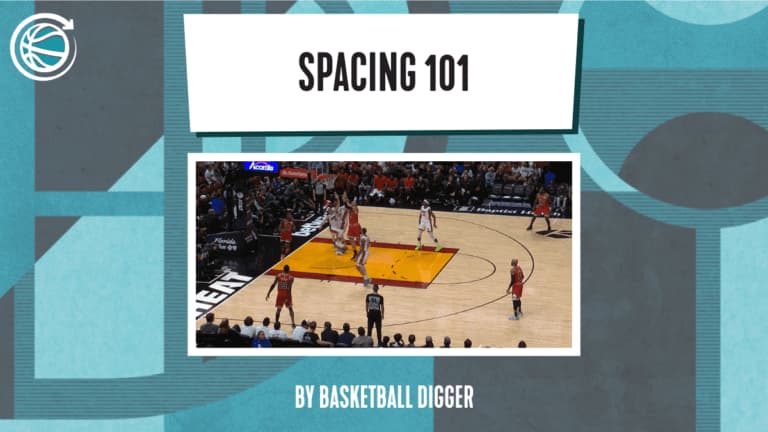
Spacing has changed the game. NBA offenses today look nothing like they did in the ’90s—more threes, better efficiency, and smarter shot selection. But why? The key lies in how teams use space to create and capitalize on advantages.
Mar 31, 2025
Simon Caret
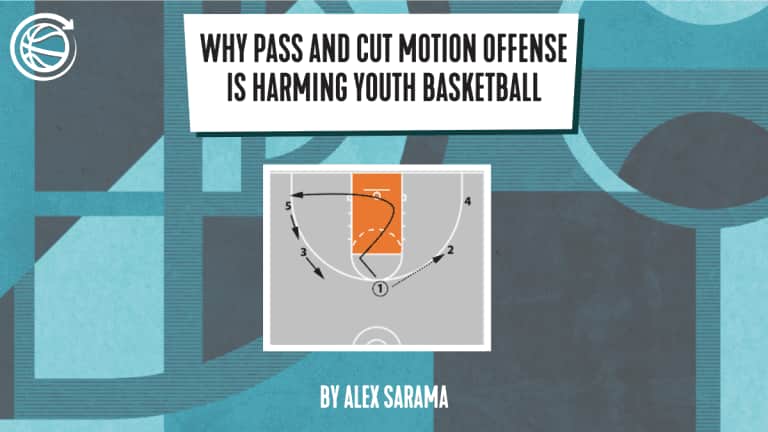
This article breaks down why pass and cut motion offense limits youth player development, and explores better ways to teach spacing, decision-making, and offensive creativity.
May 1, 2024
Alex Sarama
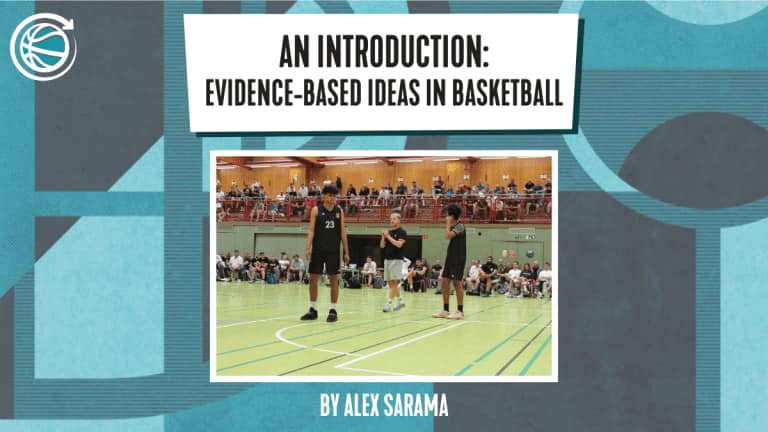
Approaches within the basketball industry are predominantly based upon experiential knowledge and traditions.


