

Maximizing “Time on Task”: How to Cut the Fluff and Revolutionize Your Basketball Practices




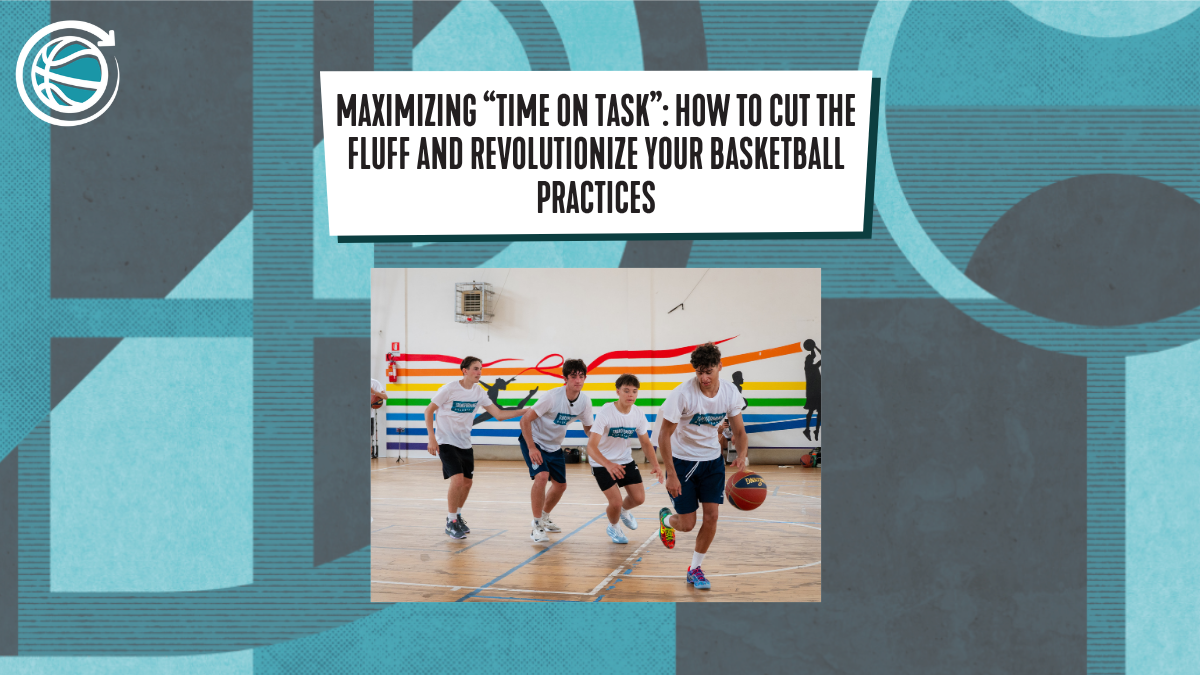
Have you ever paused a stopwatch during your basketball practice to measure exactly how many minutes your players spend actively playing the game?
If you run a traditional practice, the final number might be a tough pill to swallow. In many gymnasiums across the world, “Time on Task”—defined as the time athletes are actually participating versus waiting in lines or listening to a coach lecture—is alarmingly low. In most traditional settings, this figure frequently hovers below 50%.
But what if we could flip that ratio? For coaches striving to build highly adaptable, skilled players, the goal should be to keep athletes engaged for more than 90% of the session. This article explores the science behind maximizing active time and provides practical, evidence-based strategies to cut the fluff and keep your players moving.
The Science of Academic Learning Time
To understand the value of Time on Task, we look to Academic Learning Time (ALT). This represents the specific unit of time in which athletes are actively engaged in instructional materials at an appropriate level of difficulty, resulting in high success.
- Motor Engagement is Mandatory: Athletes cannot learn the game if they are not physically interacting with the content.
- The Ruthless Evaluation: Every activity must answer one question: “Does this actually help us win?”
- The Trap of Filler: High amounts of verbal instruction do not equate to skill development; active, motor-engaged practice does.
“If an activity only serves to fill time while players stand around, it needs to be eliminated.”
Quality Over Quantity: Repetition Without Repetition
Increasing raw minutes isn’t enough; the quality of that time is paramount. Within the Constraints-Led Approach (CLA), time on task only guarantees learning efficacy if the environment features Representative Design.
If a player’s time consists of 50 identical, uncontested 1-on-0 reps, they are merely reciting a dead, robotic pattern. True development requires “repetition without repetition,” where time on task is high, but every single repetition presents the athlete with a slightly different problem to solve.
“By utilizing Small-Sided Games and live defenders, we ensure authentic perception-action coupling, forcing players to read and adapt to the ever-changing landscape of the sport.”
Practical Strategies for High-Efficiency Practices
1. Implement “Bursts”
In traditional designs, players perform one rep and rotate to the back of a line. Bursts require players to stay in their assigned roles continuously for a fixed period—often 45 to 60 seconds—before rotating.
- The Setup: In any SSG, instead of checking the ball after every score, players instantly transition and keep playing live possessions until the burst is complete.
- The Impact: This eliminates dead time, creates intense physiological demands, and generates a massive volume of variable repetitions in a short window.
2. Minimal Effective Instruction (MEI)
Excessive talking is the enemy of development. Every minute spent delivering a monologue is a minute robbed from the players’ opportunity to explore movement solutions.
- The Rule of 30: Challenge yourself to fully explain the rules of any SSG in 30 seconds or less.
- MEI Checklist:
1. Tell them where to start.
2. Define what action to take (e.g., pass, dribble, play live).
3. Outline the specific task constraints.
3. Time Constraints & Jungle Shooting
Adding a “random clock”—where a coach counts down from a random number like 7 or 5—forces the offense to be immediately decisive and eliminates passive perimeter passing.
To maximize engagement during shooting, move away from blocked spot shooting and implement Jungle Shooting. This rapid, chaotic format involves shooters receiving passes from varying locations and angles, keeping them highly active and simulating the true time pressures of competition.
the above is 4v2 Jungle Shooting. Coaches can modify the constraints to change the complexity of the game. Eg., 3v2.
Jungle Shooting: 4 players are on offense. 2 Players on defense. Offense stays for 60 seconds. They have to score 3 Silver Medals (catch and shoot 3) to win.
4. Strategic Load Management Games
To maintain 90% time on task without burning players out, integrate games that manage physical load while keeping cognitive engagement high:
- 1-on-1 Mosquito Shooting: One offensive player shoots while a defender (the “mosquito”) circles them, yelling and waving hands to distract without blocking the shot. This trains focus and rhythm under pressure without heavy physical contact.
- 2-on-1 Shooting: A defender passes the ball out from the block to two offensive players. The offense has a maximum of two passes to generate a ROB (Rhythm, Open, Balanced) shot. This forces players to read closeouts and make decisions with a lower physical load than 5-on-5. (See example above)
- Differential Learning (DL) Shooting Blocks: Players work in pairs to shoot with exaggerated variability—shooting off one leg, using different release speeds, or performing a 180-degree jump before the catch. This helps shooters self-organize and discover adaptable mechanics during “recovery” periods. (https://transformingbball.com/how-to-apply-the-theory-of-differential-learning-in-basketball-shooting/)
Summary: The 90% Shift
Transitioning to a 90% Time on Task environment is a shock to the system. Because the mental and physical load increases so significantly, practices can (and should) be shorter, prioritizing high-quality decisions over exhaustive, hours-long grinds. (If 90% is too much to start – try 70%, then 80% and build up from there.)
| Category
|
Traditional Practice
|
High-Efficiency (CLA) Practice
|
| Active Time
|
50% Active / 50% Idle
|
90%+ Active Engagement
|
| Session Flow
|
Long, exhaustive “grinds”
|
Shorter, high-intensity sessions
|
| Skill Work
|
Blocked, robotic repetitions
|
Variable, game-representative decisions
|
| Coaching Style | Long-winded monologues | Minimal Effective Instruction (MEI) |
By embracing these strategies, you eliminate the empty minutes of your sessions. When you value quality time on task, you build a practice environment where every second serves the ultimate goal: developing adaptable, resilient, and highly skilled basketball players.
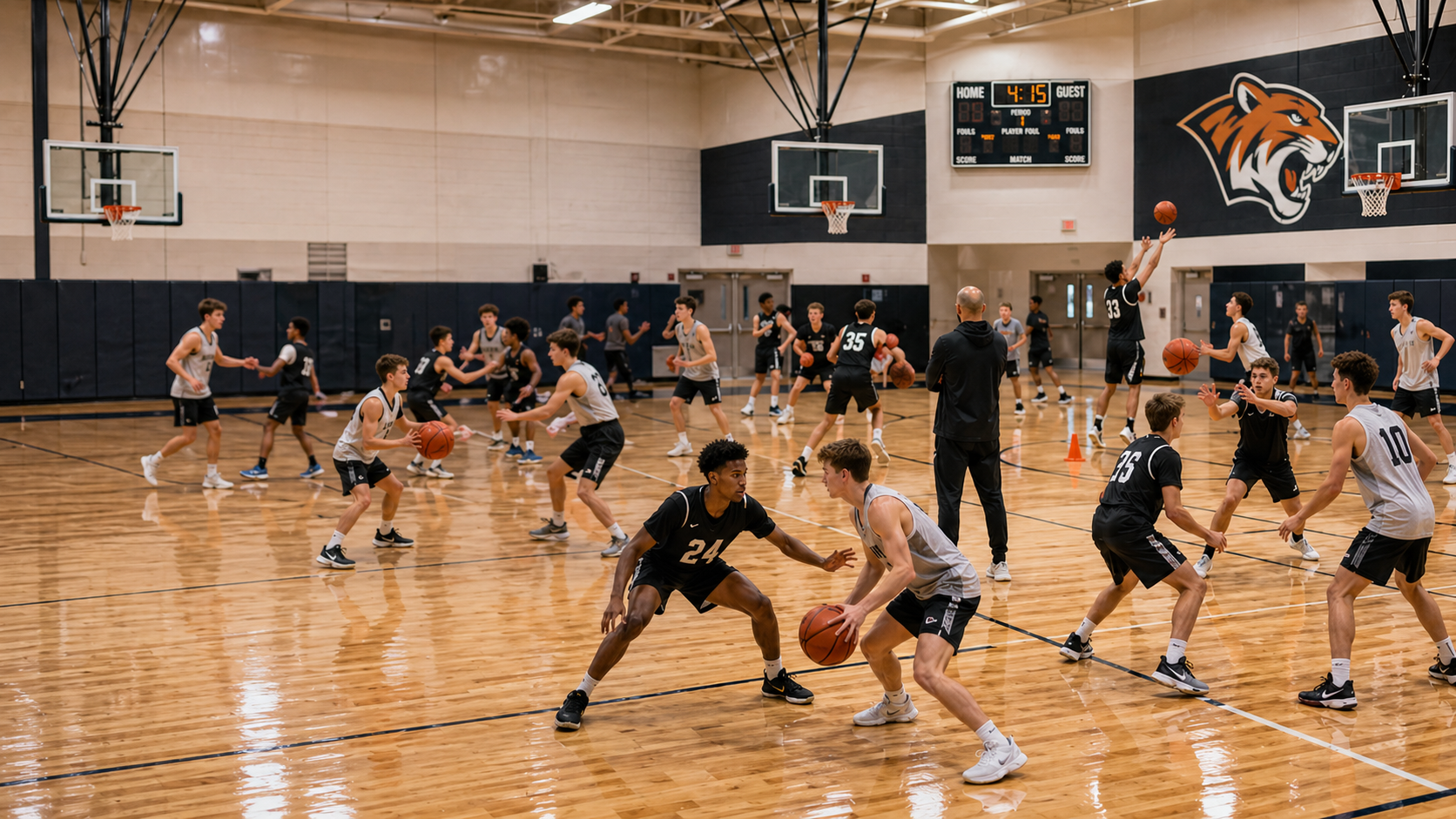
Basketball practice time on task keeps players actively engaged through game-like reps, small-sided play, and high-efficiency coaching.
Join the Transformation
- Join the Community: Access hundreds of SSG diagrams and clinics at TransformingBball.com
- The Deep Dive: Check out the Transforming Basketball book for the full evidence-based framework on player development.

Have you ever paused a stopwatch during your basketball practice to measure exactly how many minutes your players spend actively playing the game?
If you run a traditional practice, the final number might be a tough pill to swallow. In many gymnasiums across the world, “Time on Task”—defined as the time athletes are actually participating versus waiting in lines or listening to a coach lecture—is alarmingly low. In most traditional settings, this figure frequently hovers below 50%.
But what if we could flip that ratio? For coaches striving to build highly adaptable, skilled players, the goal should be to keep athletes engaged for more than 90% of the session. This article explores the science behind maximizing active time and provides practical, evidence-based strategies to cut the fluff and keep your players moving.
The Science of Academic Learning Time
To understand the value of Time on Task, we look to Academic Learning Time (ALT). This represents the specific unit of time in which athletes are actively engaged in instructional materials at an appropriate level of difficulty, resulting in high success.
- Motor Engagement is Mandatory: Athletes cannot learn the game if they are not physically interacting with the content.
- The Ruthless Evaluation: Every activity must answer one question: “Does this actually help us win?”
- The Trap of Filler: High amounts of verbal instruction do not equate to skill development; active, motor-engaged practice does.
“If an activity only serves to fill time while players stand around, it needs to be eliminated.”
Quality Over Quantity: Repetition Without Repetition
Increasing raw minutes isn’t enough; the quality of that time is paramount. Within the Constraints-Led Approach (CLA), time on task only guarantees learning efficacy if the environment features Representative Design.
If a player’s time consists of 50 identical, uncontested 1-on-0 reps, they are merely reciting a dead, robotic pattern. True development requires “repetition without repetition,” where time on task is high, but every single repetition presents the athlete with a slightly different problem to solve.
“By utilizing Small-Sided Games and live defenders, we ensure authentic perception-action coupling, forcing players to read and adapt to the ever-changing landscape of the sport.”
Practical Strategies for High-Efficiency Practices
1. Implement “Bursts”
In traditional designs, players perform one rep and rotate to the back of a line. Bursts require players to stay in their assigned roles continuously for a fixed period—often 45 to 60 seconds—before rotating.
- The Setup: In any SSG, instead of checking the ball after every score, players instantly transition and keep playing live possessions until the burst is complete.
- The Impact: This eliminates dead time, creates intense physiological demands, and generates a massive volume of variable repetitions in a short window.
2. Minimal Effective Instruction (MEI)
Excessive talking is the enemy of development. Every minute spent delivering a monologue is a minute robbed from the players’ opportunity to explore movement solutions.
- The Rule of 30: Challenge yourself to fully explain the rules of any SSG in 30 seconds or less.
- MEI Checklist:
1. Tell them where to start.
2. Define what action to take (e.g., pass, dribble, play live).
3. Outline the specific task constraints.
3. Time Constraints & Jungle Shooting
Adding a “random clock”—where a coach counts down from a random number like 7 or 5—forces the offense to be immediately decisive and eliminates passive perimeter passing.
To maximize engagement during shooting, move away from blocked spot shooting and implement Jungle Shooting. This rapid, chaotic format involves shooters receiving passes from varying locations and angles, keeping them highly active and simulating the true time pressures of competition.
the above is 4v2 Jungle Shooting. Coaches can modify the constraints to change the complexity of the game. Eg., 3v2.
Jungle Shooting: 4 players are on offense. 2 Players on defense. Offense stays for 60 seconds. They have to score 3 Silver Medals (catch and shoot 3) to win.
4. Strategic Load Management Games
To maintain 90% time on task without burning players out, integrate games that manage physical load while keeping cognitive engagement high:
- 1-on-1 Mosquito Shooting: One offensive player shoots while a defender (the “mosquito”) circles them, yelling and waving hands to distract without blocking the shot. This trains focus and rhythm under pressure without heavy physical contact.
- 2-on-1 Shooting: A defender passes the ball out from the block to two offensive players. The offense has a maximum of two passes to generate a ROB (Rhythm, Open, Balanced) shot. This forces players to read closeouts and make decisions with a lower physical load than 5-on-5. (See example above)
- Differential Learning (DL) Shooting Blocks: Players work in pairs to shoot with exaggerated variability—shooting off one leg, using different release speeds, or performing a 180-degree jump before the catch. This helps shooters self-organize and discover adaptable mechanics during “recovery” periods. (https://transformingbball.com/how-to-apply-the-theory-of-differential-learning-in-basketball-shooting/)
Summary: The 90% Shift
Transitioning to a 90% Time on Task environment is a shock to the system. Because the mental and physical load increases so significantly, practices can (and should) be shorter, prioritizing high-quality decisions over exhaustive, hours-long grinds. (If 90% is too much to start – try 70%, then 80% and build up from there.)
| Category
|
Traditional Practice
|
High-Efficiency (CLA) Practice
|
| Active Time
|
50% Active / 50% Idle
|
90%+ Active Engagement
|
| Session Flow
|
Long, exhaustive “grinds”
|
Shorter, high-intensity sessions
|
| Skill Work
|
Blocked, robotic repetitions
|
Variable, game-representative decisions
|
| Coaching Style | Long-winded monologues | Minimal Effective Instruction (MEI) |
By embracing these strategies, you eliminate the empty minutes of your sessions. When you value quality time on task, you build a practice environment where every second serves the ultimate goal: developing adaptable, resilient, and highly skilled basketball players.
Basketball practice time on task keeps players actively engaged through game-like reps, small-sided play, and high-efficiency coaching.
Join the Transformation
- Join the Community: Access hundreds of SSG diagrams and clinics at TransformingBball.com
- The Deep Dive: Check out the Transforming Basketball book for the full evidence-based framework on player development.




check what's trending

What is ecological dynamics and how is it connected to a constraints-led approach?
Dec 8, 2025
George Vaz

Are you searching for the best small sided games (SSGs) to improve your basketball practices? Want to replace boring, low-transfer drills with competitive games that actually develop player decision-making and in-game skills?
In this post, I’m sharing my top 5 favorite small-sided basketball games—designed to teach core concepts like closeouts, pick-and-roll, advantage creation, and transition offense and defense. These basketball SSGs are intense, purposeful, and built around real-game actions.
Whether you're coaching youth basketball, high school, or pros, these top small sided games will make your sessions more effective, more engaging, and more fun—for both players and coaches.
Let’s break down each game and how it can transform your practices.
Aug 4, 2025
George Vaz

Whether you’re coaching in the NBA, EuroLeague, or youth basketball, one thing remains universally true: the worst transition offense is still more efficient than the best half-court offense. Yet, many teams still struggle to fully capitalize on transition opportunities, often opting to slow down the game instead of pushing the pace. The question is, why? By running more intentionally, teams can create easier scoring opportunities. So why do some teams hesitate?
Apr 7, 2025
George Vaz
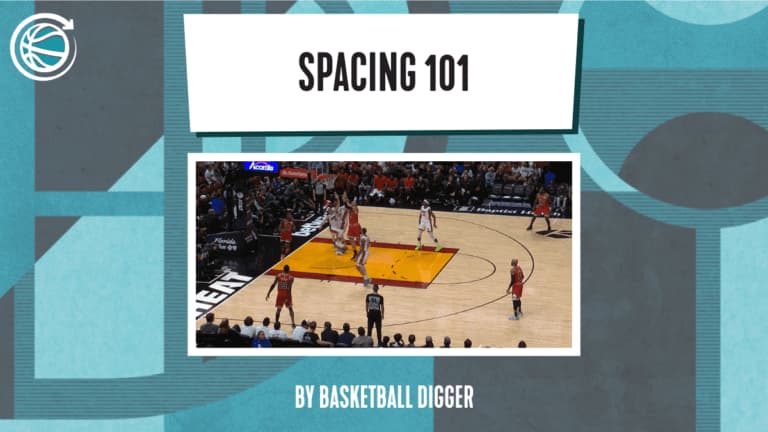
Spacing has changed the game. NBA offenses today look nothing like they did in the ’90s—more threes, better efficiency, and smarter shot selection. But why? The key lies in how teams use space to create and capitalize on advantages.
Mar 31, 2025
Simon Caret
This article breaks down why pass and cut motion offense limits youth player development, and explores better ways to teach spacing, decision-making, and offensive creativity.
May 1, 2024
Alex Sarama
Approaches within the basketball industry are predominantly based upon experiential knowledge and traditions.


