Transforming Basketball
AbbonatiSei già abbonato? Accedi

Coaching Guide

Basketball Rebounding Drills

Many basketball rebounding drills begin with a coach telling players to find someone and box out. However, the appropriate action depends on where the shot comes from, the flight of the ball and the positions of the players. Sometimes a player needs to make contact with an opponent. Other times, they may need to pursue and track the ball to move directly towards its path off the rim. At Transforming Basketball, we use constraints to help players explore these different rebounding situations.

2 min read
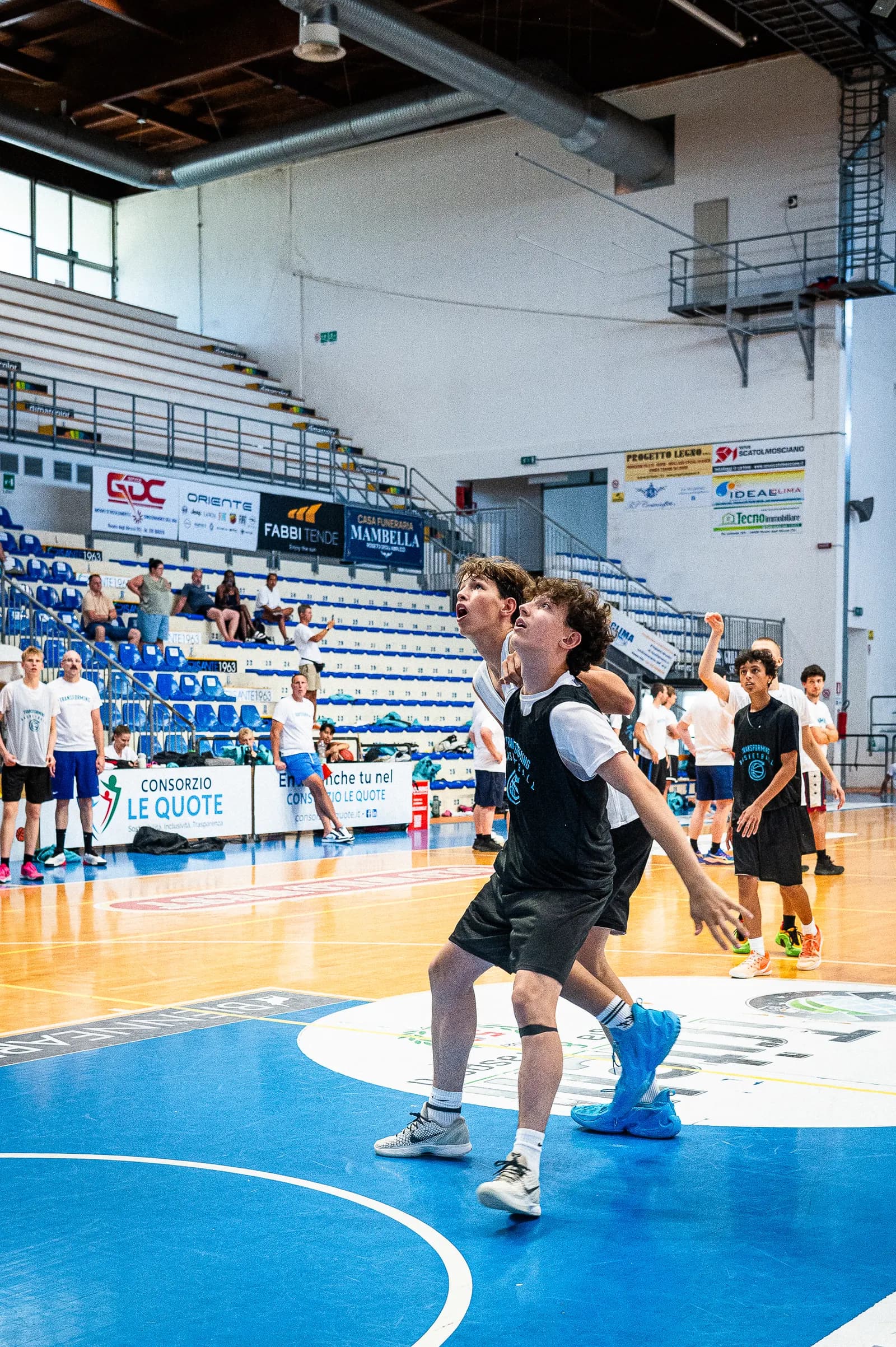
Two players boxing out and watching the ball for a rebound at the Transforming Basketball camp in Roseto

Keep the Shot and the Rebound Together

The simplest change coaches can make to their practice drills is not ending a drill on a shot attempt. This ensures the possession is live until a team secures the ball. This allows players to experience how their positioning during the shot influences what they do next. Negative transfer occurs when players stop playing after attempting a 1v1 finish or shooting during a small-sided game.

Try It in Practice: Defensive Shutdown

Play 4-on-4 with three teams sharing one basket. Two teams play while the third waits to enter. The first team to earn five defensive stops wins.

A stop counts when the defense forces a turnover or secures a rebound after a contested miss. An open miss does not count as a stop.

After a stop, the defense stays on and the waiting team enters on offense. After a basket, the scoring team becomes the defense, the previous defense leaves and the waiting team enters.

To emphasize rebounding, subtract one stop whenever the defense concedes an offensive rebound. This gives players a clear consequence for contesting the shot without finishing the possession.

4-on-4-on-4 Defensive ShutdownA contested miss only completes the stop when the defense secures possession.

Use a Rebounding Constraint in 5-on-5

You can also emphasize rebounding within a normal game using Three Lives. Keep the usual basketball score, but give each team three lives. Every offensive rebound conceded costs the defending team a life.

When a team loses all three lives, it loses the game, even if it is ahead on points. The constraint makes rebounding consequential while players still have to manage closeouts, help responsibilities and the other demands of playing defense.

5-on-5 Three LivesWatch the game format, then consider the offensive-rebound consequence described above.

Connect the Rebound to the Next Action

Once a player secures the rebound, they need to recognize whether to pass or advance with a breakout dribble. Teammates also need to respond by becoming available.

Allow the activity to continue after the rebound. Watch whether the rebounder can use the space available and whether teammates provide an outlet before defensive pressure arrives.

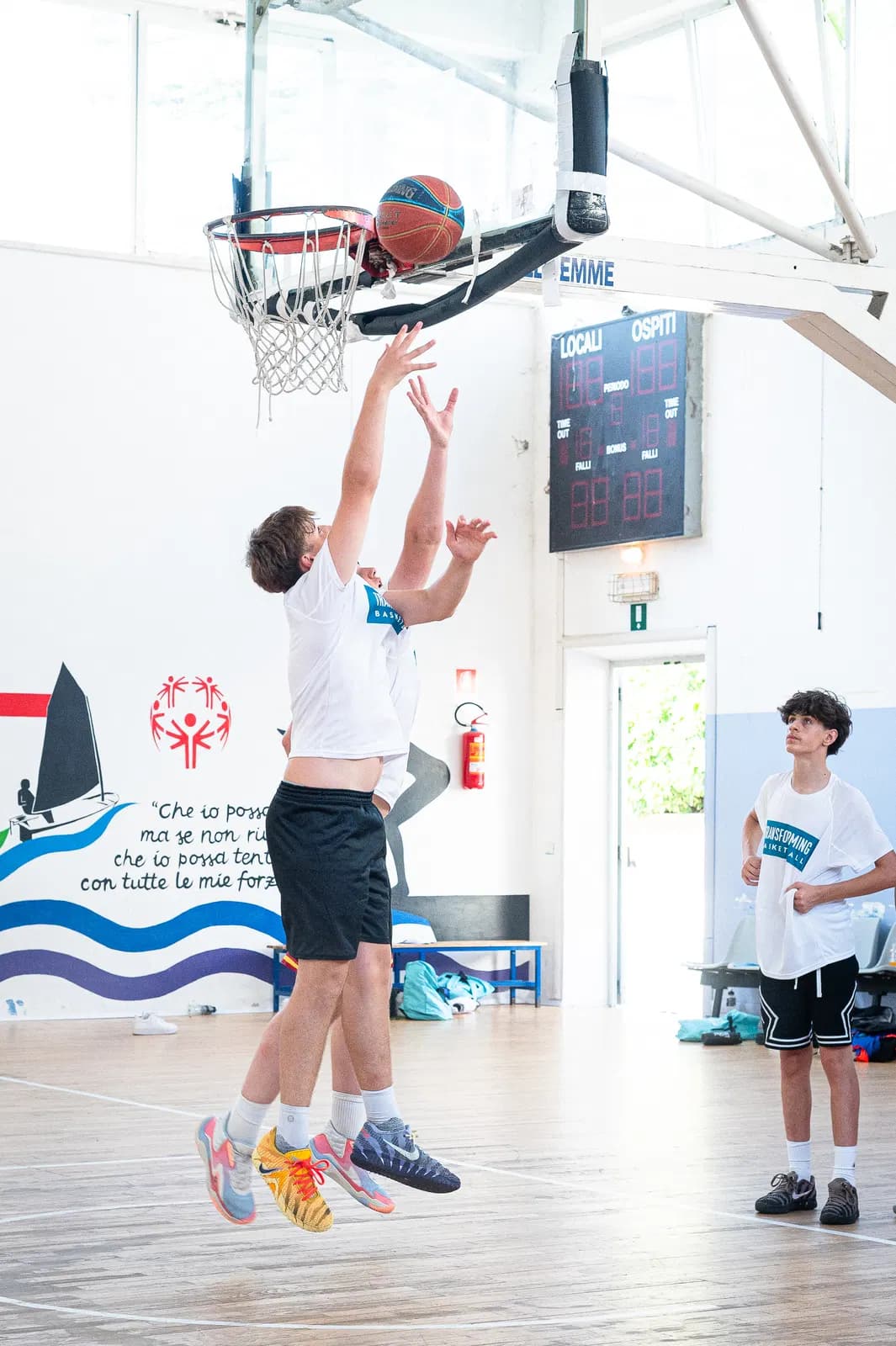
A player leaping for a rebound during an indoor camp session

Explore rebounding

Keep learning

Free

21 SSGs for Your Next Practice

21 small-sided games you can run and adapt at your next practice — representative, game-like activities built around the Transforming Basketball approach.

Ti invieremo la risorsa via email e, di tanto in tanto, spunti di coaching. Puoi disiscriverti in qualsiasi momento. Informativa sulla privacy.

Lingua della risorsa: inglese. Il download gratuito e le email successive sono attualmente solo in inglese.

Cover of the Small-Sided Games Book PDF.

The Small-Sided Games Book

$49 USD

Go beyond your first 21 games. Build your practice around 50+ small-sided games, with diagrams and constraints you can adapt to your players.