

How to Plan Your Youth Basketball Practices




In this blog, we touch on all the considerations coaches should take into account when creating a practice plan. It is important to write and save each practice plan. This allows you to make notes on the activities, cues, or any other relevant things that might have happened at a practice. Maybe a constraint didn’t work as desired, so this could be one of your steps in your plan-do-review sequence. At Transforming, we recommend using Google Drive for all your practice planning. It’s free and allows you to quickly look back at what your team did at a practice by quickly searching for keywords and any other relevant activities.
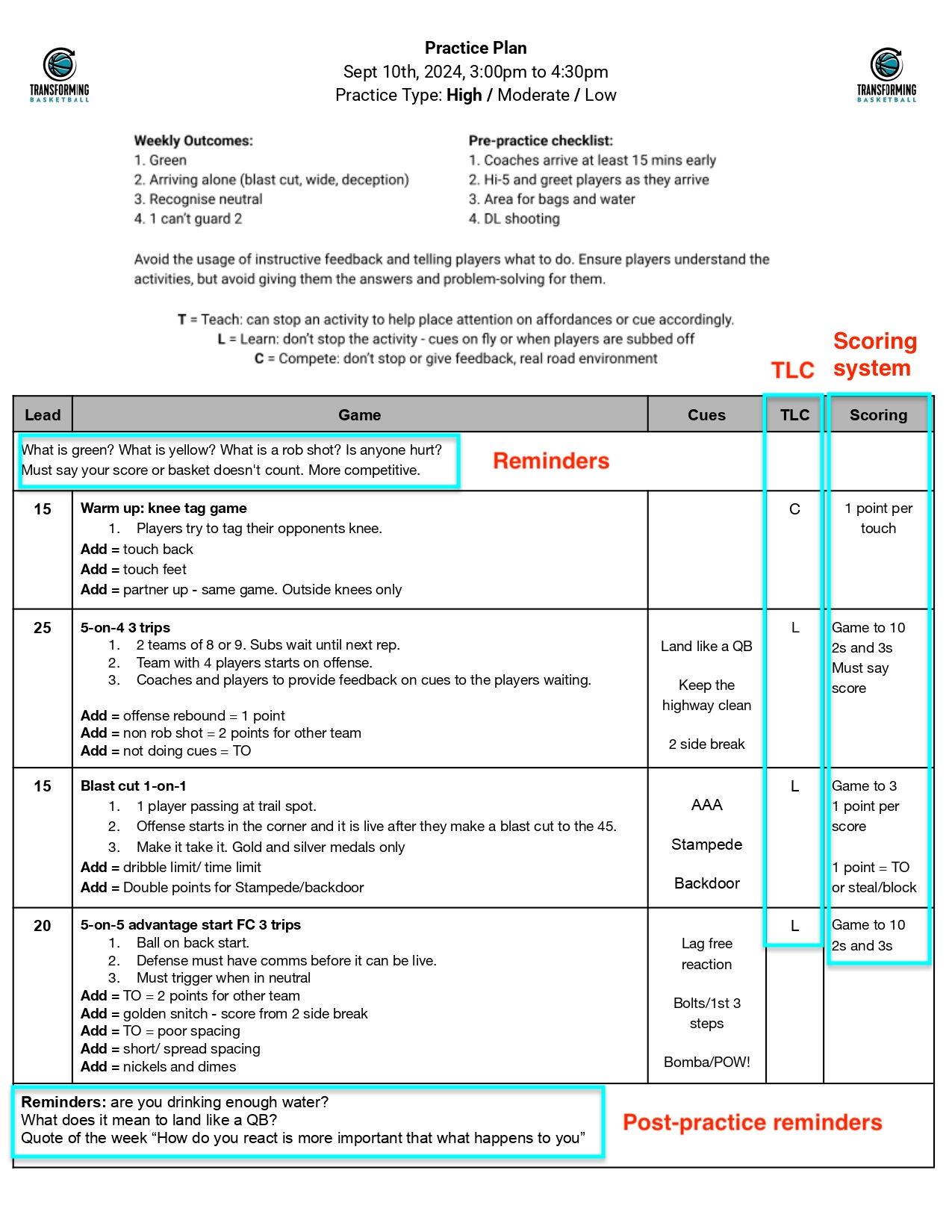
Below is a copy of one of my practice plans from last season at MVP Academy in Portugal. These follow the same style as the Transforming Basketball Youth Practice Plan Bundle.

Practice Plan Checklist
- Logistics: Where, when, and what time is practice.
- Practice type: Low/Moderate/high stress day. This can help with load management and ensuring players do not get burnt out.
- Weekly outcomes: This helps me remind myself what we want to prioritise for the week ahead.
- Pre-practice Checklist: This can help me and the assistant coaches know exactly what to do upon arriving in the gym — check in with players, encourage differential learning shooting exercises to warm up, as well as any other reminders of how we want to coach.
- Reminders/AOB for pre-practice: Sometimes I might quiz the players on our terminology to check for understanding.
- Small-sided Games: SSGs, their rules, and potential constraints. I like to anticipate how I think players will respond to the games with the constraints. Sometimes it works; sometimes I am way off.
- Scoring system: You can see from the examples above that I removed this section in the plan to suit my needs. The team was used to the scoring systems we used.
- Lead: Who is going to be coaching the activity.
- Cues: I like to look at this as the intention of the game. What are we trying to teach? This can help with providing feedback and influencing the players’ intentions and attentions. Note that these are all in our terminology.
- TLC: Teach, learn, compete. This is taken from Mike MacKay. I find it helps me with two things:
- Knowing when to step in and provide feedback or to let them play and figure it out.
- Load management. If it is a low-stress day, I might include more ‘teaching’ in the activity.
- Post-practice reminders: This may also include a time for the players to reflect on the practice and what we learned.
Practice Planning Best Practices
Basketball can be a mix of emotions — highs and lows — for youth players. A player can arrive at practice after a bad day at school, and the right practice can quickly transform their poor mood into one of growth and joy — and vice versa!
That being said, it is important to remember that learning is complex in an environment as unpredictable as the basketball court. Here are some best practices for you to remember to help deal with some of this unpredictability:
- Be adaptable: The same way we try to teach our players to be adaptable and creative, we as coaches should strive for the same thing. If you can see the players are learning and growing in a game, perhaps you should stick with it longer — sacrificing another game at practice if needed.
- Move on if it is not working: Know when to say “no.” On the flip side of the above, it is equally important to move on if something is not working. You tried to be creative and create a game that, in your head, would solve all your problems about how to punish a zone defense — and it isn’t going as expected. Move on and…
- Plan, do, review: Take the example above and review why your activity didn’t work, make the necessary changes, and come back to it.
- KISS — Keep it Simple, Stupid! Sometimes less is more when trying to teach something. Too many constraints and rules can confuse not only the players but even us as coaches!
Remember…
Coaching youth players is extremely different from coaching professional players. Youth players are still learning both the game of basketball and life. As a youth coach, our job should be to be as transformational as possible!
This is why I always consider it important to check in with each player throughout the week. Last season, my assistants and I intentionally divided the players up each week for who we would each speak to. We would catch up before practice and ask how school and life outside basketball were going. This helped us build a solid rapport with the players and create a safe learning environment where they knew we cared about their holistic development — not just basketball!


In this blog, we touch on all the considerations coaches should take into account when creating a practice plan. It is important to write and save each practice plan. This allows you to make notes on the activities, cues, or any other relevant things that might have happened at a practice. Maybe a constraint didn’t work as desired, so this could be one of your steps in your plan-do-review sequence. At Transforming, we recommend using Google Drive for all your practice planning. It’s free and allows you to quickly look back at what your team did at a practice by quickly searching for keywords and any other relevant activities.
Below is a copy of one of my practice plans from last season at MVP Academy in Portugal. These follow the same style as the Transforming Basketball Youth Practice Plan Bundle.
Practice Plan Checklist
- Logistics: Where, when, and what time is practice.
- Practice type: Low/Moderate/high stress day. This can help with load management and ensuring players do not get burnt out.
- Weekly outcomes: This helps me remind myself what we want to prioritise for the week ahead.
- Pre-practice Checklist: This can help me and the assistant coaches know exactly what to do upon arriving in the gym — check in with players, encourage differential learning shooting exercises to warm up, as well as any other reminders of how we want to coach.
- Reminders/AOB for pre-practice: Sometimes I might quiz the players on our terminology to check for understanding.
- Small-sided Games: SSGs, their rules, and potential constraints. I like to anticipate how I think players will respond to the games with the constraints. Sometimes it works; sometimes I am way off.
- Scoring system: You can see from the examples above that I removed this section in the plan to suit my needs. The team was used to the scoring systems we used.
- Lead: Who is going to be coaching the activity.
- Cues: I like to look at this as the intention of the game. What are we trying to teach? This can help with providing feedback and influencing the players’ intentions and attentions. Note that these are all in our terminology.
- TLC: Teach, learn, compete. This is taken from Mike MacKay. I find it helps me with two things:
- Knowing when to step in and provide feedback or to let them play and figure it out.
- Load management. If it is a low-stress day, I might include more ‘teaching’ in the activity.
- Post-practice reminders: This may also include a time for the players to reflect on the practice and what we learned.
Practice Planning Best Practices
Basketball can be a mix of emotions — highs and lows — for youth players. A player can arrive at practice after a bad day at school, and the right practice can quickly transform their poor mood into one of growth and joy — and vice versa!
That being said, it is important to remember that learning is complex in an environment as unpredictable as the basketball court. Here are some best practices for you to remember to help deal with some of this unpredictability:
- Be adaptable: The same way we try to teach our players to be adaptable and creative, we as coaches should strive for the same thing. If you can see the players are learning and growing in a game, perhaps you should stick with it longer — sacrificing another game at practice if needed.
- Move on if it is not working: Know when to say “no.” On the flip side of the above, it is equally important to move on if something is not working. You tried to be creative and create a game that, in your head, would solve all your problems about how to punish a zone defense — and it isn’t going as expected. Move on and…
- Plan, do, review: Take the example above and review why your activity didn’t work, make the necessary changes, and come back to it.
- KISS — Keep it Simple, Stupid! Sometimes less is more when trying to teach something. Too many constraints and rules can confuse not only the players but even us as coaches!
Remember…
Coaching youth players is extremely different from coaching professional players. Youth players are still learning both the game of basketball and life. As a youth coach, our job should be to be as transformational as possible!
This is why I always consider it important to check in with each player throughout the week. Last season, my assistants and I intentionally divided the players up each week for who we would each speak to. We would catch up before practice and ask how school and life outside basketball were going. This helped us build a solid rapport with the players and create a safe learning environment where they knew we cared about their holistic development — not just basketball!




check what's trending

What is ecological dynamics and how is it connected to a constraints-led approach?
Dec 8, 2025
George Vaz

Are you searching for the best small sided games (SSGs) to improve your basketball practices? Want to replace boring, low-transfer drills with competitive games that actually develop player decision-making and in-game skills?
In this post, I’m sharing my top 5 favorite small-sided basketball games—designed to teach core concepts like closeouts, pick-and-roll, advantage creation, and transition offense and defense. These basketball SSGs are intense, purposeful, and built around real-game actions.
Whether you're coaching youth basketball, high school, or pros, these top small sided games will make your sessions more effective, more engaging, and more fun—for both players and coaches.
Let’s break down each game and how it can transform your practices.
Aug 4, 2025
George Vaz

Whether you’re coaching in the NBA, EuroLeague, or youth basketball, one thing remains universally true: the worst transition offense is still more efficient than the best half-court offense. Yet, many teams still struggle to fully capitalize on transition opportunities, often opting to slow down the game instead of pushing the pace. The question is, why? By running more intentionally, teams can create easier scoring opportunities. So why do some teams hesitate?
Apr 7, 2025
George Vaz
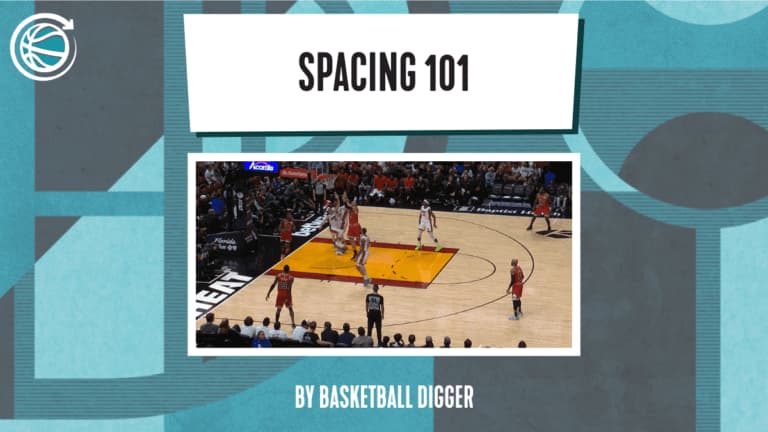
Spacing has changed the game. NBA offenses today look nothing like they did in the ’90s—more threes, better efficiency, and smarter shot selection. But why? The key lies in how teams use space to create and capitalize on advantages.
Mar 31, 2025
Simon Caret
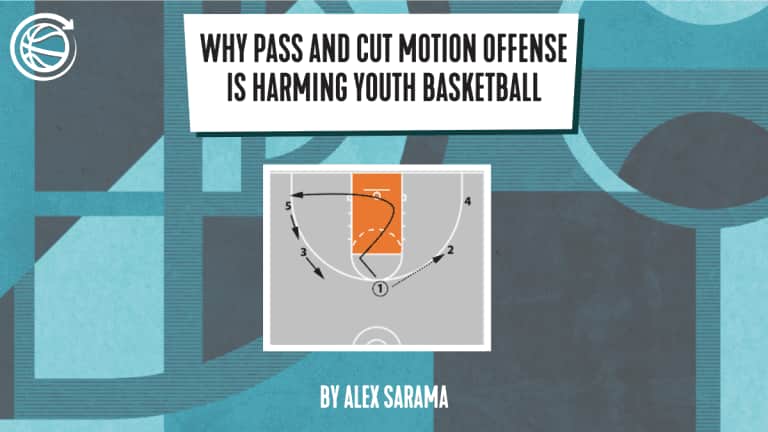
This article breaks down why pass and cut motion offense limits youth player development, and explores better ways to teach spacing, decision-making, and offensive creativity.
May 1, 2024
Alex Sarama
Approaches within the basketball industry are predominantly based upon experiential knowledge and traditions.


